Sculpting Material Finder
Not sure where to start? Answer these questions to find the best material for your first sculpting project.
Your Profile
Recommended Material
Select your preferences and click "Find My Material" to see recommendations.
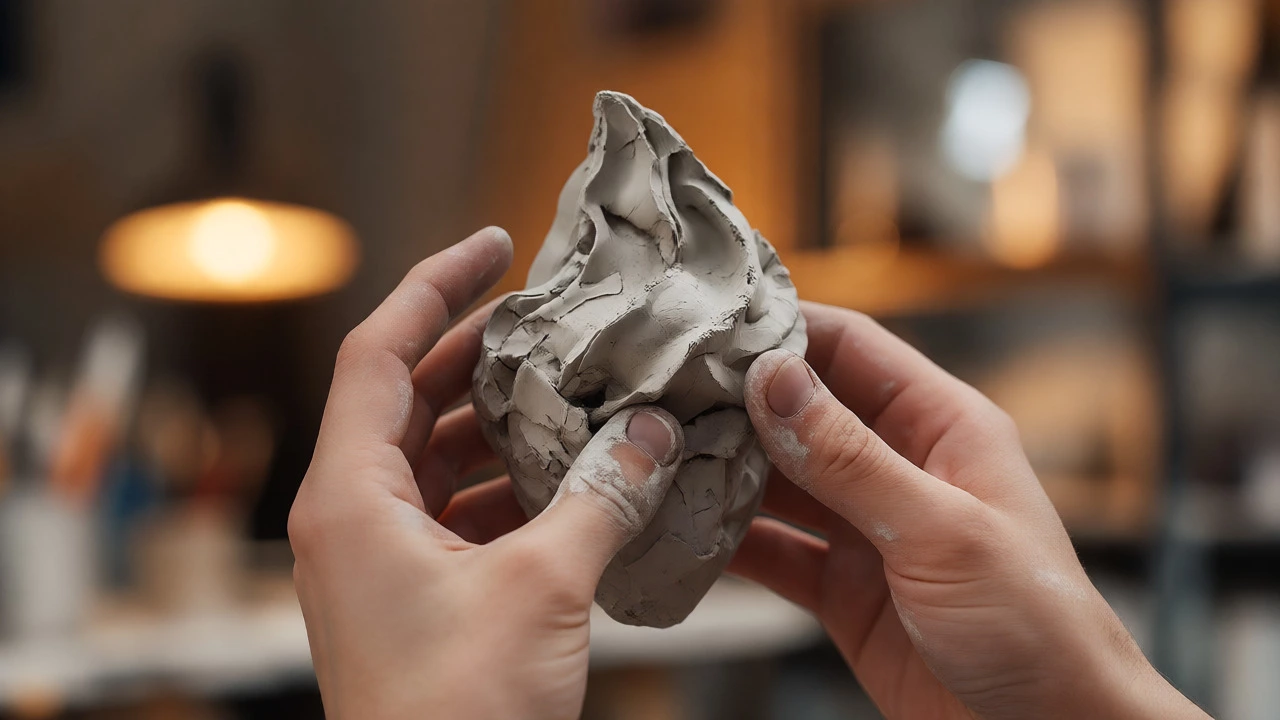
You see a marble statue in a museum, or maybe you just watched a satisfying time-lapse of someone turning a lump of gray goop into a realistic human face on Instagram. Your first thought is probably: "I could do that." Then you buy a block of clay, squish it around for ten minutes, and end up with something that looks more like a melted ice cream cone than a masterpiece. Suddenly, the question hits you hard: is sculpting difficult?
The short answer? Yes, but not for the reasons most people think. It’s not because your hands are clumsy or you lack "artistic DNA." It’s because sculpting requires a specific type of spatial thinking that doesn’t come naturally to most of us. We live in a 3D world, sure, but we mostly interact with it through 2D screens. Translating what you see in your mind’s eye into physical volume is a skill, and like any skill, it has a steep learning curve.
Why Sculpting Feels Harder Than Drawing
If you’ve ever tried drawing from life, you know it’s tricky. But drawing gives you a safety net. If you mess up a line, you erase it. If the proportions are off, you adjust them on the flat plane of paper. Sculpting removes that safety net entirely. You are working with mass and gravity. When you add clay, you have to remove it later if it’s wrong. When you carve stone, there is no undo button. Once that chip flies off, it’s gone forever.
This permanence creates anxiety. Many beginners freeze because they are afraid of making a mistake that ruins the whole piece. In reality, mistakes are part of the process. The difficulty isn't in avoiding errors; it's in understanding how to correct them within the constraints of the material. For instance, oil-based clay allows for endless corrections because it never dries out, whereas water-based clay shrinks as it dries, requiring careful management of moisture levels.
The Three Main Hurdles Beginners Face
When artists say sculpting is hard, they are usually referring to three specific cognitive and physical barriers. Understanding these can help you tackle them head-on rather than quitting after your first failed attempt.
- Spatial Visualization: This is the ability to imagine an object rotating in space without actually moving it. Most people struggle to visualize the back of a head while looking at the front. In sculpture, you must constantly walk around your work. You cannot rely on a single viewpoint. This forces your brain to build a mental model of the object in full 360 degrees, which is mentally exhausting at first.
- Material Resistance: Clay fights back. Stone breaks. Wood splinters. Each material has its own personality. Bronze casting involves chemistry and metallurgy, adding layers of technical complexity beyond just shaping form. If you try to force a soft material to hold a rigid shape without an armature (internal support), it will collapse under its own weight. Learning to respect the physics of the medium is half the battle.
- Anatomical Accuracy: Even if you aren't doing hyper-realism, you need to understand underlying structure. A lumpy shoulder doesn't look artistic; it looks broken. Knowing where bones protrude and how muscles attach helps you create believable forms. Without this knowledge, your sculptures often feel "soft" or undefined, lacking the tension that makes real bodies look alive.

Comparing Materials by Difficulty Level
Not all sculpting is created equal. The material you choose dictates how difficult the process will be. Here is a breakdown of common materials and their challenge factors.
| Material | Difficulty Level | Main Challenge | Best For |
|---|---|---|---|
| Oil-Based Clay | Low | Messy cleanup; requires heat to soften in cold weather. | Beginners, maquettes, detailed studies. |
| Polymer Clay | Medium | Can burn if baked too long; limited size due to oven constraints. | Jewelry, small figures, hobbyists. |
| Water-Based Clay | Medium-High | Cracking during drying; shrinking issues; fragile when wet. | Traditional pottery, large-scale models. |
| Soapstone | Medium | Dust inhalation risk; requires proper ventilation and masks. | First-time carvers, quick projects. |
| Marble | High | Expensive; irreversible removal of material; heavy equipment needed. | Professional studio work, classical styles. |
| Wood | High | Grain direction affects carving; tool maintenance is critical. | Folk art, traditional carving. |
The Role of Tools and Technique
A common misconception is that expensive tools make you a better sculptor. They don’t. A sharp knife and a set of wire loop tools are enough to start. The difficulty lies in developing a light touch. Pressing too hard with a metal rib tool can gouge clay unintentionally. Using a mallet too aggressively on chisels can shatter stone.
Technique evolves over time. Initially, you might focus on gross shapes-getting the silhouette right. This is called blocking out. If you skip this step and jump straight into detailing eyes and noses, you’ll end up with a distorted face. Experienced sculptors spend 70% of their time on basic forms. Only once the big masses are correct do they refine the details. This discipline is hard to learn because our brains want to rush to the fun stuff-the details.
Is It Worth the Struggle?
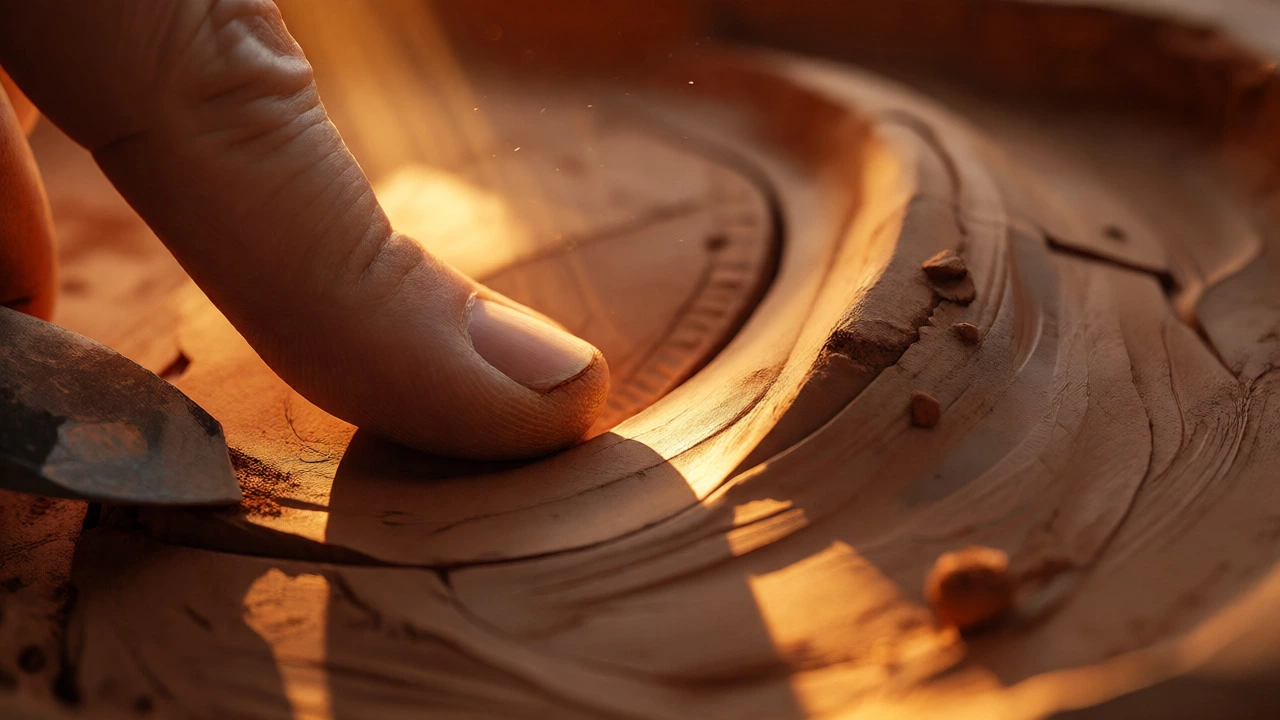
So, why put yourself through the frustration? Because nothing else feels quite like it. Painting is visual; writing is linguistic. Sculpting is tactile. There is a primal satisfaction in pushing your thumb into warm clay and feeling the resistance. When you finally get a curve right, and the light catches it perfectly, creating a shadow that defines the form, you feel a sense of accomplishment that is uniquely physical.
Moreover, the skills transfer. Spatial reasoning improves. Patience increases. You start seeing the world differently-not just as images, but as volumes and weights. You notice how light wraps around a coffee mug or how fabric folds on a chair. These observations feed back into your other creative pursuits.
If you are worried about being "bad" at it, remember that every professional sculptor started with ugly blobs. The difference between them and you isn't talent; it's persistence. They kept going when the clay looked terrible. They learned to read the material. They embraced the difficulty instead of fearing it.
How to Start Without Getting Discouraged
If you want to test the waters, don't buy a ton of marble. Start with something forgiving. Buy a pound of oil-based modeling clay. It’s cheap, reusable, and low-stress. Spend your first week just making simple geometric shapes. Try to make a perfect sphere. Then a cube. Then a cylinder. Notice how hard it is to keep edges sharp or surfaces smooth. This builds muscle memory.
Next, try copying a simple object. Don't invent a character yet. Take an apple or a skull and try to replicate its form. Use reference photos. Walk around your sculpture frequently. Compare it to the original from multiple angles. Ask yourself: Is it too wide here? Too flat there? This feedback loop is where the actual learning happens.
Consider taking a beginner workshop. Watching a live demonstration reveals tricks you won't find in books, like how to blend seams or how to use water to smooth clay without dissolving detail. Online tutorials are helpful, but they can't correct your hand position in real-time.
Do I need to be good at drawing to start sculpting?
No. While drawing skills help with planning, many successful sculptors are weak drawers. Sculpting relies more on tactile feedback and spatial intuition than on sketching ability. You can plan directly in the clay.
Which material is easiest for absolute beginners?
Oil-based clay is generally considered the easiest starting point. It doesn't dry out, so you can work on it indefinitely. Mistakes can be smoothed over instantly, allowing you to focus on form rather than material limitations.
How long does it take to get decent at sculpting?
With consistent practice (a few hours a week), you can produce recognizable, coherent forms within 3 to 6 months. Achieving high realism or professional-level technique typically takes several years of dedicated study.
Is sculpting physically demanding?
It depends on the scale and material. Working with small clay pieces is low-impact. Carving stone or wood can be strenuous, involving repetitive motion and vibration that may affect joints. Proper ergonomics and breaks are essential to prevent injury.
Can I teach myself sculpting effectively?
Yes, many artists are self-taught. However, progress is faster with feedback. Joining local art groups, online communities, or hiring a mentor for occasional critiques can accelerate your learning curve significantly.