Abstract Art Market Explorer
Not sure which side of the abstract art world you're looking at? Select your interest below to see key characteristics, price ranges, and popular styles.
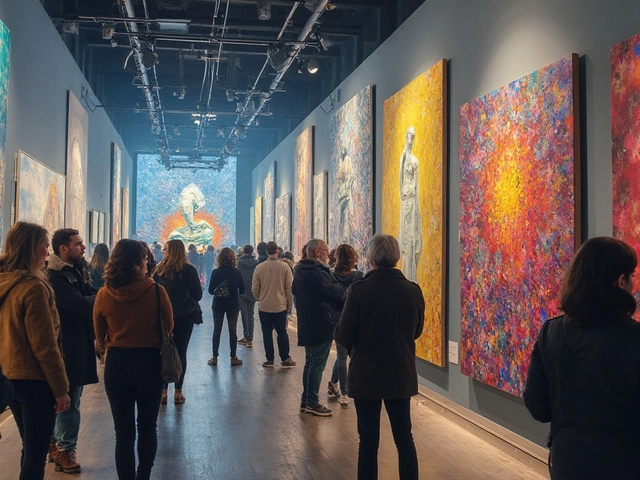
You walk into a gallery or scroll through an online auction site, and you see it: a canvas with bold splashes of color, geometric shapes that don't quite make sense, or maybe just a single black line on white. You wonder, "Who buys this?" And more importantly, "What is the most sold abstract art?" It’s a question that stumps even seasoned collectors because "sold" can mean two very different things. Are we talking about the highest price ever paid at auction? Or are we talking about the pieces that fly off shelves in millions of homes worldwide?
The answer isn't one single painting. The abstract art market is split into two distinct worlds: the ultra-high-end investment tier and the mass-market decorative tier. Understanding which world you're looking at changes everything about how you view these works. Let's break down what actually sells, who is buying it, and why certain abstract styles dominate the charts.
The Auction House Giants: Highest Priced Abstract Works
If by "most sold" you mean "most expensive," then the conversation starts and ends with a few specific names. These aren't just popular; they are blue-chip assets. When Sotheby's or Christie's lists a piece from this group, it doesn't matter if the public understands it. Billionaires do.
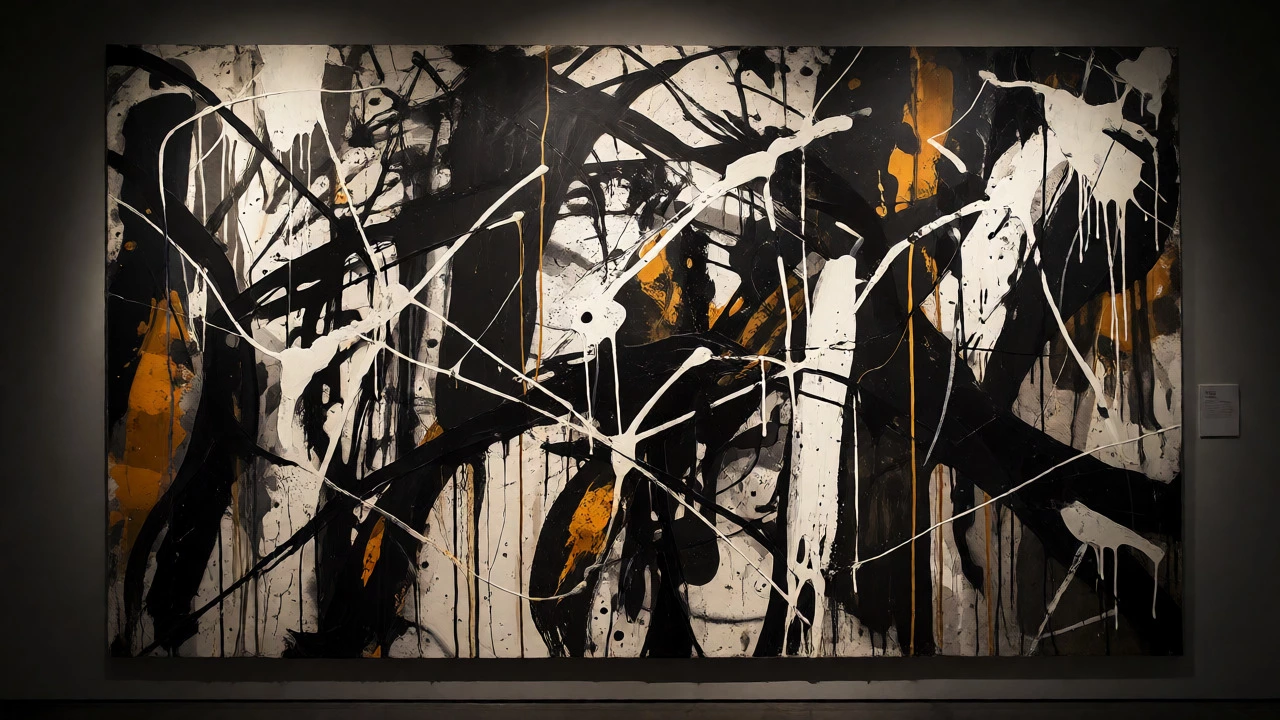
The undisputed king here is Jackson Pollock. His drip painting "No. 5, 1948" holds the record for being one of the most expensive paintings ever sold privately, reportedly fetching $140 million in 2006. While not technically an auction sale, its valuation sets the ceiling for the entire genre. Pollock’s work defines Abstract Expressionism-a movement where the act of painting was as important as the result. Collectors buy Pollock not just for the visual impact, but for historical significance. Owning a Pollock is like owning a piece of mid-century American history.
Close behind is Willem de Kooning. His "Interchange" sold for $300 million in a private deal in 2015, making it arguably the most valuable abstract painting in existence. De Kooning’s style is chaotic, aggressive, and deeply emotional. Unlike Pollock’s rhythmic drips, de Kooning’s brushstrokes feel like arguments made visible. This intensity appeals to collectors who want art that demands attention rather than just decorates a wall.
Then there is Cy Twombly. His scribbled, graffiti-like canvases have seen massive price surges in recent years. In 2015, his "Untitled (Bull in a China Shop)" sold for over $70 million. Twombly represents a bridge between Abstract Expressionism and Pop Art. His work is quieter, more intellectual, and often features faint writing or diagrams. Buyers here are typically institutions or wealthy individuals with a strong academic interest in post-war art.
The Mass Market: What Sells in Homes and Offices
Now, let’s pivot to reality. Most people aren’t spending $100 million on a canvas. They’re spending $50 to $500. In this sector, the "most sold" abstract art looks very different. Here, accessibility and interior design trends drive sales. You won't find raw, aggressive expressionism here. Instead, you’ll find controlled chaos and soothing minimalism.
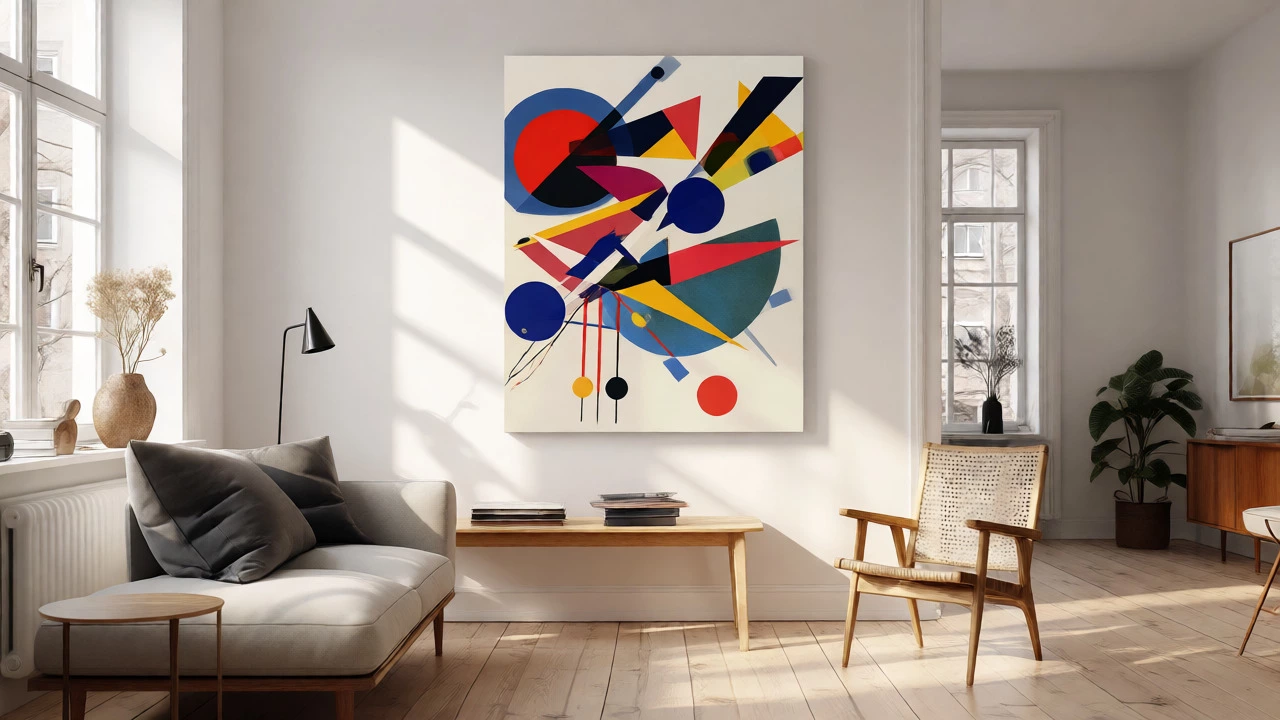
Kandinsky-inspired Geometrics dominate the affordable end. Wassily Kandinsky is widely considered the pioneer of pure abstract art. His theory that colors and shapes evoke spiritual emotions resonates with modern buyers who want their living rooms to feel "calm" or "energized." Prints featuring circles, triangles, and primary colors in balanced compositions are perennial best-sellers on platforms like Etsy, Amazon, and Society6. Why? Because they fit almost any interior style, from Scandinavian minimalism to Mid-Century Modern.
Another huge seller is Minimalist Line Art. Think of a single continuous black line forming a face, a body, or a landscape on a stark white background. Artists like Matisse inspired this trend, but contemporary digital artists have taken it global. These pieces sell in the millions because they are neutral. They don’t clash with your couch. They don’t require interpretation. They simply add sophistication without shouting for attention. For renters and first-time homeowners, this is the safest bet in abstract art.
We also cannot ignore Abstract Floral Expressions. This is a hybrid category. It uses abstract techniques-blurred edges, exaggerated colors, fragmented forms-to depict flowers. Pure abstraction can be intimidating to some buyers. But if you hint at a rose or a lily within the swirls, it becomes approachable. Retailers like West Elm and CB2 stock these heavily because they bridge the gap between traditional floral art and modern abstract taste. They sell exceptionally well in bedrooms and bathrooms where softness is desired.
Why Do People Buy Abstract Art?
You might ask, "If it doesn't look like anything real, why pay for it?" The psychology behind abstract purchases is fascinating. Research in neuroaesthetics suggests that the human brain processes abstract patterns differently than representational images. We don't try to identify objects; we respond to emotion and composition directly.
- Emotional Regulation: Many buyers choose cool blues and greens (think Rothko’s color fields) to create calming spaces. Others choose reds and oranges to stimulate energy in creative studios.
- Status Signaling: In professional settings, owning abstract art signals cultural literacy. It says, "I understand contemporary culture," without requiring the viewer to explain a narrative.
- Open Interpretation: Unlike a portrait of a person, abstract art allows the owner to project their own feelings onto it. Today it feels chaotic; tomorrow it feels dynamic. This flexibility makes it durable over time.
Comparing the Markets: High-End vs. Decorative
To help you decide which side of the market interests you, here is a breakdown of the key differences between the investment-grade abstract art and the consumer-grade variety.
| Feature | Auction/Investment Tier | Consumer/Decorative Tier |
|---|---|---|
| Top Artists | Pollock, De Kooning, Rothko, Twombly | Emerging digital artists, Print-on-demand creators, Replica makers |
| Price Range | $1 Million - $300+ Million | $20 - $2,000 |
| Primary Buyer | Ultra-High-Net-Worth Individuals, Museums | Homeowners, Renters, Corporate Offices |
| Style Preference | Raw, Emotional, Historically Significant | Harmonious, Neutral, Trend-Driven |
| Medium | Original Oil/Acrylic on Canvas | Giclée Prints, Digital Downloads, Small Originals |
The Rise of Digital Abstract Art
Technology has changed what "sold" means. In 2026, a significant portion of abstract art sales happens entirely digitally. NFTs (Non-Fungible Tokens) were a hype cycle, but they matured into a legitimate niche for digital-only abstract collections. Platforms like SuperRare and Foundation host abstract generative art that sells for thousands of dollars.
But beyond crypto, the biggest shift is in Generative Art. Using algorithms to create unique, non-repeating patterns, artists like Refik Anadol have brought data visualization into the art world. These pieces are often sold as limited-edition prints or screensavers for smart displays. They appeal to tech-forward buyers who appreciate mathematics as beauty. If you look at best-seller lists on major print sites, algorithmic fractals and fluid simulations are climbing fast, rivaling traditional paint strokes.

How to Spot a Future Best-Seller
If you’re looking to buy now, hoping for future value, keep an eye on emerging markets. Traditional Western Abstract Expressionism is saturated. The next wave of high-value sales may come from Contemporary African Abstraction. Artists like El Anatsui use recycled materials to create shimmering, textile-like abstractions that critics argue redefine materiality in art. Their prices are rising steadily, though they haven't hit the Pollock stratosphere yet.
Similarly, watch for Neo-Minimalism. As homes get smaller and urban living densifies, art that creates a sense of space without clutter is gaining traction. Large-scale monochromatic works with subtle textures are outperforming busy, multi-colored pieces in luxury apartment developments.
Frequently Asked Questions
What is the most expensive abstract painting ever sold?
The title generally goes to Willem de Kooning's "Interchange," which was sold privately for approximately $300 million in 2015. Jackson Pollock's "No. 5, 1948" is also frequently cited with a reported sale price of $140 million, though exact figures for private sales are often estimated.
Is abstract art a good investment?
For established blue-chip artists like Pollock, Rothko, or de Kooning, yes, it has historically been a stable store of value. However, for emerging or mid-tier artists, it is risky. The mass-market decorative segment is not an investment; it depreciates quickly once purchased, similar to furniture.
What types of abstract art are most popular for home decor?
Minimalist line art, geometric shapes in neutral tones, and abstract florals are currently the top sellers for residential interiors. These styles blend easily with modern and contemporary furniture designs and do not overwhelm small spaces.
Do I need to understand abstract art to buy it?
No. One of the main appeals of abstract art is that it invites personal interpretation. You do not need an art degree to enjoy it. If a piece evokes a feeling or complements your space visually, that is sufficient reason to purchase it.
Where can I buy authentic abstract art?
For originals, visit reputable galleries or auction houses like Sotheby's and Christie's. For affordable originals, check local art fairs or online platforms like Saatchi Art. For prints, ensure you buy from licensed retailers or directly from the artist to guarantee quality and authenticity.