Carving vs. Sculpting Explorer
Explore the core differences between these two artistic methods. Use the tabs below to compare tools and philosophies, then test your understanding with the quiz.
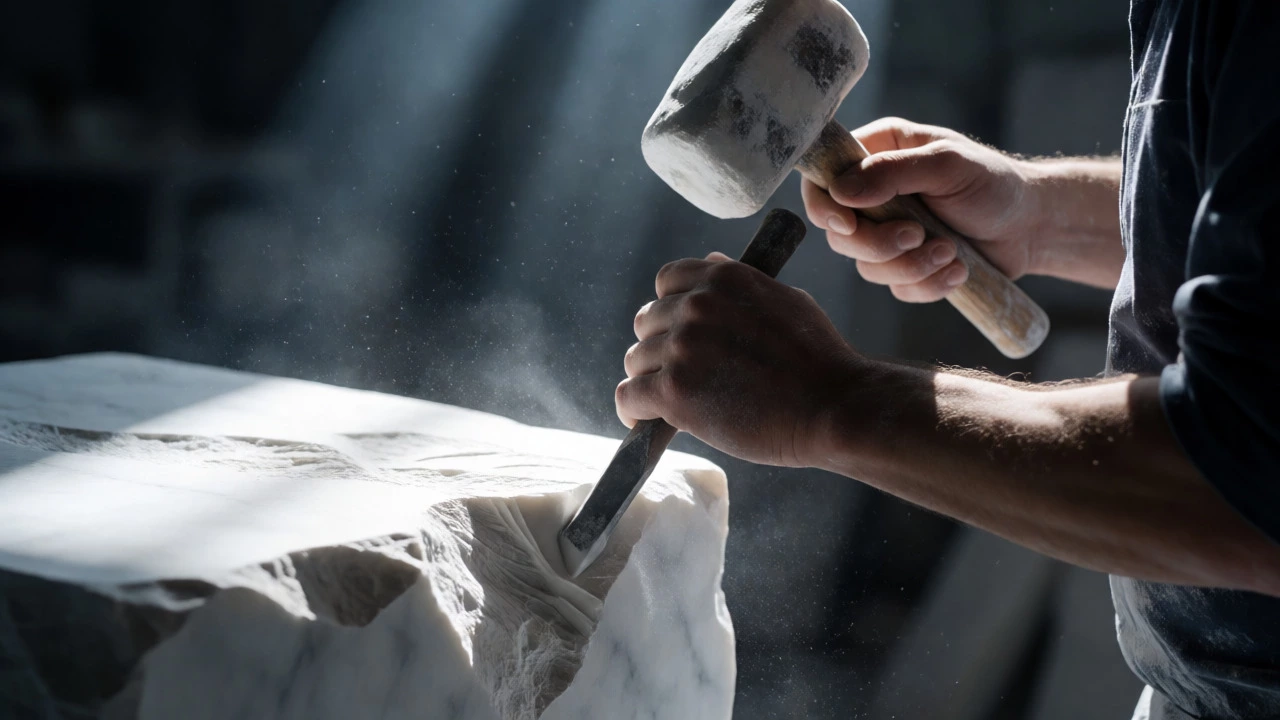
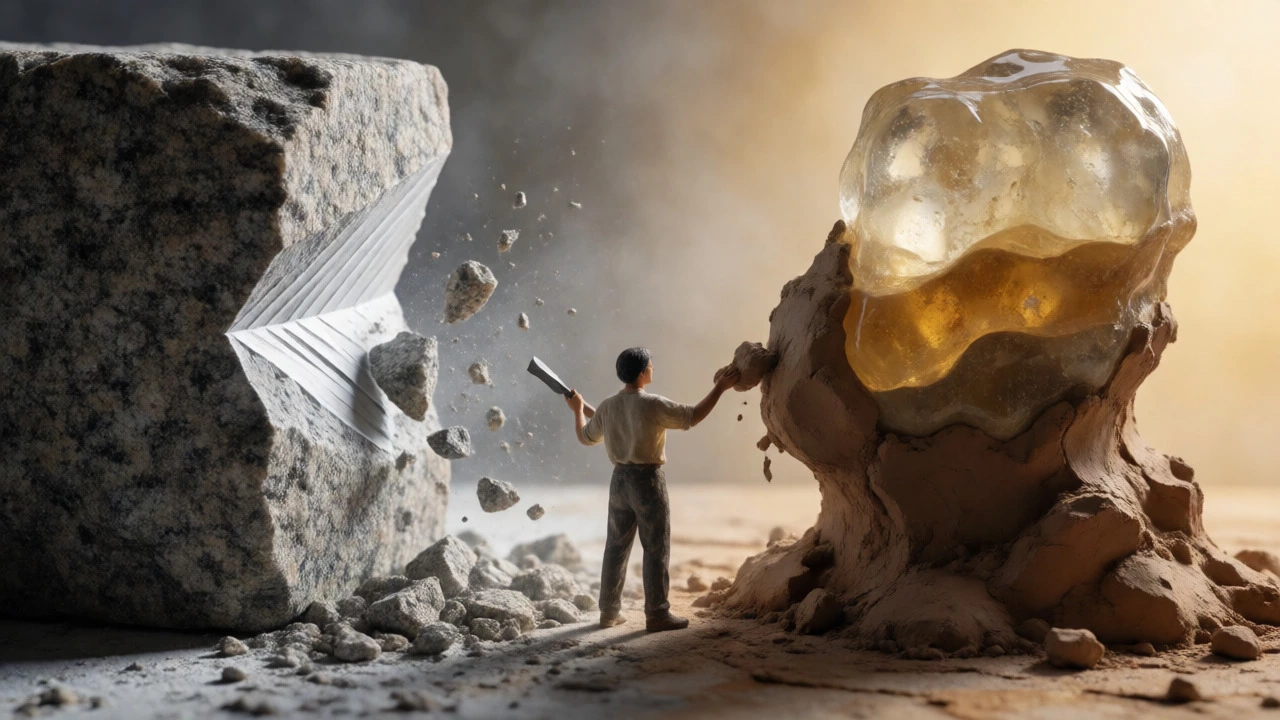
Core Concept: Removing material from a solid block to reveal the form.
Philosophy: The form is already inside; you just remove what doesn't belong (Michelangelo's "freeing the angel").
Aesthetic: Smooth, dense, monolithic, timeless.
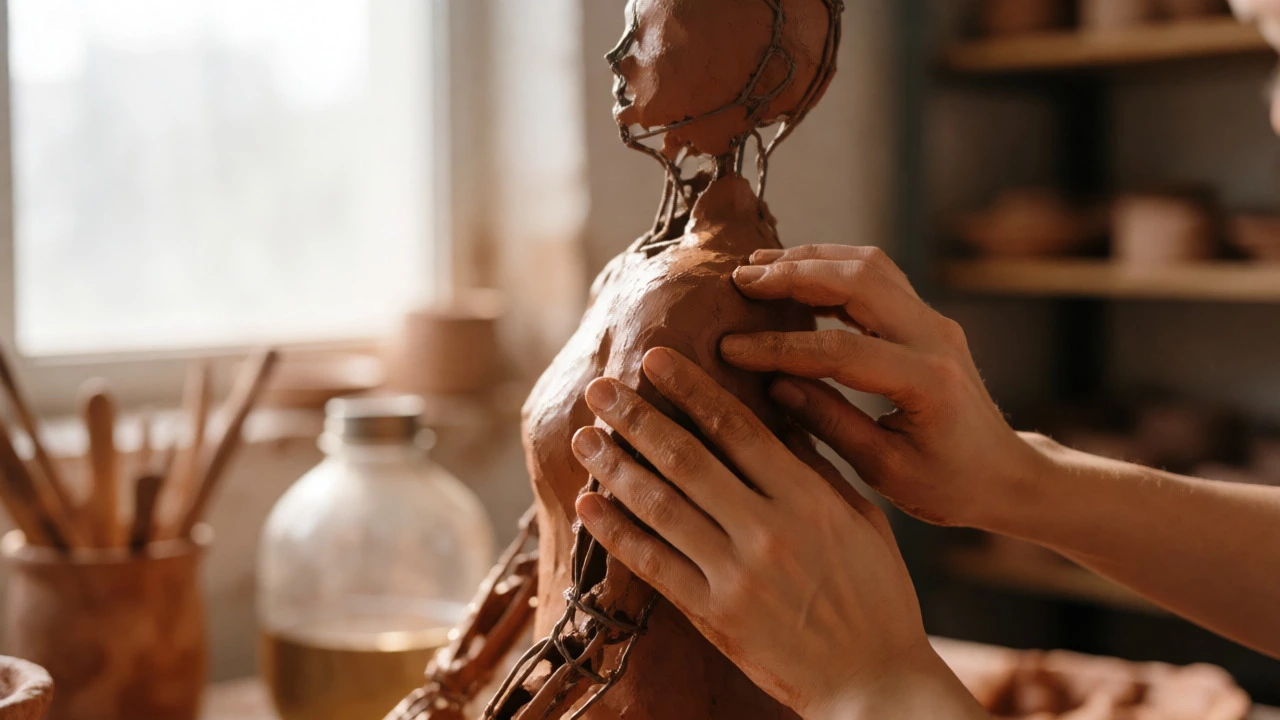
Core Concept: Building up material to create the form.
Philosophy: Constructing the shape layer by layer; highly experimental and flexible.
Aesthetic: Textured, expressive, often shows evidence of touch (fingerprints, tool marks).
| Feature | Carving | Sculpting |
|---|---|---|
| Primary Action | Removing mass | Adding mass |
| Common Materials | Marble, Wood, Ice, Soapstone | Clay, Wax, Plaster, Wire Armatures |
| Key Tools | Chisels, Mallets, Saws, Rasps | Spatulas, Modeling Tools, Brushes |
| Error Correction | Difficult/Impossible | Easily Reversible |
Physical Demand
Carving is athletic and high-impact. It requires repetitive striking (swinging mallets), leading to shoulder strain and calluses. Precision is critical because mistakes are permanent.
Time Factor
Slow, steady progression. Artists spend weeks studying grain and veins before making the first cut. One wrong swing can ruin months of work.
Physical Demand
Sculpting is tactile and fine-motor focused. You feel temperature, blend seams, and smooth surfaces. It allows for rapid iteration without fear of permanent error.
Time Factor
Rapid experimentation possible. Clay remains workable (if kept moist or oil-based). Mistakes can be smoothed over or new lumps added instantly.
Test Your Knowledge
You walk into a museum, stand before a block of marble that looks like it’s breathing, and then you see a clay figure that seems ready to jump off its pedestal. Both are sculpture, but they got there in completely opposite ways. One artist took material away; the other added it up. This isn’t just a technicality-it changes how the artwork feels, how long it takes to make, and even what mistakes you can fix.
If you’ve ever wondered why some statues look smooth and permanent while others feel rough and immediate, you’re asking about the fundamental divide between carving and sculpting. While people often use these words interchangeably in casual conversation, artists know they refer to two distinct processes with different risks, tools, and philosophies. Let’s break down exactly what separates them, so you can appreciate the craft behind every piece you see.
The Subtractive Nature of Carving
Carving is a subtractive process. You start with a solid block of material-stone, wood, ice, or soap-and you remove pieces until the form emerges. Think of it as revealing something that was already hiding inside the block. Michelangelo famously said he saw the angel in the marble and carved until he set him free. That’s the mindset here: the form exists, and your job is to get out of its way.
This approach demands precision because you cannot put material back. If you chop off too much marble from a nose, you don’t have glue that works on stone. You have to adjust the entire face or accept the flaw. This irreversibility makes carving high-stakes. Artists spend weeks studying the grain of the wood or the veins in the stone before making the first cut. They map out their strategy in three dimensions mentally, knowing that one wrong swing of the chisel could ruin months of work.
Common materials for carving include:
- Stone: Marble, limestone, granite, and soapstone. These require heavy-duty tools like mallets, chisels, and pneumatic hammers.
- Wood: Basswood, walnut, and pine. Woodworkers use gouges, knives, and saws. The grain direction matters immensely; cutting against it causes splintering.
- Ice: Used for temporary installations. It requires chainsaws and specialized hand tools, and the clock is literally ticking as it melts.
The Additive Nature of Sculpting
Sculpting, in its strictest sense, refers to an additive process. You build the form by adding material. Clay, wax, plaster, or even wire armatures serve as the base. You add more clay to make a muscle bulge, or you shave it away to refine a line. But crucially, you can always add more back. If you mess up an ear, you stick another lump of clay on it and reshape it. There is no finality until the piece is fired or cast.
This flexibility changes the creative flow. Sculptors often work quickly, experimenting with shapes without fear of permanent error. It’s a forgiving medium. Many modern sculptors combine both methods-they might carve a wooden core and then build up layers of papier-mâché or resin over it. But when we talk about "pure" sculpting, we mean building up mass rather than reducing it.
Materials commonly used in additive sculpting include:
- Clay: Oil-based (like plastilina) or water-based (terracotta). Water-based clay must be kept moist to remain workable.
- Wax: Often used for lost-wax casting. It captures fine detail and melts away during the bronze-casting process.
- Plaster: Applied in layers over a mold or armature. It hardens quickly, requiring fast decision-making.
Tools and Techniques: A Side-by-Side Look
The toolkit tells you everything about the intent. Carvers need sharp, durable edges to bite into resistance. Sculptors need pliable surfaces to manipulate soft matter. Here’s how the gear stacks up.
| Feature | Carving (Subtractive) | Sculpting (Additive) |
|---|---|---|
| Primary Action | Removing material | Adding material |
| Key Tools | Chisels, rasps, files, saws, sandpaper | Spatulas, modeling tools, brushes, armatures |
| Error Correction | Difficult or impossible | Easily reversible (until hardened) |
| Physical Effort | High impact, repetitive striking | Fine motor control, pushing/pulling |
| Time Factor | Slow, steady progression | Rapid iteration possible |
Notice the difference in physical demand. Carving is athletic. You’re swinging a mallet hundreds of times a day. Your shoulders burn, and your hands develop calluses. Sculpting is more tactile. You’re feeling the temperature of the clay, smoothing fingerprints, and blending seams. Both are exhausting, but in different muscles.
Why Does the Distinction Matter?
You might think, "Who cares? It’s all art." But the method dictates the aesthetic outcome. Carved stone tends to look solid, monolithic, and timeless. Light hits it differently because the surface is continuous and dense. Think of the Pietà by Michelangelo-the folds of Mary’s robe look fluid despite being made of hard rock. That illusion comes from masterful subtraction.
Additive sculptures, especially those left in raw clay or textured materials, often retain evidence of the artist’s touch. Fingerprints, tool marks, and uneven surfaces become part of the story. Rodin’s The Thinker shows this clearly; the surface is rugged and expressive, reflecting the additive buildup of his original clay model. Even after casting in bronze, the texture remains because it was built, not carved.
For collectors and students, understanding this helps in valuation and conservation. Carved works are generally more durable if the stone doesn’t crack. Additive works, unless cast in metal or fired, are fragile. A dropped clay sculpture shatters; a dropped marble statue might chip but often survives.
Hybrid Methods and Modern Context
In contemporary studios, the lines blur. Digital sculpting using software like ZBrush mimics additive processes-you push and pull virtual clay. Then, 3D printers output the object layer by layer (additive manufacturing). Conversely, CNC routers carve digital designs out of foam or wood (subtractive manufacturing).
Many traditional artists now use hybrid approaches. A common workflow involves:
- Building an armature (wire skeleton).
- Applying bulk clay or paper maché (additive).
- Refining details by scraping away excess material (subtractive).
- Casting the final result in bronze or resin.
This mix allows artists to enjoy the freedom of addition while achieving the refined surfaces typical of subtraction. It’s the best of both worlds, but it requires mastery of both skill sets.
How to Tell Them Apart at a Glance
Next time you’re at a gallery, try this quick test. Look for tool marks. If you see parallel striations from a chisel or file, it’s likely carved. If you see thumbprints, spatula smears, or layered textures, it’s likely sculpted. Also, consider the weight and density. Carved pieces are usually single blocks of heavy material. Sculpted pieces might be hollow (if cast) or supported by internal structures (armatures), making them lighter relative to their size.
Don’t forget context. Historical periods favored specific methods. Ancient Greek statues were primarily carved from marble or bronze-cast (which starts additive). Medieval wood carvings dominated religious icons. Today, mixed media is the norm, but the root technique still influences the visual language of the piece.
Frequently Asked Questions
Is molding considered carving or sculpting?
Molding is technically neither, but it is closely related to sculpting. It is a reproductive process where you create a negative space (mold) and fill it with material. Since you are adding material into a void to create a positive form, it aligns more with additive principles. However, the mold itself is often made by pressing material around a sculpted original.
Which is harder to learn: carving or sculpting?
Most beginners find sculpting easier to start because it is forgiving. You can undo mistakes in clay. Carving is unforgiving; one mistake can ruin the block. However, mastering the subtle nuances of carving stone to achieve realism is often considered more difficult than shaping clay, which has a lower barrier to entry but infinite complexity in refinement.
Can you carve clay?
Yes, you can remove clay with tools, which is a subtractive action. However, since clay is soft and easily replaced, this isn't typically called "carving" in the artistic sense. We usually reserve the term "carving" for hard materials like stone or wood where removal is permanent. Working with clay is universally referred to as modeling or sculpting.
What is the most common material for each?
For carving, marble and basswood are the most common traditional materials due to their workability and availability. For sculpting, oil-based modeling clay (plastilina) is the industry standard for maquettes and studies because it never dries out and allows for endless revision.
Does digital art count as sculpting?
Digital sculpting programs like Blender or ZBrush simulate additive processes. You push and pull polygons to add volume. While there is no physical material, the cognitive process mirrors traditional additive sculpting. Therefore, it is widely accepted as a form of digital sculpting, though purists may argue it lacks the tactile feedback of real-world mediums.