Modern vs. Classical Art: Interactive Comparison Tool
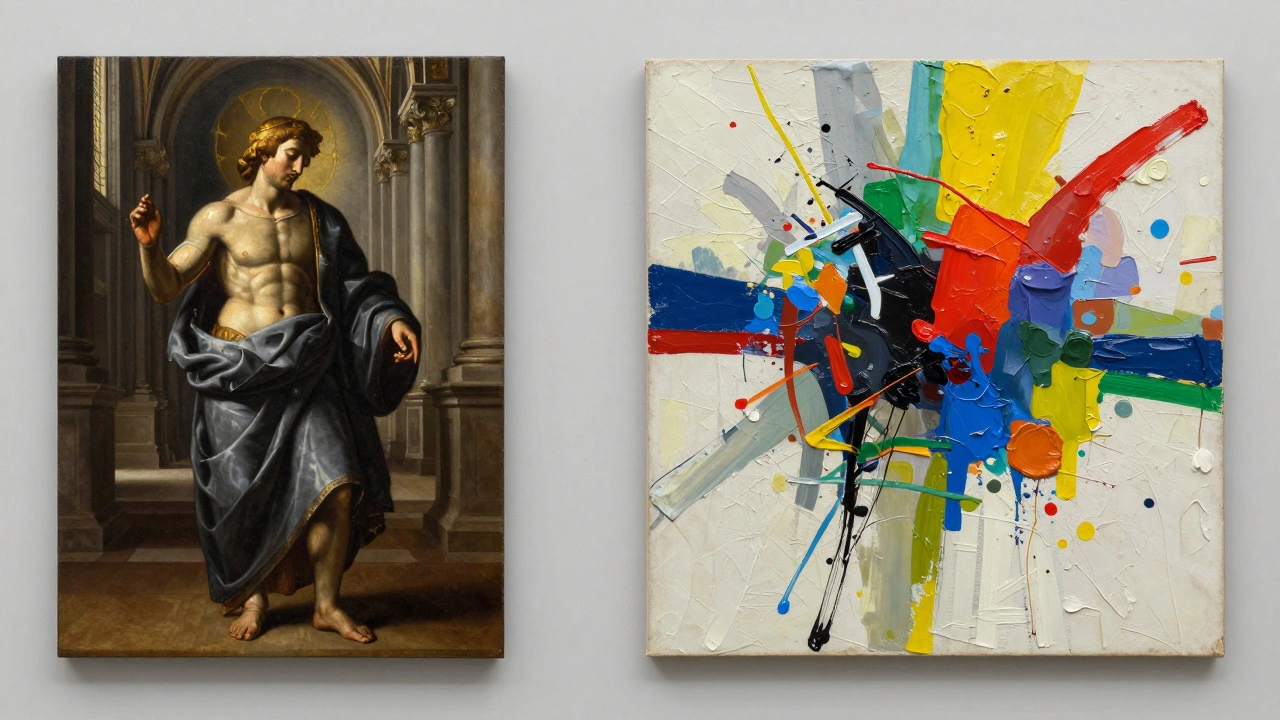
Explore the fundamental shift in style, purpose, and meaning between traditional "old" art and modern art. Select an artwork below to see how its characteristics align with different artistic eras.
Classical Art
Pre-late 19th Century
- Realistic Representation
- Hidden Brushstrokes
- Single Perspective
- Religious/Historical Subjects
Modern Art
1860s – 1970s
- Abstract/Symbolic
- Visible/Expressive Strokes
- Multiple Viewpoints/Flat Space
- Inner Psyche/Everyday Life
Detailed Comparison
| Feature | Classical/Old Art | Modern Art |
|---|---|---|
| Representation | Realistic, photographic accuracy | Abstract, distorted, or symbolic |
| Brushwork | Smooth, invisible strokes | Visible, textured, expressive strokes |
| Perspective | Single-point linear perspective | Multiple viewpoints or flat space |
| Color | Naturalistic, based on observation | Emotional, arbitrary, non-naturalistic |
| Subject Matter | Religious, historical, aristocratic | Everyday life, inner psyche, pure form |
Appreciation Guide: How to Look at Modern Art
Don't ask "Does it look real?" Instead, try these questions:
- What is the artist trying to feel? Look at colors and lines. Do they feel chaotic or calm?
- What rule is being broken? Notice if perspective is off or colors are unnatural. Ask why.
- What is the context? Was this painted during a war or industrial revolution? Art reflects its time.
Walk into any major museum, and you’ll likely see a jarring split. On one side, there are oil paintings of saints, kings, and landscapes that look like photographs from centuries ago. On the other, you might find a canvas splashed with random colors, a pile of bricks, or a single line drawn on paper. If you’ve ever stood in front of a piece of modern art is art produced during the period roughly spanning the 1860s to the 1970s, characterized by a conscious break with tradition. and thought, "My kid could do that," you are not alone. But that reaction misses the point entirely. The difference isn’t just about skill; it’s about a fundamental shift in what art was supposed to *do*.
To understand why modern art looks so different from "old" art (often referred to as traditional or classical art), we have to look at how technology, philosophy, and society changed the way artists saw the world. It wasn’t a sudden decision to be weird. It was a logical response to a world that was changing faster than ever before.
The Great Divide: What Defines "Old" Art?
When people say "old art," they usually mean classical art is art created before the late 19th century, emphasizing realism, religious themes, and technical mastery. This covers everything from the Renaissance through the 1800s. For hundreds of years, the goal of an artist was clear: represent reality as accurately as possible.
If you were commissioned to paint a portrait, you needed to capture the likeness perfectly. If you were painting a religious scene, you needed to make it look divine and real. The value lay in mimesis-the imitation of nature. Artists spent years mastering perspective, anatomy, and light. A painting was judged by how invisible the brushstrokes were and how realistic the final image appeared.
- Focus: Realism and accurate representation.
- Subjects: Religion, mythology, royalty, and historical events.
- Technique: Smooth finishes, hidden brushstrokes, strict adherence to perspective rules.
- Purpose: To educate, inspire faith, or glorify power.
This approach worked for centuries because art was the primary way people experienced the wider world. Most people never left their villages. A painting of Rome or Jerusalem was their only window into those places. Art was a service industry, serving the Church and the wealthy elite.
The Camera Changed Everything
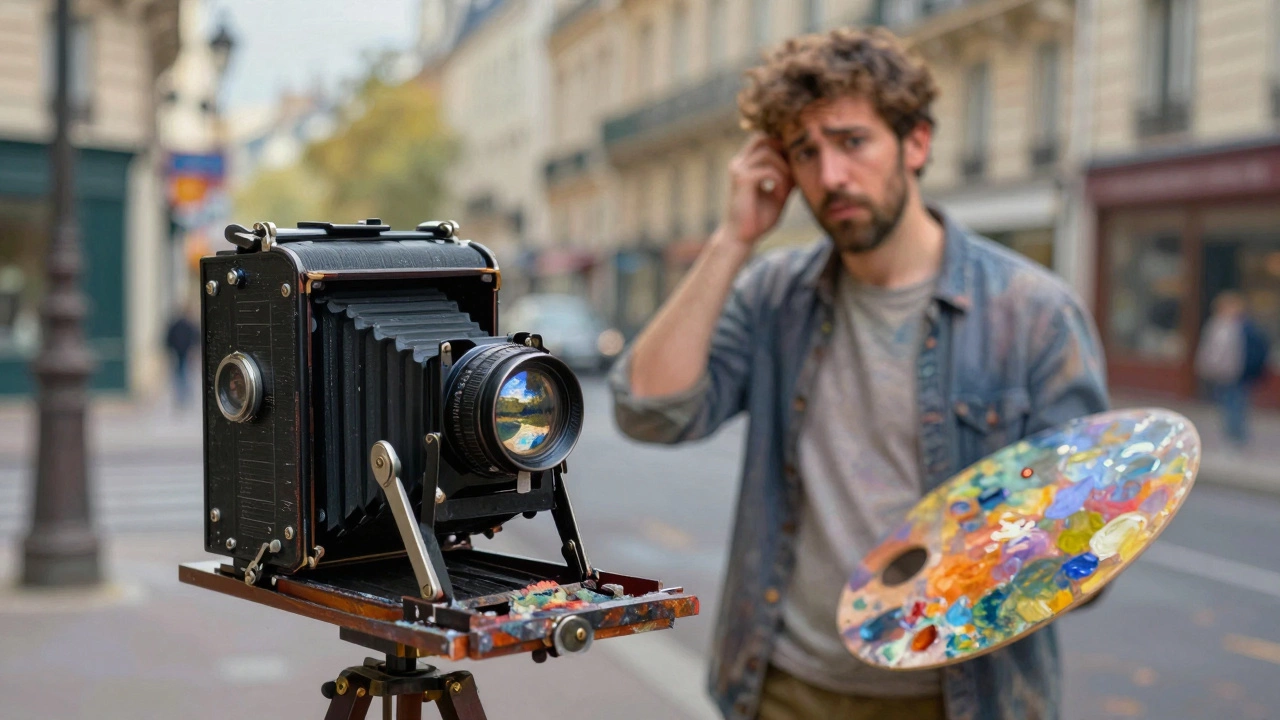
So, why did this change? The biggest catalyst was the invention of photography. In the mid-19th century, cameras began to capture reality faster and more accurately than any painter could. Suddenly, the primary job of a realist painter-making things look real-was obsolete. Why pay an artist thousands of dollars to paint your portrait when a photographer could do it for pennies in minutes?
This forced artists to ask a new question: "If a camera can copy reality, what can a painting do that a camera cannot?" The answer led to the birth of modern art. Artists stopped trying to compete with the camera and started exploring what was unique to human perception and emotion.
Key Differences in Style and Technique
The shift from old art to modern art wasn't just philosophical; it was visual. Here is how you can spot the difference instantly.
| Feature | Classical/Old Art | Modern Art |
|---|---|---|
| Representation | Realistic, photographic accuracy | Abstract, distorted, or symbolic |
| Brushwork | Smooth, invisible strokes | Visible, textured, expressive strokes |
| Perspective | Single-point linear perspective | Multiple viewpoints or flat space |
| Color | Naturalistic, based on observation | Emotional, arbitrary, or non-naturalistic |
| Subject Matter | Religious, historical, aristocratic | Everyday life, inner psyche, pure form |
Impressionism: The Starting Point
It all started with Impressionism is an art movement founded in the 1860s by artists like Monet and Renoir, focusing on light and momentary impressions rather than detail.. Instead of painting indoors with careful outlines, Impressionists went outside. They used quick, visible brushstrokes to capture how light changes throughout the day. They didn’t care about perfect details; they cared about the feeling of a sunny afternoon.
Cubism: Breaking the Viewpoint
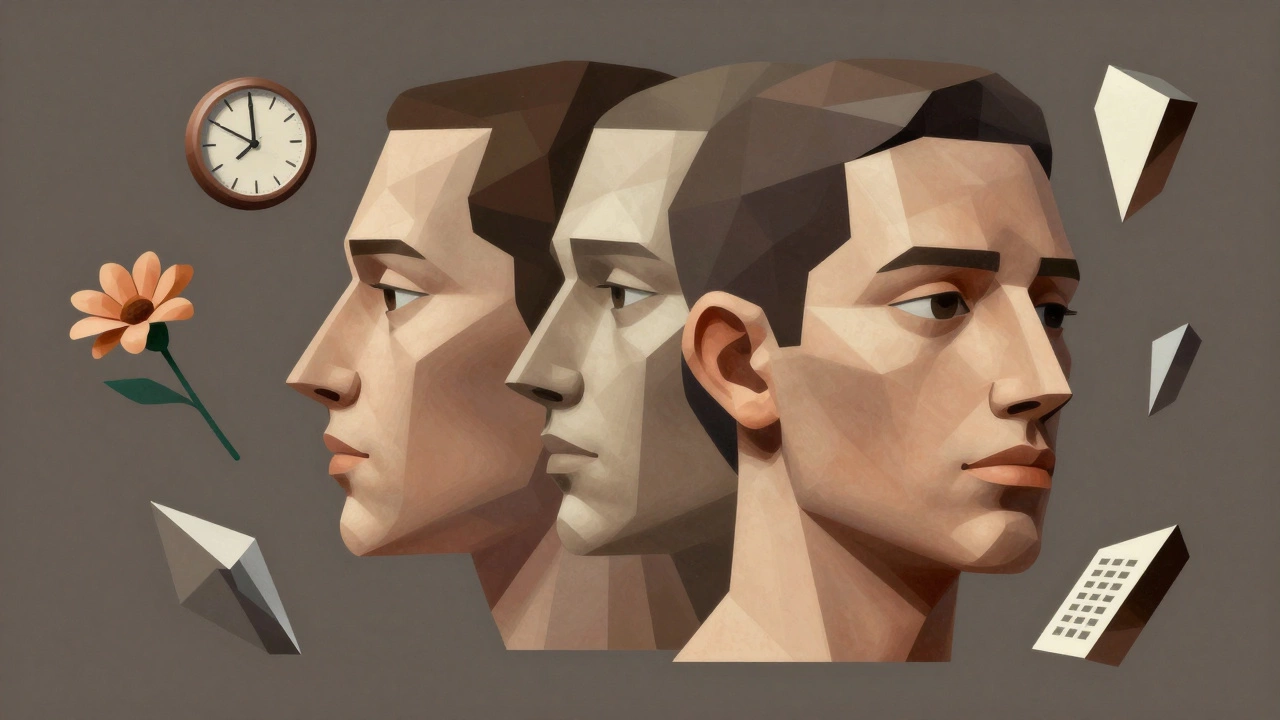
Then came Cubism is a revolutionary early 20th-century art style developed by Picasso and Braque, depicting subjects from multiple angles simultaneously.. Pablo Picasso and Georges Braque realized that a single viewpoint was limiting. In real life, we move around objects; we don’t stand still like a camera. So, they broke objects apart and showed them from several angles at once. A face might show both the front and the profile. This was a direct rejection of the single-point perspective that had dominated art since the Renaissance.
Expressionism: Painting Emotion
While Cubists focused on structure, Expressionists focused on feeling. Expressionism is an artistic movement where the artist distorts reality to evoke moods or ideas rather than to show objective truth. Artists like Edvard Munch (famous for *The Scream*) used harsh colors and twisted forms to show anxiety, fear, and joy. The color of a sky wasn’t blue because it looked blue; it was red because the artist felt angry. This shifted the focus from the external world to the internal mind.
The Shift in Purpose: From Service to Self-Expression
In the era of old art, artists were craftsmen. You commissioned a priest to paint an altar piece, or a king to paint his lineage. The artist’s personal opinion rarely mattered. The goal was to serve the patron’s message.
Modern art flipped this script. The artist became the author. The artwork became a statement about the artist’s view of the world, their politics, or their psychology. When Jackson Pollock threw paint onto a canvas, he wasn’t trying to please a king. He was exploring chaos, energy, and the physical act of creation itself. This autonomy allowed for radical experimentation but also made art harder for the general public to decode.
Why Does Modern Art Look "Simple"?
A common criticism is that modern art lacks technical skill. But consider this: if you spend ten years learning to draw a perfect hand, and then you decide to draw a stick figure to convey a specific emotional idea, that stick figure is a deliberate choice, not a lack of ability. Most modern artists were highly trained in classical techniques first. They chose to abandon realism because it no longer served their goals.
For example, Henri Matisse, a master draftsman, said, "What I dream of is an art of balance, of purity and serenity... devoid of troubling or depressing subject matter." His bold, flat colors weren’t lazy; they were calculated to create harmony. The simplicity is often a tool to strip away distraction and focus on the core concept.
How to Appreciate the Difference
If you want to bridge the gap between old and modern art, change the questions you ask. Don’t ask, "Does it look real?" Instead, try these:
- What is the artist trying to feel? Look at the colors and lines. Do they feel chaotic or calm?
- What rule is being broken? Notice if the perspective is off or the colors are unnatural. Ask why the artist made that choice.
- What is the context? Was this painted during a war? During a time of industrial revolution? Art reflects its time.
Old art asks you to admire the skill. Modern art asks you to engage with the idea. One isn’t better than the other; they are just answering different questions.
Is modern art considered "bad" art because it's abstract?
No. Abstraction is a deliberate technique, not a failure of skill. Most modern artists trained extensively in realism before choosing to abstract. They aimed to express emotions, concepts, or structures that realism couldn't capture. Judging abstract art by realistic standards is like judging a poem by how well it reports news facts.
When did modern art start?
Modern art is generally considered to have begun in the 1860s with the Impressionist movement. It continued until the 1970s, after which it transitioned into contemporary art. The key trigger was the invention of photography, which freed painters from the need to replicate reality.
What is the difference between modern and contemporary art?
Modern art refers to the period from the 1860s to the 1970s. Contemporary art refers to art made today, by living artists. While modern art broke with tradition, contemporary art often uses digital media, installation, and performance, reflecting current global issues like identity, technology, and climate change.
Why did artists stop painting realistically?
Cameras took over the job of realistic documentation. Artists sought new ways to express subjective experiences, emotions, and social commentary. Movements like Cubism and Expressionism prioritized internal truth and structural innovation over external appearance.
Can you give an example of a famous modern art piece?
Pablo Picasso's Les Demoiselles d'Avignon (1907) is a landmark modern art piece. It breaks traditional perspective by showing figures from multiple angles and using jagged, primitive forms. It marked the beginning of Cubism and challenged centuries of artistic convention.