Modern art doesn’t always make sense at first glance. A canvas with a single red stripe. A pile of bricks. A painting that looks like a child’s scribble. So why do millions of people stand in line for hours to see it? Why do collectors pay millions for pieces that seem simple-or even absurd? The answer isn’t about technique. It’s not about beauty in the traditional sense. It’s about something deeper: connection.
It’s Not About What You See, It’s About What You Feel
Before the 20th century, art mostly showed gods, kings, or pretty landscapes. It was meant to impress, to honor, to tell stories. Modern art broke all that. It stopped trying to look like reality and started trying to express inner truths. Artists like Mark Rothko, Jackson Pollock, and Yves Klein didn’t paint to show you a tree or a person. They painted to make you feel loneliness, rage, peace, or wonder.
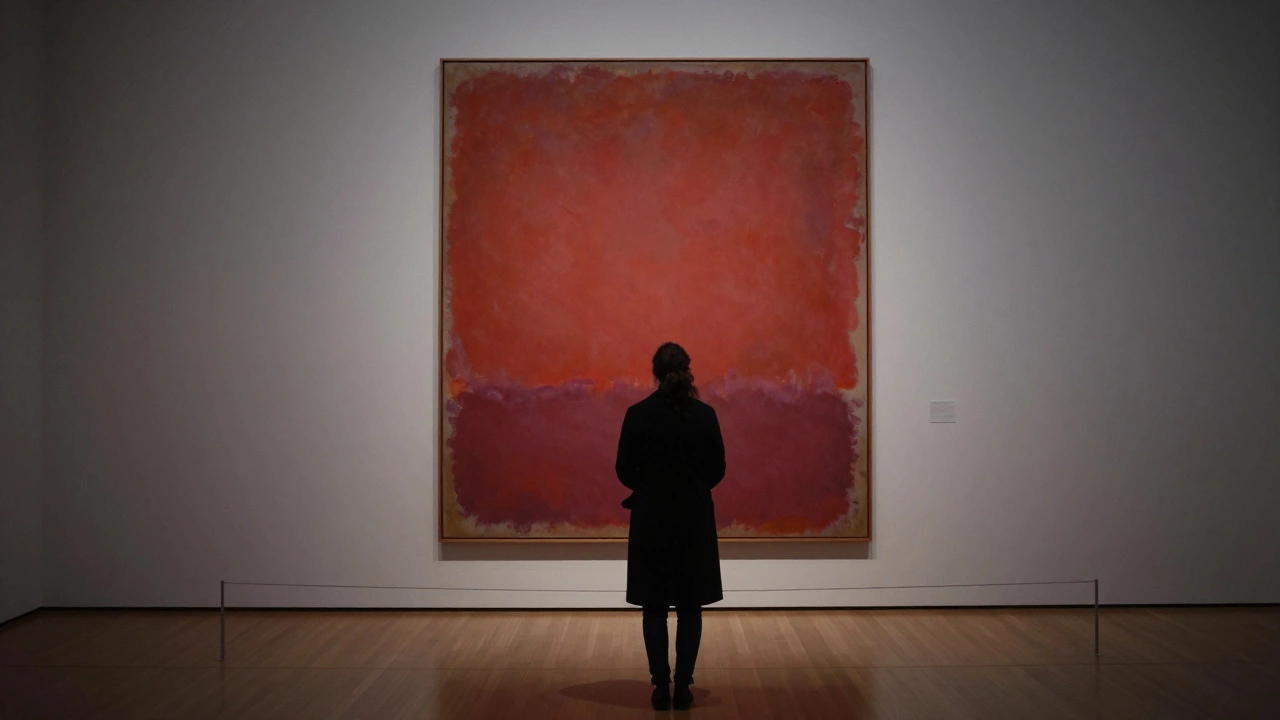
Think about Rothko’s dark red rectangles. At first, they look like flat paint. But stand in front of one for five minutes. Let your eyes soften. You’ll start to feel something-maybe sadness, maybe awe. That’s not an accident. Rothko called his paintings “tragedies.” He wanted people to sit with them like they would sit with a friend in grief. That’s why people love modern art: it doesn’t tell you what to feel. It gives you space to feel whatever you need to feel.
It Reflects the World We Live In
Modern art didn’t appear in a vacuum. It rose alongside wars, revolutions, industrial collapse, and the rise of psychology. After World War I, artists didn’t want to paint perfect palaces. They wanted to show fractured minds, broken societies, the chaos beneath the surface. Picasso’s Guernica isn’t a pretty picture of a bombing-it’s raw terror frozen in charcoal and black. That’s why it still hits hard today.
Modern art became a mirror. When you look at a Duchamp urinal titled Fountain, you’re not looking at a plumbing fixture. You’re looking at a question: What even is art? That question still echoes in our age of AI-generated images, viral memes, and Instagram feeds. People love modern art because it asks the same questions we’re asking ourselves: Who decides what matters? What’s real? What’s just noise?
It Challenges You-And That’s Why It Sticks
Most things in life are designed to be easy. Ads tell you what to buy. Algorithms tell you what to watch. But modern art refuses to give you easy answers. It makes you work. You don’t just look at a piece-you argue with it. You wonder: Is this genius? Is this nonsense? Why does it make me uncomfortable?
That tension is the point. A 2023 study from the University of London found that people who spent time with abstract art reported higher levels of curiosity and openness to new experiences. Why? Because modern art doesn’t hand you meaning. It hands you a puzzle. And humans love puzzles. We love the rush of figuring something out-even if the answer is that there is no answer.
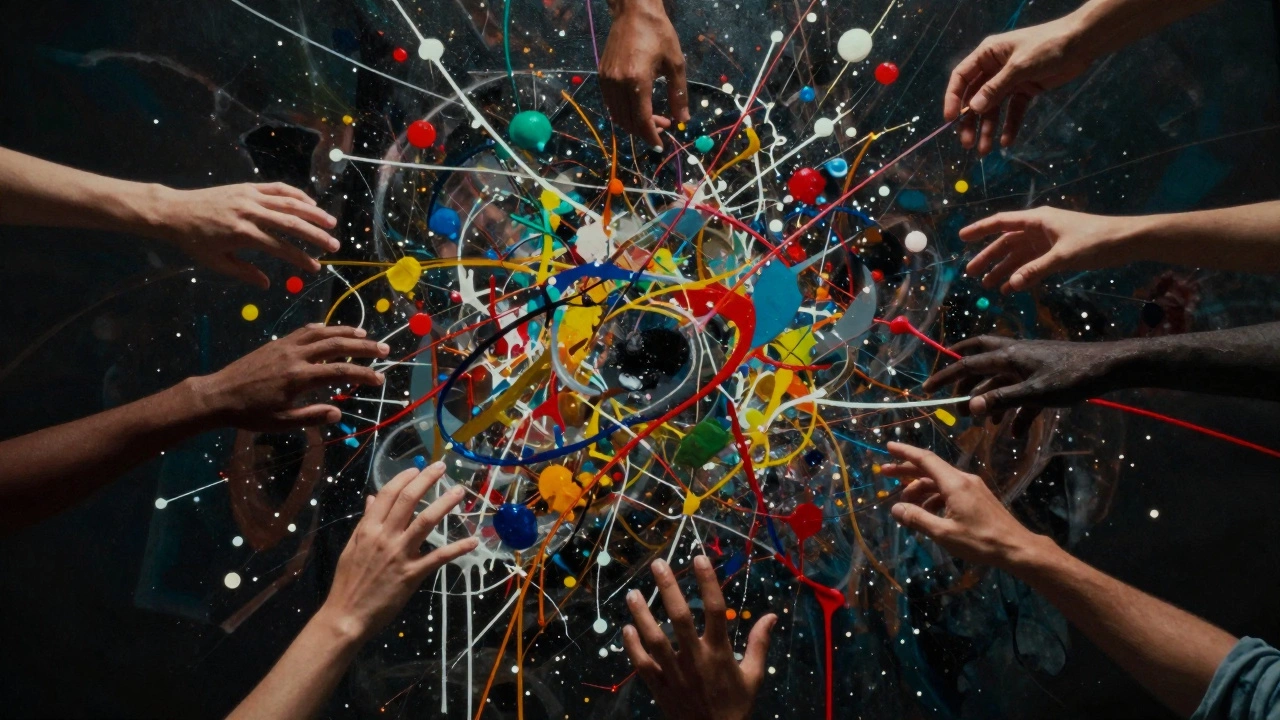
It’s Personal. No Two People See It the Same Way
Unlike a photograph of a sunset, modern art doesn’t have one fixed meaning. A Pollock drip painting might look like chaos to one person. To another, it’s a storm of emotions they’ve felt but never named. To a third, it’s a memory of their grandmother’s kitchen, where paint splattered on the floor every Sunday.
This is why modern art thrives in homes, not just museums. People don’t buy a Kandinsky because it matches their couch. They buy it because it feels like their inner life made visible. A 2024 survey of 5,000 art buyers found that 78% chose modern art pieces because they “felt like a part of me.” That’s not about taste. It’s about identity.
It’s Not Perfect. And That’s Why It’s Honest
Traditional art often hides flaws. Brushstrokes are smoothed. colors are blended. Everything is controlled. Modern art embraces the opposite. Cracks. Smudges. Drips. Unfinished edges. These aren’t mistakes. They’re proof that a human hand made this. A machine can’t replicate the shaky line of a Basquiat scribble or the uneven texture of a Rauschenberg collage. Those imperfections scream: I was here. I felt this.
In a world of polished influencers and AI-perfected images, modern art feels like a breath of real air. It doesn’t pretend to be flawless. It doesn’t try to sell you happiness. It just says: This is what it felt like to be alive, right now. And that honesty? That’s magnetic.
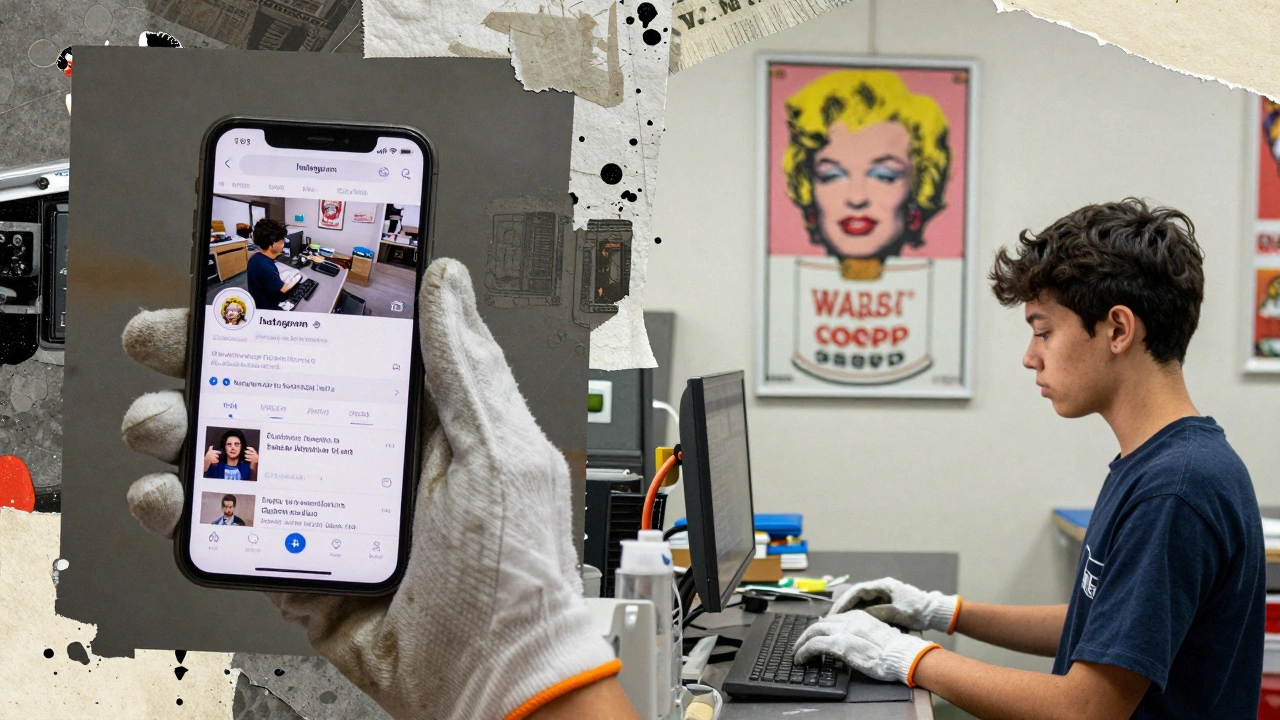
It’s a Conversation Across Time
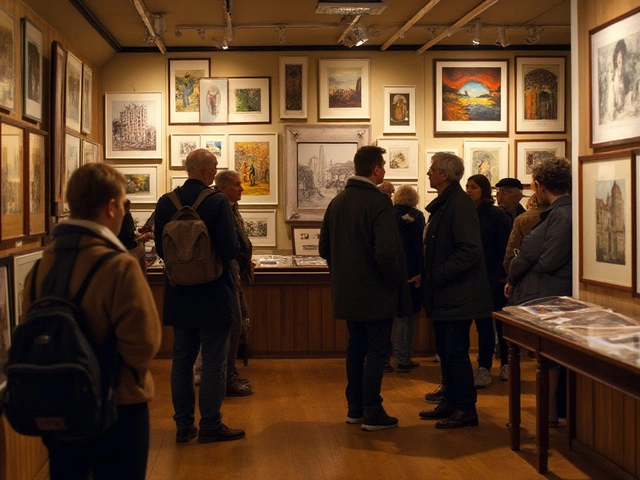
When you stand in front of a Rothko, you’re not alone. You’re standing where thousands have stood before you-people from different countries, languages, and generations-all silent, all feeling something they can’t explain. Modern art creates a quiet, shared space. It doesn’t shout. It waits. And in that waiting, you find others who’ve felt the same way.
That’s why museums have benches in front of modern art galleries. Not to rest. To sit. To be with the piece. To let it breathe with you.
It’s Not About the Price Tag
You’ve probably heard about a Basquiat painting selling for $110 million. That number shocks people. But the love for modern art isn’t tied to money. It’s tied to access. You don’t need to own a $100,000 piece to feel it. A poster on your wall. A photo on your phone. A moment in a free museum. That’s where the real connection happens.
Modern art’s power isn’t in its cost. It’s in its ability to speak to anyone, anywhere. A teenager in Jakarta sees a Warhol soup can and thinks about consumerism. A factory worker in Detroit sees a de Kooning swirl and remembers the rhythm of his machine. The art doesn’t care where you’re from. It just asks: Do you feel it?
People love modern art because it doesn’t ask you to understand it. It asks you to experience it. And in a world that’s always telling us what to think, that’s the most radical thing of all.
Why do some people think modern art is just nonsense?
Many people expect art to be technically skilled or represent something recognizable. When modern art breaks those rules-like a blank canvas or a pile of bricks-it feels like a trick. But modern art isn’t about skill in the traditional sense. It’s about intention. The artist isn’t trying to draw a perfect face. They’re trying to show how it feels to be afraid, lonely, or free. The discomfort comes from confronting emotions we usually ignore. That’s not nonsense. It’s honesty.
Can anyone create modern art?
Technically, yes. Anyone can put paint on canvas or arrange objects in a gallery. But what makes modern art powerful isn’t the act-it’s the context and the idea behind it. A child’s finger painting is not modern art. But if an artist uses finger painting to express trauma, and frames it with intention, history, and cultural dialogue, it becomes art. Modern art isn’t about how you make it. It’s about why you made it-and what it says about the world.
Is modern art still relevant today?
More than ever. Today’s world is full of noise: misinformation, algorithms, perfect online personas. Modern art is one of the few spaces that welcomes confusion, doubt, and raw emotion. Artists today still use abstraction, collage, and found objects to comment on climate change, identity, and digital isolation. The tools change, but the purpose doesn’t: to make people stop, feel, and question.
Do you need to know art history to appreciate modern art?
No. Art history helps you understand the context, but it’s not required to feel the emotion. A person who’s never heard of Pollock can still stand in front of one of his drip paintings and feel overwhelmed. That’s the beauty of it. Modern art speaks directly to the human experience-not the academic one. Knowledge adds depth, but feeling is the entry point.
Why do museums display such strange-looking pieces?
Museums don’t display modern art to confuse people. They display it because it changed how we see the world. A single red canvas by Ellsworth Kelly isn’t just a color. It’s a statement about perception, light, and emotion. Museums preserve these moments because they’re cultural turning points. They show how humans have wrestled with truth, identity, and meaning-not just in the past, but right now.