Contemporary Art Concept Validator
Is your work "just art" or is it "contemporary art"? Use this analyzer to evaluate your project's shift from technical skill to conceptual depth.
1. Primary Driver
Ever looked at a blank canvas with a single red line or a pile of candy in a corner and wondered, "Why is this in a museum?" You're not alone. There is a common misconception that for a piece to be contemporary art, it just needs to look weird or be expensive. But it's actually about the conversation the work starts. It isn't just about when the art was made, but how it engages with the world we are living in right now.
Key Takeaways
- Contemporary art is defined by its engagement with current social, political, and cultural contexts.
- The "idea" (concept) often outweighs the technical skill (craft) in the current art market.
- Context-where the art is shown and who is talking about it-is as important as the art itself.
- Authenticity and a unique perspective on the human condition drive longevity.
The Shift from Modern to Contemporary
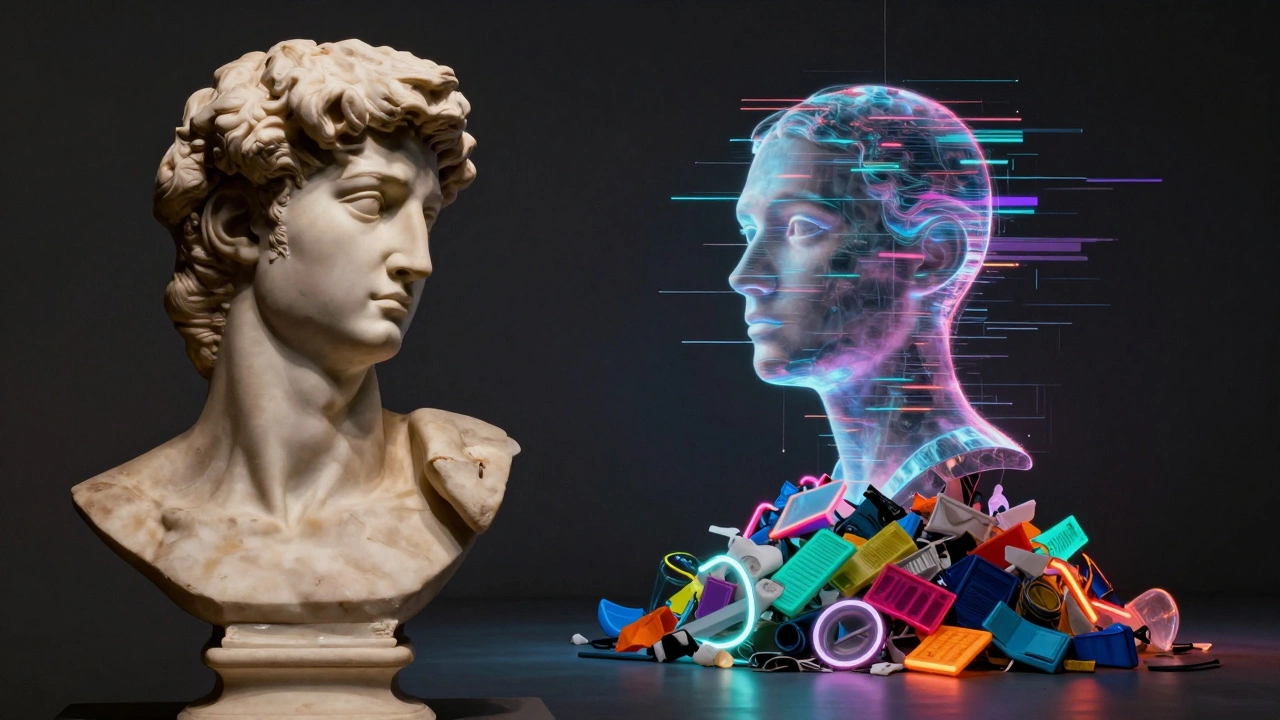
Before we get into how your work fits in, we need to clear up a big naming mistake. People often use "modern" and "contemporary" interchangeably, but in the art world, they are completely different. Modern Art is the art produced from the 1860s to the 1970s, focusing on the birth of individualism and the breakdown of traditional styles . Think of Monet or Picasso. They were rebels in their time, but their goals were often about exploring the medium of paint or the structure of a face.
On the other hand, Contemporary Art is the art of today, produced in our own era . It doesn't follow a single style. It can be a VR experience, a massive sculpture made of recycled plastic, or a painting that looks like a photograph. The defining characteristic is that it is "of the moment." It reflects the complexities of 2026, from AI-driven existence to climate anxiety.
The Power of the Concept
If you want your work to be viewed as contemporary, you have to move past just making something "pretty." In the past, artists were judged on their ability to mimic reality. Today, the art world prizes the concept. This is the heart of Conceptual Art, where the idea or concept behind the work is more important than the finished physical object .
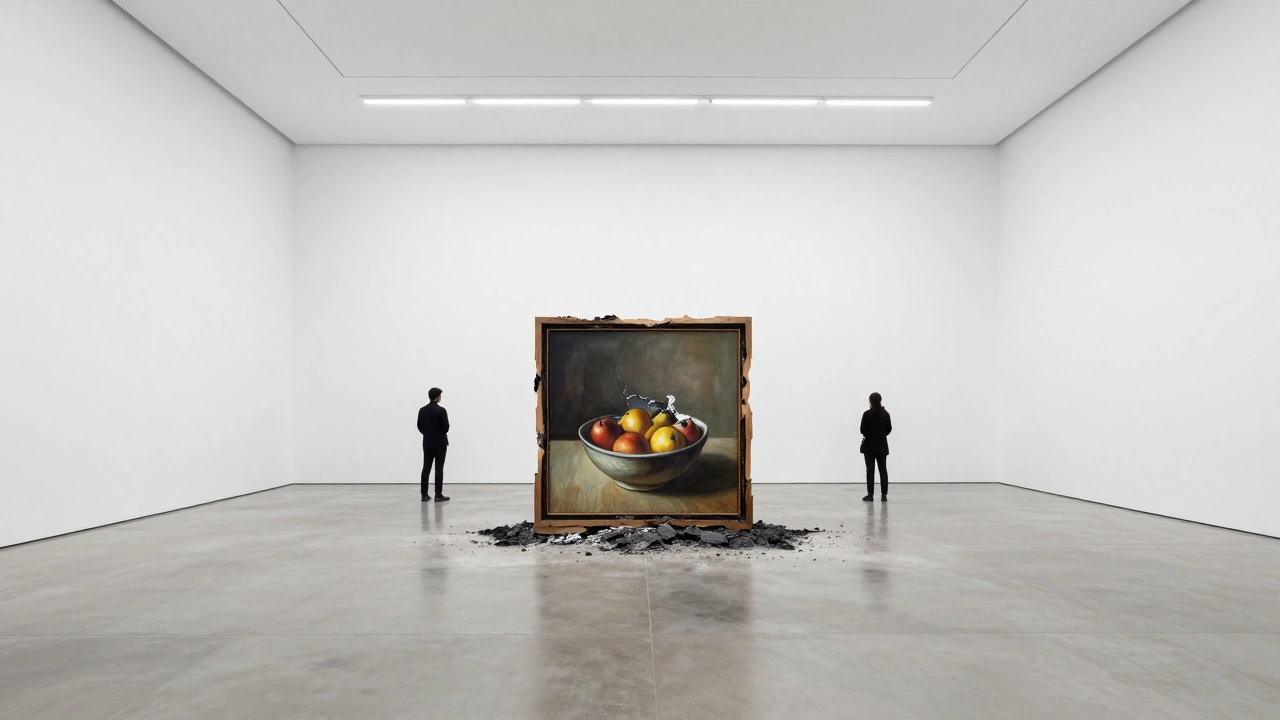
Think about it this way: if you paint a realistic bowl of fruit, you've shown you have great skill. But if you paint a bowl of fruit and then set the painting on fire to comment on the fleeting nature of consumption, you've created a concept. You're no longer just documenting a thing; you're making a statement about life. Contemporary curators look for this "why." Why does this work need to exist right now? What is it saying that hasn't been said a thousand times before?
Context and the "White Cube"
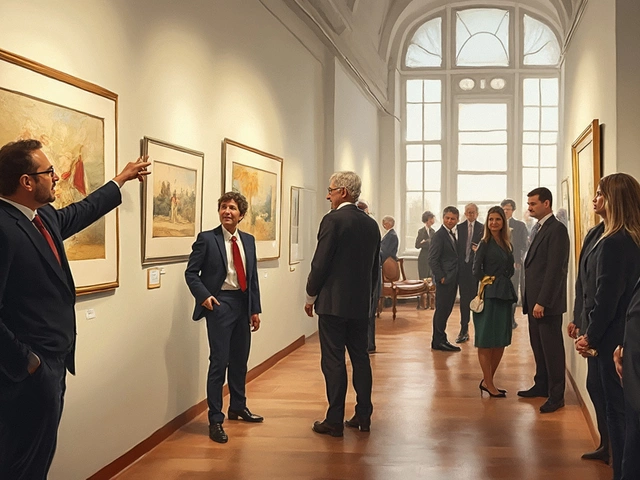
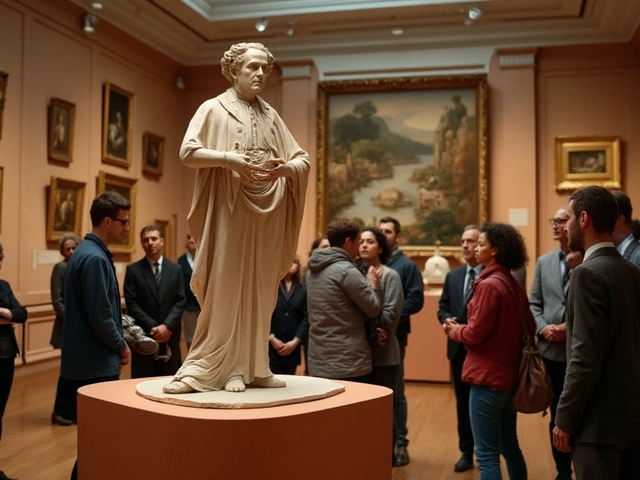
You can create the most provocative piece of art in your garage, but it doesn't become "contemporary art" in the systemic sense until it enters a specific ecosystem. This is where Art Curation comes in. Curation is the process of selecting, organizing, and presenting artworks in a way that creates a cohesive narrative.
There is a phenomenon called the "White Cube." This refers to the sterile, white-walled galleries that strip away the outside world to make the art the sole focus. When a piece of art is placed in a white cube, it is being "validated." The environment tells the viewer, "This object is important; please analyze it." To get your work into these spaces, you need to understand the relationship between the artist, the gallery, and the critic.
| Feature | Traditional/Modern Art | Contemporary Art |
|---|---|---|
| Primary Goal | Aesthetic beauty or formal innovation | Cultural critique or conceptual inquiry |
| Medium | Paint, Clay, Bronze, Stone | Mixed media, Digital, Found objects, Performance |
| Value Driver | Technical mastery and rarity | Intellectual depth and institutional backing |
| Viewer's Role | Passive observation/admiration | Active interpretation/engagement |
Navigating the Art Market
Let's be honest: money and power play a role. The Art Market is the global network of galleries, auction houses, and collectors that determine the economic value of artwork . For your work to be recognized as contemporary, it often needs to be "vetted" by these entities. This doesn't mean you have to sell out, but it does mean you need to be aware of how value is constructed.
Collectors today aren't just buying a painting; they are buying a piece of a cultural movement. This is why having a strong "Artist Statement" is crucial. Your statement shouldn't be a list of materials used. Instead, it should be a manifesto. If you use Installation Art-art that is designed to transform a specific space-you need to explain how the interaction between the viewer and the space creates meaning. If the market perceives you as a leader of a new trend or a sharp critic of a current event, your value increases.

Practical Steps to Make Your Work "Contemporary"
You don't need a degree from Yale to create contemporary work. You just need to change how you approach the creative process. Here is a a few ways to push your work into the contemporary realm:
- Research First: Stop starting with the sketch. Start with a question. "How does social media affect my sense of loneliness?" Now, create the work that answers that question.
- Experiment with Mediums: Why use oil on canvas when you can use digital projections on a salt pile? Contemporary art thrives on "materiality." The material should be part of the message.
- Embrace the Uncomfortable: Art that is too "safe" rarely feels contemporary. Challenge the viewer. Make them feel awkward, confused, or curious.
- Document Everything: In the age of the internet, your digital presence is your secondary gallery. High-quality photos of your process are often as valuable as the final piece.
The Trap of the "Trend"
One big mistake artists make is trying to copy what is currently popular in galleries. If you see that "glitch art" is trending and you start making glitch art just to get noticed, you aren't making contemporary art-you're making a commodity. True contemporary art is forward-looking. It doesn't follow the trend; it predicts the next one or critiques the current one.
The most successful artists, like those associated with Postmodernism, understand that they are playing a game with the viewer. They use irony, parody, and appropriation to question the very nature of art. When you stop trying to be "correct" and start trying to be "honest" about your specific, weird perspective on the world, that's when your work truly becomes contemporary.
Do I need a gallery to be a contemporary artist?
No, you don't. With the rise of social media and independent artist-run spaces, many creators build their own "contemporary" status. However, institutional recognition (museums, biennials) still carries the most weight in terms of historical legacy and high-end pricing.
Can digital art be considered contemporary art?
Absolutely. Digital art, including AI-generated pieces, VR installations, and crypto-art, is at the forefront of the contemporary movement because it reflects our current technological reality. The key is to ensure the technology serves a concept rather than just being a gimmick.
What is the difference between an artist's statement and a description?
A description tells the viewer what they are looking at ("This is a 5x5 foot canvas with blue acrylic paint"). An artist's statement tells them why it matters ("This work explores the crushing weight of urban isolation using the coldness of industrial blue"). Contemporary art relies heavily on the latter.
Is technical skill irrelevant in contemporary art?
It's not irrelevant, but it's no longer the primary goal. While mastery of a craft is admired, a conceptually brilliant piece with low technical skill will often be valued higher than a technically perfect piece that says nothing.
How do I know if my work is actually "contemporary"?
Ask yourself: if this piece was made in 1920, would it still make sense? If the answer is yes, it might just be "art." If the answer is no-because it relies on a specific modern context, technology, or social issue-then it is likely contemporary.