Contemporary Art Checker
Check if this artwork is contemporary art
Based on the article's criteria, does this work qualify as contemporary art?
Look for these contemporary art characteristics:
Results will appear here...
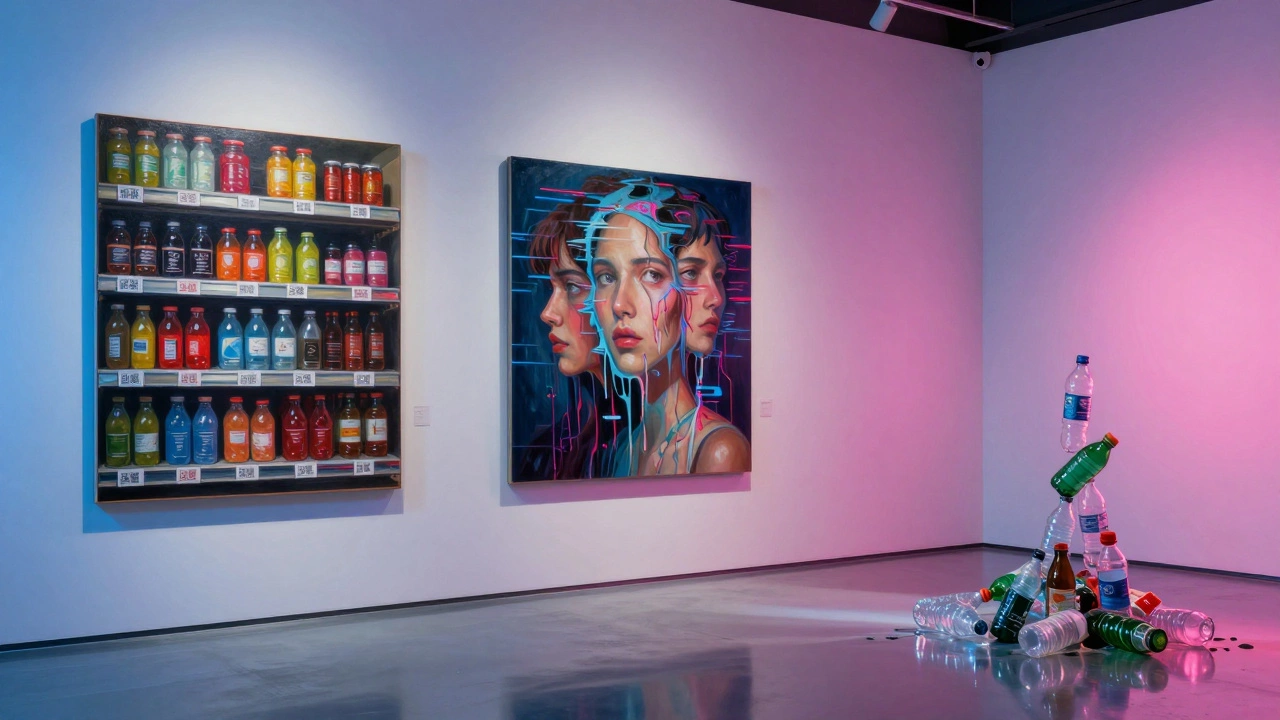
There’s no single name for today’s art style-and that’s the point. If you’ve walked through a gallery in Berlin, Toronto, or Tokyo lately, you’ve probably seen works that look nothing like each other. One wall might hold a hyperrealistic painting of a grocery store shelf. The next could be a glitchy digital collage made from AI-generated faces. Over there, a sculpture made of recycled plastic bottles drips slowly onto the floor. None of these fit neatly into ‘modern art’ as people remember it from the 1950s. So what’s the right term? The answer isn’t a label. It’s a mix of chaos, tools, and cultural shifts.
Modern Art Is Not the Same as Contemporary Art
People often say ‘modern art’ when they mean anything made after 1900. But that’s wrong. Modern art ended around the 1970s. It was defined by movements: Cubism, Surrealism, Abstract Expressionism. These were clear, named styles with manifestos, leaders, and shared goals. Think Picasso, Pollock, Dali. They were reacting to industrialization, war, and psychology. Today’s artists aren’t reacting to the same things.
Contemporary art is what we’re living in now. It doesn’t have one style. It doesn’t need one. It’s defined by time-not aesthetics. Anything made after 1970, roughly, counts. But that doesn’t mean it’s random. There are patterns. Tools. Shared concerns. And they’re changing fast.
What’s Actually Dominating Galleries and Museums in 2026?
Look at the big institutions: Tate Modern, MoMA, the Centre Pompidou. What’s on the walls? Three things keep showing up:
- Hybrid media - Paintings that include QR codes. Sculptures with embedded speakers. Installations that use real-time weather data to change color.
- Process over product - Art that’s meant to decay, evolve, or be rebuilt. Think of a canvas painted with algae that grows under UV light, or a video loop that changes based on how many people stand in front of it.
- Political urgency - Climate collapse, AI surveillance, digital identity, migration. These aren’t just themes-they’re the reason the work exists. A 2025 piece at the Venice Biennale used 12,000 discarded SIM cards to map global migration routes. No brushstroke needed.
There’s no unified look. But there’s a shared mindset: art as a live system, not a static object.
The Rise of the Algorithmic Aesthetic
AI tools are no longer just for making images. They’re reshaping how artists think. In 2024, a group of artists in Vancouver started using AI not to generate art, but to deconstruct it. They fed 200 years of Western art history into a model, then asked it: ‘What would a painting look like if it had never been made by humans?’ The result? A series of portraits with mismatched eyes, distorted skin tones, and impossible lighting-none of which matched any human technique. They called it Post-Canon.
That’s not a style. It’s a method. And it’s spreading. Artists now use AI as a collaborator, a critic, or a mirror. Some even let algorithms choose their color palettes. The human hand is still there-but it’s no longer the boss.
Material Rebellion
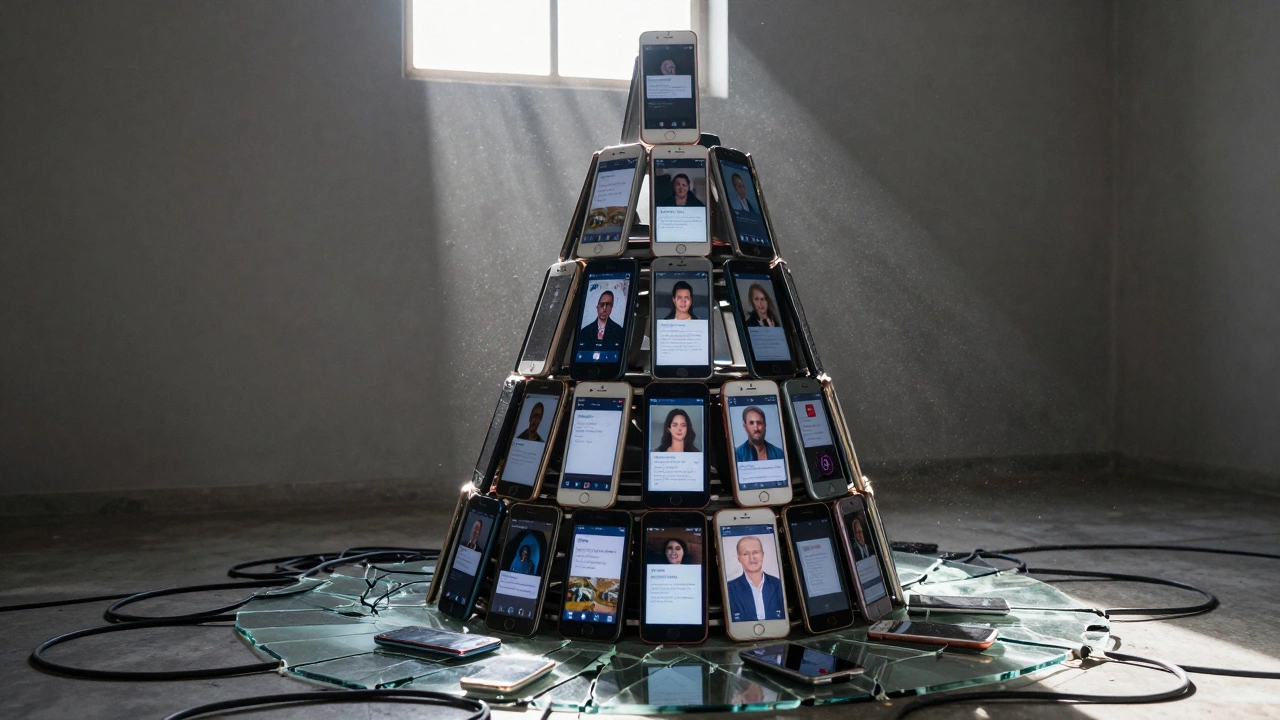
Forget canvas and bronze. Today’s artists are using what’s around them. Plastic waste. Old smartphones. Used medical masks. Data from surveillance cameras. In 2023, a Berlin collective built a 10-foot tower out of discarded TikTok phones. Each screen played a loop of a person deleting their account. The piece was called Self-Portrait in 1,000 Pixels.
This isn’t just about recycling. It’s about commentary. The materials carry meaning. A sculpture made from coal dust from a closed mine says more than a bronze statue ever could. The object’s origin is part of its message.
Why There’s No Single Name (And Why That’s Good)
Art movements used to be like fashion trends: one dominant look, then the next. Think of the 1980s: graffiti, pop, neo-expressionism. Everyone was shouting the same name. Today? No one’s shouting. That’s because the world is too fractured, too fast, too unequal for one style to hold.
There’s no ‘ism’ anymore. No manifesto. No school. Instead, there are networks. Artists in Lagos, Seoul, and São Paulo are talking to each other online. They share tools, not styles. They remix ideas across borders. A piece from a rural Indonesian artist might use the same digital tool as one from a studio in Brooklyn. But the meaning? Totally different.
Trying to name today’s art is like trying to name the weather. You can say ‘rain’ or ‘wind,’ but you can’t capture the whole storm.
What You’re Seeing Isn’t Random-It’s Responsive
If you’re confused by what you see in galleries today, you’re not alone. But confusion isn’t a flaw. It’s the point.
Artists aren’t trying to make things beautiful. They’re trying to make things visible. They’re showing how algorithms shape our choices. How data is mined from our faces. How climate change is rewriting our landscapes-even our memories.
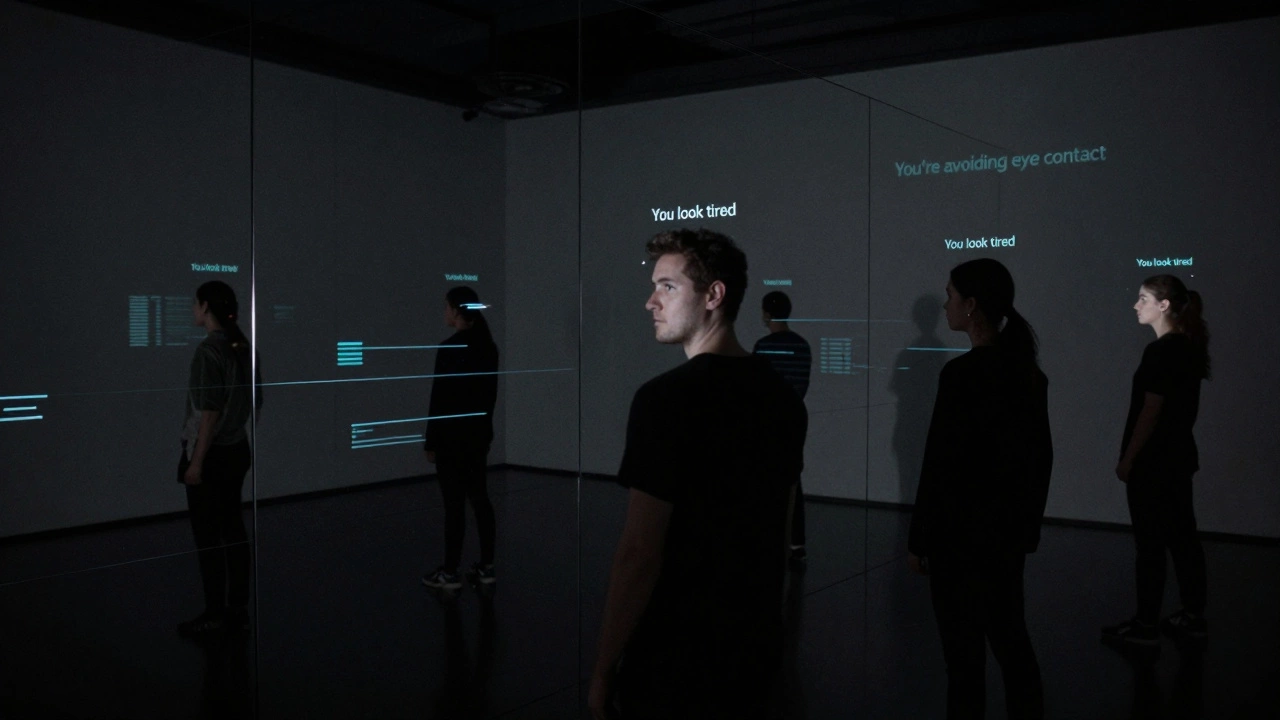
Look at a piece by Lina Wu, a Toronto-based artist. In 2025, she installed a mirrored wall in a public library. Every time someone walked by, a facial recognition system analyzed their expression. Then it projected a line of text based on what it thought they felt: ‘You look tired.’ ‘You’re smiling, but your eyes aren’t.’ ‘You’re avoiding eye contact.’
It wasn’t art about technology. It was art about us.
How to Recognize Contemporary Art (Even When It Doesn’t Look Like Art)
Here’s how to tell if something is contemporary art-not by its style, but by its questions:
- Does it use materials that aren’t traditionally ‘artistic’? (e.g., plastic, code, data, trash)
- Does it change over time-or respond to people? (e.g., movement, sound, light, interaction)
- Does it make you uncomfortable? (Not because it’s ugly-but because it forces you to think about power, control, or inequality?)
- Is it made with tools that didn’t exist 30 years ago? (e.g., AI, AR, blockchain, biotech)
- Does it refuse to be owned? (e.g., it’s only visible online, or it disappears after one viewing?)
If the answer is yes to two or more, it’s likely contemporary art. Even if it looks like a pile of cables and old keyboards.
What Comes Next?
Artists in 2026 aren’t waiting for the next movement. They’re building systems. One collective in Montreal is training AI to generate art based on local air quality data. Another in Cape Town is using ancestral DNA samples to create soundscapes that ‘remember’ lost languages. A third in Mexico City is turning abandoned subway tunnels into immersive experiences using holograms of forgotten protests.
The future of art isn’t a new brushstroke. It’s a new way of seeing. Art isn’t about what you look at anymore. It’s about what you’re forced to confront.
Is contemporary art just AI-generated images?
No. AI is one tool among many. Many contemporary artists use AI to challenge it-not to replace their own vision. Some create work that exposes how biased AI can be. Others use it to remix cultural histories. But plenty still work with paint, clay, or performance. The key isn’t the tool-it’s the question behind it.
Why don’t galleries explain what the art means?
Because the meaning isn’t fixed. Contemporary art often asks you to find your own connection. A wall of shredded plastic might mean climate change to one person, consumerism to another, or waste culture to a third. The artist doesn’t want to tell you what to think-they want you to think.
Can I still enjoy contemporary art if I don’t understand it?
Absolutely. You don’t need to ‘get it’ to feel it. If a piece makes you pause, feel uneasy, or wonder why it’s there-that’s already working. Art doesn’t have to be decoded to be powerful. Sometimes, confusion is the first step toward understanding.
Is contemporary art only for wealthy collectors?
Not anymore. Many artists now release work as open-source files, public installations, or free online experiences. A piece by a Berlin collective is viewable on a public bus stop screen. Another, made from recycled e-waste, is displayed in a community center in Nairobi. The art world is still unequal-but the work itself is becoming more accessible.
How do I know if something is real contemporary art and not just random junk?
Look for intent. Real contemporary art doesn’t just shock-it asks. It connects. It responds. A pile of trash in a gallery might be meaningless. But if that trash came from a factory that polluted a river, and the artist worked with locals to collect it, and the piece changes as the river’s health improves-that’s art. Context matters more than appearance.