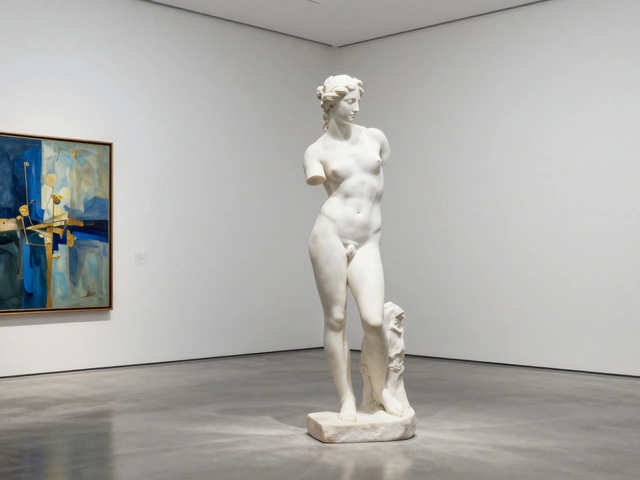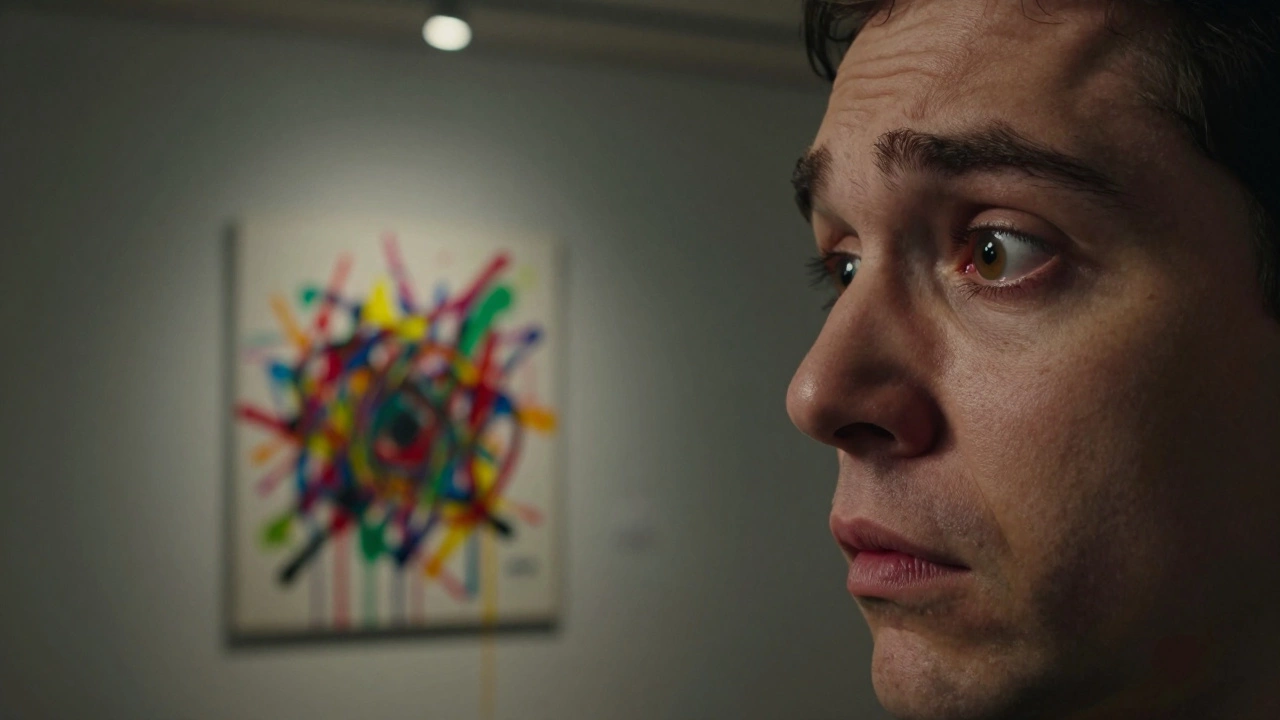
Ever stared at a canvas covered in splattered paint and wondered, 'How is this worth millions?' You're not alone. modern art has been a lightning rod for debate for over a century. From Duchamp's urinal to Warhol's soup cans, these pieces often leave people scratching their heads. But why does modern art trigger such strong reactions? Let's break it down.
When 'Simple' Looks Like a Trick
Ever looked at a Jackson Pollock painting and thought, 'My kid could do that'? You're not alone. Pollock's drip paintings seem chaotic at first glance. But here's the thing: he wasn't just splashing paint. He was experimenting with movement, emotion, and the physical act of painting itself. His technique required years of practice, even if the result looks effortless. The real question isn't whether it's easy-it's whether the intention behind it matters. When you see a child's finger painting, you might laugh. But Pollock's work was about breaking rules to express something deeper. His piece No. 5, 1948 sold for $140 million in 2006. Why? Because it changed how we think about art itself.
Think about it: if you handed a toddler a paintbrush, they'd make something messy. But Pollock's process was calculated. He'd lay canvas on the floor, drip paint from above, and move his whole body. That physicality was the point. It wasn't about creating a picture-it was about capturing energy. When you understand that, the 'simple' look makes sense. It's not about skill in the traditional sense. It's about redefining what skill even means.
The Concept Over Craft Debate
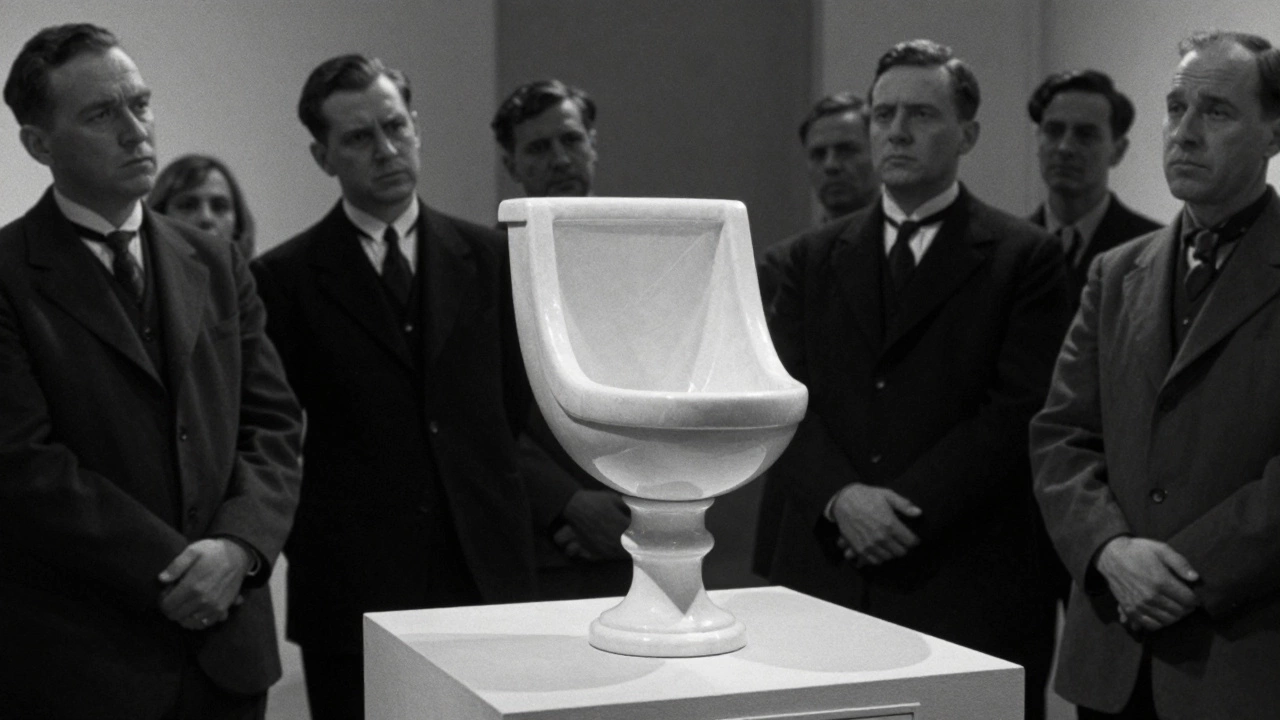
Marcel Duchamp's Fountain is a porcelain urinal signed 'R. Mutt' that he submitted to an art exhibition in 1917. The committee rejected it, calling it 'not art.' But Duchamp's point was exactly that: art isn't just about skill-it's about context and intention. Today, this piece is considered a landmark in art history. It challenged the idea that art must be beautiful or technically perfect. Instead, it made us ask: What even is art? This shift is why many people struggle with modern art. They're used to paintings that look like real life, but modern art often asks them to think differently.
Think of it like this: a chair is just a chair until you place it in a gallery and call it art. Duchamp didn't build Fountain-he 'selected' it. That act of choosing was the artwork. It wasn't about the object itself but the idea behind it. For many, this feels like a trick. But for others, it's revolutionary. Modern art isn't always about what you see. Sometimes it's about what you think.
Elitism and Exclusivity
The art market often feels like a closed club. Auction houses like Christie's and Sotheby's sell modern art for millions. A Warhol Campbell's Soup Can sold for $15.8 million in 2019. But these prices aren't just about the canvas-they're about cultural influence, rarity, and the story behind the piece. Critics argue the art market is elitist, controlled by a few wealthy collectors and galleries. Supporters say it reflects the artwork's role in shaping culture. Either way, when art becomes a luxury item, it can alienate everyday people. If you can't afford a Warhol, does that mean you can't understand it? Not at all. But the perception of exclusivity makes modern art feel out of reach for many.
Think about how you experience art. Most people see it online or in museums, not in private collections. Yet the high prices create a narrative that modern art is only for the rich. That's not true. Museums worldwide display these works for free. The problem is the story around them. When galleries and auction houses treat art like a status symbol, it pushes away regular people. But the art itself isn't exclusive-it's the conversation around it that feels that way.

Familiarity Breeds Acceptance
Van Gogh's 'Starry Night' is now iconic, but he sold only one painting during his lifetime. His work was considered too bold, too emotional for his era. Similarly, Picasso's early Cubist works were met with confusion. Over time, as society changed, so did our understanding. What seemed nonsensical then became revolutionary. Today, museums worldwide have entire wings dedicated to modern art. But this acceptance didn't happen overnight. It took decades of discussion, education, and exposure. The lesson? Many works we love today were once controversial. Time and context can change everything.
Consider how we view technology. Early smartphones were mocked for being 'just a phone.' Now they're everywhere. Same with modern art. What seems weird today might be normal tomorrow. The key is patience. Give yourself time to absorb the context. Read about the artist's life, the era they lived in, or the movement they started. Suddenly, that 'meaningless' piece starts to make sense.
Personal Taste vs. Cultural Influence
Why do some people hate modern art while others love it? It often comes down to personal taste and cultural exposure. A 2024 survey by the National Endowment for the Arts found that 62% of Americans find modern art difficult to understand, but 78% said they'd appreciate it more with context. That gap shows how much education matters. People who grew up around art-maybe through school trips or family visits-tend to be more open to it. But those without that exposure often dismiss it as 'not real art.'
Think about music. If you only listen to pop, you might not get jazz. Same with art. Your background shapes what you see as 'good.' But modern art isn't about right or wrong. It's about expanding your perspective. When you learn why a piece was made, you might not love it-but you'll understand why it matters. That's the real goal: not to force you to like it, but to help you see the world differently.
Why do some people think modern art isn't 'real' art?
Modern art often challenges traditional definitions of art. Many people associate art with technical skill-like realistic paintings or sculptures. But modern art prioritizes concepts, emotions, or new ways of seeing. For example, Marcel Duchamp's 'Fountain' (a urinal) was rejected by an exhibition committee in 1917 because it didn't fit their idea of art. Today, it's considered groundbreaking. The confusion comes from expecting art to look like something familiar. But modern art asks us to think differently about what art can be.
Is there a difference between modern and contemporary art?
Yes. Modern art refers to work created roughly between the 1860s and 1970s, including movements like Cubism and Abstract Expressionism. Contemporary art is work made after 1970, reflecting current issues and techniques. Many people mix them up, but they're distinct eras. For example, Picasso is modern art; Banksy is contemporary. The confusion happens because 'modern' sounds like 'current,' but in art history, it's a specific period.
What's the most controversial modern art piece?
Marcel Duchamp's 'Fountain' (1917) is often called the most controversial. A porcelain urinal signed 'R. Mutt,' it was rejected by an exhibition committee for being 'not art.' But Duchamp's point was to challenge what society considers art. Today, it's celebrated as a turning point in conceptual art. Other controversial pieces include Warhol's Campbell's Soup Cans, which seemed too commercial, and Yves Klein's 'Blue Monochrome,' which some dismissed as a single color.
Why do some modern artworks sell for millions?
Price tags reflect more than the artwork itself. Factors include rarity, cultural impact, the artist's legacy, and market demand. A Warhol Campbell's Soup Can sold for $15.8 million in 2019 because it symbolized consumer culture and revolutionized pop art. Jackson Pollock's drip paintings command high prices because they represent a radical shift in painting techniques. But it's not just about the canvas-it's about the story behind the work. These pieces changed art history, making them valuable to collectors and institutions.
How can I learn to appreciate modern art?
Start with context. Visit a museum with guided tours or read about the artist's background. For example, learning that Pollock's drip paintings were about movement and emotion-rather than depicting a scene-changes how you see them. Watch documentaries or listen to artist interviews. The Tate Modern in London offers free workshops explaining modern art concepts. Remember, appreciation doesn't mean you have to love everything. It's about understanding the ideas behind the work. Even if you still don't like it, knowing why it matters can be rewarding.