The Evolution of the Musical
Context: Explore how The Black Crook changed theater from isolated variety acts to integrated storytelling.
1864-1865
Precursors like The Black Domino and The Streets of New York exist but lack narrative cohesion.
Burlesque/RevueSeptember 12, 1866
The Black Crook premieres. A rejected drama meets a stranded ballet troupe due to a fire.
The Turning Point1866 - 1867
Runs for 672 performances, breaking records and proving long runs are viable business models.
Record BreakerLate 1870s
Gilbert & Sullivan's operettas arrive, refining lyrics but arriving after the format was invented.
Savoy Opera1943
Oklahoma! perfects the integration of music and plot first attempted by The Black Crook.
Golden AgeTest Your Knowledge
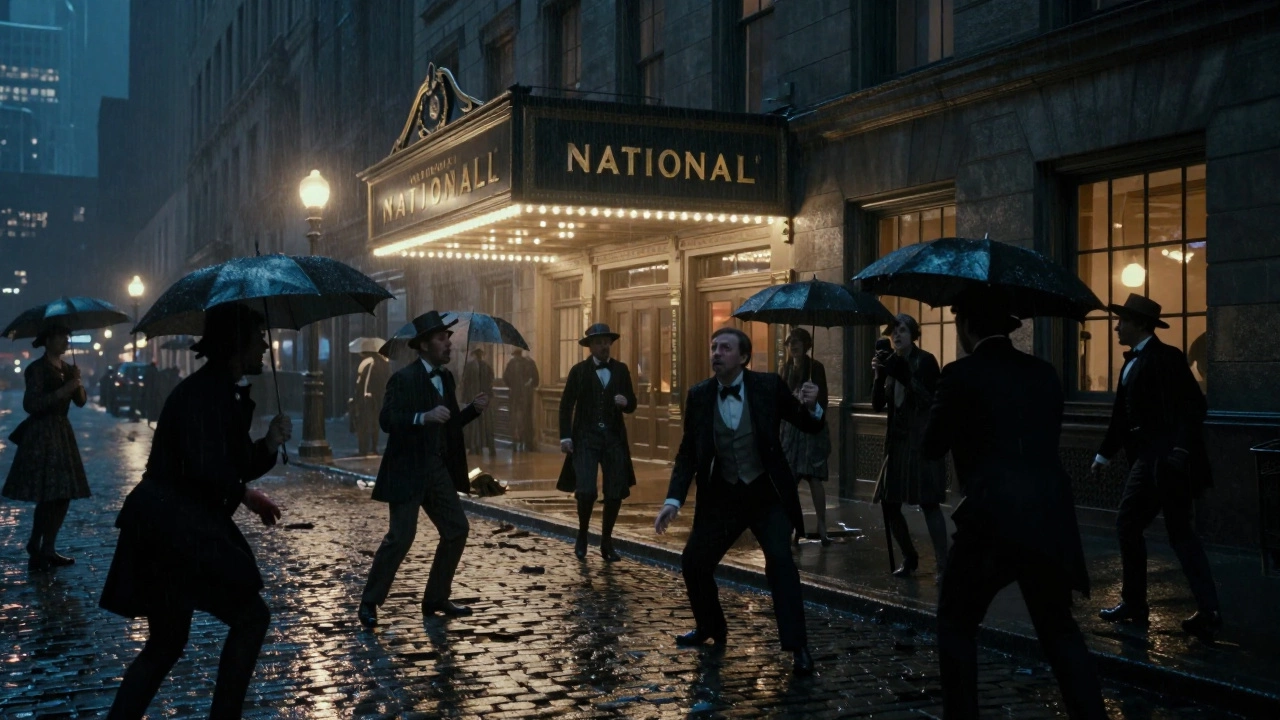
Score: 0/5Imagine a stage where dancers leap through hoops of fire while actors recite poetry about a sorcerer’s curse. It sounds like a modern spectacle, but this chaotic mix of dance, comedy, and drama actually marks the birth of a genre we now take for granted. You might expect the answer to "what is the first major Broadway musical" to be something as iconic as West Side Story or even The Great Gatsby. But the truth goes back much further, to a rainy night in New York City in 1866.
The title belongs to The Black Crook, which premiered on September 12, 1866. Before this show, theater was strictly divided into serious plays and variety acts. There was no such thing as a story that seamlessly wove song and dance into the plot. The Black Crook created the template for the modern musical by combining narrative drama with elaborate ballet sequences. It ran for an astonishing 672 performances, a record at the time, proving that audiences craved this new hybrid form.
The Accidental Birth of a Genre
History rarely plans itself, but the creation of The Black Crook is one of the most unlikely stories in entertainment. To understand why it matters, you have to look at two separate disasters happening simultaneously in New York. On one side, you had Charles M. Barrington, a playwright whose drama The Black Crook (based on Heinrich Heine’s Der Engel der Rache) had just been rejected by every major theater house. It was considered too dark and too weird for the conservative tastes of the day.
On the other side, you had James H. Mapes, the manager of the National Theatre on Broadway. His entire production company, a troupe of 16 female dancers known as the Victoria Ballet Troupe, had just arrived from London. They were scheduled to perform a series of burlesque shows, but a fire destroyed their costumes and props before they could debut. Mapes was desperate. He needed a venue and a script quickly to avoid losing his investment.
Rumor has it that Mapes approached Barrington with a proposition: combine your rejected play with my stranded dancers. The result was a Frankenstein-like creation. The original play was about a magician who summons demons from hell. The producers decided to add lavish ballet scenes, comedic interludes, and spectacular special effects to keep the audience entertained during the slower dramatic parts. This accidental marriage of high art and lowbrow variety created a chemical reaction that changed theater forever.
Why It Was Considered "Major"
When we ask what makes a musical "major," we aren't just talking about box office numbers. We are looking for structural innovation. The Black Crook wasn't just popular; it established the rules of the game. Prior to 1866, if a character sang in a play, it was usually because they were a musician in the story, or it was a standalone variety act inserted between scenes. These songs didn't advance the plot.
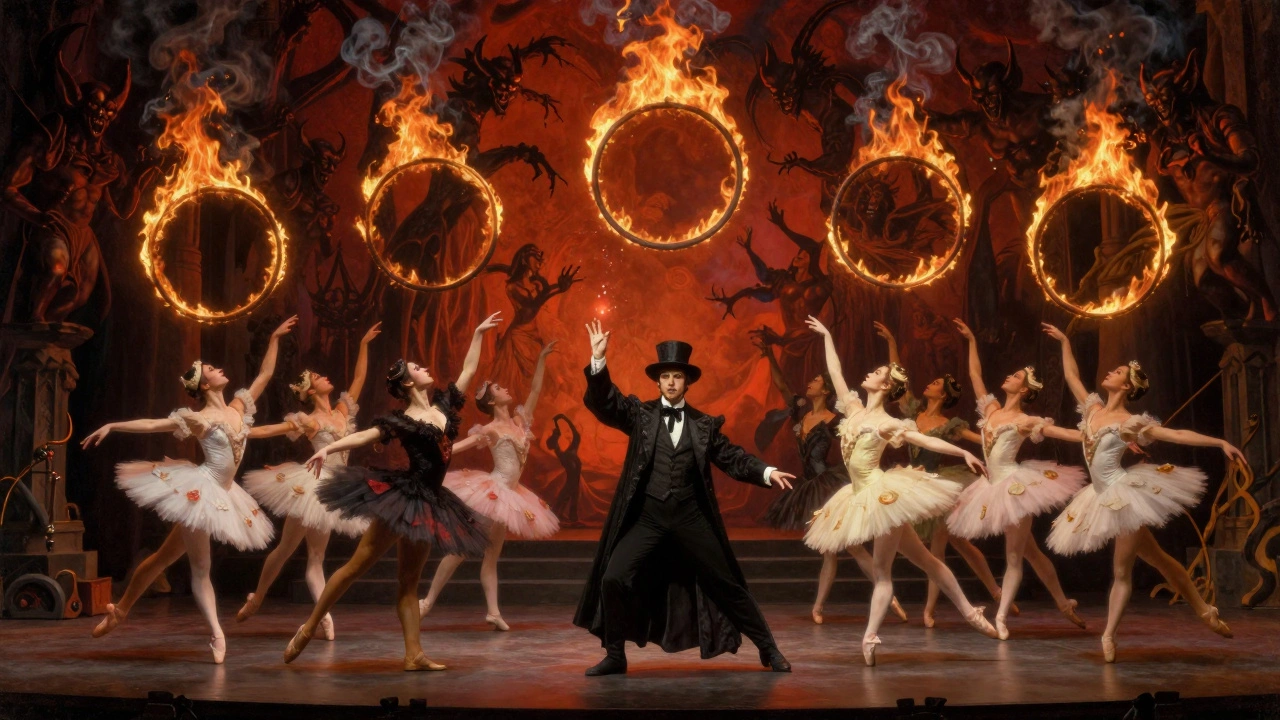
In The Black Crook, the music and dance became integral to the storytelling. The famous "Hell Scene" featured 16 women dancing amidst simulated flames and smoke, representing the demonic realm. This wasn't just decoration; it visualized the conflict between good and evil central to the plot. Critics were scandalized by the scantily clad dancers, calling it "a moral disaster," but audiences couldn't get enough. The show introduced the concept of the "spectacular"-large-scale visual effects that became a staple of Broadway for decades.
- Narrative Integration: Songs and dances advanced the story rather than interrupting it.
- Commercial Success: It broke attendance records, drawing both elite society members and working-class crowds.
- Cultural Impact: It shifted public taste toward lighter, more visually stimulating entertainment.
The Contenders: What Came Before?
If The Black Crook is the first *major* musical, does that mean nothing existed before it? Not exactly. Theater historians often debate the distinction between "musical plays" and true "musicals." Several productions tried to blend music and drama earlier, but they lacked the cohesive structure that defined the genre.
| Production | Year | Type | Why It Didn't Count |
|---|---|---|---|
| Black Crook | 1866 | Musical Spectacle | It did. Integrated plot, dance, and song. |
| The Streets of New York | 1865 | Burlesque Revue | No continuous narrative; just sketches. |
| H.M.S. Pinafore | 1878 | Savoy Opera | Came later; focused on wit over spectacle. |
| The Black Domino | 1864 | Comic Opera | Lacked the scale and integration of dance. |
For instance, Gilbert and Sullivan’s operettas, which debuted in America in the late 1870s, were highly influential. However, they arrived more than a decade after The Black Crook. They refined the art form with sharper lyrics and tighter scores, but they didn’t invent the format. Similarly, vaudeville acts of the 1860s featured singing and dancing, but these were variety shows without a unifying storyline. You watched them for individual gags, not for a character’s journey.
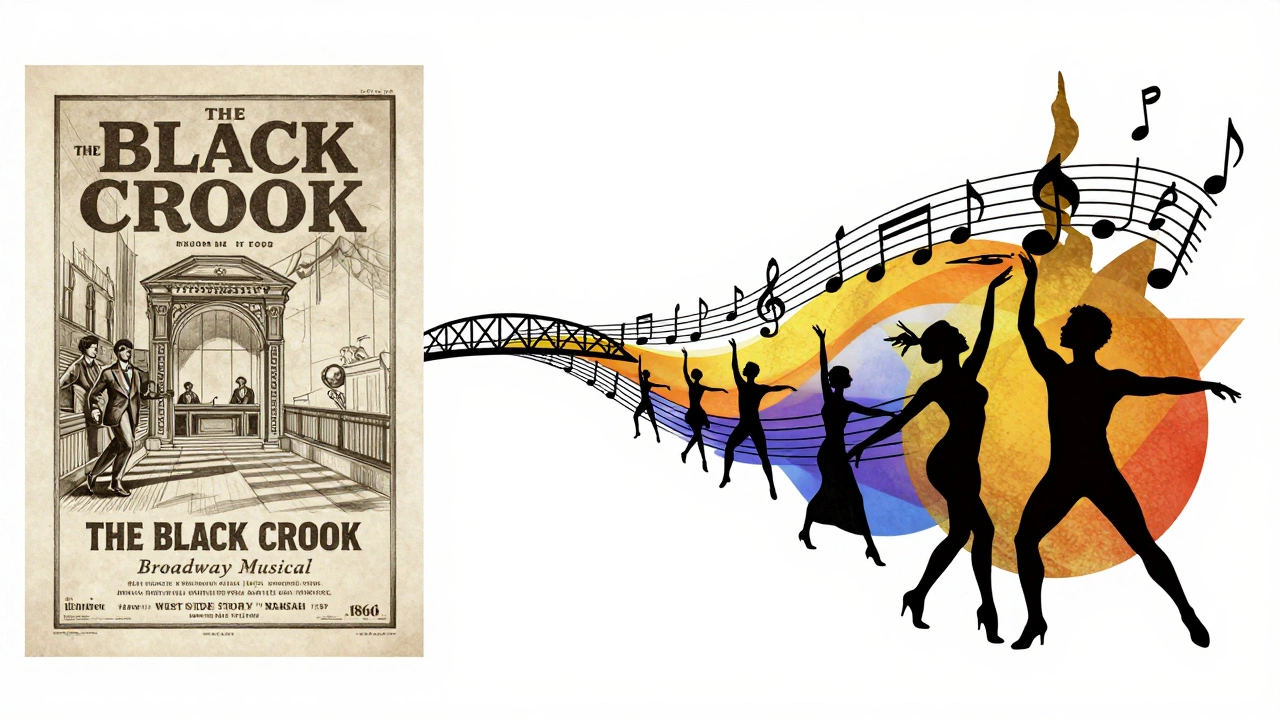
The Legacy of the Black Crook
The success of The Black Crook triggered a gold rush of similar productions. Producers realized that adding ballet girls and special effects could turn a mediocre script into a hit. This era, known as the "Golden Age of Burlesque," dominated Broadway until the early 20th century. Shows like Clorinda (1867) and Auriol (1868) copied its formula almost exactly.
However, the legacy isn't just about copycats. It paved the way for the integrated musicals of the 20th century. When Rodgers and Hammerstein released Oklahoma! in 1943, they weren't starting from scratch. They were evolving the principle first demonstrated in 1866: that music should reveal character and advance plot. Without the experimental risk-taking of The Black Crook, we might never have seen the seamless storytelling of Les Misérables or Hamilton.
Even the business model of Broadway changed. Before 1866, theaters operated on short runs, expecting a show to move on after a few weeks. The Black Crook stayed open for over a year. This proved that long-running hits were possible, leading to the development of larger, more permanent theater venues designed to accommodate big spectacles. The very architecture of Times Square today owes a debt to that single, accidental production.
Common Misconceptions About Broadway History
People often confuse "first musical" with "first successful musical." Many forget that The Black Crook was originally intended as a serious drama. The addition of the Victoria Ballet Troupe was a last-minute rescue attempt, not a creative vision from day one. This highlights how much of theater history is driven by circumstance rather than pure artistic intent.
Another common mistake is attributing the invention of the musical to European traditions alone. While opera and operetta influenced it, The Black Crook was distinctly American in its mix of high and low culture. It blended the sophistication of European ballet with the rough-and-tumble humor of American minstrelsy and burlesque. This cultural melting pot is what gave the American musical its unique voice.
Was The Black Crook really the first musical ever?
It is widely considered the first *modern* musical because it integrated song, dance, and dialogue into a single narrative structure. Earlier forms like operettas or burlesques existed, but they did not combine these elements in the same cohesive way.
Who wrote the music for The Black Crook?
The music was composed by Julius Eichberg, with orchestrations by Alfred Clark. Eichberg adapted existing pieces and wrote new themes to match the dramatic needs of the plot.
How long did The Black Crook run on Broadway?
It ran for 672 performances, which was a record-breaking number at the time. This longevity helped establish the concept of long-running Broadway hits.
What was the plot of The Black Crook?
The story follows a magician named Blackheart who tries to summon demons from hell to gain power. The plot alternates between serious dramatic scenes in 16th-century Germany and fantastical ballet sequences set in the underworld.
Why is The Black Crook important to theater history?
It created the blueprint for the musical theater genre by showing that music and dance could be essential parts of storytelling, not just interruptions. It also proved the commercial viability of large-scale theatrical spectacles.
Did The Black Crook face any criticism?
Yes, critics were shocked by the revealing costumes of the dancers and the mixing of high art with lowbrow comedy. Some called it morally corrupt, but audiences loved the entertainment value.
Is there a connection between The Black Crook and West Side Story?
Indirectly, yes. The Black Crook started the tradition of integrating dance into narrative. West Side Story perfected this technique decades later, using dance to express character emotions and drive the plot forward.
Where can I see a performance of The Black Crook today?
Full revivals are rare due to the complexity of the production. However, regional theaters occasionally stage abridged versions or excerpts, particularly around anniversaries of its premiere.