Art Workshop Stress Reduction Calculator
Based on a 2023 University of British Columbia study showing a 42% drop in stress levels after 3 months of weekly art workshops.
Estimate your stress reduction based on workshop attendance
Ever sat in front of a blank canvas and felt stuck? Not because you couldn’t draw, but because your mind was too loud? Art workshops don’t teach you how to paint like Picasso. They teach you how to breathe again.
They Quiet the Noise
Most of us live in a world that rewards speed. Emails answered in seconds. Tasks checked off lists. Meetings that run over. Art workshops do the opposite. They force you to slow down-so slowly, you notice the way light hits a clay surface, or how blue mixes with white to make something you’ve never seen before.A 2023 study from the University of British Columbia tracked adults who attended weekly art workshops for three months. Participants reported a 42% drop in self-reported stress levels. Not because they became better artists, but because they stopped thinking about deadlines, bills, or what someone else thought of them. The workshop became a space where doing mattered more than achieving.
You Don’t Need to Be Good
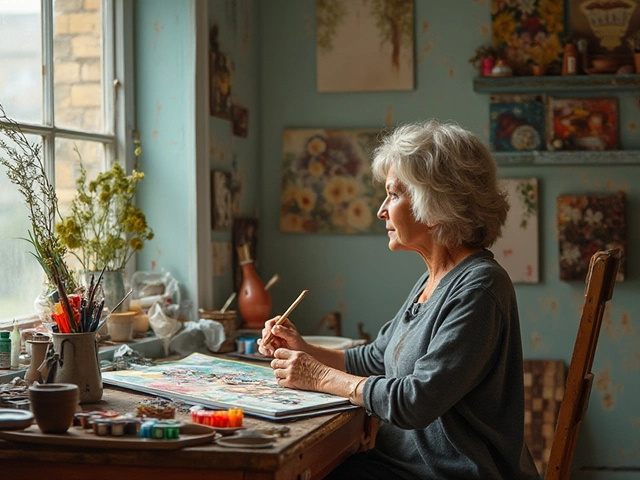
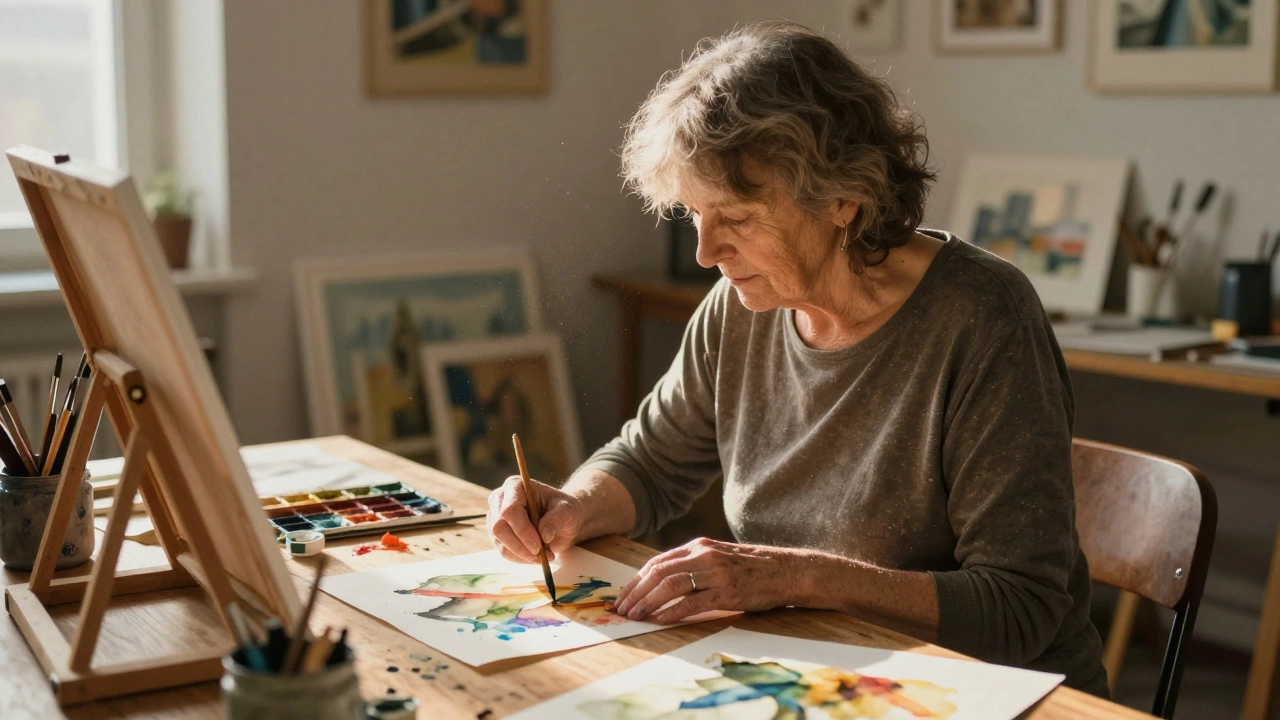
One of the biggest myths about art is that you need talent. That’s why so many people avoid it. They think if they can’t draw a perfect circle, they shouldn’t try. Art workshops are built to dismantle that idea.In a community studio in East Vancouver, a woman in her 60s started attending watercolor classes after her husband passed away. She didn’t want to be an artist. She just wanted to feel something besides grief. After six weeks, she was mixing colors she didn’t know existed. Her hands remembered how to move. Her mind remembered how to wonder. She never sold a painting. But she started smiling again.
Good workshops don’t judge. They don’t grade. They don’t even ask you to show your work. The only rule? Show up. The rest takes care of itself.
It’s Not About the Art-It’s About the Process
The final piece doesn’t matter. What matters is the act of making. Rolling clay between your palms. Watching ink bleed across paper. The smell of linseed oil. The sound of charcoal scraping.Neuroscientists call this state “flow.” It’s the same feeling you get when you’re lost in a good book, or running without thinking. But unlike running or reading, art forces you to use your hands. That physical engagement rewires your brain. A 2022 fMRI study showed that people who engaged in regular hands-on art activities had increased activity in the prefrontal cortex-the area tied to decision-making, emotional regulation, and self-awareness.
You’re not just painting a landscape. You’re rebuilding your ability to focus, to sit with discomfort, to try again after a mistake. That skill? It doesn’t stay on the canvas. It shows up at work. In conversations. In how you handle a bad day.
It Connects You to Real People
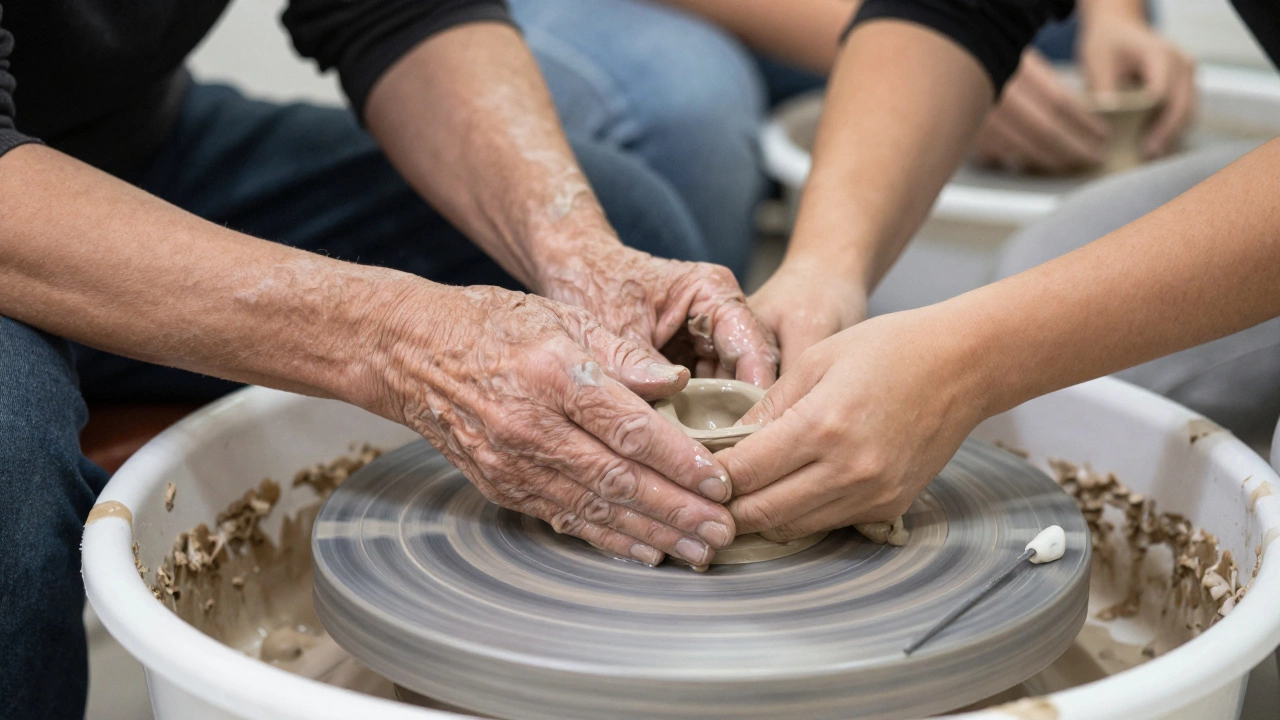
Social media connects us to thousands of people we’ll never meet. Art workshops connect us to a few people we’ll never forget.In a ceramics class I watched last fall, a quiet man in his 40s kept messing up his pots. Every time, he’d sigh, start over, and keep going. No one said a word. Not until week four, when another student handed him a new tool. “This helps with the walls,” she said. He nodded. Didn’t thank her. Just used it. Next week, he brought her cookies.
That’s the magic. No hashtags. No likes. Just presence. You’re not performing. You’re sharing space. And in a world where loneliness is rising-especially among adults over 40-this kind of quiet connection is rare. And valuable.
You Rediscover Play
When was the last time you did something just because it felt good? Not because it looked good on Instagram. Not because it would help your resume. Just because you liked it?Art workshops bring back play. The kind you had as a kid, when you colored outside the lines because it felt right. A workshop might ask you to paint with your non-dominant hand. Or make a sculpture out of trash. Or close your eyes and draw your mother’s face.
These aren’t tricks. They’re invitations. To let go. To be silly. To be wrong. To be human.
One participant in a Toronto workshop told me she hadn’t laughed like that since her daughter was five. She’d spent 20 years in corporate meetings. Then she spent an hour smearing paint with her fingers-and remembered what joy felt like.
It Builds Confidence Without Saying a Word
You don’t need applause to grow. You just need to do something hard-and keep doing it.Every workshop ends with something unfinished. A half-painted canvas. A lopsided bowl. A sketch that looks nothing like what you imagined. And that’s the point. You learn that you don’t have to be perfect to be proud. You learn that progress isn’t loud. It’s quiet. It’s showing up again tomorrow.
That kind of confidence doesn’t come from promotions or likes. It comes from knowing you can sit with uncertainty and still create something.
It’s Affordable and Accessible
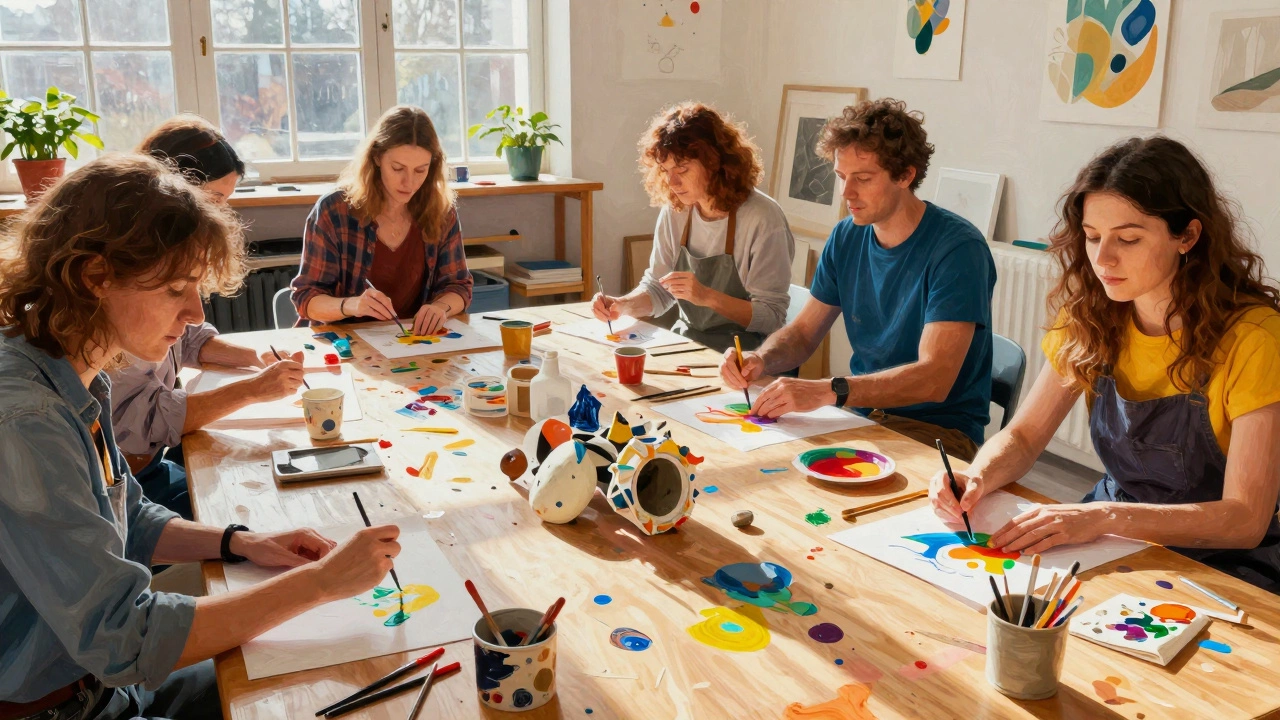
You don’t need a degree. You don’t need fancy supplies. You don’t even need a studio.Many community centers in Vancouver, Calgary, and Halifax offer art workshops for under $15 a session. Some are even free. All you need is an open mind and 90 minutes. Local libraries often host them. Parks departments too. You can find one near you with a quick search-or just walk into a local art supply store and ask.
Some workshops focus on specific techniques. Others are open-ended. You can try printmaking one week, collage the next. No pressure. No commitment. Just space to explore.
It’s Not Therapy-But It Works Like It
Art workshops aren’t clinical. They’re not led by therapists. But they do what therapy often tries to do: give you a safe space to feel, express, and release.People come for different reasons. Some are grieving. Some are burnt out. Some are just tired of feeling invisible. They don’t talk about it. They don’t need to. The brush, the clay, the ink-they do the talking.
There’s a reason art therapy is used in hospitals, schools, and veterans’ centers. You don’t need a license to benefit from it. You just need to make something.
Start Small. Stay Consistent.
You don’t need to sign up for a six-week course. Start with one session. Find a local event. Try a weekend workshop. Go alone. Go with a friend. It doesn’t matter.The goal isn’t to become an artist. The goal is to become more yourself. Quieter. Calmer. More alive.
Art workshops don’t change your life all at once. They change it in small, quiet ways. Until one day, you realize you’re breathing deeper. Laughing easier. Seeing color where you used to see gray.
Do I need any art experience to join a workshop?
No. Art workshops are designed for all levels, including complete beginners. Instructors focus on guiding you through the process, not judging your results. Many participants have never held a paintbrush before. That’s the point.
How often should I attend art workshops to see benefits?
You can feel the difference after one session. For lasting effects-like lower stress or improved focus-attending once a week for 4-6 weeks is ideal. But even monthly participation helps. Consistency matters more than intensity.
Are art workshops only for adults?
No. Many workshops are tailored for kids, teens, and seniors. Some studios offer family sessions where parents and children create together. Others run programs for seniors with dementia or veterans dealing with PTSD. Art is for everyone, no matter the age.
What if I’m not creative?
You don’t need to be “creative” to benefit. Creativity isn’t a talent-it’s a habit. Art workshops help you rebuild that habit. You’ll be surprised what comes out when you stop trying to be “good” and just start playing.
Can art workshops help with anxiety or depression?
They’re not a replacement for professional care, but they’re a powerful complement. Studies show regular hands-on art reduces cortisol levels and increases dopamine. Many people report feeling calmer, more grounded, and less isolated after attending. It’s not a cure-but it’s a lifeline.
If you’ve been feeling drained, disconnected, or stuck-don’t wait for a sign. Just show up. Grab a brush. Get your hands dirty. Let the quiet do the work.