Digital Art Setup Cost Calculator
Compare Your Digital Art Setup
Your Savings Analysis
iPad Setup
- Initial Cost $500
- Monthly Cost $0
- Total Cost $500
- Time Saved 120 hours
Desktop Setup
- Initial Cost $1,500
- Monthly Cost $30
- Total Cost $1,860
- Time Saved 24 hours
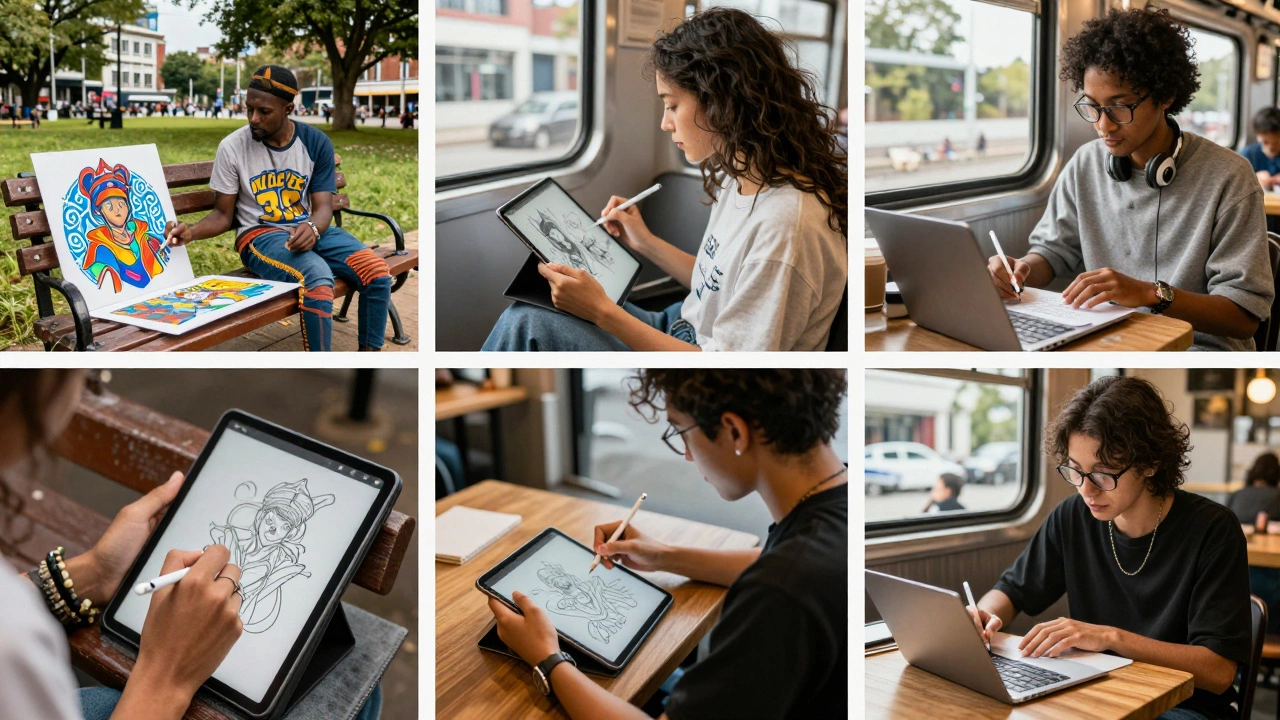
Most people making digital art today don’t use fancy desktop rigs or expensive tablets. They use what’s already in their hands: an iPad and an Apple Pencil. It’s not just a trend-it’s the new standard. In 2025, over 68% of digital artists surveyed by ArtStation reported using an iPad as their primary tool. That’s more than Photoshop on a Wacom tablet, more than Corel Painter on a Windows machine, and more than any other combination. Why? Because it’s simple, portable, and feels like drawing on paper.
Why the iPad Dominates Digital Art
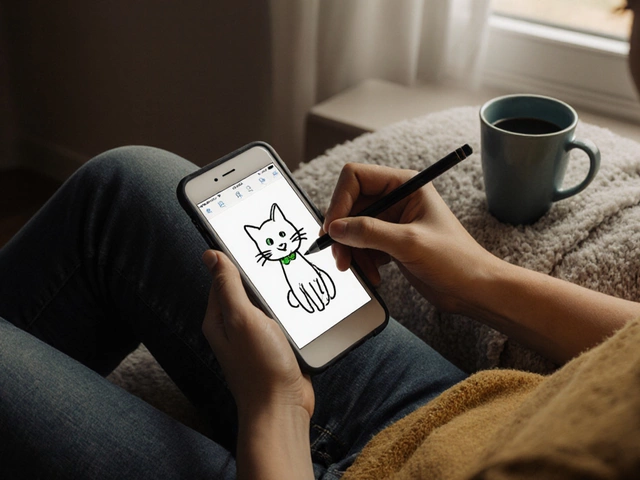
The iPad isn’t just a tablet. It’s a sketchbook, a canvas, and a studio-all in one. Artists in Vancouver, Tokyo, Lagos, and Mexico City are using it to create everything from comic book pages to NFT collections. The magic isn’t in the hardware alone. It’s in how Procreate turns the device into something alive. With pressure-sensitive brushes, layer masks, and time-lapse recording built right in, you don’t need to learn a dozen tools to get started. Open the app, pick a brush, and draw. No setup. No plugins. No crashes.
Compare that to Photoshop. Sure, it’s powerful. But it’s also heavy. You need a fast computer, a good monitor, a graphics tablet, and hours of tutorials just to get comfortable. Most beginners give up before they even finish their first sketch. Procreate? You can learn the basics in 20 minutes. That’s why it’s on over 90% of iPad devices used for art.
What About Photoshop and Other Desktop Tools?
Photoshop still has a place-but mostly in professional studios and freelance workflows that need to deliver print-ready files or complex composites. It’s the go-to for photo manipulation, branding work, and high-res illustrations meant for publishing. But even there, many artists start on an iPad. They sketch in Procreate, then send the file to Photoshop for final touches. It’s not an either/or anymore-it’s a pipeline.
Other desktop options like Clip Studio Paint and Corel Painter are popular with manga artists and traditional painters who want ultra-realistic brush textures. But they’re niche. Clip Studio Paint has a loyal following, especially in Japan, but it’s still a fraction of Procreate’s user base. Corel Painter? It’s powerful, but it’s slow on most machines and feels outdated next to the fluidity of iPad tools.
The Rise of Android and Chromebook Artists
Not everyone uses Apple. Android users have options too. Samsung Galaxy Tab S series with the S Pen and apps like Adobe Fresco and Infinite Painter are gaining ground. Fresco’s live brushes that mimic watercolor and oil paint are impressive. But the ecosystem isn’t as tight. Apps crash more. Updates are slower. The pen latency? Still not as smooth as Apple’s.
Chromebook users? They’re mostly using web-based tools like Krita or Medibang Paint. It works, but it’s clunky. No pressure sensitivity on most models. No stylus support beyond basic input. These aren’t replacements-they’re backups. Most serious digital artists on Android or Chromebooks still carry an iPad when they need to create.
What About Drawing Tablets?
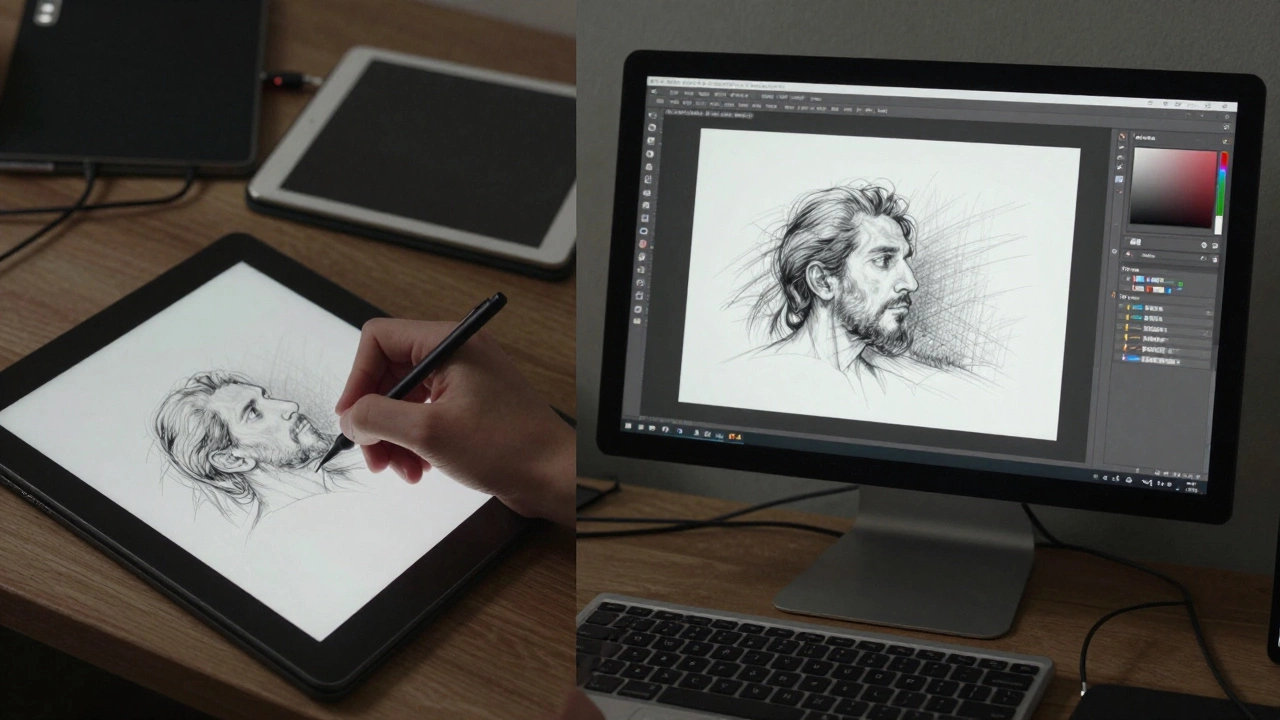
Wacom Intuos and Huion tablets are still sold everywhere. But they’re losing ground fast. Why? Because they’re not portable. You need a desk, a computer, and space. You can’t draw on the couch. You can’t sketch while waiting for coffee. You can’t take it to a park. Artists who used to swear by Wacom are switching to iPads because they want freedom-not just precision.
Even the Wacom MobileStudio Pro, once the dream machine for pros, is now seen as overpriced and outdated. It costs $2,000. An iPad Air with Apple Pencil 2? Around $600. Same pressure sensitivity. Better battery. Way more apps. And it doubles as a tablet for browsing, video calls, and Netflix.
The Role of AI in Digital Art Tools
AI isn’t replacing artists. It’s making tools smarter. Procreate now has AI-powered brush suggestions based on your stroke patterns. Adobe Fresco uses AI to simulate how paint bleeds on wet paper. Even free apps like Autodesk Sketchbook now offer smart fill and auto-line smoothing.
But here’s the catch: AI features are still optional. Most artists don’t use them. Why? Because they want control. They want their hand, not an algorithm, to decide where the brush goes. AI is a helper, not a co-creator. The real innovation isn’t in AI-it’s in how tools feel under your fingers.
What Do Beginners Actually Need?
If you’re just starting out, you don’t need the latest iPad Pro. An iPad 9th generation ($329) and a first-gen Apple Pencil ($99) are enough. Procreate is $12.99-one-time fee. No subscriptions. That’s less than a month of Netflix. You can start creating today for under $500.
Compare that to a Wacom Intuos ($79) plus a $1,000 laptop plus Photoshop ($20.99/month). You’re already at $1,300 before you even open the software. And you still can’t draw on the bus.
Most beginners who start with an iPad stick with it. Those who start with desktop tools often switch later-once they realize how much time they waste on setup, updates, and crashes.
What About Artists Who Work in 3D or Animation?
For 3D modeling, Blender on a desktop is still king. For animation, Toon Boom and Adobe Animate dominate. But even here, many artists sketch their characters and storyboards on iPads first. Then they import the drawings into their 3D or animation software. The iPad isn’t replacing those tools-it’s becoming the first step.
Apps like FlipaClip and Tayasui Sketches are bringing simple frame-by-frame animation to the iPad. They’re not as powerful as Maya, but they’re fast. And they’re what most indie animators use to pitch ideas before committing to big software.
It’s Not About the Tool-It’s About the Habit
The real reason people use iPads for digital art? They draw more. Daily. Without thinking. Because it’s always there. No boot-up time. No cables. No drivers. Just pick it up and go.
One artist in Toronto told me she went from sketching once a week to drawing every morning on her iPad. Her Instagram following grew from 2,000 to 87,000 in 18 months. Not because she had better skills. But because she showed up. Every day. With a tool that didn’t get in her way.
That’s the secret. The best digital art tool isn’t the most powerful. It’s the one you actually use.