Emotional Impact Calculator for Modern Art
Modern art isn't about finding hidden meanings—it's about your emotional response. This tool helps you understand how color, shape, and texture create feelings. Just like the article says: "What does it make you feel?" instead of "What does it mean?".
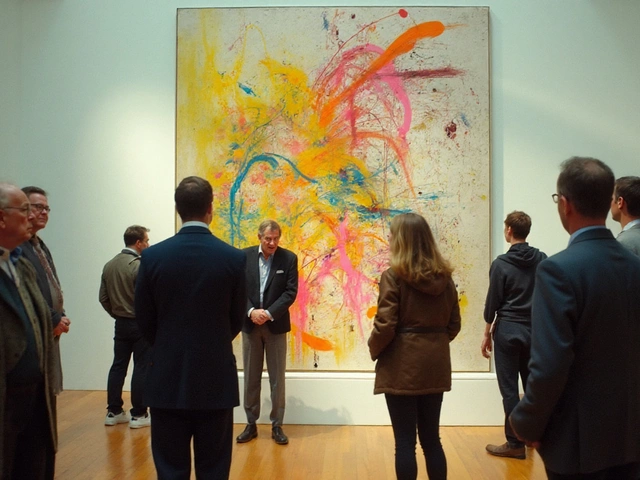
Look at a canvas covered in splatters of paint. Or a pile of bricks stacked unevenly. Or a single word written in neon lights. You’ve probably stood in front of something like this and thought: "But is this art?" You’re not alone. Millions of people feel the same way. Modern art doesn’t just confuse us-it often feels like it’s mocking us. Why does it seem so impossible to "get"?
It’s Not Supposed to Be Easy
Modern art wasn’t designed to be understood like a movie or a song. It doesn’t tell a story. It doesn’t show a beautiful landscape or a perfect portrait. It’s not trying to please you. It’s trying to make you question what art even is.
Before the 20th century, art had rules. Paintings had to look real. Sculptures had to be idealized. Art was about skill, beauty, and telling stories-usually religious or royal ones. Then came the Industrial Revolution, photography, and world wars. People stopped believing in old systems. Artists started asking: If a camera can capture reality better than a brush, why paint it at all?
That’s when modern art was born-not to decorate, but to disrupt.
Artists Stopped Painting What They Saw
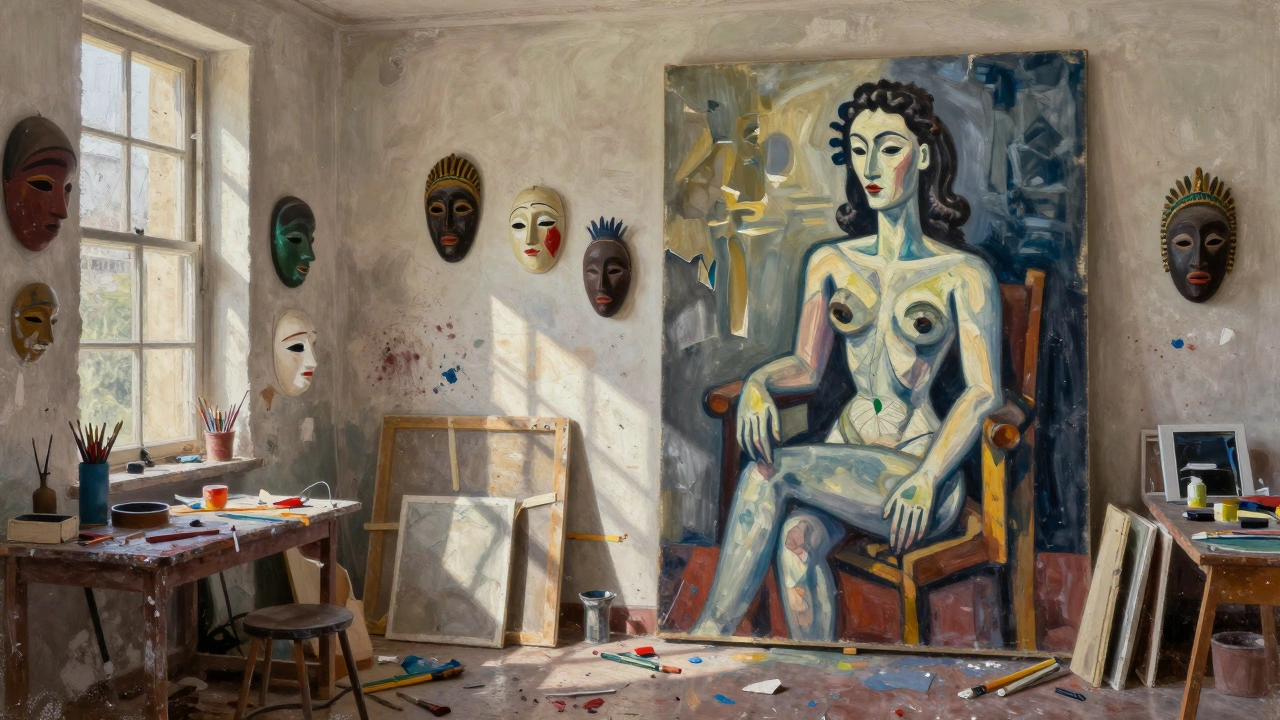
Take Picasso. In 1907, he painted Les Demoiselles d’Avignon. Five women, faces like broken masks, bodies twisted into angles. Critics called it ugly. The public was horrified. But Picasso wasn’t trying to make them beautiful. He was breaking the rules of perspective, borrowing from African masks, rejecting centuries of Western tradition.
That painting didn’t represent reality. It represented a new way of seeing. And that became the pattern. Kandinsky abandoned figures entirely and painted emotions as colors and shapes. Mondrian reduced everything to lines and primary colors. Rothko filled huge canvases with floating rectangles of color that made people cry-not because they "meant" anything, but because they felt something.
Modern artists weren’t lazy. They were radical. They didn’t want to copy the world. They wanted to change how you experienced it.
Modern Art Is About Ideas, Not Skill
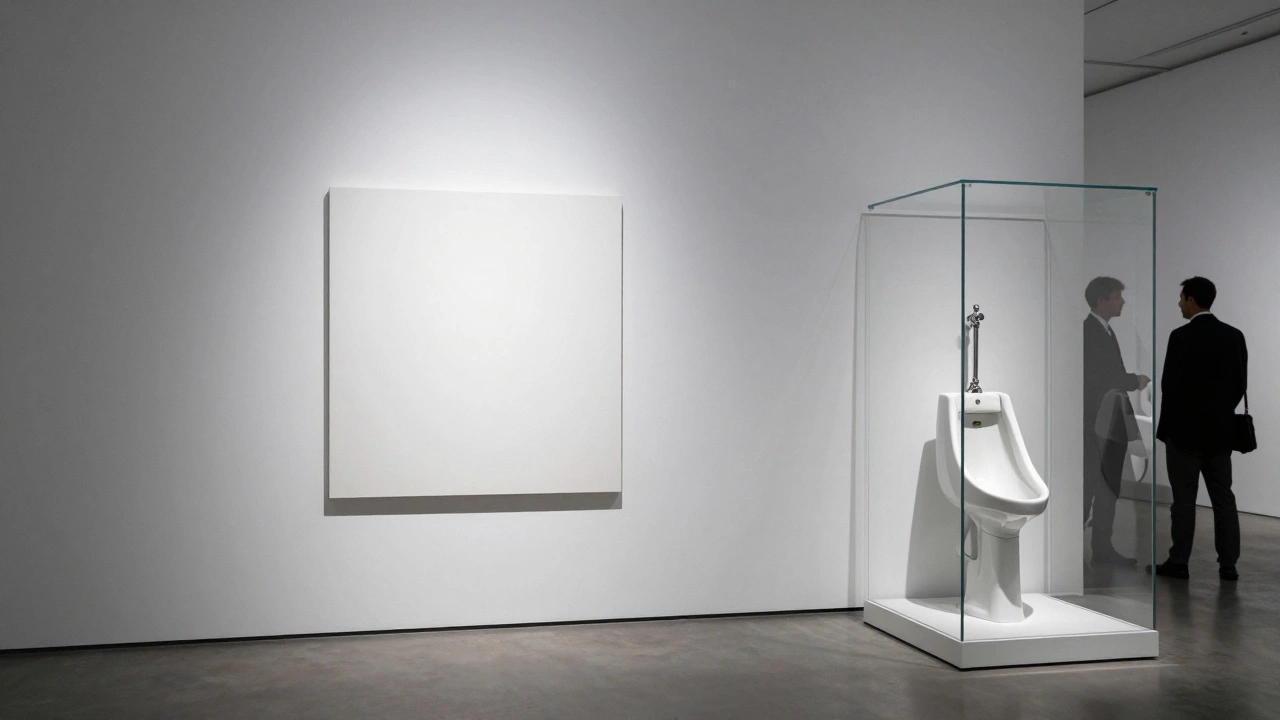
One of the biggest misunderstandings is that modern art looks "easy" because anyone could do it. A child could paint a red square. A toddler could throw paint. So why is a $100 million painting just a white canvas?
That’s the point.
When Duchamp put a urinal on a pedestal in 1917 and called it Fountain, he wasn’t saying "I made this." He was asking: "Who decides what art is?" Museums? Critics? The market? He turned the whole system upside down. The value wasn’t in craftsmanship-it was in the idea.
Today, that idea still lives. Ai Weiwei’s Dropping a Han Dynasty Urn isn’t valuable because it’s an old vase. It’s valuable because he smashed it on camera to make a statement about cultural destruction. The act matters more than the object.
Modern art doesn’t reward your eye. It rewards your mind.
You’re Not Missing the Meaning-You’re Looking for the Wrong Thing
We’re trained to look for meaning like a detective. What does this symbolize? Who is this person? What’s the story? But modern art often has no hidden message. It’s not a puzzle. It’s an experience.
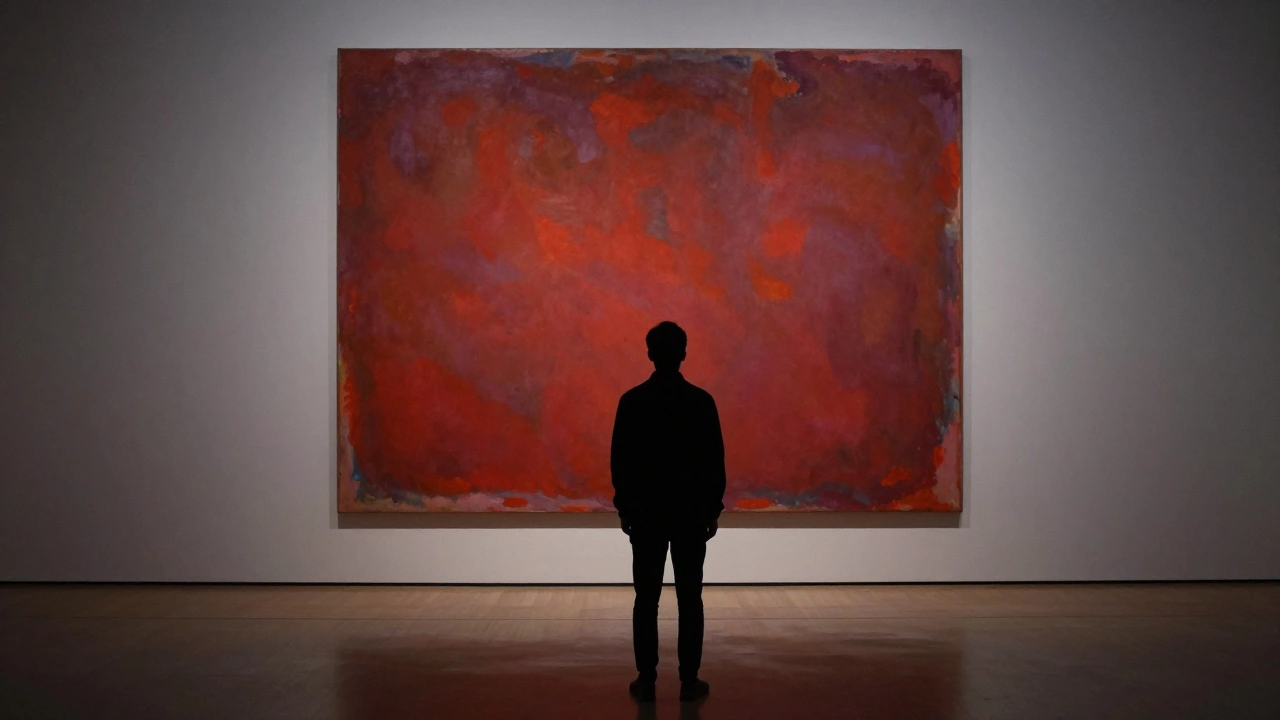
Think of it like music. You don’t need to "understand" a jazz improvisation to feel it. You don’t need to know the chords to be moved by a saxophone solo. Modern art works the same way. A Rothko painting doesn’t "mean" anything. It creates a mood. A feeling. A silence that fills the room.
When you stand in front of a Mark Rothko, you’re not supposed to decode it. You’re supposed to feel it. The color pulls you in. The edges blur. Time slows. That’s the art. Not the explanation. The reaction.
Try this next time you’re in a gallery: Don’t read the plaque. Just stand there for two minutes. Don’t think. Just feel. What happens to your breathing? Your heartbeat? Your thoughts? That’s the real artwork.
The Art World Made It Worse
Here’s the dirty secret: the art world didn’t help. Critics, curators, and professors started writing in dense, jargon-filled language. They called things "deconstructive", "post-humanist", or "interrogating the gaze."
Suddenly, understanding modern art wasn’t about personal experience-it was about knowing the right words. If you didn’t use the right terminology, you were "not getting it."
That turned art into a club. You had to be invited in-not by your eyes, but by your vocabulary. It wasn’t about the art anymore. It was about proving you belonged.
That’s why so many people walk away feeling stupid. They’re not stupid. The system made them feel that way.
Modern Art Isn’t About You-But It Still Affects You
Modern art doesn’t care if you like it. It doesn’t need your approval. But it still changes you.
Think about advertising. Think about graphic design. Think about how you see color, shape, and space in your phone screen or your favorite brand logo. That’s modern art’s legacy.
Every time you see a minimalist logo, a bold abstract poster, or a sculpture in a public square, you’re seeing the fingerprints of Picasso, Duchamp, and Kandinsky. They didn’t just make art. They rewired how we see the world.
You don’t need to love it. But you can’t ignore it. It’s everywhere.
How to Start Understanding Modern Art (Without Feeling Dumb)
Here’s what actually works:
- Forget "What does it mean?" Ask: "What does it make me feel?"
- Look at the context. When was it made? What was happening in the world? A painting from 1945 might respond to war. A sculpture from 2010 might respond to social media.
- Read the artist’s own words. Not the museum’s plaque. The artist’s interviews, diaries, manifestos. They often say what the work is really about.
- Visit smaller galleries. Big museums are intimidating. Smaller ones often have fewer crowds and more honest explanations.
- Try making your own. Grab some paint, paper, or clay. Don’t try to make something "good." Just make something that expresses a feeling. You’ll start seeing modern art differently.
You don’t need a degree. You don’t need to know the names of every movement. You just need to be willing to sit with something strange-and let it sit with you.
It’s Not Broken. You’re Just Using the Wrong Map
Modern art isn’t broken. It’s not a failure. It’s not a joke. It’s a different language.
Trying to understand it like a novel or a movie is like trying to read music with a dictionary. You’re using the wrong tool.
Modern art speaks to emotion, perception, and idea-not narrative or representation. It asks you to be present, not analytical. To feel, not solve.
The next time you’re confused by a piece of modern art, don’t walk away. Stay. Look longer. Breathe. Let the confusion sit with you. Maybe it’s not meant to be understood. Maybe it’s meant to be felt.
And that’s okay.
Why do people say modern art is "not real art"?
People say that because they’re comparing modern art to traditional art-paintings that look real, sculptures that look perfect. But modern art isn’t trying to be that. It’s trying to challenge what art can be. Calling it "not real art" is like saying jazz isn’t real music because it doesn’t follow classical rules. It’s a different form, not a lesser one.
Can I like modern art even if I don’t understand it?
Absolutely. In fact, that’s often how it works. Many people feel drawn to a piece without knowing why. That’s not ignorance-it’s intuition. Modern art doesn’t require logic to be powerful. It works on emotion, memory, and atmosphere. If it moves you, that’s enough.
Is modern art just a scam to make money?
Some pieces are overpriced because of hype, fame, or speculation. But that’s true in every art era. The value of a Van Gogh or a Rembrandt isn’t just in the paint-it’s in history, rarity, and cultural weight. Modern art has the same forces at play. But many works are deeply meaningful, made by artists who spent decades developing their ideas. Don’t confuse the market with the message.
Why do museums display things that look like trash?
They don’t display trash. They display objects that artists have chosen to reframe. A pile of bricks might be a commentary on labor, urban decay, or mass production. A used mattress might speak to homelessness or memory. The artist gives it context. The museum gives it space. You’re meant to ask: Why this? Why now? That’s the point-not the object itself, but the question it raises.
What’s the difference between modern art and contemporary art?
Modern art refers to work made between the 1860s and the 1970s-artists like Picasso, Matisse, Pollock. Contemporary art is made today, by living artists. Modern art broke the rules. Contemporary art builds on that, using new tools like video, digital media, and social platforms. They’re related, but not the same.
If you’ve ever walked out of a modern art exhibit feeling lost, you’re not failing. You’re just learning a new language. And like any language, it takes time. But once you start listening-not to what it says, but to how it makes you feel-you’ll start hearing things you never noticed before.