Art Perspective Analyzer
How to use: Select an artwork description below. The analyzer will break down whether it aligns with Traditional or Contemporary values based on the article's criteria.
Royal Portrait (17th C)
Example 1The Plastic Wave
Example 2Marble Deity Statue
Example 3Virtual Void
Example 4Click on an artwork on the left to analyze its characteristics.
- Traditional art focuses on technical skill, realism, and established historical standards.
- Contemporary art prioritizes the concept, the message, and the breaking of rules.
- The main divide is 'skill-based' versus 'idea-based' creation.
- Traditional art follows a linear history; contemporary art is a living, evolving dialogue.
The Bedrock of Traditional Art
When we talk about Traditional Art is art created using methods and styles that have been passed down through generations, typically focusing on representational accuracy and formal mastery, we are talking about a world of rules. For centuries, the goal was clear: capture reality. Whether it was a portrait of a royal family or a landscape of the Tuscan countryside, the value of the art was often tied to how much the artist's hand disappeared into the work. If it looked like a photograph before cameras existed, you were a master.
Traditional artists spent years studying Anatomy and perspective. They didn't just paint a person; they understood how the muscles moved under the skin. This approach relied heavily on the Academy of Fine Arts model, where students copied the old masters to learn the 'correct' way to paint. The tools were consistent: oil paints, charcoal, marble, and canvas. The result was a timeless quality-a painting from 1650 still feels 'correct' because it follows the laws of physics and light.
The Shift Toward Contemporary Thinking
Now, let's flip the script. Contemporary Art is art produced in the present day, often characterized by a lack of a single unifying style and a heavy emphasis on conceptual meaning over technical execution. If traditional art is about the 'how,' contemporary art is almost entirely about the 'why.' It doesn't care if you can draw a perfect circle; it cares why you chose to draw a circle in the first place and what that circle says about the state of the world in 2026.
This style of art emerged from a desire to break free from the restrictive rules of the past. After the industrial revolution and the world wars, artists felt that painting a pretty bowl of fruit wasn't enough to describe the chaos of human existence. They began experimenting with Conceptual Art, where the idea behind the work is more important than the physical object itself. This is why you see things like a urinal in a gallery or a blank canvas painted white. The artist isn't trying to trick you into thinking they have a specific skill; they are asking you to engage with a specific thought.
| Attribute | Traditional Art | Contemporary Art |
|---|---|---|
| Primary Goal | Aesthetic beauty & Realism | Communication of a Concept |
| Mediums | Oil, Marble, Fresco | Digital, Found Objects, VR, Mixed Media |
| Training | Formal Academic Study | Experimental / Self-Taught / Diverse |
| Viewer's Role | Admiration of Skill | Interpretation of Meaning |
| Context | Historical / Religious | Social / Political / Personal |
The Role of Medium and Materials
In the traditional world, the medium was a means to an end. A sculptor used Carrara Marble because it allowed for a smooth, skin-like finish. The material was chosen to support the subject. You wouldn't use plastic to carve a Roman emperor because plastic doesn't carry the weight of history or the prestige of the material.
Contemporary art treats the material as part of the message. If an artist chooses to make a sculpture out of recycled trash or melted chocolate, that choice is a statement. The medium *is* the meaning. We see this in Installation Art, where the entire room becomes the artwork. The viewer isn't just looking at a painting on a wall; they are walking through the art, smelling it, and perhaps even touching it. This breaks the 'fourth wall' of the museum, turning the viewer from a passive observer into an active participant.
How We Judge Value: Skill vs. Concept
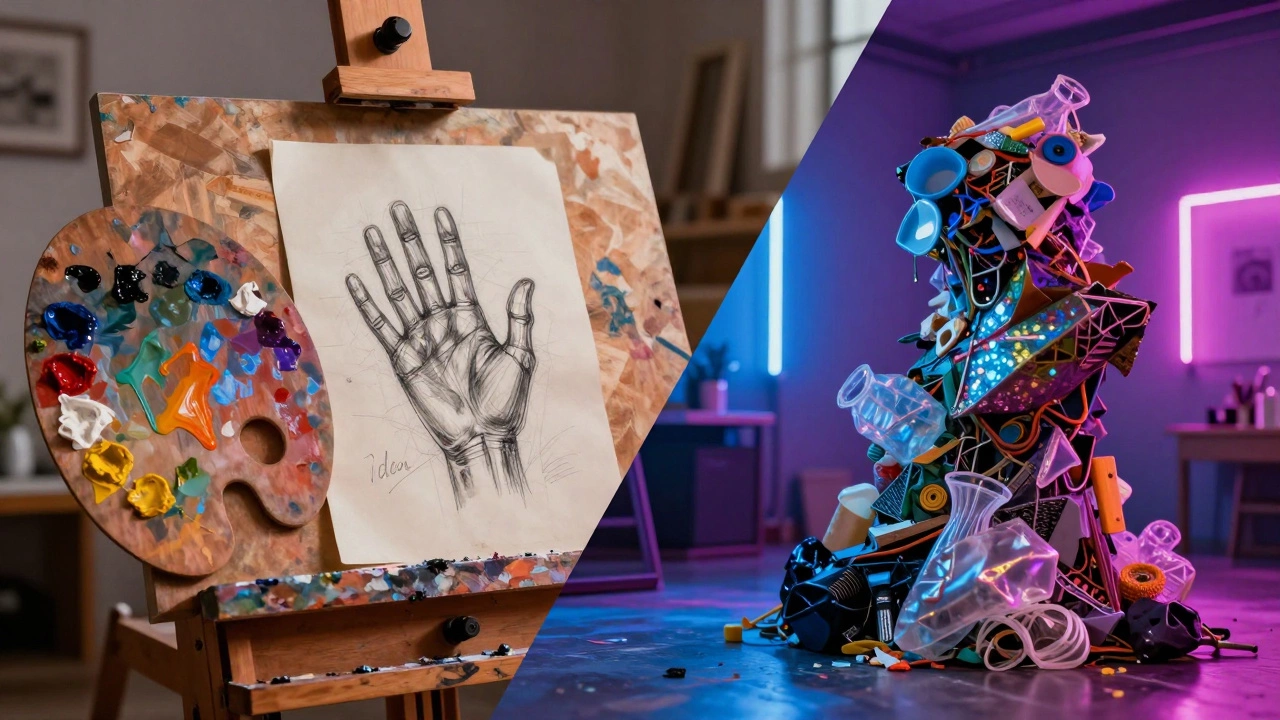
This is where most people get frustrated. You look at a piece of contemporary art and think, 'My five-year-old could do that.' When we judge traditional art, we use a skill-based metric. We look at the blending of colors or the precision of the lines. The value is in the labor and the rare talent required to achieve that level of realism.
Contemporary art uses a different metric: the 'intellectual spark.' The value isn't in the act of painting the canvas red; it's in the decision to paint it red to represent, for example, the anger of a specific political movement or the feeling of a sunset in a dying city. The 'skill' here is the ability to distill a complex human emotion or a social critique into a visual form. It's less about the hand and more about the mind. If the work starts a conversation or changes the way you think about your surroundings, it has succeeded, regardless of whether it took ten minutes or ten months to create.
Where the Two Worlds Meet
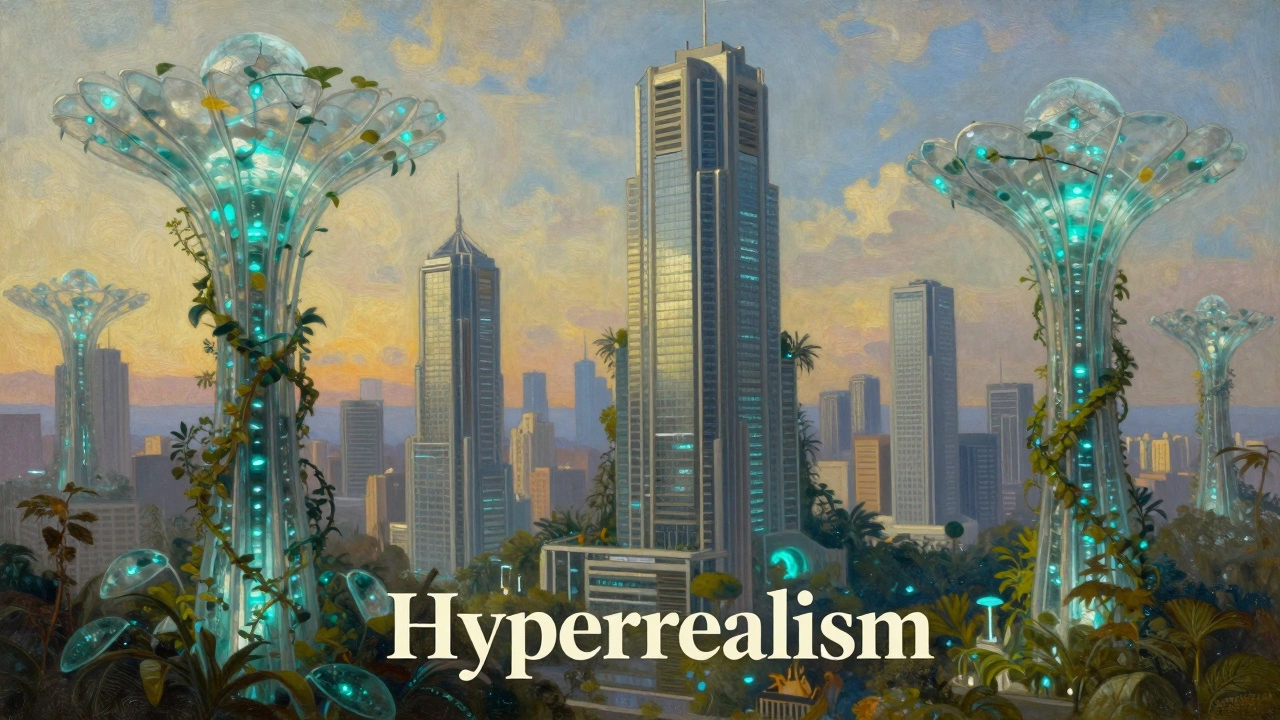
It's a mistake to think these two are permanently at war. Many of the most successful artists today use a hybrid approach. You'll find painters who use traditional oil techniques to create hyper-realistic images of things that don't exist-like a futuristic city made of glass and plants. This is often called Hyperrealism. They are using the 'traditional' toolkit to serve a 'contemporary' idea.
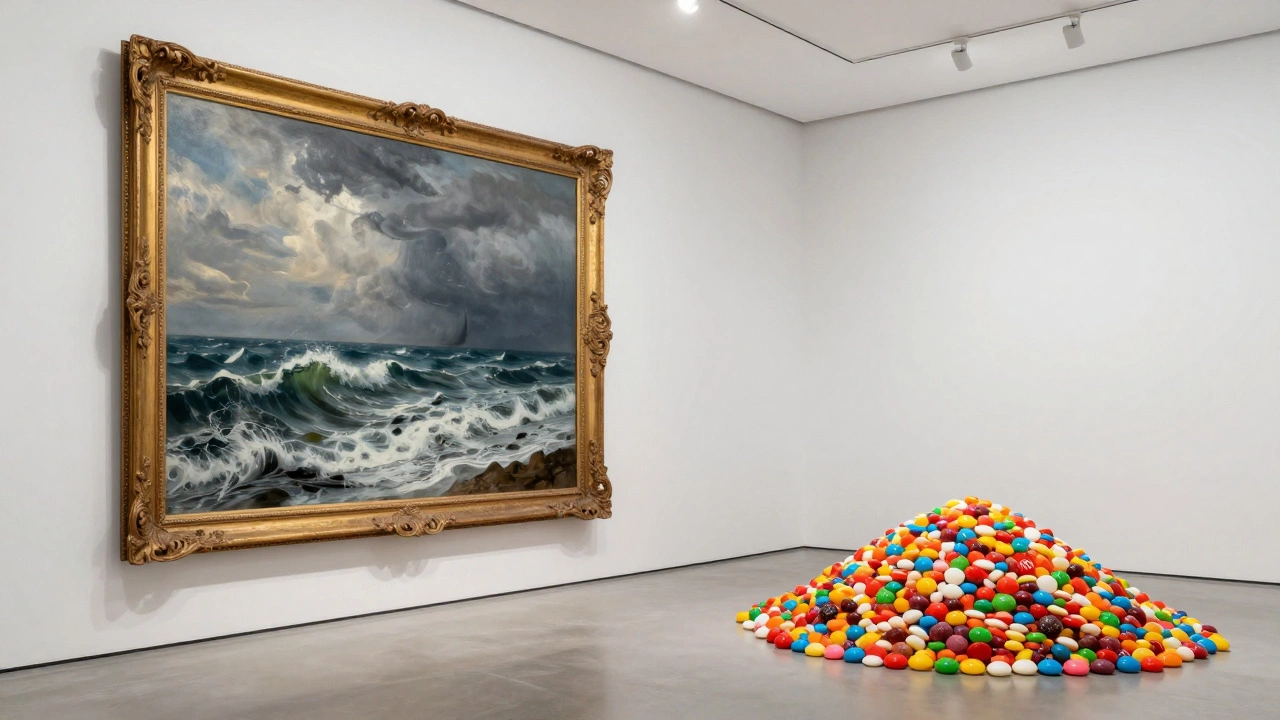
Similarly, museums are changing how they display work. Instead of strictly separating 'The Old Masters' from 'The Moderns,' some curators are placing a Renaissance portrait next to a digital screen. This allows us to see that the human desire to express identity and emotion hasn't changed; only the tools have. Whether it's a charcoal sketch from the 1400s or a 3D-printed sculpture from 2025, both are attempting to freeze a moment of human experience.
Common Pitfalls in Understanding Art
One of the biggest mistakes people make is assuming that contemporary art is 'trying to trick them.' It's not a puzzle with one right answer. In traditional art, the meaning is often explicit-a painting of a crown represents power. In contemporary art, the meaning is often collaborative. The artist provides the prompt, and you provide the interpretation based on your own life experiences.
Another trap is thinking that traditional art is 'better' because it requires more manual labor. While the craft is impressive, art has always been about more than just muscle memory. Even the old masters were innovators who broke the rules of their time. Leonardo da Vinci's use of Sfumato-that smoky blending of edges-was a radical departure from the sharp outlines used by his predecessors. In a way, every traditional masterpiece was 'contemporary' the moment it was painted.
Does contemporary art have to be abstract?
No. While a lot of it is, contemporary art can be incredibly realistic. The difference is the intent. A contemporary realistic painting usually focuses on a social or conceptual message rather than just demonstrating a technical ability to mimic life.
When did art stop being 'traditional' and become 'contemporary'?
There isn't a specific date, but the shift accelerated with the rise of Modernism in the late 19th century (think Impressionism). However, 'contemporary art' specifically refers to art made from the late 20th century to today, reflecting current global issues and technologies.
Why is contemporary art so expensive if it looks simple?
The price often reflects the artist's reputation, the historical importance of the idea, and the market demand. In the art world, you aren't just buying a canvas; you're buying a piece of a conceptual breakthrough or a specific moment in cultural history.
Can an artwork be both traditional and contemporary?
Absolutely. This happens when an artist uses traditional mediums (like fresco or oil on canvas) to explore contemporary themes (like climate change or digital identity). This blend often creates a powerful contrast between the timelessness of the medium and the urgency of the topic.
How can I start appreciating contemporary art more?
Stop asking 'What is this?' and start asking 'How does this make me feel?' or 'Why did the artist choose this material?' Shift your focus from the visual quality to the conversation the artwork is trying to start. Read the gallery notes, but don't let them dictate your personal reaction.
Moving Forward with Your Art Journey
If you're feeling overwhelmed by the vast difference between these styles, the best thing to do is visit a local gallery. Try this: find a piece of traditional art and spend five minutes noticing the details-the brushstrokes, the light, the anatomy. Then, find a piece of contemporary art and spend five minutes thinking about the emotion it triggers, even if that emotion is annoyance or confusion.
For those who prefer the structure of the past, looking into the Renaissance or Baroque periods provides a great foundation. For the curious, exploring the works of Andy Warhol or Damien Hirst can show you how the rules were systematically dismantled to make way for the current era of conceptual expression.