Contemporary Art Lens: Concept vs. Execution
Artistic Approach
Select a philosophy to see how the "painting" changes from a window of reality to a conceptual object.
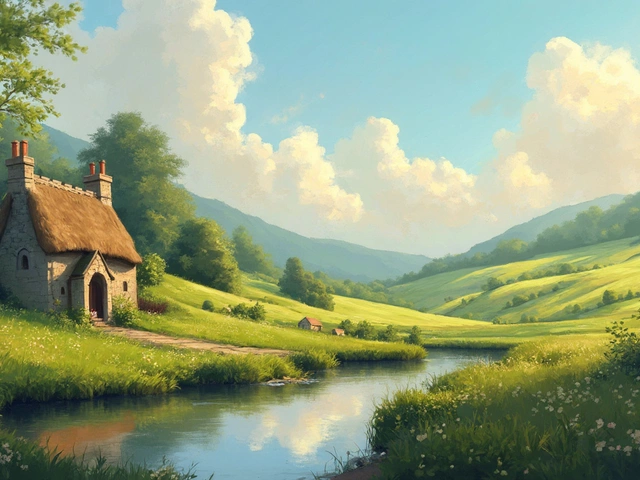
Traditional Representation
WindowFocus on realism, linear perspective, and aesthetic beauty.
Modernist Abstraction
FlatnessCelebrating the paint itself and the flat surface of the canvas.
Contemporary Conceptual
ObjectUsing materials and space to evoke emotion or social commentary.
Realistic Landscape
The Big Question: Is Painting Dead?
You've probably walked into a gallery and seen a blank white canvas, a pile of candy in a corner, or a digital screen flashing random colors and wondered, "Wait, where are the actual paintings?" For decades, critics have been predicting the death of painting. They claimed that photography captured reality better and that conceptual art captured ideas more effectively. But here is the weird part: painting isn't just surviving; it's thriving. In a world dominated by screens and AI-generated images, the physical act of putting pigment on a surface has become a rebellious act of presence.
The reason contemporary art continues to embrace painting isn't because artists are nostalgic for the Renaissance. It's because the medium has evolved. Painting today isn't just about depicting a bowl of fruit or a landscape; it's a tool for exploring identity, politics, and the very nature of seeing. When you look at a painting today, you aren't just looking at a picture-you're looking at a record of time and physical labor that a digital file simply cannot replicate.
| Feature | Traditional Painting | Contemporary Painting |
|---|---|---|
| Primary Goal | Representation and Aesthetics | Concept, Emotion, and Dialogue |
| Materials | Oil, Tempera, Watercolor | Acrylics, Spray Paint, Mixed Media, Digital Hybrids |
| Subject Matter | Religious, Mythological, Portraiture | Abstract, Political, Social Commentary, Identity |
| Perspective | Linear Perspective/Realism | Flattened space, Fragmented, Non-objective |
The Shift from Window to Object
For centuries, painting was treated like a window. The goal was to trick your eye into thinking you were looking through the frame into another world. Then came Modernism is an artistic movement that broke away from traditional representation, emphasizing the flat surface of the canvas and the properties of the paint itself . This shift changed everything. Artists stopped trying to hide the paint and started celebrating it.
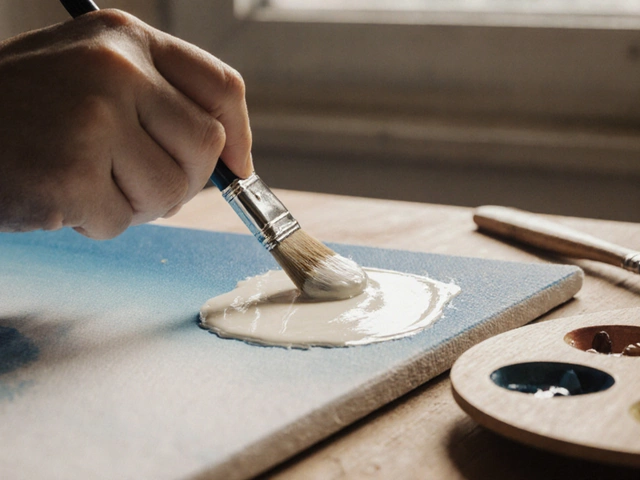
In contemporary art, the canvas is no longer just a support for a picture; it is an object in its own right. You'll see artists leave the edges raw, drip paint onto the floor, or use the canvas as a 3D structure. This "objecthood" is what makes painting contemporary. It acknowledges that the artwork exists in a physical room with a physical viewer. When you see a massive canvas by an artist like Mark Rothko or a chaotic piece by Gerhard Richter, the scale and the texture are meant to overwhelm your senses, not just tell you a story.
Painting as a Reaction to the Digital Age
We spend most of our waking hours staring at backlit pixels. Everything is polished, editable, and instantly reproducible. This is exactly why Fine Art is art created primarily for its aesthetic or intellectual value, often characterized by a focus on the artist's unique hand and vision is seeing a massive resurgence in tactile painting. There is a hunger for "the glitch"-the human error, the smudge of a thumb, the uneven layer of acrylic that proves a person was actually there.
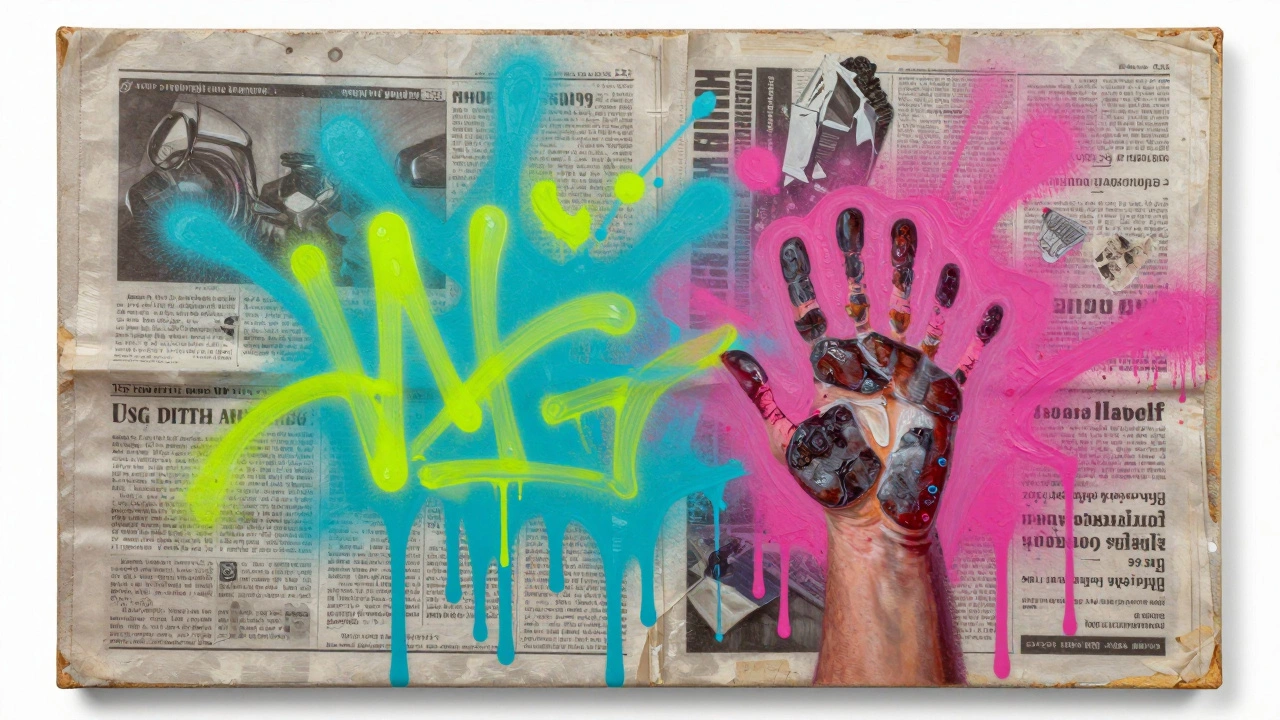
Consider the rise of Mixed Media is an artistic technique that combines different materials-such as ink, collage, and fabric-into a single piece of work . Contemporary painters aren't just using brushes. They are incorporating photographs, street posters, and industrial plastics. By blending these materials, they mirror our own fragmented experience of reality, where we jump from a physical conversation to a digital notification in a split second. The painting becomes a physical archive of these intersecting worlds.
The Power of Conceptual Painting
One of the biggest misunderstandings about contemporary art is the idea that it's "just a concept" and doesn't need skill. In reality, Conceptual Art is an art movement where the idea or concept behind the work takes precedence over the traditional aesthetic or material concerns has actually breathed new life into painting. Painting is now often used as a vehicle for an idea. The artist isn't just painting a person; they are painting the *idea* of a person, or the *absence* of a person.
Take a look at how social issues are handled today. Instead of a traditional historical painting, a contemporary artist might use a monochromatic blue canvas to represent grief or a series of distorted figures to critique corporate culture. The "why" is now more important than the "how." The technical skill is still there, but it's used strategically to serve the message. This allows painting to stay relevant in an era where we are constantly questioning the structures of power and identity.
Breaking the Frame: Painting in the Real World
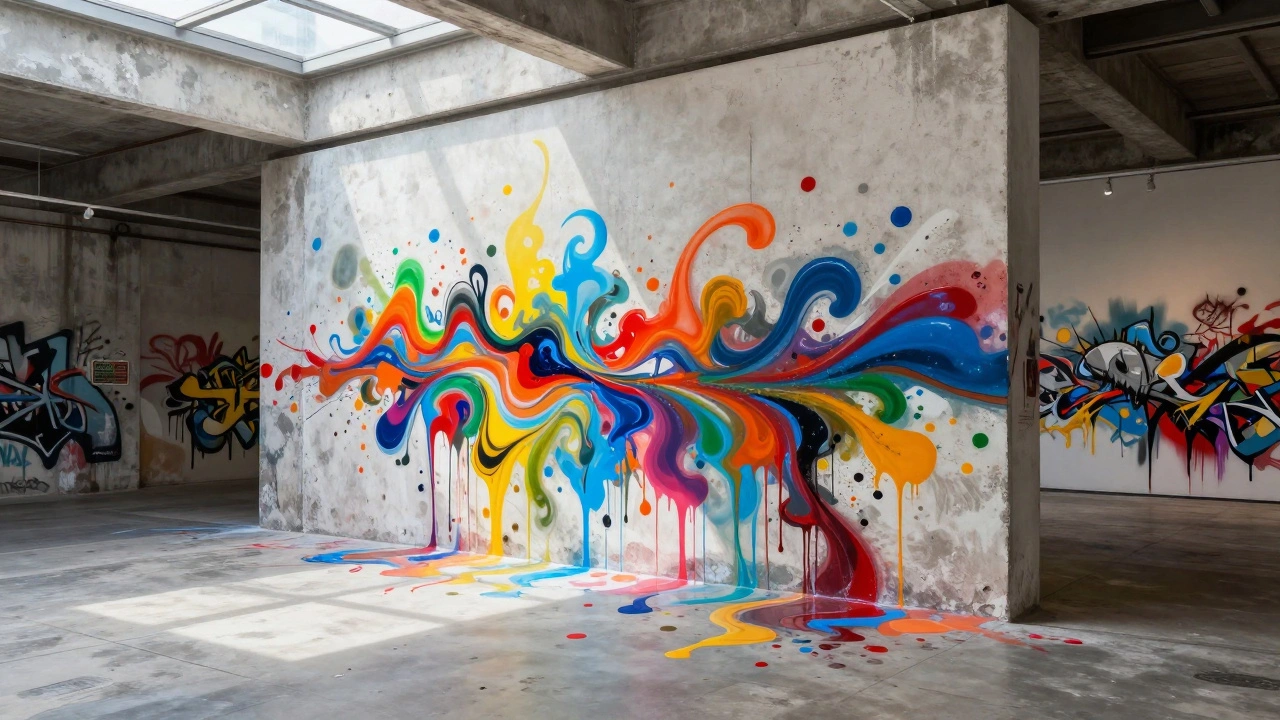
Painting has also escaped the rectangle. Contemporary artists are increasingly treating the entire environment as their canvas. This connects painting directly to Installation Art is large-scale, mixed-media constructions designed to transform the perception of a space . When an artist paints a mural that wraps around a corner or applies pigment directly to the gallery walls, they are challenging the boundary between the art and the viewer.
This movement is heavily influenced by Street Art is visual art created in public locations, often unsanctioned, characterized by its accessibility and social urgency . By bringing painting out of the museum and onto the street, artists like Banksy or JR have proved that painting can be a democratic tool for communication. It's no longer just for the elite in gold-framed galleries; it's a living, breathing part of the urban landscape that reacts to the news in real-time.
Why Painting Will Never Truly Disappear
Some might argue that AI can now "paint" better than humans. Sure, an algorithm can mimic the style of Van Gogh or create a photorealistic image in seconds. But AI cannot experience the frustration of a drying canvas, the smell of linseed oil, or the physical exhaustion of spending ten hours on a single detail. Painting is a somatic experience-it's about the body.
The value of a contemporary painting lies in its authenticity. In an era of deepfakes and AI-generated content, the physical mark of a human being is the ultimate luxury. Whether it's a minimalist strip of color or a complex figurative scene, painting offers a moment of slow contemplation that is almost extinct in our fast-paced digital lives. It forces us to stop, stand still, and actually *look*.
Is abstract painting considered contemporary art?
Yes, but with a distinction. While abstraction started decades ago with movements like Abstract Expressionism, contemporary abstract painting often incorporates new materials or addresses current social and political themes, moving beyond just "form and color" to include conceptual layers.
Why do some contemporary paintings look "unfinished"?
The "unfinished" look is often a deliberate choice known as non-finito. In contemporary art, leaving drips, raw canvas, or sketchy lines is a way to show the process of creation. It emphasizes that the artwork is a living thing and invites the viewer to complete the image in their own mind.
Can digital painting be considered contemporary fine art?
Absolutely. Digital painting is a recognized medium in the contemporary art world. However, it is often categorized differently than traditional painting because it lacks the physical texture of pigment. Many digital artists bridge this gap by printing their work on canvas or using augmented reality to add depth.
What makes a painting "contemporary" versus "modern"?
Generally, "Modern Art" refers to the period from the 1860s to the 1970s (think Picasso or Dalí). "Contemporary Art" refers to art made in our current time, typically from the late 20th century to today. While modern art focused on breaking rules, contemporary art focuses on questioning everything, including the definition of art itself.
Do contemporary painters still use oil paints?
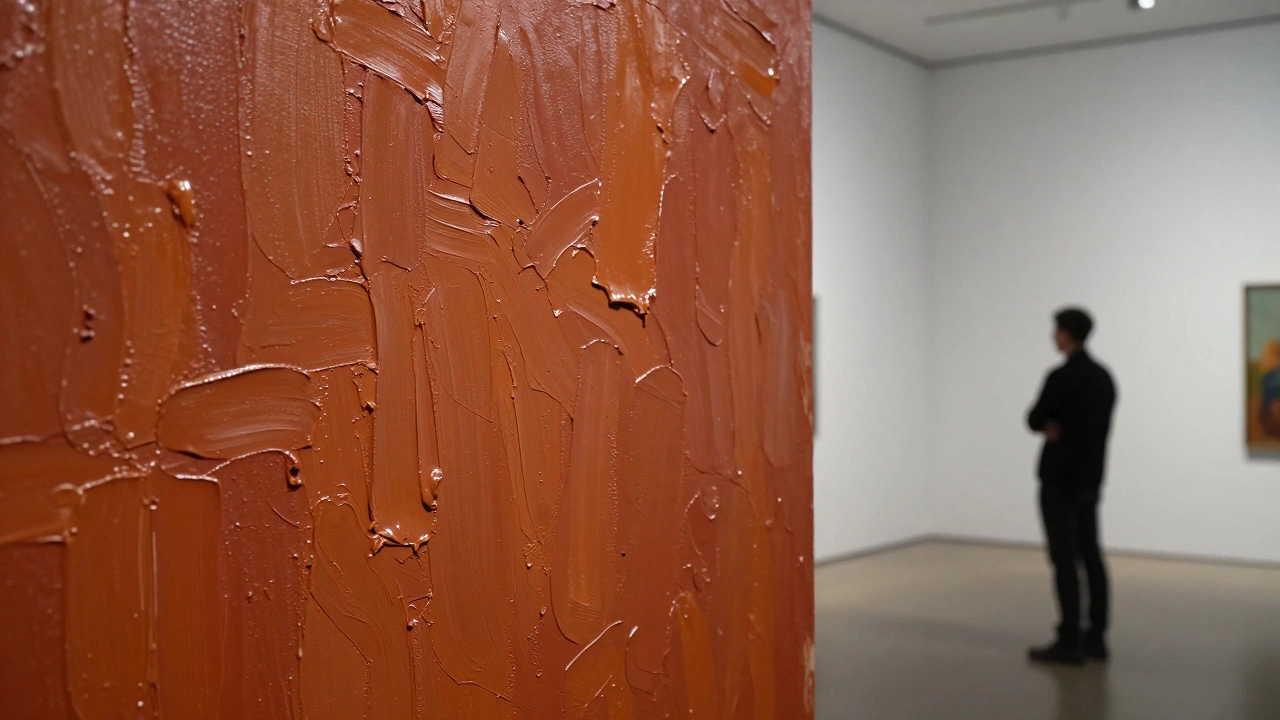
Yes, oil paint remains highly popular due to its richness and longevity. However, many contemporary artists mix oils with acrylics or use them in unconventional ways, such as applying them in thick, sculptural slabs (impasto) to create a more three-dimensional effect.
Next Steps for Art Lovers
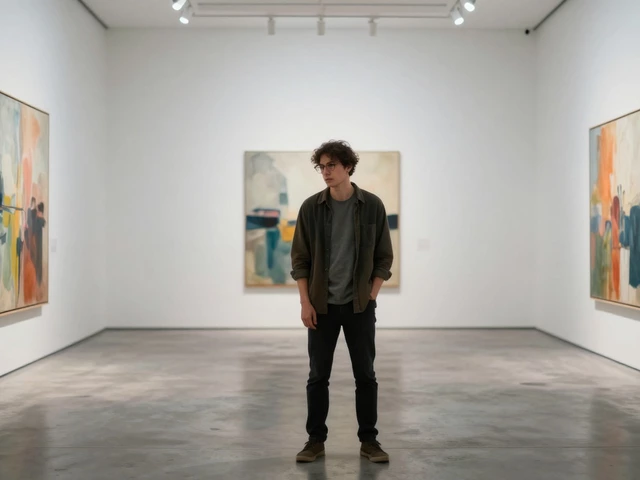
If you're feeling overwhelmed by the variety of contemporary painting, the best way to engage is to stop looking for a "meaning" and start looking at the "feeling." Next time you're at a gallery, try these three things:
- Check the distance: Step back five feet, then step in close. Notice how the image changes from a conceptual whole to a series of physical brushstrokes.
- Look for the edges: See how the artist treated the boundary of the canvas. Does the paint bleed off? Is it neatly contained? This tells you a lot about the artist's intent.
- Compare mediums: Find a digital piece and a physical painting side-by-side. Ask yourself what the physical piece provides that the digital one cannot.