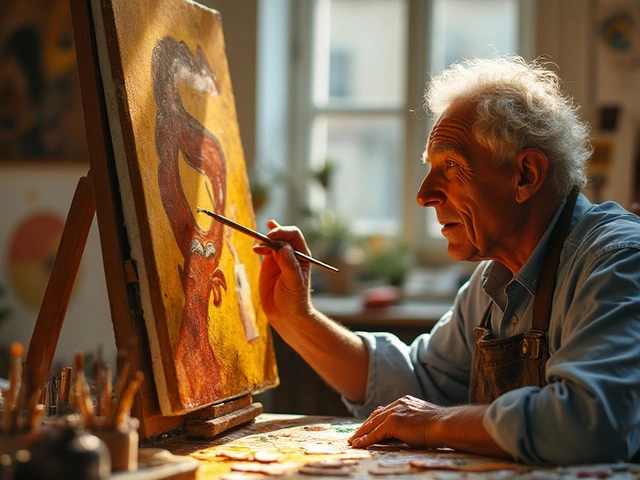
Abstract Art Interpretation Simulator
This simulator generates a unique abstract composition based on principles of visual rhythm and color theory described in the article. Your task is not to find the 'correct' answer, but to observe your own emotional response and project meaning onto the shapes.
Your Interpretation
You stand in front of a canvas that looks like someone spilled coffee and then got mad about it. Maybe there are jagged black lines cutting through a field of beige. Or perhaps it’s just a giant blue square. Your first instinct might be to ask, "What does this even mean?" But here is the twist: you probably feel something anyway. A sense of calm, a spike of anxiety, or a weird satisfaction. Why do we fall for these non-representational images? It isn’t because we are trying to be smart or pretentious. It is because our brains are wired to find patterns, process emotion, and engage with ambiguity in ways that literal realism often misses.
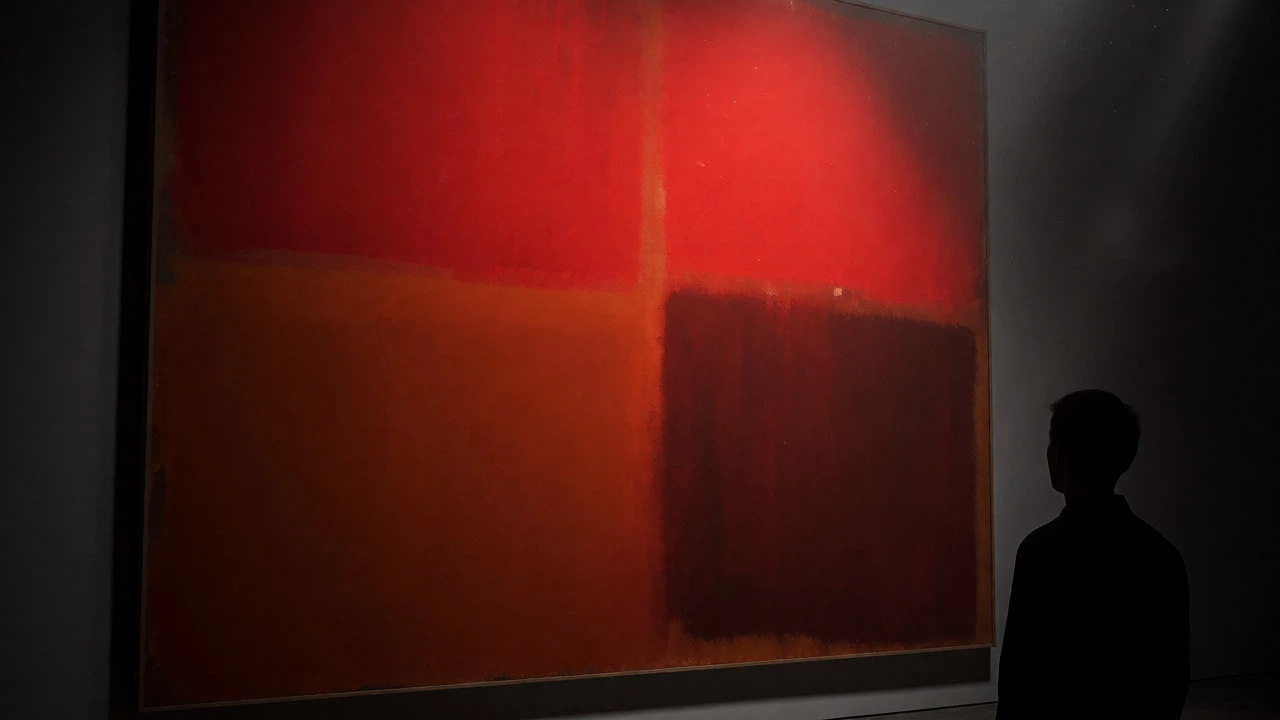
Abstract art is a form of visual art that does not attempt to represent an accurate depiction of a visual reality but instead uses shapes, colors, forms, and gestural marks to achieve its effect. Unlike portrait painting or landscape photography, which tell you exactly what to see, abstract art invites you to co-create the meaning. This lack of explicit instruction is actually the primary driver of its attraction. When you look at a photo of a tree, your brain files it away as "tree." Done. But when you look at a Rothko color field, your brain has to work harder to categorize the experience, engaging deeper cognitive and emotional networks.
The Brain Loves Ambiguity (When It Can Solve It)
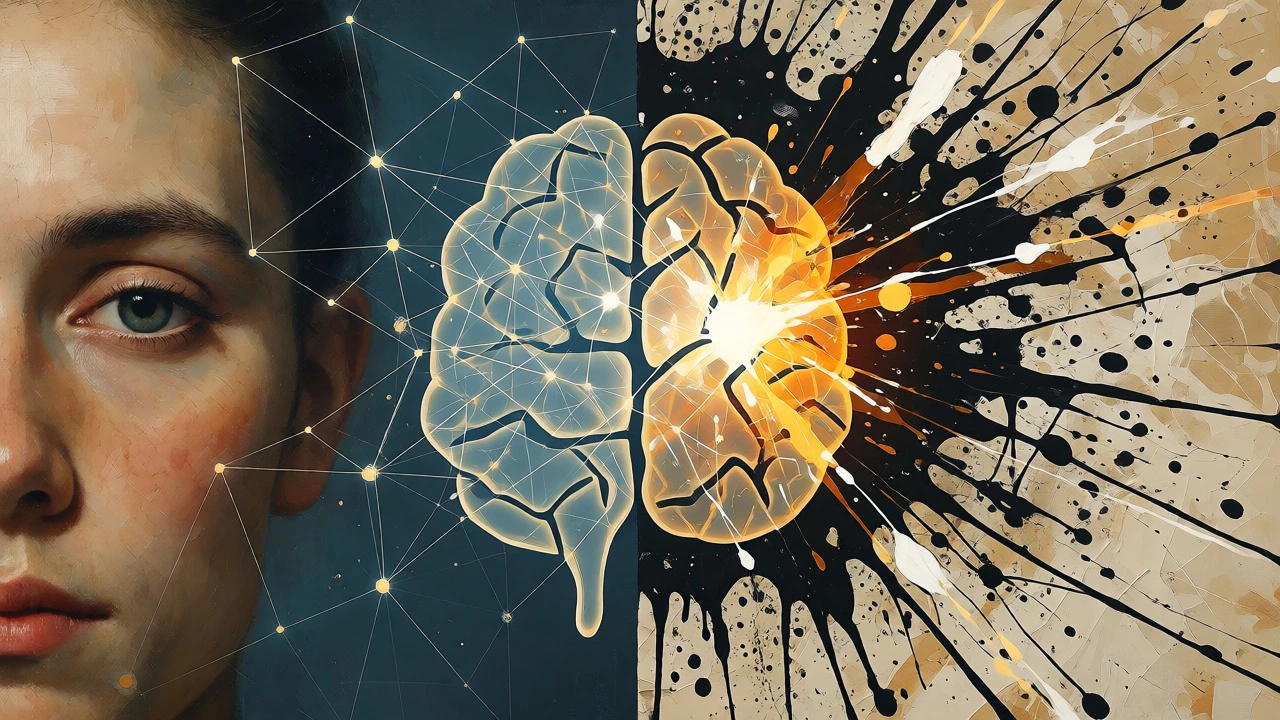
Neuroscience offers a compelling explanation for why we linger on abstract works. Research from University College London suggests that viewing abstract art activates the prefrontal cortex-the part of the brain responsible for decision-making and interpretation-more intensely than viewing realistic art. This happens because the brain hates unresolved puzzles. When presented with ambiguous stimuli, such as a Jackson Pollock drip painting, your mind attempts to impose order on chaos. You aren't just looking; you are solving.
This process triggers a release of dopamine. It’s the same reward chemical you get from finishing a crossword puzzle or finding the plot hole in a movie. If the artwork is too chaotic, you give up. If it is too simple, you get bored. The sweet spot-and the reason people are attracted to the best abstract pieces-is the balance between complexity and coherence. You feel smart because your brain successfully found a pattern where none was explicitly drawn.
Emotion Without Narrative Distraction
Realistic art comes with baggage. If you look at a painting of a war scene, you think about history, politics, and death. If you look at a still life of fruit, you might think about hunger or domesticity. These narratives can distract from pure aesthetic experience. Abstract art strips away the narrative. There is no story to follow, no character to judge, and no historical context required to understand the image.
This allows for a direct emotional hit. Colors have physiological effects. Red raises heart rate and blood pressure; blue lowers them. Mark Rothko, one of the most famous abstract expressionists, deliberately used large blocks of color to evoke primal human emotions like tragedy, ecstasy, and doom. He didn’t want viewers to say, "That looks like a sunset." He wanted them to cry. Because there is no object to analyze, the viewer projects their own internal state onto the canvas. The art becomes a mirror for your mood, making the connection feel deeply personal and intimate.
The Power of Visual Rhythm and Flow
Have you ever listened to instrumental music? No lyrics, just melody and rhythm. Abstract art is the visual equivalent. Artists use line weight, spacing, and repetition to create visual rhythm. Kandinsky, a pioneer of abstraction, believed that color and shape had inherent musical qualities. He compared yellow to a trumpet blast and blue to a cello note.
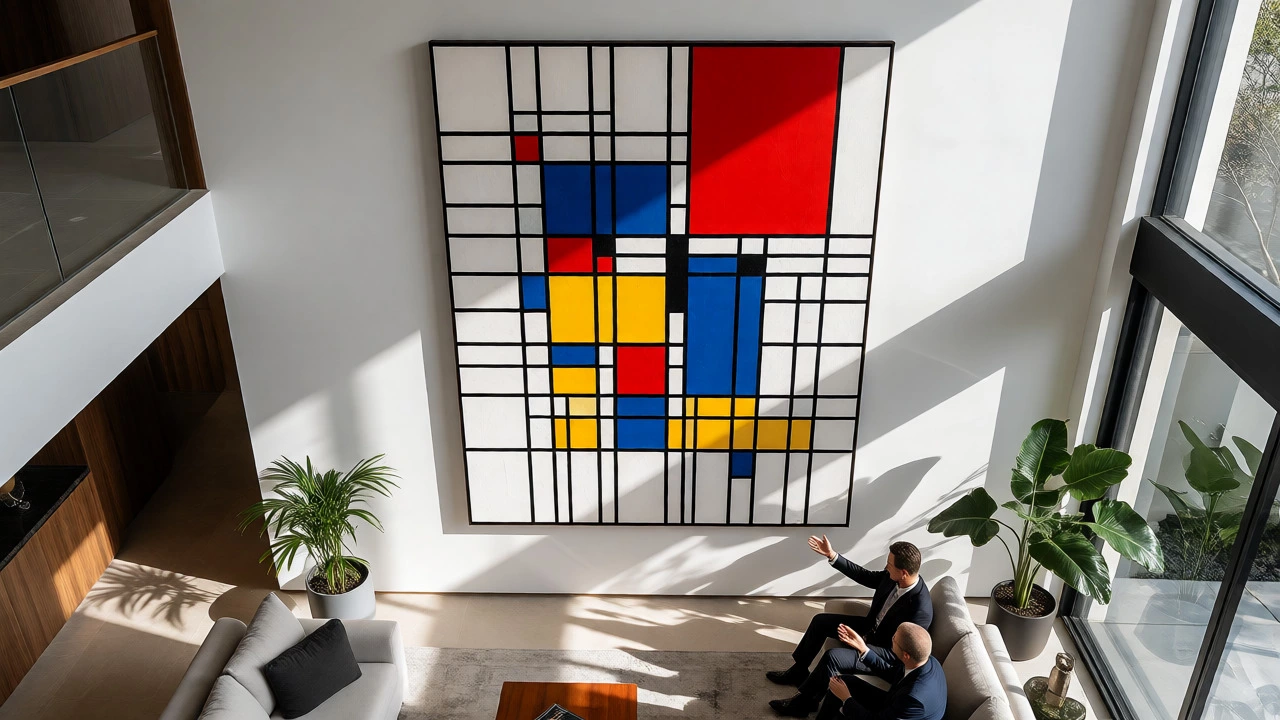
When you view a piece by Piet Mondrian, with his grid-like compositions of black lines and primary colors, your eye moves across the canvas in a predictable yet dynamic way. This movement creates a sense of flow. Psychologists call this "processing fluency." When visual information is easy to track but still interesting, it feels pleasing. We are attracted to these works because they harmonize with our natural scanning patterns. They feel balanced, even if they aren't symmetrical. This visual harmony provides a subconscious sense of order in a world that often feels disordered.
Social Signaling and Cultural Capital
We cannot ignore the social aspect. For decades, abstract art has been associated with high culture, wealth, and sophistication. Owning or appreciating abstract art signals that you possess certain cultural capital. It suggests you are open-minded, educated, and capable of thinking beyond the literal.
This isn't just snobbery; it's a form of identity performance. In professional settings, displaying abstract art in a home or office communicates creativity and modernity. It says, "I value innovation over tradition." This social utility reinforces attraction. Even if you don't fully "get" a specific piece, the act of engaging with it places you within a community of discerning observers. The shared language of critique and appreciation becomes a social glue. You bond over the confusion, the awe, or the debate. The attraction is partly intellectual, but also tribal.
Comparing Abstract vs. Realistic Art Appeal
To understand the specific pull of abstraction, it helps to compare it directly with representational art. Here is how they differ in terms of cognitive load and emotional impact:
| Feature | Realistic Art | Abstract Art |
|---|---|---|
| Cognitive Load | Low to Medium (Recognition based) | High (Interpretation based) |
| Primary Response | Identification ("That is a horse") | Projection ("This feels anxious") |
| Time Spent Viewing | Shorter (Once recognized, less need to scan) | Longer (Brain continues searching for meaning) |
| Emotional Trigger | Narrative or Memory-based | Direct Sensory or Mood-based |
| Accessibility | Universal (No training needed) | Contextual (Often benefits from background knowledge) |
It’s Not About Understanding, It’s About Experiencing
A common barrier for new viewers is the fear of "getting it wrong." We are taught from school that art has a correct answer. But abstract art rejects this premise. There is no hidden code to crack. The artist’s intention matters less than your reaction. This freedom is liberating. You don't need to know the biography of Willem de Kooning to feel the energy in his brushstrokes. You just need to let your eyes wander.
This shift from analysis to experience reduces anxiety. In a world where everything is optimized and explained, abstract art offers a space for silence and uncertainty. It asks you to sit with discomfort or wonder without demanding a resolution. That patience pays off. Over time, your ability to tolerate ambiguity increases, and so does your enjoyment of complex experiences in other areas of life, from relationships to problem-solving.
Key Takeaways
- Neurological Reward: Your brain releases dopamine when it finds patterns in abstract visuals, treating the artwork like a solvable puzzle.
- Emotional Directness: Without recognizable objects, colors and shapes trigger raw emotional responses rather than intellectual associations.
- Visual Flow: Abstract compositions guide the eye through rhythmic movements, creating a sense of subconscious harmony.
- Social Identity: Appreciating abstract art signals cultural openness and sophistication, reinforcing social bonds among viewers.
- Freedom from Judgment: The lack of a single "correct" interpretation allows for personal projection and reduces the pressure to perform intellectually.
Do I need to study art history to enjoy abstract art?
No, you do not. While knowing the history of artists like Kandinsky or Pollock can add layers of context, the primary appeal of abstract art is sensory and emotional. Many people connect deeply with these works purely through their visual impact, without any academic background. Start by trusting your gut reaction to the colors and shapes.
Why does some abstract art look like children's drawings?
Some abstract styles, particularly those influenced by Art Brut or Neo-Expressionism, intentionally mimic naive or childlike aesthetics to bypass technical perfection. Artists like Jean-Michel Basquiat used rough, scribbled lines to convey raw energy and urgency. The goal isn't to replicate reality but to express immediate feeling, valuing authenticity over polish.
Is abstract art just a scam?
This is a common criticism, but neuroscience and psychology suggest otherwise. Studies show that viewing abstract art engages unique neural pathways related to pattern recognition and emotional processing. While the market value of some pieces may be speculative, the human experience of engaging with abstraction is genuine and measurable. It challenges the brain in ways realistic art does not.
How long should I look at an abstract painting?
There is no rule, but try spending at least two minutes. Initial reactions are often superficial. Give your brain time to settle and start tracking the visual rhythms. You might notice details you missed at first glance, such as subtle color gradients or texture variations. The longer you stay, the more likely you are to enter a state of contemplative engagement.
Can abstract art cause negative emotions?
Absolutely. Because abstract art lacks clear subject matter, it acts as a blank screen for your psyche. If you are feeling stressed or anxious, chaotic or dark abstract pieces might amplify those feelings. Conversely, they might also provide a safe container for processing those emotions. The reaction is highly individual and depends on your current mental state.