Find Your Abstract Art Style
Answer these questions to discover which type of abstract art resonates most with you.
Select your preferences
Choose answers on the left to see which abstract art style matches your personality.
Why this fits you:
Key Artists to Explore:
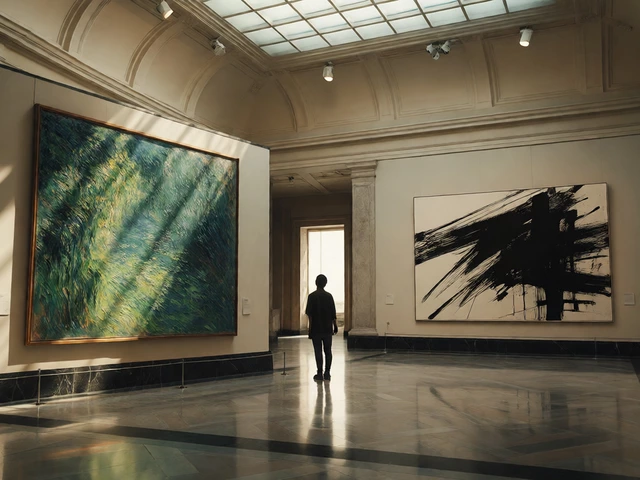
Walk into any major museum today, and you will likely stop in front of a canvas that looks like nothing you recognize. No trees, no faces, no landscapes. Just shapes, colors, and textures. This is abstract art, a movement that fundamentally changed how we look at visual culture. But if you have ever stood before a Rothko or a Kandinsky wondering what you are supposed to see, you are not alone. The term "abstract" covers a massive range of styles, which can make it feel chaotic or inaccessible.
The good news is that abstract art isn't random. It follows distinct traditions. While there are dozens of sub-movements, art historians generally group them into three main types: Geometric Abstraction, Lyrical (or Expressive) Abstraction, and Color Field Painting. Understanding these three categories gives you a framework to decode the work, whether you are buying your first print or just trying to enjoy a gallery visit without feeling lost.
1. Geometric Abstraction: Order, Logic, and Precision
If you prefer structure, clean lines, and mathematical harmony, Geometric Abstraction is where you will find your footing. This style relies on basic forms-circles, squares, triangles, and straight lines-to create compositions that feel balanced and intentional. It is the visual equivalent of a well-organized spreadsheet or a perfectly tiled floor.
Geometric Abstraction emerged prominently in the early 20th century as artists sought to move away from the emotional chaos of the world around them. They believed that universal truths could be expressed through pure form and logic. It emphasizes precision, clarity, and the elimination of personal gesture in favor of objective design.
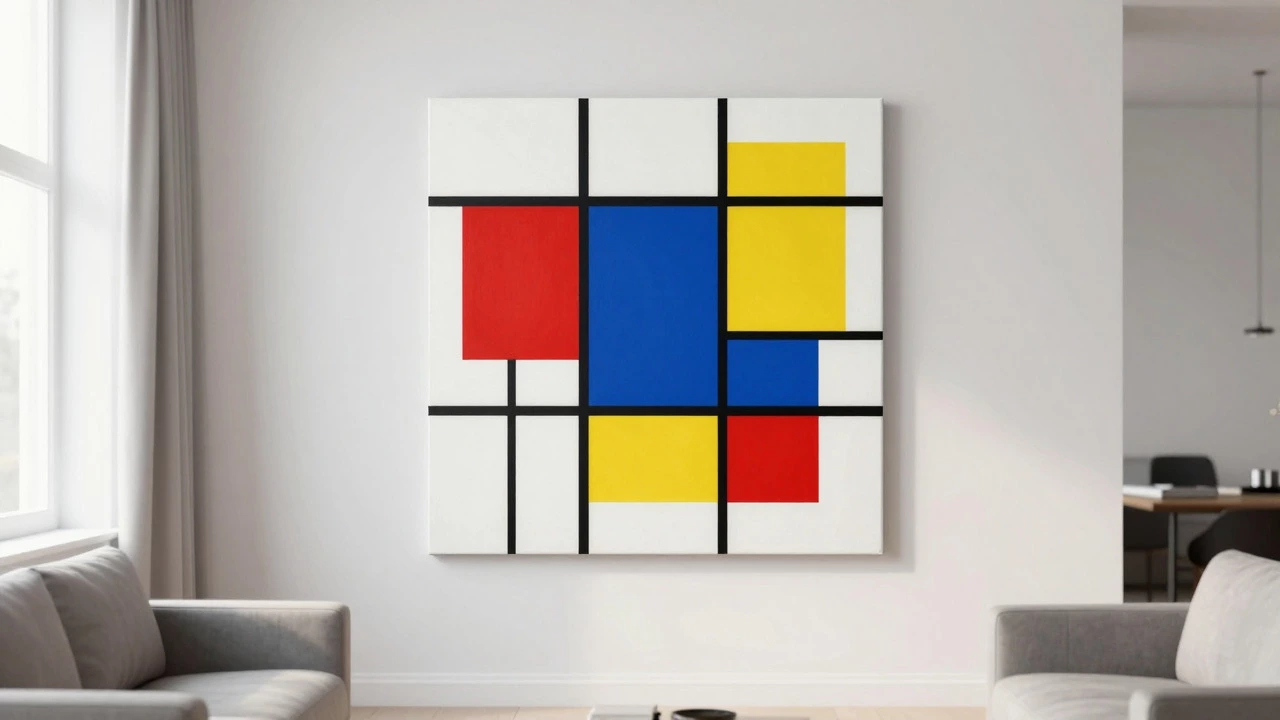
The pioneers here were figures like Piet Mondrian, who reduced nature to vertical and horizontal black lines with blocks of primary colors. His grid-like paintings are instantly recognizable and have influenced everything from architecture to graphic design. Another key figure is Kazimir Malevich, who founded Suprematism, focusing on basic geometric forms painted in a limited color range to express "pure feeling."
Why does this matter to you? Because Geometric Abstraction teaches us that simplicity can be profound. When you look at a Mondrian, you aren't seeing a window to a room; you are seeing an exploration of balance. If you are looking for art that brings calm order to a busy space, this is the type to explore. It pairs beautifully with modern interiors because its clean lines do not compete with furniture or decor.
- Key Characteristics: Sharp edges, symmetrical or asymmetrical balance, limited palettes, repetitive patterns.
- Famous Artists: Piet Mondrian, Kazimir Malevich, Wassily Kandinsky (early works), Josef Albers.
- Best For: Viewers who appreciate minimalism, architecture, and structured design.
2. Lyrical (Expressive) Abstraction: Emotion and Gesture
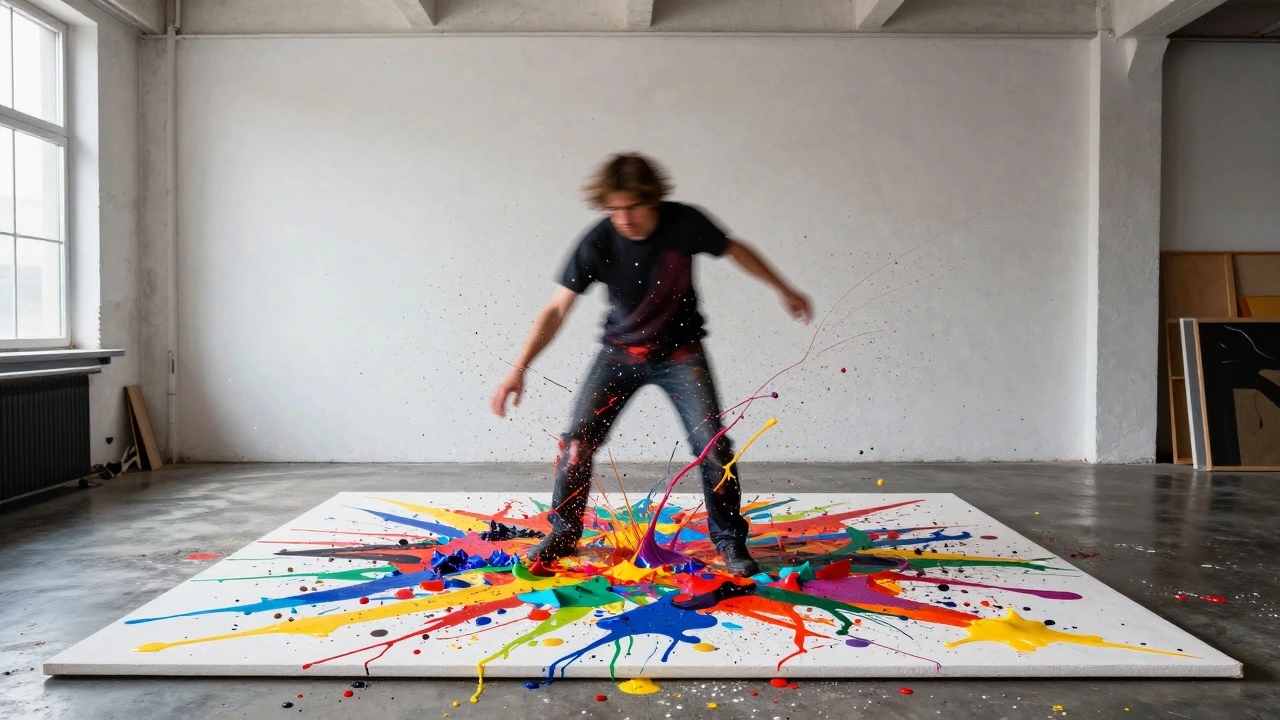
Now, imagine the opposite of a grid. Imagine paint splashed, smeared, slashed, and poured across a canvas with raw energy. This is Lyrical Abstraction, also known as Expressive Abstraction or Action Painting. Here, the process is more important than the final image. The artist’s physical movement-the sweep of the arm, the drip of the brush-becomes the subject.
This style exploded after World War II, particularly in New York City. Artists wanted to break free from European traditions and express the anxiety, freedom, and chaos of the post-war era. The most famous name here is Jackson Pollock. You might have seen his "drip paintings," where he laid canvas on the floor and poured or splattered housepaint onto it. To some, it looks like a mess. To others, it is a record of human energy frozen in time.
Lyrical Abstraction prioritizes the spontaneous, automatic, or subconscious creation. It values the artist's gesture and the texture of the medium over representational accuracy.
When you view Lyrical Abstraction, don't try to find hidden objects. Instead, look at the rhythm. Is the energy frantic and aggressive, like Pollock? Or is it fluid and melancholic, like the sweeping gestures of Helen Frankenthaler? This type of art invites you to feel rather than analyze. It connects directly to your nervous system. If you love music, think of this as the visual equivalent of jazz improvisation-unpredictable, dynamic, and deeply personal.
- Key Characteristics: Visible brushstrokes, drips, splatters, textured surfaces, chaotic composition, high contrast.
- Famous Artists: Jackson Pollock, Willem de Kooning, Helen Frankenthaler, Joan Mitchell.
- Best For: Viewers who connect with emotion, movement, and the physical act of creation.
3. Color Field Painting: Immersion and Mood
If Geometric Abstraction is about structure and Lyrical Abstraction is about action, Color Field Painting is about atmosphere. This style uses large, flat areas of solid color to create a sense of immersion. There are no sharp lines, no dramatic gestures, and no complex patterns. Just vast expanses of hue.
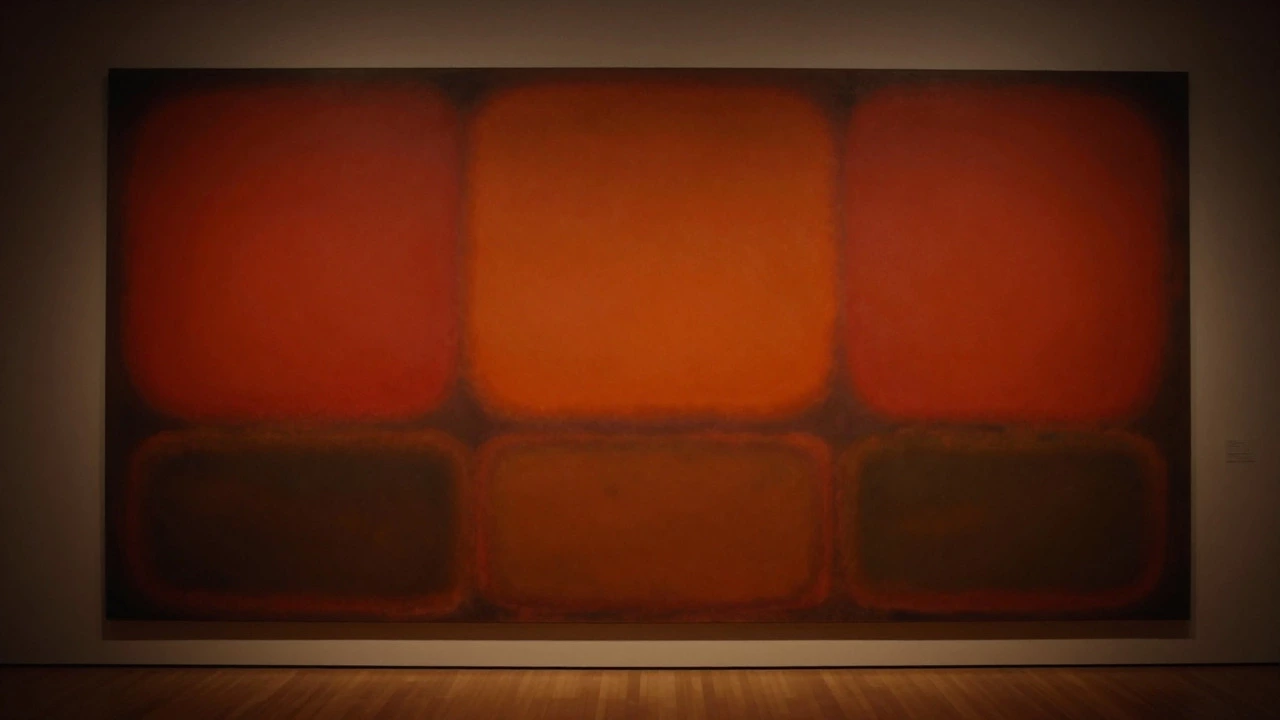
Emerging in the late 1940s and 1950s, Color Field painters wanted to evoke a contemplative mood. They believed that color itself could communicate emotion without the distraction of form. The giant of this movement is Marc Rothko. His paintings often consist of two or three soft-edged rectangles of color floating against a darker background. When you stand close to a Rothko, the colors seem to vibrate and bleed into one another. He intended for viewers to feel enveloped by the work, experiencing a spiritual or tragic emotion.
Color Field Painting focuses on the emotional impact of large fields of color. It aims to create a meditative experience, using subtle gradations and soft edges to dissolve the boundary between the viewer and the canvas.
Another notable figure is Mark Rothko's** contemporary, **Hans Hofmann**, who explored the tension between pushing and pulling colors. Later, artists like Anni Albers** used color fields in textile design, showing how this approach transcends fine art. If you are stressed or overwhelmed, Color Field art can be surprisingly calming. It slows down your eye. It asks you to breathe and simply exist within the color.
- Key Characteristics: Large canvases, soft edges, muted or vibrant monochromatic schemes, lack of distinct forms.
- Famous Artists: Mark Rothko, Barnett Newman, Clyfford Still, Ad Reinhardt.
- Best For: Viewers seeking tranquility, meditation, and emotional resonance through color psychology.
Comparing the Three Types: Which One Resonates With You?
To help you navigate these styles, let's break them down side-by-side. Understanding the differences can help you identify what you naturally gravitate toward, whether you are curating a home gallery or studying art history.
| Feature | Geometric Abstraction | Lyrical Abstraction | Color Field Painting |
|---|---|---|---|
| Primary Focus | Form, Structure, Logic | Gesture, Energy, Process | Color, Mood, Atmosphere |
| Visual Elements | Lines, Shapes, Grids | Brushstrokes, Drips, Texture | Large Blocks of Color |
| Emotional Tone | Calm, Ordered, Intellectual | Dynamic, Chaotic, Emotional | Meditative, Spiritual, Subtle |
| Key Artist | Piet Mondrian | Jackson Pollock | Mark Rothko |
| Ideal Setting | Modern offices, minimalist homes | Creative studios, bold living rooms | Bedrooms, meditation spaces |
How to Appreciate Abstract Art: A Practical Guide
Knowing the three types is only half the battle. The real skill is learning how to look. Many people walk past abstract art because they feel they need to "solve" it. You don't. Here is a simple framework to engage with any abstract piece:
- Identify the Type: Does it look structured (Geometric), energetic (Lyrical), or atmospheric (Color Field)? This sets your expectation.
- Observe the Composition: Where does your eye go first? In Geometric art, look for balance. In Lyrical art, follow the movement. In Color Field art, notice how the colors interact.
- Consider the Context: When was it made? What was happening in the world? Abstract art often reflects the zeitgeist. Post-war anxiety birthed Lyrical Abstraction; the desire for order in a digital age revives Geometric trends.
- Trust Your Reaction: Do you feel calm? Agitated? Curious? Your emotional response is valid data. Art is not a math problem with one right answer.
For example, if you hang a Jackson Pollock in a quiet library, it might feel jarring. But in a vibrant kitchen, it could add the necessary spark. Conversely, a Mark Rothko in a chaotic nursery might provide the serenity parents crave. Context matters as much as content.
Common Misconceptions About Abstract Art
Let's address the elephant in the room: "My kid could do that." This phrase is common, but it misses the point. While a child might make similar marks, they rarely do so with the intentionality, historical awareness, and technical mastery of a trained abstract artist.
Abstract art requires discipline. Creating a balanced geometric composition demands precise calculation. Executing a powerful gestural stroke requires years of practice to control chaos. Mixing a seamless color field requires an understanding of light and pigment chemistry. The value lies not in the difficulty of replication, but in the depth of expression and the contribution to the cultural conversation.
Another myth is that abstract art is meaningless. In reality, it is highly meaningful-it just communicates differently. It bypasses language and logic to speak directly to our senses and emotions. It is closer to music than to literature. You don't read a symphony; you feel it. Abstract art operates on the same principle.
Where to See These Styles Today
You don't need to travel to New York or Paris to experience these masterpieces. Many major museums worldwide have dedicated wings for modern and contemporary art. In Canada, institutions like the National Gallery of Canada in Ottawa and the Art Gallery of Ontario in Toronto hold significant collections of abstract works. If you are in Vancouver, the Vancouver Art Gallery features rotating exhibitions that often include abstract pieces from both local and international artists.
Additionally, online platforms like Artsy or Saatchi Art allow you to filter by style. Searching for "Geometric Abstraction" will yield thousands of results, helping you see how these principles apply to current market trends. This accessibility means you can build a personal collection that aligns with your aesthetic preferences, starting with affordable prints and moving up to original works.
Is abstract art just random splashes of paint?
No. While Lyrical Abstraction may appear chaotic, it is highly intentional. Artists carefully consider composition, color theory, and the physical properties of their materials. Even "random" techniques like dripping are controlled to achieve specific visual rhythms and balances.
Which type of abstract art is best for a small apartment?
Geometric Abstraction is often ideal for smaller spaces because its clean lines and structured compositions can make a room feel more organized and spacious. Small-scale Color Field pieces can also add warmth without overwhelming the area.
Can I mix different types of abstract art in one room?
Yes, but proceed with caution. Mixing Geometric and Lyrical styles can create dynamic tension, while combining Color Field and Geometric works might result in a balanced, sophisticated look. Avoid mixing too many contrasting styles, as this can lead to visual clutter.
Who started abstract art?
Wassily Kandinsky is often credited with creating the first purely abstract painting around 1910. However, other pioneers like Hilma af Klint and Pablo Picasso were also exploring non-representational forms during the early 20th century.
Is abstract art still popular today?
Absolutely. Abstract art remains dominant in the contemporary art market. Modern artists continue to reinterpret these three main types, incorporating digital tools, new materials, and social commentary into their work.