Modern Art Identifier & Timeline Checker
Confused about whether a piece is "Modern" or "Contemporary"? In art history, these terms have specific dates. Use this tool to check the timeline and identify potential movements based on the year created.
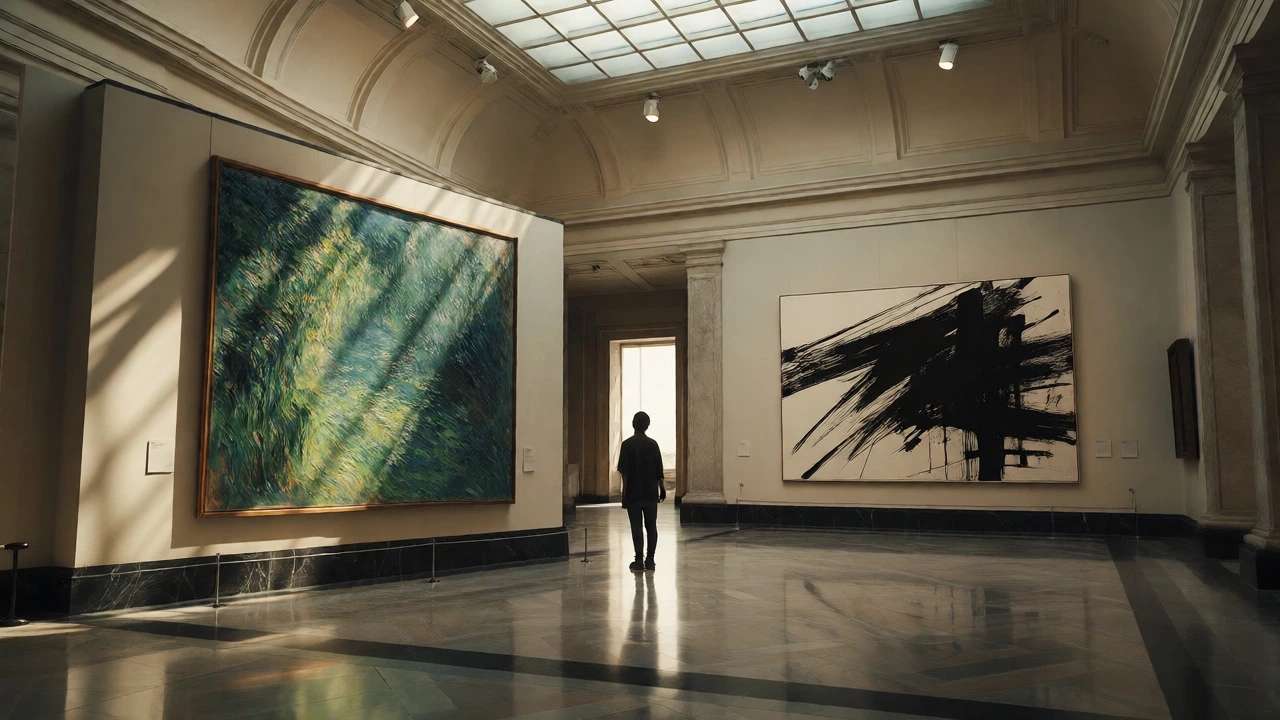
You walk into a museum. You see a painting of a soup can. Next to it hangs a canvas covered in chaotic black slashes on white. Is that modern art? The answer depends entirely on when it was made and what the artist was trying to break.
Here is the confusion: people use "modern" to mean "new." But in art history, "modern" has a specific expiration date. It refers to a period roughly spanning from the 1860s to the 1970s. Anything after that is usually called "contemporary." This distinction trips up almost everyone. If you are trying to figure out if a piece falls under this umbrella, you need to look at three things: the timeline, the intent to reject tradition, and the medium used.
The Timeline That Defines Modern Art
Before we talk about styles, let’s fix the dates. Modern art isn’t just "art made recently." It is a historical era. Most historians agree it began around the mid-19th century, often citing Édouard Manet’s rejection of academic standards as the starting gun. It ended somewhere between the late 1960s and the early 1970s, with the rise of conceptual art and postmodernism.
If you see a Picasso or a Warhol, it is modern art. If you see a Jeff Koons or a Banksy, it is contemporary art. Why does this matter? Because the goals were different. Modern artists wanted to redefine what art could be by breaking away from realism. Contemporary artists often critique society, identity, and the market itself using whatever tools they have, including digital media.
| Feature | Modern Art | Contemporary Art |
|---|---|---|
| Time Period | c. 1860s - c. 1970s | c. 1970s - Present |
| Primary Goal | Experimentation with form and color; rejecting academic rules. | Social commentary, global issues, and questioning the definition of art. |
| Key Mediums | Oil paint, bronze, marble, early photography, collage. | Digital media, installation, video, performance, mixed reality. |
| Famous Names | Picasso, Pollock, Duchamp, Monet, Frida Kahlo. | Ai Weiwei, Yayoi Kusama, Damien Hirst, Takashi Murakami. |
Breaking the Rules: The Core Philosophy
So, what actually happened during those hundred years? Artists stopped trying to copy reality. For centuries, the goal was to make a picture look like a photograph. Then cameras got good. Suddenly, painting didn’t need to record events anymore. It could do something else.
This shift is the heart of modern art. It is about abstraction. When Wassily Kandinsky painted shapes without recognizable objects, he wasn’t being lazy; he was arguing that color and line have their own emotional language. When Marcel Duchamp put a urinal in a gallery, he wasn’t making a joke; he was asking if an object becomes art simply because an artist says so.
If a work prioritizes expression, distortion, or conceptual ideas over realistic depiction, it likely fits the modern art criteria. Look for these traits:
- Abstraction: Objects are simplified, distorted, or removed entirely.
- Subjectivity: The artist’s inner feeling matters more than external accuracy.
- Experimentation: New materials (like newspaper collages) or techniques (like drip painting) are central to the work.
Major Movements You Need to Know
Modern art isn’t one style. It is a collection of rebellions against the previous rebellion. Each movement pushed boundaries further. Here are the big ones that define the category.
Impressionism started the ball rolling in the 1860s. Artists like Claude Monet went outside to capture light as it changed. They broke the studio rule. Their brushstrokes were visible and rough, which shocked critics who wanted smooth, polished finishes. This was the first time "unfinished" became a valid aesthetic choice.
Then came Cubism, led by Pablo Picasso and Georges Braque. They took Impressionism’s break from realism and shattered it. Instead of showing a face from one angle, they showed it from all angles at once. This flattened the image and challenged how humans perceive space. It made the viewer work to understand the subject.
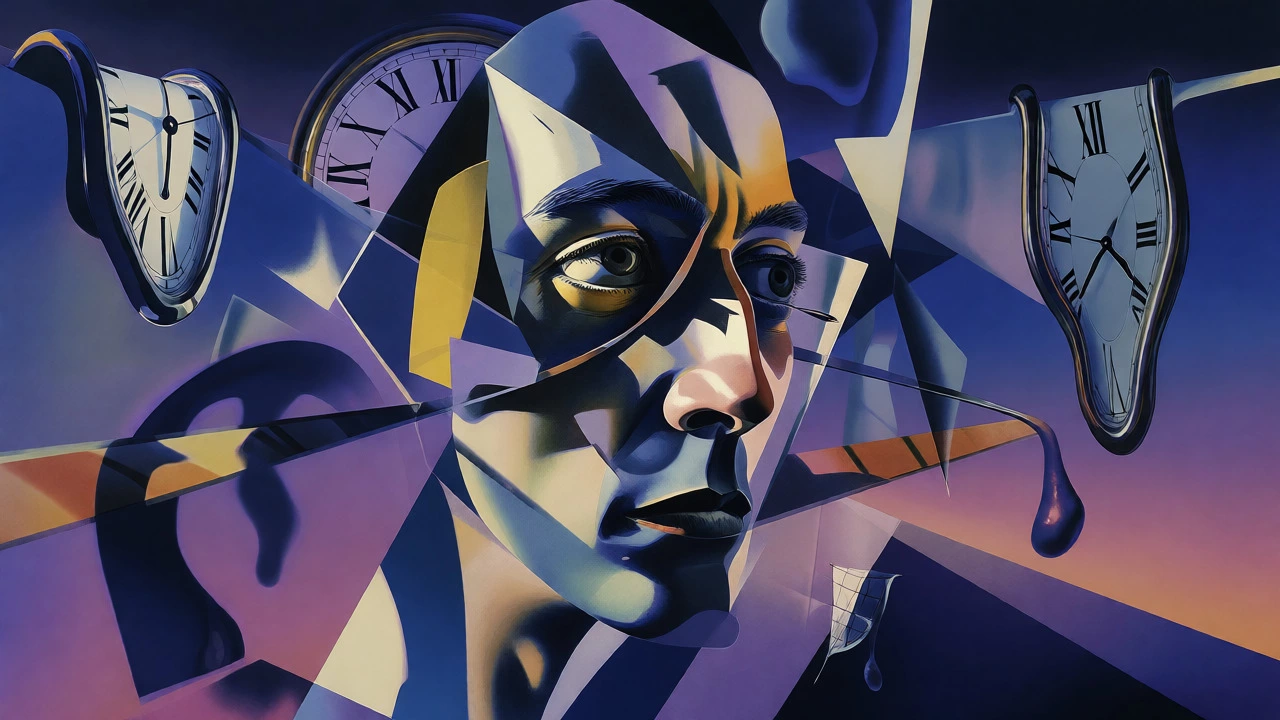
In the early 20th century, Surrealism emerged. Influenced by Freud’s theories on the subconscious, artists like Salvador Dalí and René Magritte painted dreamscapes. Clocks melted. Men floated above cities. The logic here wasn’t visual accuracy but psychological truth. If your art looks like a vivid dream, it likely falls under this modern umbrella.
Post-World War II saw the center of the art world move from Paris to New York. Abstract Expressionism dominated. Jackson Pollock dripped paint onto canvases laid on the floor. Mark Rothko painted massive fields of color meant to evoke deep emotion. The act of painting became the subject. It was raw, physical, and intensely personal.
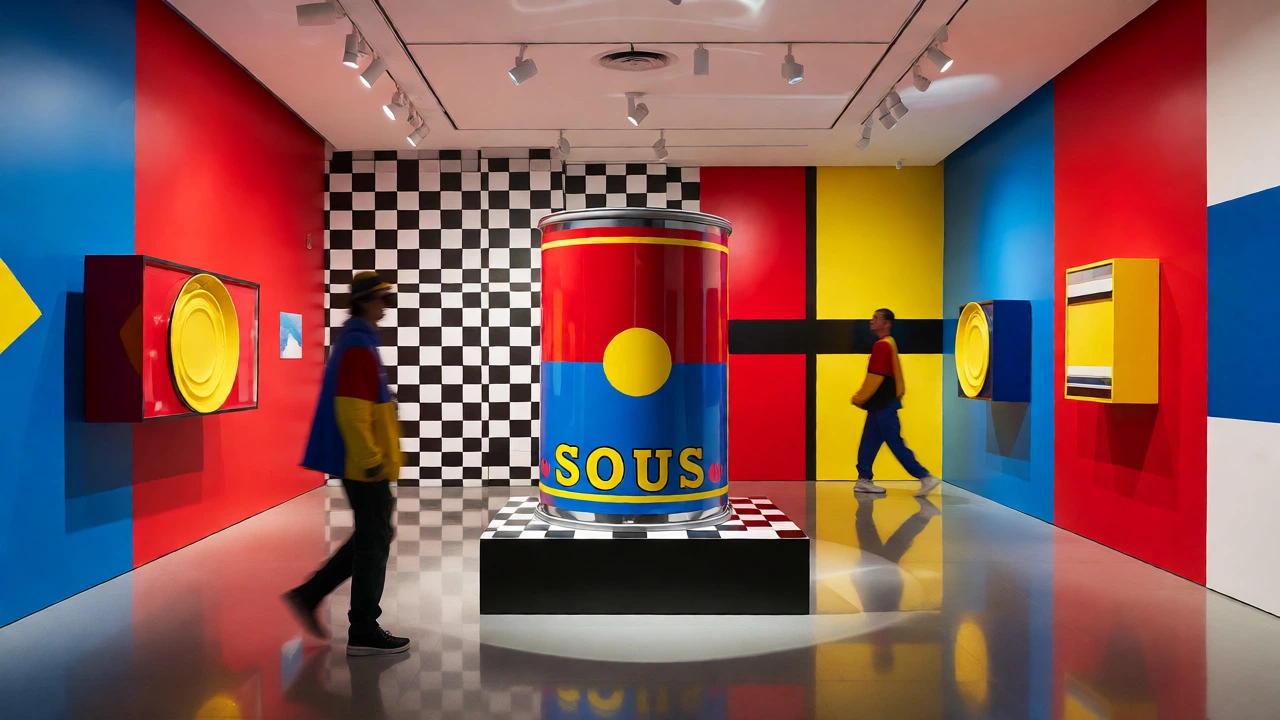
Finally, Pop Art closed the modern era in the 1950s and 60s. Andy Warhol and Roy Lichtenstein brought mass culture into high art. Soup cans, comic strips, and celebrities became subjects. They blurred the line between fine art and commercial advertising. This was the last major push before conceptualism took over.
Is Photography Modern Art?
This is a common question. Photography was invented in the 19th century, right alongside the start of modern art. Initially, painters feared cameras would kill art. Instead, photography freed painting from documentation. But did photography itself become modern art?
Yes, but only when photographers moved beyond simple snapshots. Alfred Stieglitz, for example, treated photographs as artistic compositions. He focused on lighting, composition, and mood, not just recording a scene. By the 1920s and 30s, photographers like Man Ray were experimenting with solarization and photomontages, aligning closely with Surrealist ideals.
However, standard documentary photography from the mid-20th century often sits in a gray area. It is historically significant, but unless it pushes formal boundaries or expresses a subjective vision, museums might categorize it separately from "fine art" modern pieces. If the photo feels constructed rather than captured, it leans toward modern art.
Common Misconceptions About Modern Art
People often dismiss modern art with phrases like "My kid could do that." While it’s true that technical skill looks less apparent, the value lies in the idea. Let’s clear up a few myths.
Myth 1: Modern art is always abstract. Not necessarily. Francis Bacon painted figures, but they were distorted and visceral. Edward Hopper painted realistic scenes, but his isolation and lighting choices were deeply modernist. Realism can be modern if the perspective is unique.
Myth 2: It’s all just random splashes. Pollock’s drips were controlled chaos. He studied rhythm and balance. Similarly, Mondrian’s grids weren’t random; they were carefully calculated attempts to find universal harmony through vertical and horizontal lines.
Myth 3: Modern art is dead. The movement ended, but its influence is everywhere. Every artist today stands on the shoulders of modernists. When you see a minimalist design or a bold color block in fashion, you are seeing the legacy of Bauhaus and De Stijl.
How to Identify Modern Art Yourself
Next time you’re in a gallery or browsing online, use this checklist to decide if a piece falls under modern art.
- Check the Date: Was it created between 1860 and 1970? If yes, you’re in the right zone. If it’s from 2024, it’s contemporary.
- Look for Breaks: Does the artist ignore traditional rules of perspective, anatomy, or color theory? Are they challenging what a painting "should" look like?
- Assess the Intent: Is the focus on emotion, form, or concept rather than narrative storytelling? Modern art often asks questions instead of answering them.
- Examine the Medium: Did the artist use unconventional materials? Collage, found objects, and industrial paints are hallmarks of modern experimentation.
Remember, context matters. A realistic portrait from 1950 might still be modern if it reflects the existential anxiety of the post-war era. Art history isn’t just about style; it’s about the cultural moment.
What is the difference between modern and contemporary art?
The main difference is time. Modern art covers the period from roughly the 1860s to the 1970s. Contemporary art refers to art produced from the 1970s to the present day. Modern art focuses on formal experimentation and breaking from tradition, while contemporary art often addresses social, political, and global issues using diverse media.
Why is modern art considered difficult to understand?
Modern art shifted the focus from representation to expression and concept. Viewers trained to judge art by its resemblance to reality struggle with works that prioritize emotion, abstraction, or intellectual ideas. Understanding requires knowing the historical context and the artist's intent to challenge conventions.
Does modern art include architecture and design?
Yes. The Modernist movement extended beyond painting to architecture, furniture, and graphic design. Styles like Bauhaus and International Style emphasized function, simplicity, and the absence of ornamentation, mirroring the principles of modern visual art.
Can digital art be considered modern art?
Generally, no. Digital art emerged in the late 20th century, placing it firmly in the contemporary category. However, early computer-generated graphics from the 1960s and 70s sometimes bridge the gap, as they shared the experimental spirit of late modernism.
Who are the most important modern artists?
Key figures include Pablo Picasso (Cubism), Henri Matisse (Fauvism), Marcel Duchamp (Dada/Conceptual), Jackson Pollock (Abstract Expressionism), and Andy Warhol (Pop Art). Each revolutionized how we view form, color, and the role of the artist.