Art Classification Analyzer
Select the characteristics of an artwork below to determine its historical period and style classification.
Analysis Result
Classification:
Key Characteristics:
Why this fits:
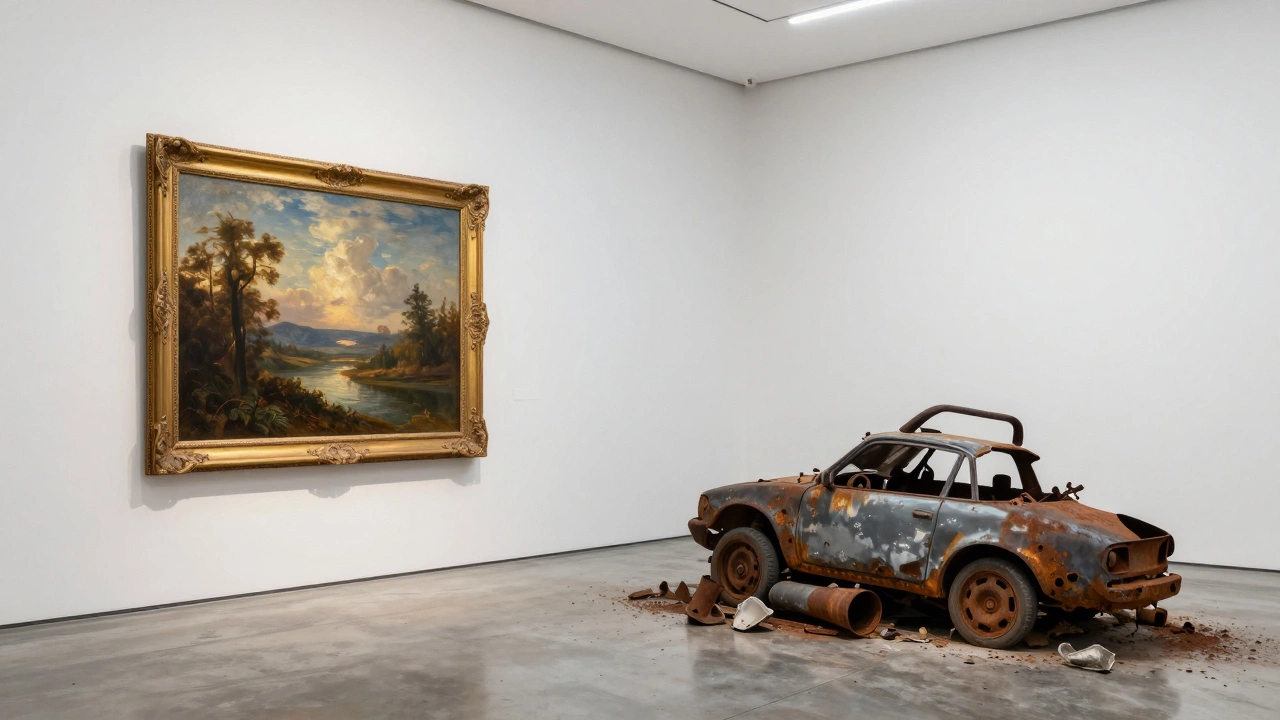
You walk into a gallery. On one wall hangs a pristine oil painting of a landscape from the 1800s. On the other, a pile of rusted car parts sits on the floor with a price tag of $50,000. You might wonder: why is that trash expensive? And more importantly, what actually makes something "art" in the first place?
This confusion is common. The terms fine art and contemporary art are often used interchangeably in casual conversation, but they mean very different things to curators, collectors, and historians. One refers to a set of traditional skills and mediums; the other refers to a specific time period and mindset. Getting this distinction right changes how you look at everything from a Renaissance masterpiece to a viral Instagram meme.
What Exactly Is Fine Art?
When people say "fine art," they are usually talking about art created primarily for its beauty or intellectual content, rather than just utility. Think of it as art made for the sake of art itself, not because you need a chair to sit on or a cup to drink from.
Historically, fine art has been divided into five main disciplines:
- Painting: Using pigments on surfaces like canvas, wood, or walls.
- Sculpture: Shaping materials like stone, metal, or clay into three-dimensional forms.
- Drawing: Creating images with dry media like pencils, charcoal, or ink.
- Printmaking: Producing multiple copies of an image through techniques like etching or lithography.
- Architecture: Designing buildings (though this often crosses into functional design).
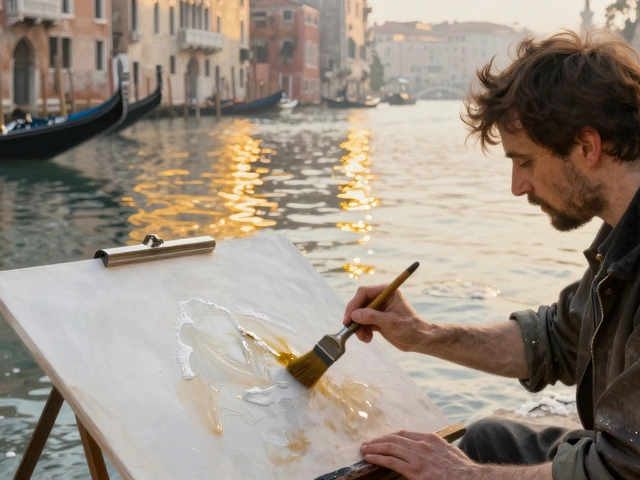
The key here is technique and tradition. If you pick up a brush and paint a realistic portrait, you are engaging in the practice of fine art. The value lies in the artist's mastery of form, color, composition, and perspective. For centuries, these were the only mediums considered "serious" enough to be taught in academies and displayed in museums.
However, "fine art" is also a bit of a moving target. In the 19th century, photography was debated fiercely before being accepted as fine art. Today, digital illustration and video games are fighting for that same status. But the core definition remains: it is visual art created with high technical skill and aesthetic intent.
Defining Contemporary Art: It’s About Time, Not Style
This is where most people get tripped up. Many assume "contemporary" means "modern" or "new-looking." It doesn't. In the art world, contemporary art is strictly defined by when it was made, not how it looks.
Contemporary art refers to art produced from the late 1960s or early 1970s to the present day. Yes, that includes today. So, a sculpture made in 2024 is contemporary art. A painting made in 1980 is also contemporary art. Even if that 1980 painting looks exactly like a classical oil portrait, it is still contemporary because of its date of creation.
So, why do we separate it? Because the context changed. After World War II, and especially during the social upheavals of the 1960s, artists stopped caring so much about making things "beautiful" in the traditional sense. They started asking questions. They wanted to challenge institutions, politics, identity, and the very definition of art itself.
If fine art is about how well you can make something, contemporary art is often about why you are making it and what it says about the world right now.
The Big Confusion: Modern vs. Contemporary
To understand the difference between fine and contemporary art, you have to clear up the biggest mix-up in art history: Modern art. People use "modern" to mean "current," but in art terms, Modern art is dead. It ended around the 1970s.
Here is the timeline breakdown:
| Period | Timeframe | Key Characteristics |
|---|---|---|
| Classical/Traditional Fine Art | Pre-1860s | Realism, religious themes, strict academic rules, focus on technique. |
| Modern Art | 1860s - 1970s | Abstraction, breaking rules, Impressionism, Cubism, Surrealism. Focus on form and color over realism. |
| Contemporary Art | 1970s - Present | Conceptual, mixed media, installation, performance, digital. Focus on ideas and current issues. |
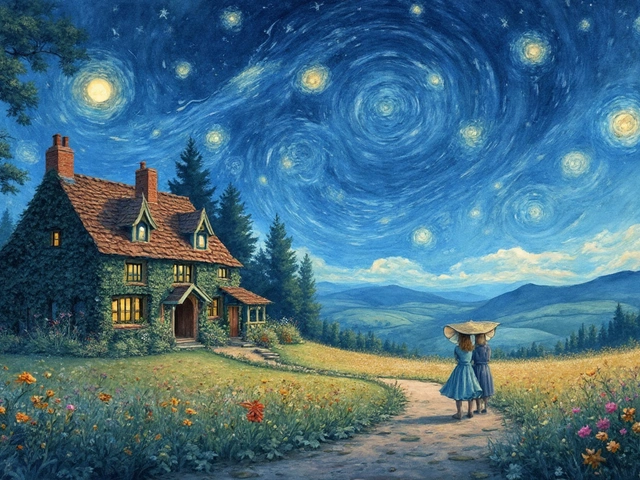
Modern art (think Picasso, Van Gogh, Monet) broke away from the rigid rules of classical fine art. They painted feelings and perspectives, not just what the eye saw. Contemporary art took that rebellion further. It didn't just break the rules of painting; it threw out the canvas entirely.
Mediums and Materials: From Oil Paint to Trash
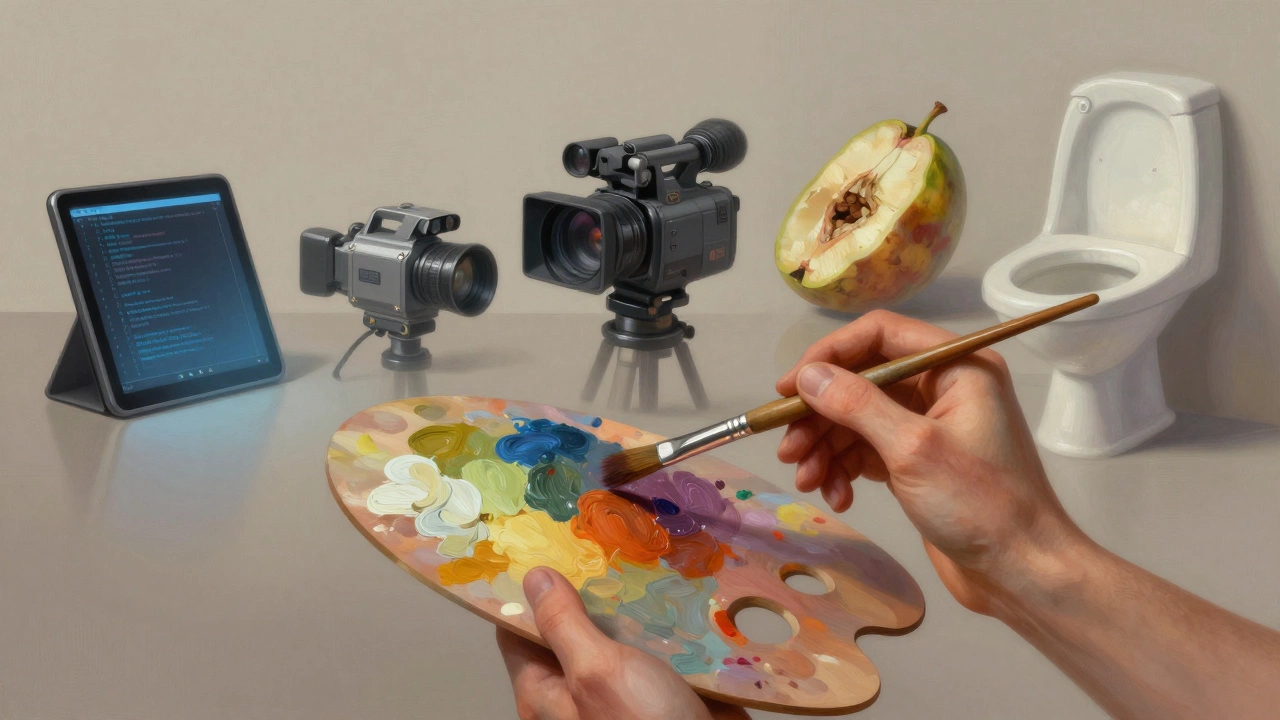
One of the easiest ways to spot the difference is by looking at the materials. Traditional fine art relies on established mediums. You learn to mix oils, carve marble, or blend watercolors. The material matters immensely. A bad canvas ruins a painting; cheap clay cracks under pressure.
Contemporary art, however, is medium-agnostic. If you have an idea, you can use anything to express it. This led to the rise of installation art, performance art, and conceptual art.
Consider Marcel Duchamp’s *Fountain* (1917), which was technically a proto-contemporary work. He took a urinal, signed it, and called it art. At the time, critics screamed that it wasn't fine art because he didn't sculpt it. He agreed! His point was that the idea was the art, not the craftsmanship. Today, contemporary artists follow this logic. They might use:
- Found objects (junk, clothes, furniture)
- Video and sound
- Digital code and AI generation
- Live bodies (performance)
- Ephemeral materials (ice, food, rotting fruit)
Does this mean contemporary artists can't paint? No. Many contemporary artists are brilliant painters. But their painting serves a concept, not just aesthetics. For example, a contemporary painter might use bright, cheerful colors to depict a horrific political event, creating a jarring contrast that forces the viewer to think critically. A traditional fine artist would likely aim for harmony and beauty in the composition.
The Role of the Viewer: Passive vs. Active
In the world of traditional fine art, the relationship between the viewer and the artwork is often passive. You stand back, admire the skill, appreciate the beauty, and maybe try to identify the subject. The artist does the heavy lifting; you enjoy the result.
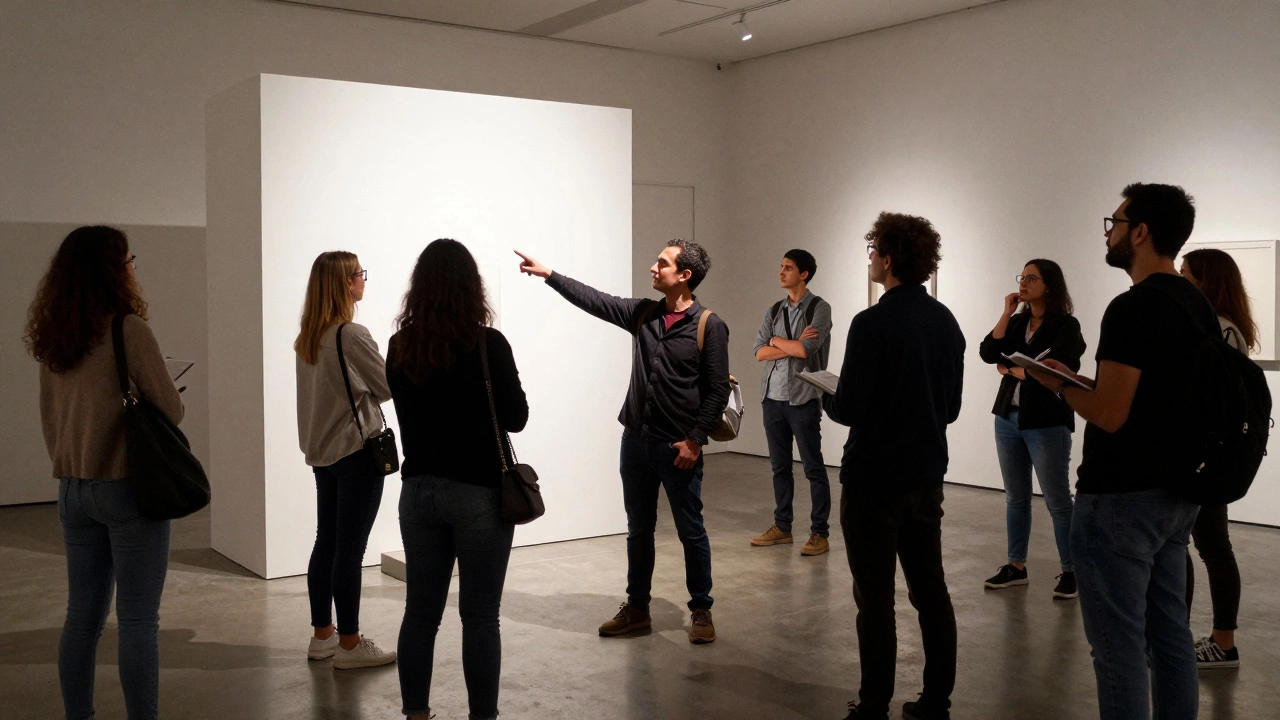
Contemporary art demands active participation. Often, the artwork is incomplete without your interpretation. If you look at a blank white canvas titled "The Cost of Living," you aren't supposed to say, "That's boring." You're supposed to ask, "Why is it blank? What is the artist saying about emptiness, consumerism, or value?"
This shift reflects a broader cultural change. We live in an age of information overload and complex social issues. Art has become a tool for dialogue. When you visit a contemporary exhibition, you are often invited to touch, move, or even destroy parts of the work. The boundary between the gallery and the street blurs. Graffiti, once considered vandalism, is now celebrated as contemporary street art because it comments on urban life and public space.
Value and Market: Why Does It Cost So Much?
Let’s address the elephant in the room: money. People often judge contemporary art by its auction prices, which can seem absurdly high for works that look simple or unfinished. To understand this, you have to look at how value is determined in both fields.
In traditional fine art, value is often tied to provenance (history of ownership), rarity, and technical mastery. A Rembrandt is valuable because few exist, and his skill is undeniable. It is a finite resource.
In contemporary art, value is driven by relevance, discourse, and the artist's career trajectory. When you buy a piece by a famous contemporary artist like Banksy or Jeff Koons, you aren't just buying an object. You are buying into a cultural conversation. You are supporting an artist who is shaping current debates. The market rewards novelty and impact. If an artist creates a work that sparks global discussion about climate change or gender identity, that work gains value because it becomes historically significant.
Also, consider the supply chain. Traditional fine art markets are old and stable. The contemporary art market is dynamic, fueled by biennials, art fairs, and social media. An artist can go from unknown to globally recognized overnight via Instagram. This volatility creates risk, which drives up prices for "blue-chip" contemporary artists whose careers are seen as safe investments.
Can Something Be Both Fine Art and Contemporary?
Absolutely. This is the nuance that gets lost. A painter working in 2024 who uses traditional oil techniques to create beautiful landscapes is producing both fine art and contemporary art.
They are using the medium and skills of fine art (painting). But because they are alive and working today, their work falls under the umbrella of contemporary art. The distinction isn't mutually exclusive; it's layered.
Think of it like clothing. "Fine art" is like a tailored suit-it requires specific skills and follows certain traditions. "Contemporary" is like wearing that suit to a protest rally. The suit is still a suit (fine art), but the context (contemporary) changes how people perceive it. Many contemporary artists reject traditional fine art methods, but many others embrace them while infusing new meanings.
How to Tell Them Apart in Practice
If you are standing in a museum or scrolling online, here is a quick checklist to help you categorize what you are seeing:
- Check the Date: Was it made after 1970? If yes, it is contemporary. Before 1970? It is likely Modern or Classical.
- Look at the Medium: Is it oil, marble, or bronze? It leans toward traditional fine art. Is it video, plastic, code, or a pile of rocks? It leans toward contemporary conceptual art.
- Analyze the Intent: Does it aim to please the eye with beauty and balance? That is a fine art goal. Does it aim to provoke, confuse, or make you think about a social issue? That is a contemporary art goal.
- Read the Label: Museums will tell you. Look for keywords like "installation," "performance," or "conceptual" for contemporary works. Look for "portrait," "landscape," or "still life" for traditional fine art categories.
Understanding these differences doesn't mean you have to prefer one over the other. It simply gives you the tools to engage more deeply. Whether you love the serene perfection of a classical painting or the chaotic energy of a contemporary installation, knowing why it exists helps you appreciate what it is.
Is photography considered fine art?
Yes, photography is widely accepted as fine art today, though it took decades to gain this status. Initially, it was seen as a mechanical process rather than a creative one. Now, artistic photography that emphasizes composition, light, and concept is treated with the same respect as painting or sculpture in major museums.
What is the difference between modern art and contemporary art?
Modern art refers to the period roughly between the 1860s and the 1970s, characterized by a break from traditional realism (e.g., Impressionism, Cubism). Contemporary art refers to art made from the 1970s to the present day. While modern art focused on abstracting form and color, contemporary art focuses on concepts, ideas, and diverse mediums.
Why is some contemporary art so controversial?
Contemporary art often aims to challenge societal norms, political structures, and moral boundaries. By addressing taboo subjects like religion, sexuality, or war, artists provoke strong reactions. This controversy is often intentional, as it generates public discourse and highlights issues that mainstream media might ignore.
Do I need an art degree to understand contemporary art?
No. While art education provides historical context, contemporary art is designed to be accessible. The best approach is to trust your own reaction. Ask yourself what the work makes you feel or think. If you don't "get" it immediately, read the artist's statement or look up reviews. Your personal interpretation is valid.
Can digital art be considered fine art?
Yes. Digital art, including NFTs, digital illustrations, and AI-generated images, is increasingly recognized as fine art. As technology evolves, the definition of "medium" expands. Major institutions now collect and exhibit digital works, acknowledging the skill and creativity involved in digital creation.