Abstract Art Pricing Calculator
This calculator helps you set fair prices for your abstract paintings based on the time you spend creating them, materials costs, and current market value. Follow the industry standard formula used by successful emerging artists.
Estimated Price
Base labor cost
$0
Materials cost
$0
Total cost
$0
Estimated market price
$0
Note: This calculation follows the industry standard formula used by successful emerging artists. For best results, consider your market position, gallery representation, and the current demand for your style.
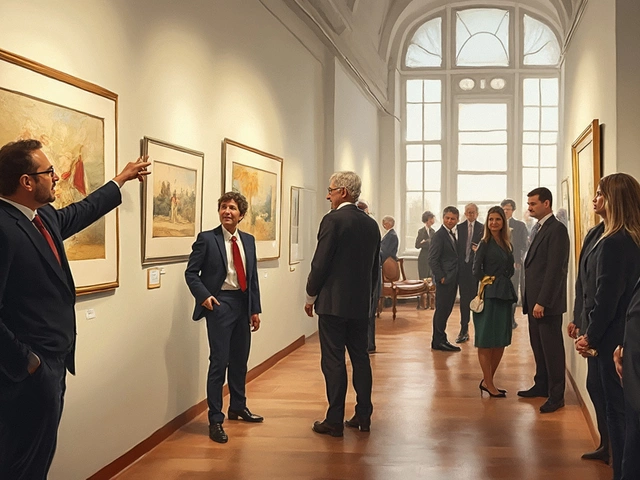
Abstract paintings don’t just hang on gallery walls-they move through auction houses, corporate lobbies, and living rooms across the world. But do they actually sell? And if they do, who’s buying, how much are they paying, and what makes one piece move while another gathers dust?
The short answer? Yes, abstract paintings sell well-but not the way most people think. It’s not about pretty colors or emotional vibes alone. There’s a system behind it, one built on reputation, context, and timing. If you’re an artist wondering if your work has a shot, or a collector trying to understand what’s worth investing in, you need to cut through the myths.
What’s Really Selling in Abstract Art?
Not all abstract art is created equal. A $500 canvas from an unknown artist on Etsy might get 12 views in a month. Meanwhile, a 1960s Helen Frankenthaler drip painting sold for $11.4 million at Christie’s in 2023. The difference isn’t just skill-it’s legacy, provenance, and institutional backing.
Two types of abstract paintings dominate the market:
- Established name abstracts: Works by artists like Mark Rothko, Agnes Martin, or Gerhard Richter. These sell consistently, often at auction houses. Rothko’s pieces regularly fetch over $20 million. Their value comes from decades of museum exhibitions, academic analysis, and collector demand.
- Emerging contemporary abstracts: Artists under 40 with gallery representation, recent solo shows, or inclusion in major art fairs like Art Basel. These sell in the $5,000-$50,000 range. Buyers here aren’t just collectors-they’re investors, designers, and tech entrepreneurs looking for fresh energy.
A 2024 report from Art Basel and UBS showed that abstract art made up 34% of all contemporary art sales globally. That’s more than figurative work, landscapes, or portraits. The trend has been steady since 2018. In fact, sales of abstract pieces by artists under 40 grew by 22% year-over-year in North America alone.
Who Buys Abstract Paintings?
Forget the stereotype of wealthy old men in tuxedos. The modern abstract art buyer is diverse-and often young.
According to data from Artsy’s 2025 buyer survey:
- 41% of buyers are under 35
- 58% are female
- 37% work in tech, finance, or startup industries
- 62% bought their first piece online
These buyers aren’t just decorating. They’re building personal collections that reflect identity, not just taste. A software engineer in Toronto might buy a large-scale abstract piece because it reminds them of code visualizations. A marketing director in Berlin picks a bold red-and-black canvas because it matches the vibe of her brand.
Corporate buyers are another big force. Companies like Google, Apple, and Shopify now have dedicated art programs. They don’t buy abstract art to impress clients-they buy it because it sparks creativity. Studies from Harvard Business School show that employees in offices with abstract art report 17% higher levels of creative problem-solving.
Where Do Abstract Paintings Sell Best?
It’s not just galleries anymore. The market has fractured into clear channels:
- Online platforms (Artsy, Saatchi Art, Artspace): These account for 48% of all emerging abstract sales. They’re low-barrier for buyers and let artists reach global audiences without gallery commissions.
- Art fairs (Art Basel, Frieze, NADA): High-ticket sales happen here. Buyers come to see work in person, but the real deals often start online before the fair even opens.
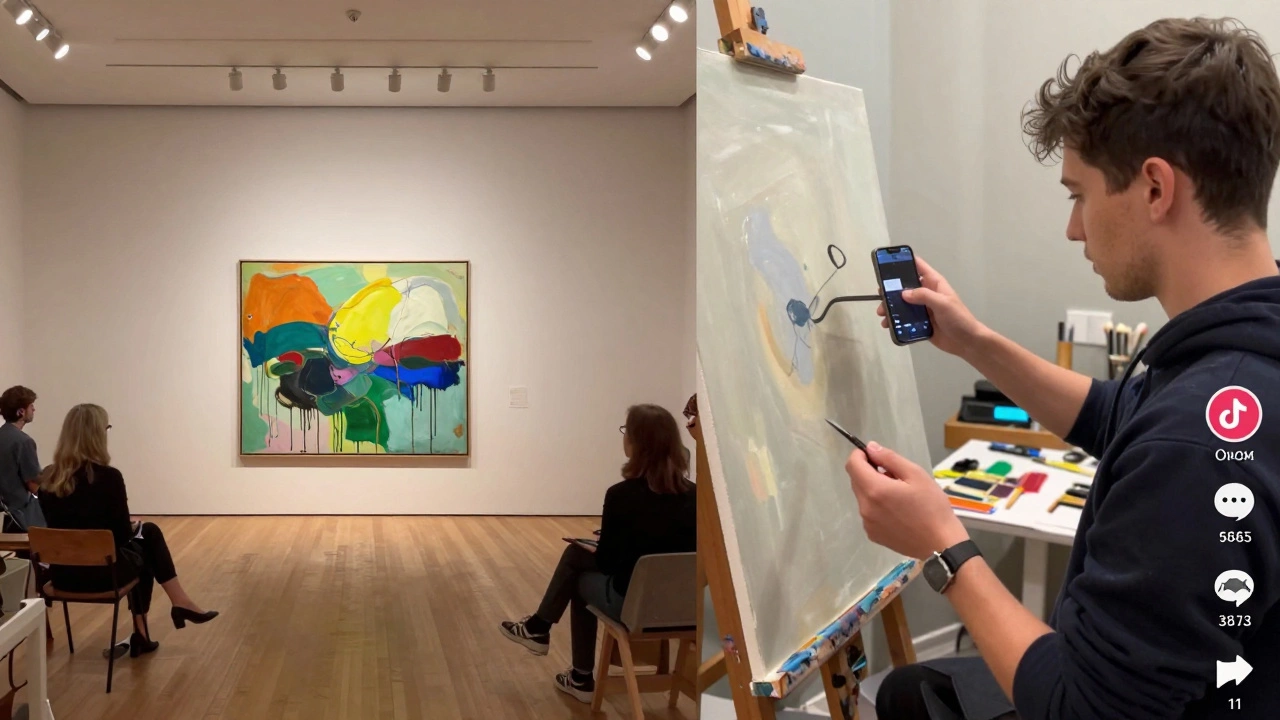
- Instagram and TikTok: Artists with 50K+ followers can sell entire collections in days. A Vancouver-based artist named Lila Chen sold 27 paintings in 72 hours after a single TikTok video showing her process. No gallery needed.
- Corporate art programs: Companies buy in bulk. A single contract for 15 pieces can net an artist $150,000.
- Auction houses: Only for established names. This is where record prices happen-but it’s a tiny slice of the overall market.
What’s surprising? The fastest-growing channel is direct-to-consumer sales via artist websites. More than 60% of artists under 35 now sell 70% or more of their work through their own sites, using tools like Shopify or Artlogic. They keep 85% of the sale instead of the typical 50% gallery cut.
What Makes an Abstract Painting Sell?
It’s not magic. It’s strategy.
Here’s what actually moves the needle:
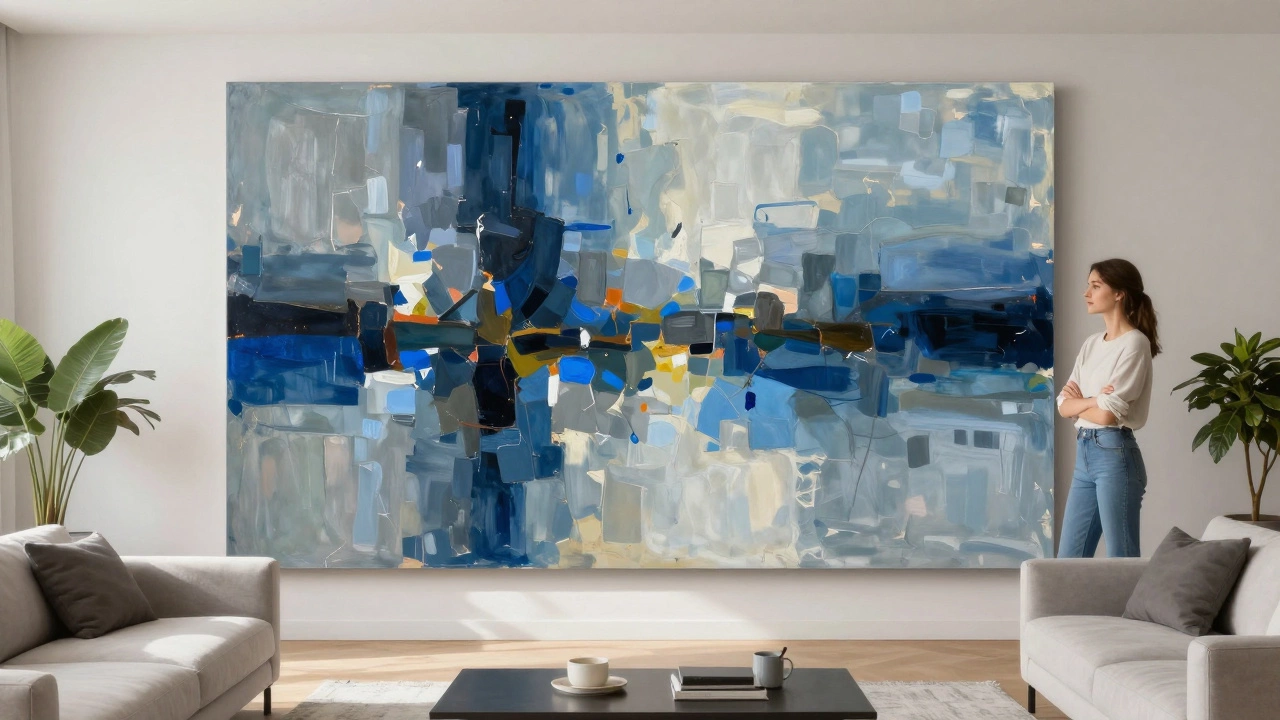
- Scale matters: Pieces larger than 48x60 inches sell 3x faster than smaller ones. Big works make a statement in open-plan spaces.
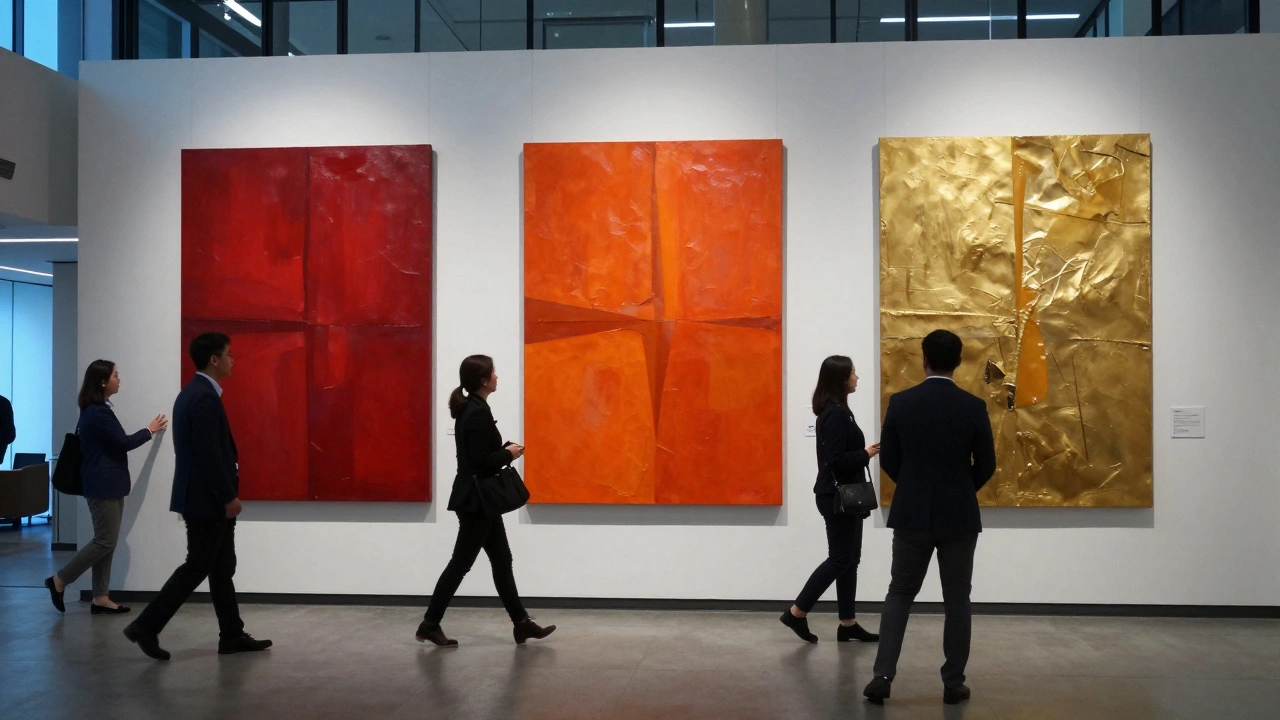
- Color psychology: Blues and greens sell best in residential settings. Reds and oranges dominate corporate sales. Neutrals (grays, beiges) are safe bets for high-end buyers.
- Texture and depth: Paintings with visible brushwork, layered glazes, or mixed media (sand, fabric, metal) attract 40% more attention than flat, single-layer pieces.
- Storytelling: Buyers want to know the process. A simple caption like “This piece was painted during 17 straight nights of insomnia” connects emotionally. It turns a visual into a human experience.
- Consistency: Artists who release 3-5 new works every 4-6 months build trust. One-hit wonders rarely get repeat buyers.
On the flip side, paintings that don’t sell often suffer from:
- Too much chaos without structure
- Overused motifs (spiral galaxies, chaotic splatters with no intent)
- No clear signature or artist identity
- Being priced too high without context
How Much Can You Actually Make?
Let’s get real about numbers. The range is huge:
- Emerging artists: $1,000-$15,000 per piece. A consistent artist selling 12 pieces a year at $8,000 average makes $96,000. That’s a full-time income.
- Mid-career artists: $20,000-$100,000 per piece. These artists have gallery representation, museum exposure, and collector lists.
- Blue-chip artists: $1 million+. Rothko, Kline, Pollock. This is the top 0.1%.
Most artists don’t hit the million-dollar mark. But you don’t need to. In 2025, over 1,200 artists in North America alone made over $100,000 selling abstract work-mostly through direct sales and online platforms.
One artist from Vancouver, Jordan Lee, sold 32 paintings in 2024. His average price? $7,200. He never used a gallery. He posted time-lapse videos, answered every DM, and offered payment plans. His income? $230,400. No hype. Just consistency.
Is Now a Good Time to Sell?
Yes. But not because the market is booming-it’s because it’s maturing.
Five years ago, you could slap some paint on canvas, call it abstract, and hope for the best. Today, buyers are smarter. They look at:
- Artist CVs
- Exhibition history
- Media coverage
- Price history across platforms
That’s a good thing. It means the market is filtering out fluff. If you’ve put in the work-studied composition, built a body of work, engaged with your audience-you have a real shot.
The biggest opportunity right now? Selling to international buyers. Canada, the U.S., and Germany are top markets. But buyers from South Korea, Japan, and the UAE are growing fast. A piece that sells for $8,000 in Toronto might go for $14,000 in Seoul.
Final Take: Yes, They Sell-But Not by Accident
Abstract paintings sell well-not because they’re pretty, but because they’re meaningful in a quiet, personal way. They speak to people who don’t need literal images to feel something.
The market isn’t broken. It’s just different than it was 10 years ago. You don’t need a gallery to succeed. You don’t need to be famous. You just need to show up, make work that matters to you, and tell the story behind it.
Abstract art isn’t about hiding meaning. It’s about inviting people to find their own.
Do abstract paintings sell better than figurative art?
In the contemporary art market, abstract paintings consistently outsell figurative work. According to 2024 data from Art Basel, abstract pieces made up 34% of all contemporary art sales, compared to 28% for figurative art. Buyers today value emotional resonance and personal interpretation over realism, especially in home and office settings. However, traditional portraits and figurative pieces still dominate in auction houses for historical works.
Can unknown artists sell abstract paintings successfully?
Absolutely. In 2025, over 60% of emerging abstract artists sold more than half their work through direct online channels like Instagram, personal websites, and platforms like Artsy. Success comes from consistent output, authentic storytelling, and engaging directly with buyers. One artist from Montreal sold 40 pieces in six months by sharing her daily painting process on TikTok-no gallery, no PR team.
What size abstract paintings sell best?
Paintings between 48x60 inches and 72x96 inches sell fastest. These sizes fit well in modern open-concept homes and corporate lobbies. Smaller pieces under 36 inches often get overlooked unless they’re part of a series. Large-scale works create presence, and buyers are willing to pay a premium for them-sometimes 2-3 times more than smaller versions of the same style.
Are abstract paintings a good investment?
Some are, but not all. Abstract art by established artists like Helen Frankenthaler or Agnes Martin has shown steady appreciation over decades. For emerging artists, it’s riskier. The best approach is to buy what you love, not what you think will appreciate. If you’re investing, look for artists with gallery representation, museum exhibitions, and consistent sales history. Avoid buying based on trends alone.
How do I price my abstract paintings?
A common formula is: (hourly rate × hours spent) + cost of materials + 30% for overhead and profit. For example, if you spend 40 hours on a painting and your rate is $40/hour, with $200 in materials, that’s $1,800. Add 30% ($540), and your price is $2,340. Adjust based on size, complexity, and where you’re selling. Emerging artists typically price between $10-$50 per square inch. Check what similar artists in your region charge.
Do galleries still matter for abstract artists?
Galleries still help with credibility and access to high-end buyers, but they’re no longer necessary. Many successful artists now bypass galleries entirely, using online platforms and social media to build direct relationships. The trade-off? You lose the gallery’s marketing and curation-but keep 85% of the sale instead of 50%. For emerging artists, direct sales often lead to faster growth and more control.