When you think of sculpture, you might picture a marble statue in a museum or a bronze figure in a city park. But sculpture is way more than that. It’s one of the oldest forms of human expression-dating back over 30,000 years-and it comes in four basic types that define how it’s made, how it’s seen, and how it interacts with space. Knowing these types helps you understand not just what you’re looking at, but how the artist thought about form, material, and movement.
Full-Round Sculpture (In the Round)
This is what most people picture when they hear the word "sculpture." Full-round sculpture, also called sculpture in the round, is a three-dimensional figure that you can walk around. It’s completely independent of any background wall or surface. You see it from all sides-front, back, sides, top, even underneath if it’s designed that way.
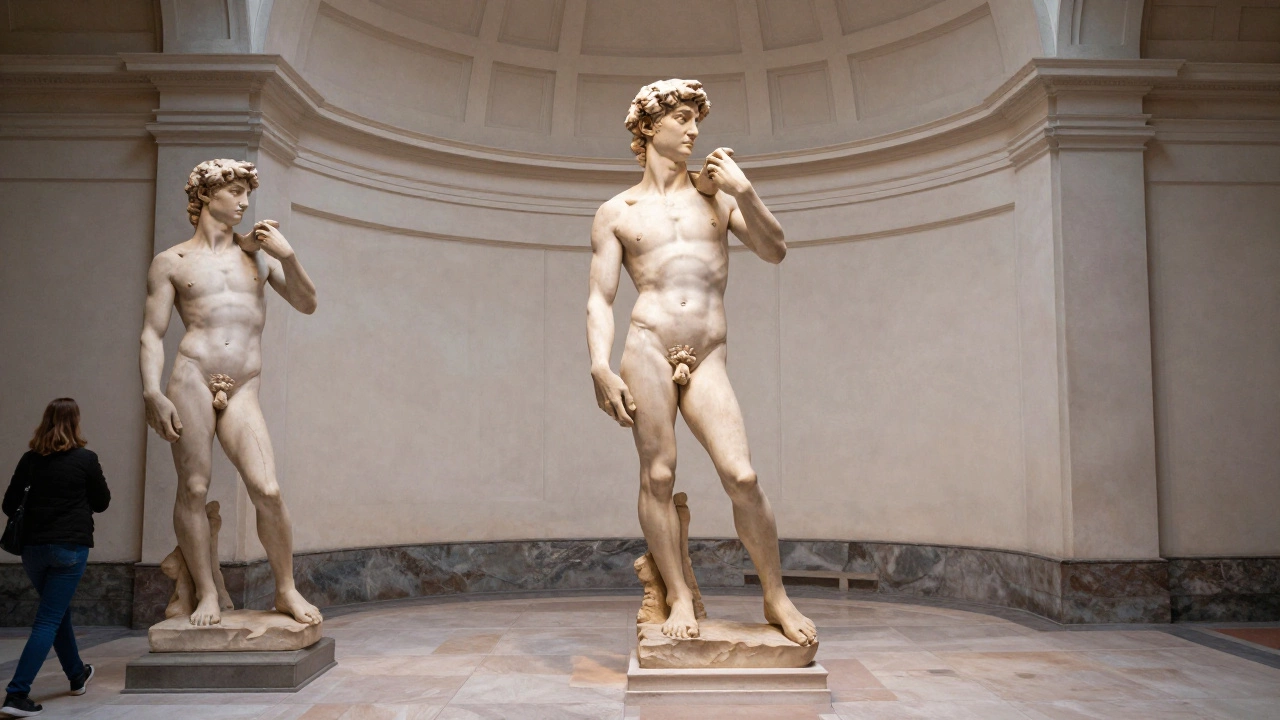
Think of Michelangelo’s David. You don’t just look at it from one angle. You circle it. You notice how the muscles shift under the light, how the weight rests on one hip, how the gaze follows you as you move. That’s the power of full-round sculpture. It demands physical engagement. It’s not just an object to observe-it’s an experience.
Artists use this type for figures, animals, or abstract forms meant to occupy real space. Materials vary: bronze, stone, wood, clay, even plastic or steel. The key is that it’s self-supporting and meant to be viewed from every direction. It’s the most challenging type to make because the artist has to consider every possible viewpoint at once.
Relief Sculpture
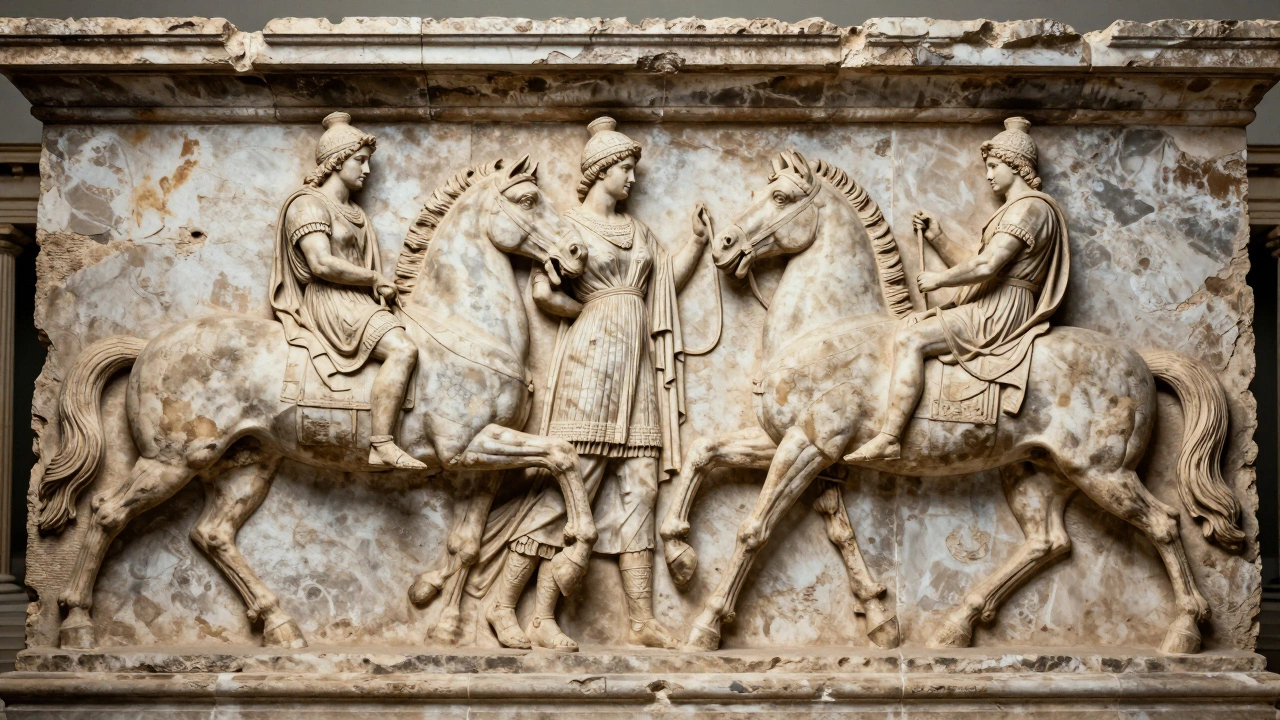
Relief sculpture is attached to a flat background. It doesn’t stand free. Instead, it projects out from a surface-like a wall, a panel, or a coin. You can’t walk around it. You look at it from one main angle, but you still see depth and dimension.
There are three kinds of relief: low relief (bas-relief), high relief, and sunken relief. Low relief barely rises from the surface-think of ancient Egyptian wall carvings where figures seem to emerge just enough to catch the light. High relief, like the figures on the Parthenon frieze, projects more than halfway out, sometimes with parts fully detached from the background. Sunken relief, common in Egyptian and Mesopotamian art, is carved into the surface, so the design sits below the original plane.
Relief is practical. It’s used on buildings, monuments, coins, and medals because it’s durable and doesn’t stick out far. It’s also great for storytelling-scenes from mythology, battles, or daily life unfold across a surface like a frozen movie.
Additive Sculpture
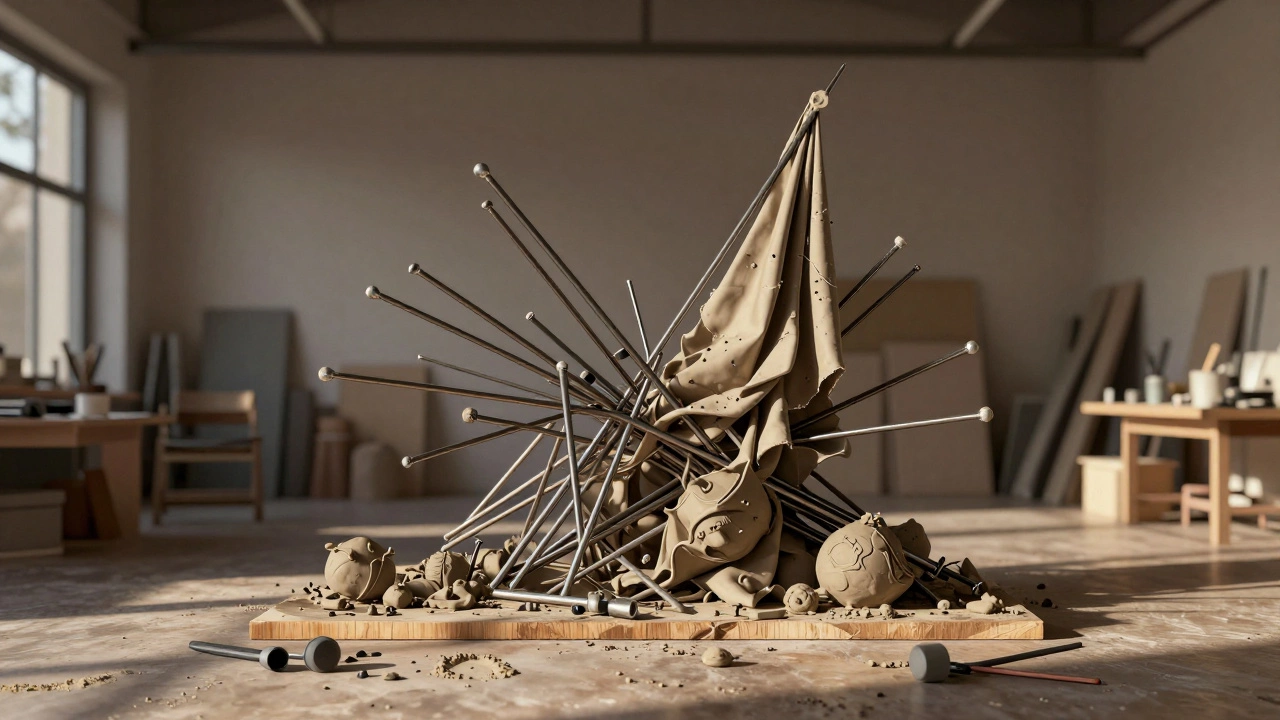
Additive sculpture is built up, not carved away. Instead of removing material, the artist adds it-layer by layer, piece by piece. This is how you make things from clay, wax, wire, plaster, or even found objects. It’s the opposite of subtractive sculpture.
Think of a child building a snowman. They roll snowballs and stack them. That’s additive. In art, it’s the same idea. A sculptor might mold clay into a figure, add arms, shape a face, then bake or cast it. Or they might weld steel rods together to form a twisted, abstract shape. Modern artists like Louise Bourgeois used this method to create emotional, organic forms from fabric, wood, and metal.
Additive techniques give artists incredible freedom. You can reshape, rework, and rebuild as you go. It’s perfect for experimental forms and non-traditional materials. It’s also how most contemporary sculpture is made today-especially in studios where speed and flexibility matter.
Subtractive Sculpture
Subtractive sculpture is the oldest method. You start with a block of material-stone, wood, or even ice-and chip away until the form appears. It’s like finding a shape hidden inside the material. This method requires patience, precision, and a deep understanding of the medium.
Michelangelo famously said he saw the figure inside the marble and just removed what wasn’t needed. That’s subtractive sculpture in its purest form. Carving stone with chisels, gouges, and rasps is slow, unforgiving, and physical. One wrong strike can ruin weeks of work. That’s why it’s still considered one of the most demanding sculptural techniques.
Wood carving follows the same principle. Artists like Henry Moore used both stone and wood, letting the grain and knots guide the final shape. Subtractive sculpture isn’t just about technique-it’s about dialogue. The material speaks. The artist listens. The result feels grounded, solid, and timeless.
Why These Four Types Matter
These four types aren’t just art history labels. They shape how you experience sculpture. A full-round piece pulls you into its space. A relief tells a story on a wall. An additive sculpture feels alive, built by hand. A subtractive one feels ancient, unearthed.
Modern artists often mix them. A sculptor might carve a stone base (subtractive), then weld metal branches onto it (additive), and mount the whole thing as a relief on a wall. But understanding the roots helps you see the choices behind the art.
When you visit a museum or walk through a public park, ask yourself: Is this sculpture free-standing? Is it carved from a block? Is it built from pieces? Is it pressed against a wall? Those questions will change how you see it. You won’t just look at sculpture-you’ll understand how it was made, why it looks that way, and what the artist was trying to say.
Common Misconceptions
Many people think all sculpture is carved from marble or cast in bronze. That’s not true. Today, sculptors use foam, resin, cardboard, light, sound, even ice. The material doesn’t define the type-the method does.
Another myth: relief isn’t "real" sculpture because it’s flat. But relief has been used for thousands of years to convey power, religion, and history. It’s not lesser-it’s different. It’s designed for architecture, not for solo display.
And additive sculpture? Some think it’s "easier" because you can fix mistakes. But building something from scratch with fragile materials like clay or wire requires just as much skill-and more planning. One wrong move, and the whole thing collapses.
How to Tell Them Apart
Here’s a quick guide:
- Full-round: Can walk all the way around it. No wall attached.
- Relief: Stuck to a surface. You see it from the front.
- Additive: Looks built-welded, glued, stacked, molded.
- Subtractive: Looks carved-smooth surfaces, tool marks, heavy material.
Next time you’re in a gallery, try sorting sculptures into these four groups. You’ll start seeing patterns you never noticed before.
What is the most common type of sculpture in public spaces?
Full-round sculpture is the most common in public spaces because it’s designed to be viewed from all angles and stands independently. Statues of historical figures, animals, or abstract forms in parks and plazas are almost always full-round. They’re meant to be walked around, photographed from different sides, and experienced as part of the environment.
Can a sculpture be both additive and subtractive?
Yes, many modern sculptures combine both methods. An artist might carve a stone base (subtractive) and then attach welded metal elements (additive). Some even use 3D printing to build up a form, then carve details into it. The technique isn’t about being pure-it’s about what the artist needs to express.
Is relief sculpture considered "real" sculpture?
Absolutely. Relief sculpture has been used for over 5,000 years in cultures from Egypt to Greece to the Aztecs. It’s not less important-it’s just different. It’s designed to work with architecture, not replace it. Many of the most powerful storytelling artworks in history are relief carvings on temple walls and tombs.
Why is subtractive sculpture still used today?
Because it connects the artist to the material in a direct, physical way. Carving stone or wood forces patience and respect for the medium. Many contemporary artists use it to create a sense of permanence, weight, and timelessness. Even with digital tools available, the process of removing material to reveal form remains powerful and deeply satisfying.
Which type of sculpture is easiest for beginners?
Additive sculpture is usually the easiest for beginners. Materials like clay, play-dough, or wire are forgiving. You can reshape, add, or remove parts without ruining everything. Subtractive sculpture requires expensive tools and permanent mistakes. Additive lets you learn form and structure without fear of breaking something.