Abstract Art Talent Checker
Stop asking "Could my kid do that?" Start asking the right questions. Evaluate a piece of abstract art using the criteria professionals use.
Describe the Artwork
Analysis Complete
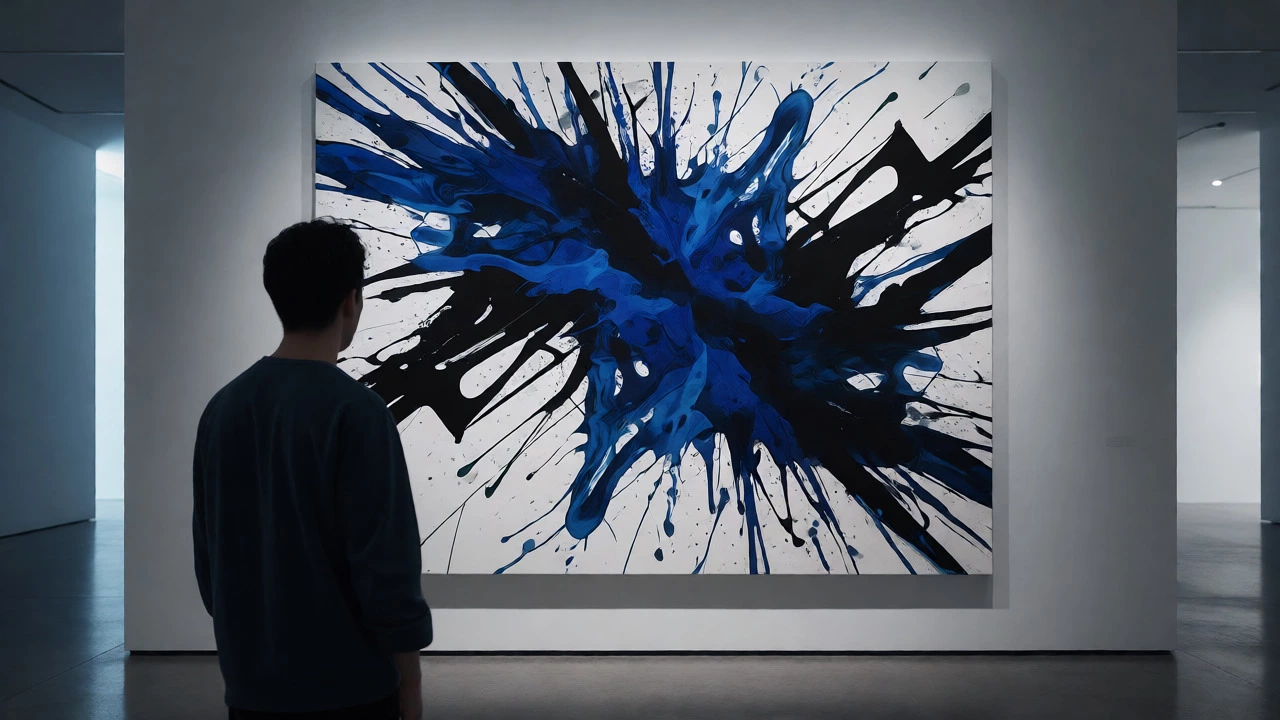
You stand in front of a canvas. It’s a splash of blue here, a jagged black line there, maybe some smudges that look like they happened by accident. You squint. You tilt your head. And then you ask the question everyone asks: "I could do that." Or, more pointedly, "Does this person actually have any talent?"
It is a fair question. For centuries, we judged art by how well it copied reality. If the horse looked like a horse, the artist was good. If it didn't, they were bad. But Abstract Art broke those rules around the early 20th century. It stopped trying to copy the world and started trying to express feelings, shapes, and colors for their own sake. This shift left many viewers confused about what "talent" even means in this context.
The short answer? Yes, abstract art requires talent, but not the kind you are thinking of. It does not require the ability to draw a perfect sphere or paint a realistic portrait. Instead, it demands a different set of skills: visual composition, color theory, emotional intelligence, and often, years of technical training to know exactly when to break the rules. Let’s unpack why the "my kid could do that" argument misses the point entirely.
Redefining Talent in the Visual Arts
When people say an artist lacks talent, they usually mean they lack representational accuracy. They cannot draw hands correctly or get the perspective right. In classical painting, this was the gold standard. But Abstract Art is a form of art that does not attempt to represent an accurate depiction of a visual reality but instead uses shapes, colors, forms, and gestural marks to achieve its effect. The goal isn't to trick your eye into seeing a tree; it's to make you feel something.
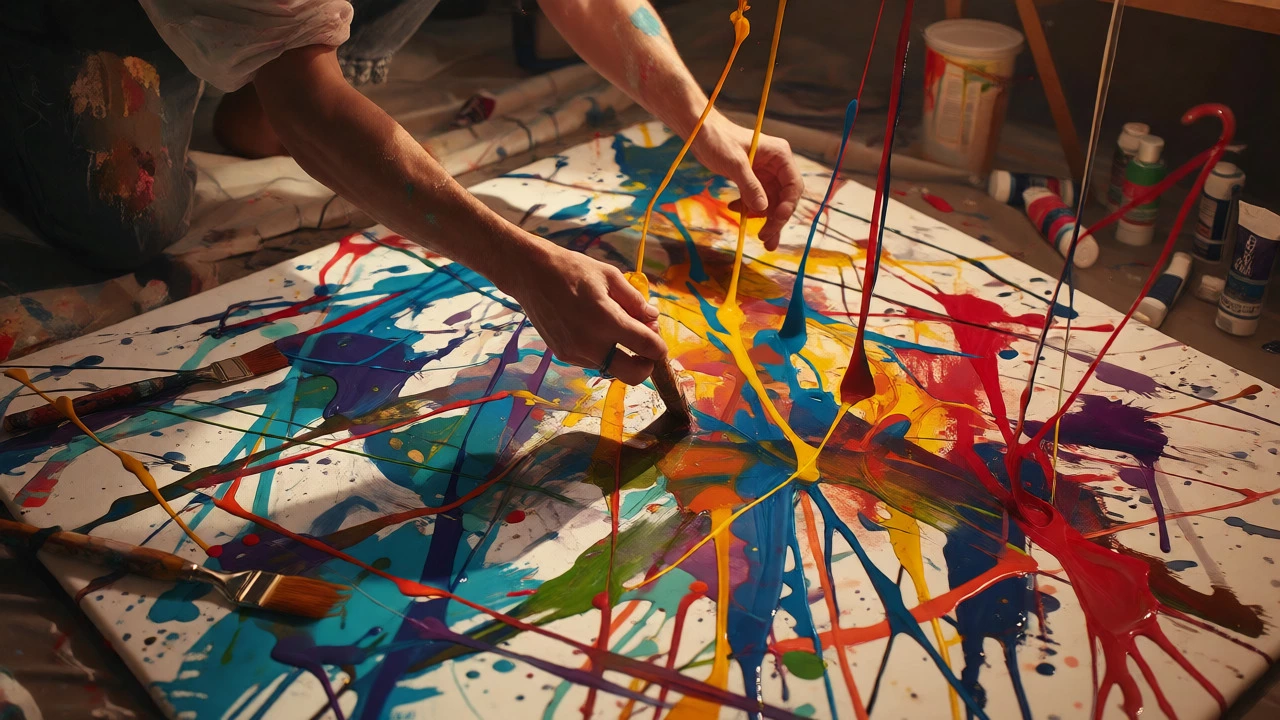
Talent in this realm shifts from manual dexterity to conceptual clarity. Can the artist arrange chaos so it looks intentional? Can they balance heavy darks with light areas so the eye moves across the canvas smoothly? These are hard skills. A toddler splashing paint creates random patterns. An abstract artist creates rhythm. There is a massive difference between randomness and controlled unpredictability.
Think of it like music. Anyone can bang on a piano keyboard to make noise. That takes no skill. But playing jazz? That requires knowing scales, harmony, and timing so well that you can improvise without sounding terrible. Abstract art is the jazz of the visual world. It looks free, but it relies on deep internal structure.
The Hidden Technical Skills Behind Abstraction
Most successful abstract artists spent years mastering realism before they threw away the rulebook. Take Pablo Picasso, who Picasso is widely considered one of the most influential artists of the 20th century. Before he created his fragmented, abstract-style works, he could draw incredibly realistic portraits as a teenager. He didn't abandon technique because he couldn't do it; he abandoned it because he wanted to explore new ideas.
This background matters. Here are the specific technical skills abstract artists must master:
- Color Theory: Knowing how colors interact emotionally and visually. Red next to green vibrates; blue next to orange calms. Getting this wrong makes a piece look muddy or chaotic rather than dynamic.
- Composition: Balancing positive and negative space. Even if there are no recognizable objects, the weight of the shapes must feel stable unless instability is the goal.
- Material Mastery: Understanding how oil, acrylic, watercolor, or mixed media behave. Some paints drip; others crack. An abstract artist controls these accidents, turning them into features.
- Gesture and Movement: Capturing energy through brushstrokes. The speed and pressure of the hand leave a trace that conveys emotion.
If you try to mimic Jackson Pollock’s drip paintings without understanding viscosity and gravity, you will likely end up with a mess that looks flat. Pollock studied anatomy and drawing extensively. His "chaos" was carefully choreographed movement around the canvas.
Why "My Kid Could Do That" Is Flawed Logic
The phrase "my kid could do that" confuses simplicity with ease. Just because an action looks simple doesn't mean it is easy to execute with intent. Consider a minimalist sculpture by Donald Judd. It might just be a stack of identical metal boxes. Your kid could build that. But did your kid decide the exact spacing, the industrial finish, and the placement in relation to the room’s light? Did they consider the history of minimalism and why that specific repetition mattered?
Context is everything in abstract art. A blank white square by Kazimir Malevich is an iconic work titled 'White on White' that challenged the very definition of painting. It wasn't lazy. It was a radical statement that art could exist without subject matter. Without that historical and theoretical framework, the object is just paper. With it, it is a revolution.
Talent here includes intellectual rigor. The artist must justify their choices. Why this shape? Why this color? If you cannot explain the intention behind the abstraction, it might just be decoration. Great abstract art has a reason for every mark.
The Role of Emotional Intelligence
Beyond technical skill, abstract art requires high emotional intelligence. Since there are no faces or landscapes to anchor the viewer, the artist must communicate mood directly. This is harder than it sounds. How do you paint sadness without a crying person? How do you paint anger without a fist?
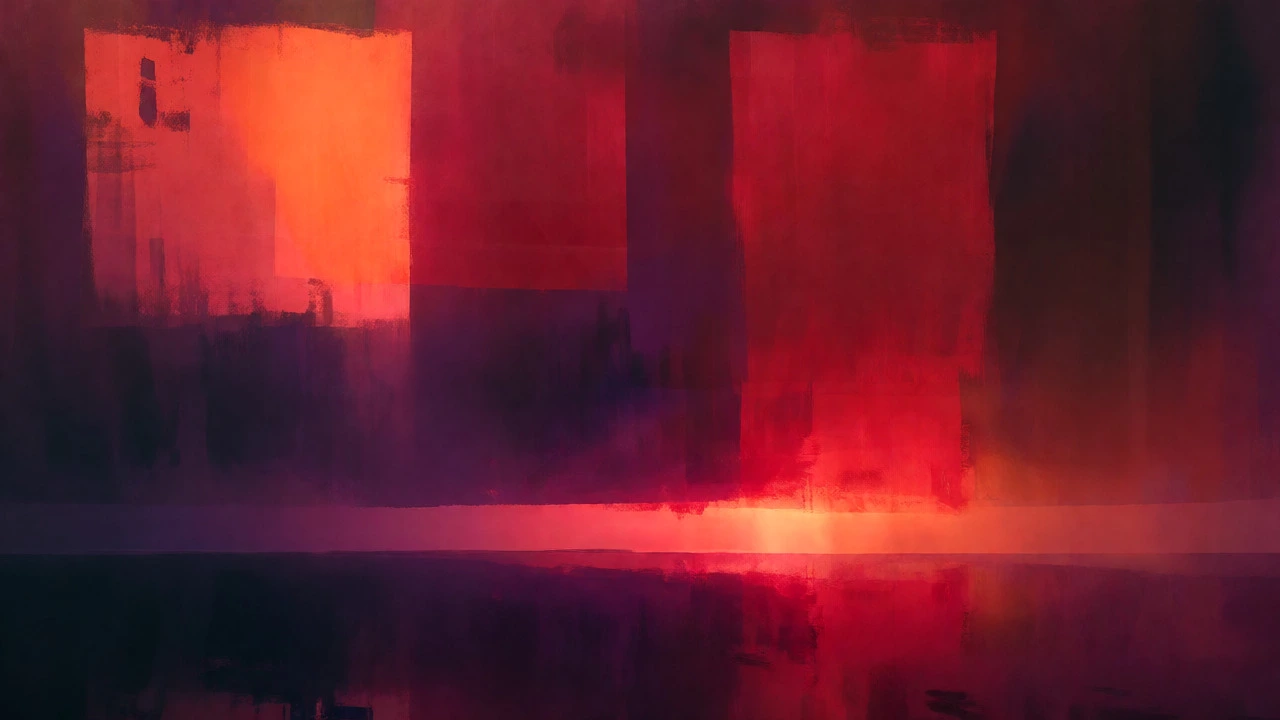
Artists use texture, scale, and color temperature to bypass logic and hit the viewer’s emotions. Mark Rothko’s large color field paintings are designed to engulf the viewer. Standing in front of one, you don't see red rectangles; you feel a sense of awe or tragedy. Achieving that visceral reaction requires the artist to understand human psychology and sensory perception deeply.
This is where natural talent plays a role. Some people have an innate sensitivity to how colors affect mood. Others develop it through practice. But both need the discipline to refine that sensitivity until it becomes a reliable tool for communication.
Learning Curve: Nature vs. Nurture
Is abstract art talent innate or learned? The answer is both. Some individuals have a natural aptitude for spatial reasoning and pattern recognition. However, the majority of abstract art skill comes from education and exposure.
Art schools teach students to unlearn the habit of copying. Beginners often struggle with abstract exercises because they are afraid of making mistakes. They want a reference image. Breaking this dependency takes time. Students learn to trust their instincts, which is a psychological hurdle as much as a technical one.
Moreover, viewing other art is crucial. Artists study masters like Kandinsky, Mondrian, and de Kooning to understand how composition works without representation. This library of visual references helps them make informed decisions when they create their own work. Without this knowledge, abstract art risks becoming repetitive or derivative.
| Skill Category | Realistic Art | Abstract Art |
|---|---|---|
| Primary Goal | Accurate representation of reality | Expression of emotion or concept |
| Key Technique | Perspective, shading, anatomical correctness | Composition, color harmony, gesture |
| Viewer Focus | "What is this?" (Identification) | "How does this make me feel?" (Interpretation) |
| Error Definition | Misproportion or incorrect lighting | Lack of balance or unclear intent |
| Training Emphasis | Observation and replication | Experimentation and intuition |
Common Misconceptions About Abstract Artists
One big myth is that abstract artists are "lazy" or "unskilled." Critics often claim they give up on realism because they can't handle it. While some hobbyists may use abstraction as a crutch, professional abstract artists usually choose it deliberately. They find realism limiting. Why paint a bowl of fruit when you can paint the feeling of hunger or the geometry of the table?
Another misconception is that all abstract art is non-representational. Many works sit on a spectrum. They hint at reality without fully depicting it. These are called semi-abstract or figurative-abstractive works. Recognizing this nuance helps you appreciate the effort involved in distilling complex subjects into essential forms.
Finally, people assume price tags reflect material cost alone. A small abstract painting selling for $10,000 isn't expensive because of the canvas and paint. It is priced based on the artist’s reputation, career trajectory, gallery representation, and the cultural significance of their work. Talent, in the market sense, includes business acumen and consistency over decades.
How to Evaluate Abstract Art Yourself
Next time you see an abstract piece, try this checklist instead of asking "Can I do this?":
- Look for Intentionality: Does the arrangement feel deliberate? Are there patterns or balances that guide your eye?
- Check Color Harmony: Do the colors clash unpleasantly, or do they create a specific mood? Good abstract art uses color purposefully.
- Assess Texture and Depth: Does the surface invite touch or interaction? Layers of paint or collage elements add complexity.
- Consider Scale: How does the size relate to the impact? Large works often aim for immersion; small ones for intimacy.
- Reflect on Your Reaction: Did it evoke a feeling? Confusion is okay, but boredom suggests the artist failed to engage you.
You don't need to "get" it intellectually to appreciate it viscerally. But recognizing the skill behind the execution changes how you value the work.
Do abstract artists need to know how to draw realistically?
Not strictly, but most successful ones do. Learning realism teaches fundamental principles like proportion, value, and composition. Once mastered, artists can intentionally break these rules for expressive purposes. Without this foundation, abstract work often lacks structural integrity.
Is abstract art easier to create than realistic art?
No. While it may take less time to apply paint, making difficult aesthetic decisions without a reference image is mentally taxing. Ensuring balance, harmony, and emotional resonance without recognizable subjects requires high-level critical thinking and editing skills.
Why do some abstract paintings sell for millions?
Value is driven by scarcity, historical importance, and the artist's influence. Works by pioneers like Pollock or Rothko changed the direction of art history. Collectors pay for the cultural capital and investment potential associated with these landmark pieces, not just the physical materials.
Can anyone become an abstract artist?
Yes, with practice. Like any skill, abstract art involves learning to see differently. While some have a natural eye for composition, most abilities are developed through experimentation, critique, and studying art history. Consistency and willingness to fail are more important than raw innate gift.
What is the difference between abstract and contemporary art?
Contemporary art refers to art produced today, regardless of style. It can be realistic, abstract, digital, or conceptual. Abstract art is a specific style that avoids representing reality. All abstract art made now is contemporary, but not all contemporary art is abstract.