Art Era Identifier Quiz
Test your knowledge! Can you tell the difference between Modern and Contemporary art? Select the correct era for each statement.
1. Which period is primarily associated with a focus on aesthetics, form, and medium purity?
2. Which era commonly uses digital media, found objects, video, and performance as primary materials?
3. Artists like Picasso and Pollock are central figures in which movement?
4. Which period places greater emphasis on social commentary, identity politics, and conceptual ideas over traditional craftsmanship?
5. If an artist died before 1970, their work is most likely classified as:
Quiz Results
Score: 0/5
You walk into a museum, see a jagged canvas with bright splashes of paint, and wonder: is this modern art or contemporary art? Most people use these terms interchangeably. They are wrong. The distinction isn't just about when the piece was made; it's about the philosophy behind it.
Here is the quick reality check: Modern art refers to work created roughly between the 1860s and the 1970s. Contemporary art is everything made after that period, up to today. But if you stop there, you miss the point entirely. One rejected tradition to find new forms; the other questions what art even is in a globalized, digital world.
| Feature | Modern Art | Contemporary Art |
|---|---|---|
| Time Period | c. 1860s - 1970s | c. 1970s - Present |
| Main Focus | Aesthetics, form, medium purity | Ideas, concepts, social commentary |
| Materials | Oil, canvas, marble, bronze | Digital media, found objects, video, performance |
| Famous Examples | Picasso, Pollock, Warhol (early) | Banksy, Ai Weiwei, Yayoi Kusama |
| Market Access | Established auction houses | Galleries, online platforms, NFTs |
The Timeline That Defines Them
History loves clear dates, but art history is messy. Still, we need anchors. Modernism began as a reaction against academic traditions. Artists like Pablo Picasso and Henri Matisse broke the rules of perspective. They wanted to show how things felt, not just how they looked. This era ended, broadly speaking, around the 1970s. Why then? Because by then, the major "isms"-Cubism, Surrealism, Abstract Expressionism-had run their course. The shock value wore off.
Enter Contemporary Art. It starts where Modernism left off. If Modernism asked, "How can I make this look different?", Contemporary Art asks, "Why am I making this at all?" The shift happened gradually. By the late 20th century, artists realized that breaking visual rules wasn't enough. They needed to break conceptual rules too.
Philosophy: Form Versus Concept
This is the biggest divide. Modern art cared deeply about the object itself. When Jackson Pollock dripped paint onto canvas, he was exploring the physical act of painting. The texture, the color, the movement on the surface-that was the point. It was about pushing the limits of the medium.
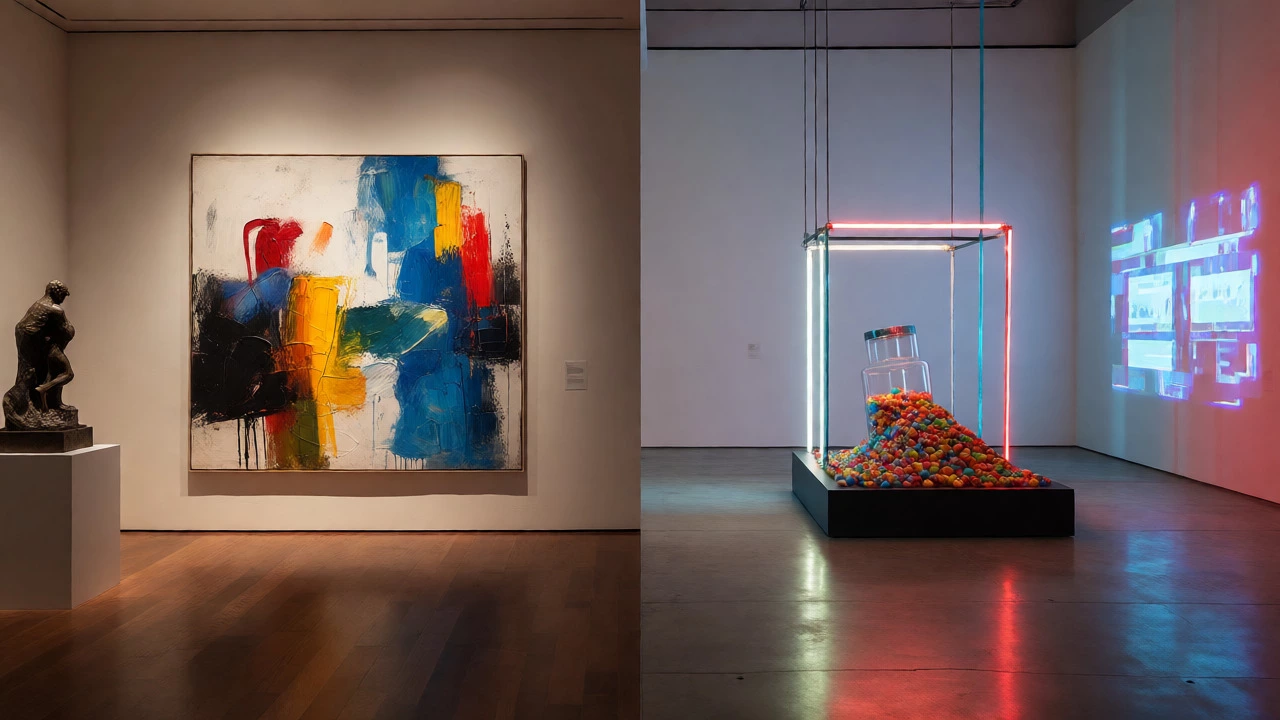
Contemporary art often cares less about the object and more about the idea. Take Marcel Duchamp, who bridged the gap. His urinal, "Fountain," wasn't beautiful. It didn't require skill to carve. It was an idea. Today, that concept dominates. If you see a pile of candy in a gallery corner, it’s likely contemporary. The artist isn’t trying to prove they can sculpt sugar. They’re asking you to think about consumption, childhood, or waste. The meaning matters more than the craftsmanship.
Materials and Methods: Canvas vs. Everything Else
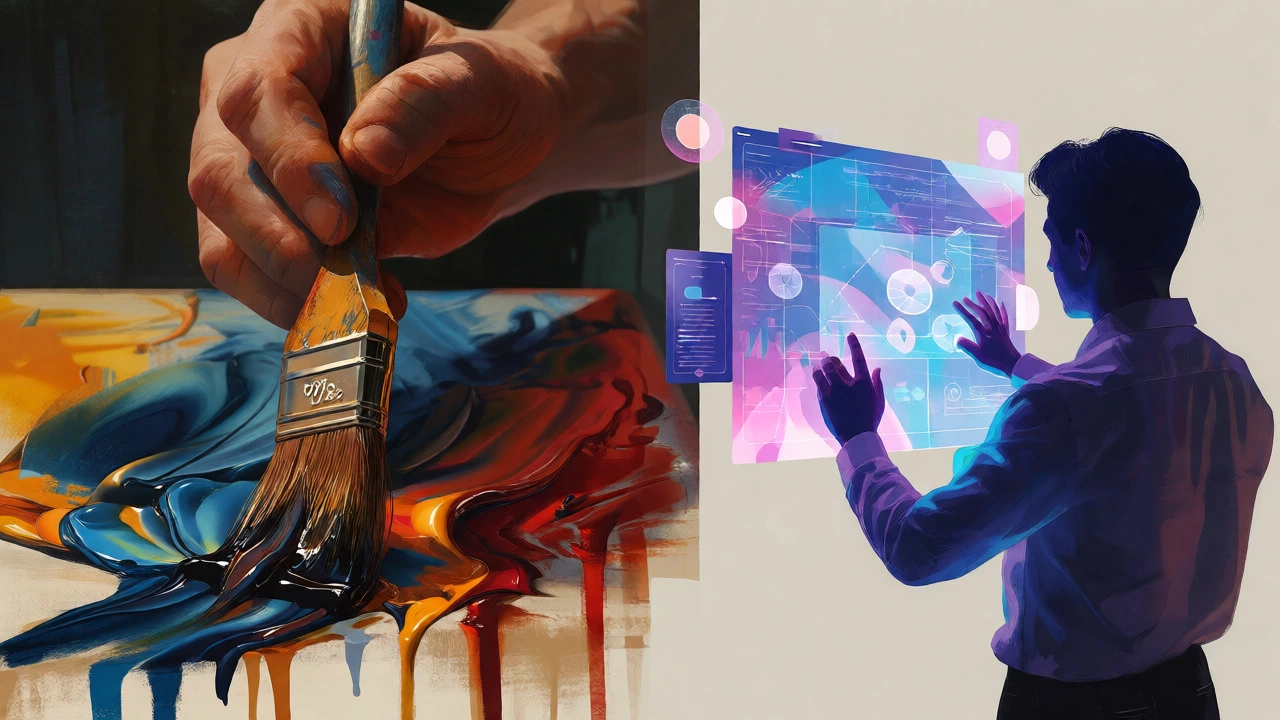
Modern artists were bound by traditional materials, even when they twisted them. Oil paint, watercolor, stone, metal. Yes, they experimented with collage and mixed media, but the core toolkit remained recognizable. You could still call most of it "painting" or "sculpture."
Contemporary artists have no such limits. If it exists, it can be art. We see this in:
- Digital Art: Using software, VR, and AI to create images that never touch paper.
- Installation Art: Transforming entire rooms into immersive experiences.
- Performance Art: Where the artist’s body is the medium, often involving time and audience interaction.
- Street Art: Banksy-style works that challenge who owns public space.
This diversity makes contemporary art harder to collect. How do you hang a video loop on your wall? How do you preserve a banana taped to a wall? These questions don’t exist in the world of Impressionist paintings.
Social Context: Globalization and Identity
Modern art was largely Eurocentric and American-centric. Paris and New York were the hubs. The stories told were mostly about Western experiences. Contemporary art shattered that monopoly. Thanks to globalization, artists from Asia, Africa, South America, and the Middle East now dominate the conversation.
Themes shifted too. While Modernists explored psychology and abstraction, Contemporary artists tackle urgent real-world issues. Climate change, gender identity, racial justice, and political corruption are front and center. For example, Ai Weiwei uses his platform to critique government censorship in China. His work is inherently political. You rarely saw that kind of direct activism in a Monet landscape.
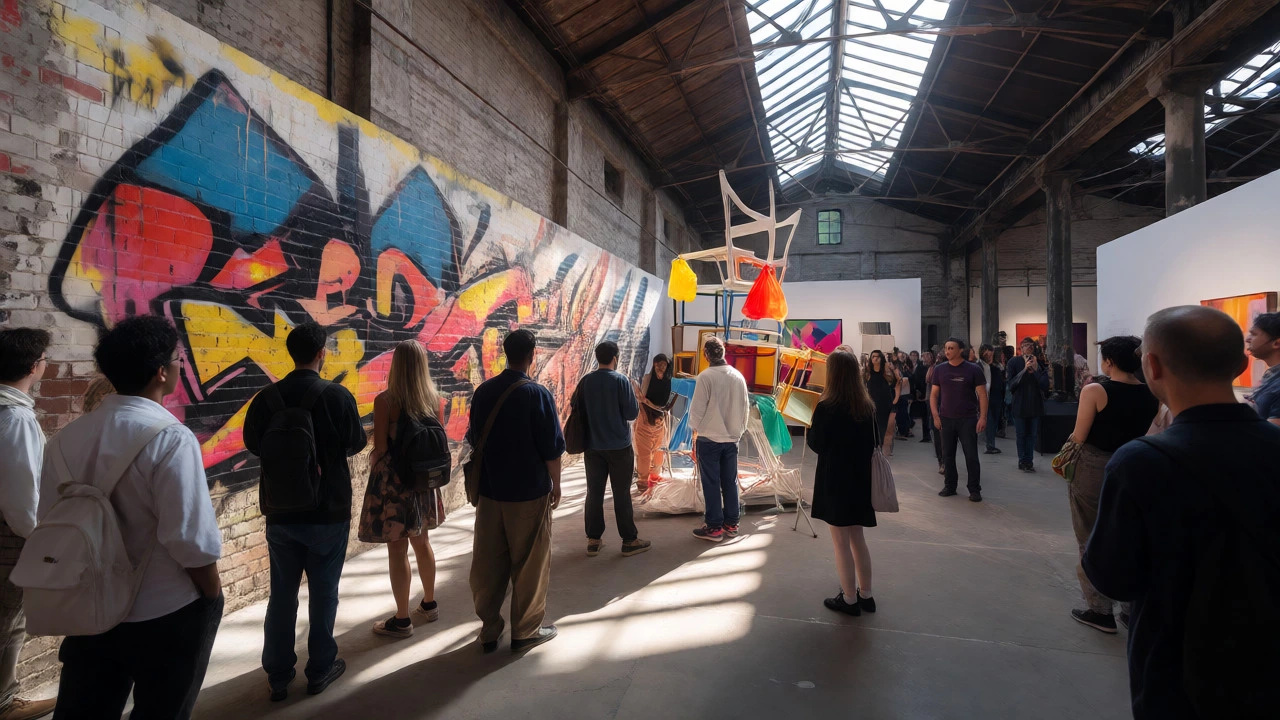
The Market: Who Buys What?
If you’re looking to buy, the markets operate differently. Modern art is a mature market. Prices are stable, provenance is documented, and blue-chip works by artists like Rothko or Basquiat sell for hundreds of millions. It’s seen as a safe investment, though entry costs are high.
The contemporary market is volatile. An unknown artist can skyrocket in value overnight due to social media buzz or a viral exhibition. Platforms like Instagram and TikTok drive visibility now. Collectors take more risks but also get access to emerging talent earlier. You might buy a print for $50 today from an artist who sells out museums in five years. Or you might watch their career stall. It’s gambling with better odds if you know what to look for.
How to Tell Them Apart in Real Life
Next time you’re in a gallery, try this quick test. Look at the label. If the artist died before 1970, it’s almost certainly Modern. If they are alive and working, it’s Contemporary. But what if the artist died recently? Look at the style.
Does the work focus on beauty, composition, and technique? Likely Modern. Does it feel confusing, ask a question, or use weird materials? Likely Contemporary. Also, check the context. Is it part of a historical retrospective? Probably Modern. Is it part of a current biennial or a pop-up installation? Almost definitely Contemporary.
Is Andy Warhol Modern or Contemporary?
Andy Warhol is technically considered Modern because his peak influence occurred during the Pop Art movement of the 1960s, which falls within the Modern era timeline. However, because he lived until 1987 and his themes remain relevant today, some classify his later work as early Contemporary. Most historians place him firmly in the Modern category due to his role in defining mid-20th-century aesthetics.
Can I collect both Modern and Contemporary art?
Absolutely. Many collectors start with Modern prints or smaller works to build a foundation of classic aesthetic appreciation. They then branch into Contemporary pieces to support living artists and engage with current cultural dialogues. Mixing both creates a dynamic collection that spans historical significance and modern relevance.
Why is Contemporary art so controversial?
Contemporary art often challenges traditional definitions of skill and beauty. Works like unmade beds or simple text signs can frustrate viewers expecting technical mastery. The controversy stems from the emphasis on concept over craft. Viewers may feel excluded if they don't understand the underlying theory or social commentary intended by the artist.
What is Post-Modernism?
Post-Modernism is the intellectual framework that gave rise to Contemporary art. Emerging in the mid-20th century, it rejected the rigid ideals of Modernism. Instead of seeking universal truths or pure forms, Post-Modernism embraced irony, pastiche, and fragmentation. It paved the way for the diverse, multi-disciplinary approach seen in today's Contemporary art scene.
Are NFTs considered Contemporary art?
Yes, Non-Fungible Tokens (NFTs) are a subset of Digital Contemporary art. They represent ownership of digital assets using blockchain technology. While the technology is new, the artistic intent aligns with Contemporary practices: questioning value, ownership, and the nature of the artwork itself in a digital age.