Modern vs. Contemporary Art Timeline Explorer
Use the timeline below to explore how art history is divided. Click or drag on the line to select a year, or type a specific year in the input field. The tool will identify the era and highlight relevant art movements.
How was this work created?
Click on the timeline above or enter a year to see where it fits in art history.
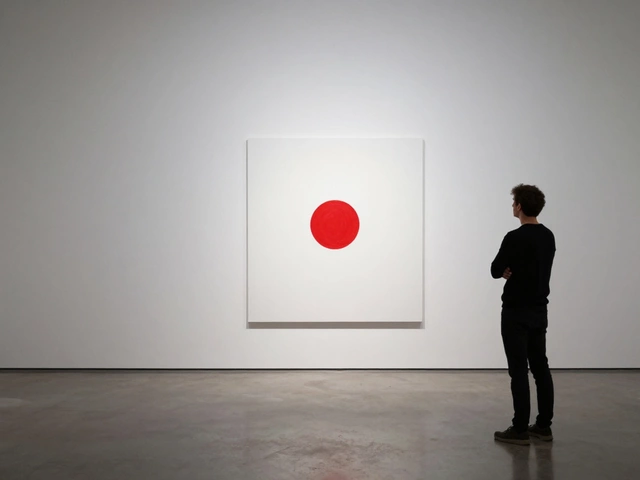
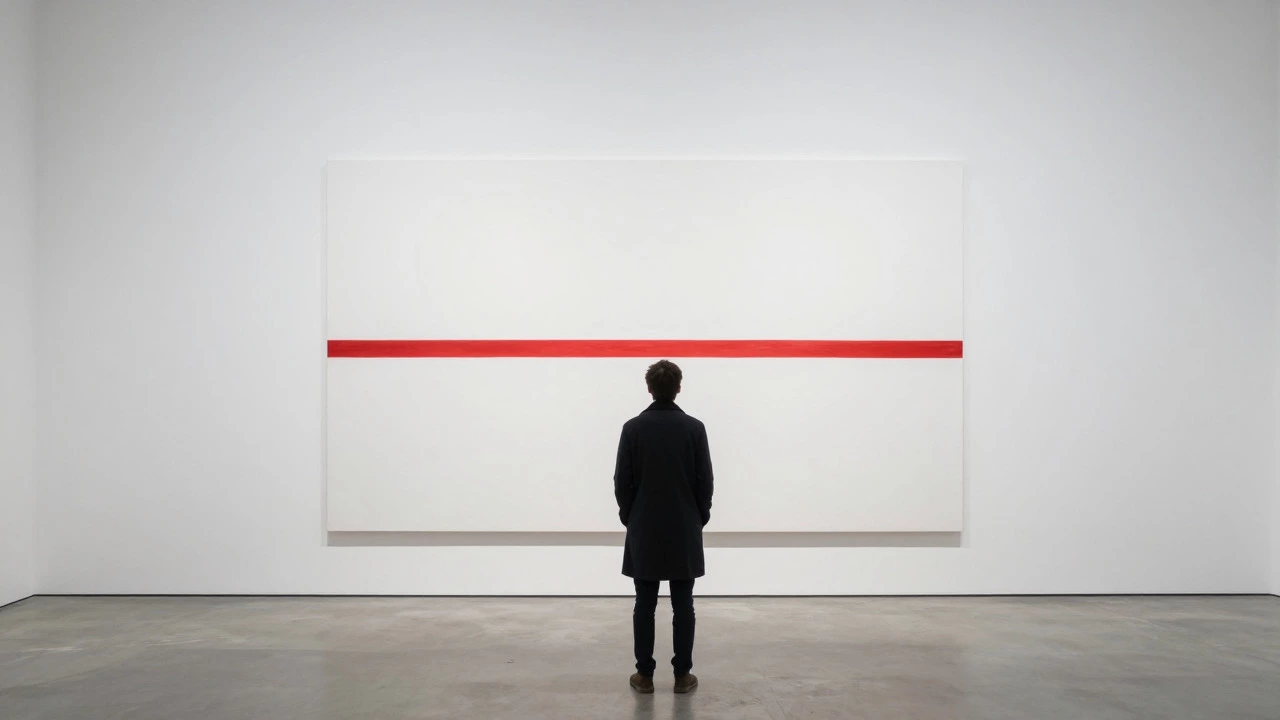
Walk into a gallery and see a blank canvas with a single red line. Or maybe it’s a pile of broken chairs welded together. You might wonder, "Is this really art?" That hesitation is exactly why the question what art is considered modern keeps coming up. It’s not just about when something was made; it’s about how it broke the rules.
Modern art isn’t a single style. It’s a massive shift in how humans see and create. To understand it, you have to look past the technique and focus on the intent. Did the artist want to copy reality, or did they want to express an idea? If it’s the latter, you’re likely looking at modern work. This guide breaks down the timeline, the key players, and the specific characteristics that separate modern art from what came before and what follows after.
The Short Answer: Definition and Timeline
Modern Art is a broad term for artistic production created roughly between the 1860s and the 1970s. This period marks a decisive break from traditional academic standards. Before this era, art was largely about technical skill, religious subjects, or realistic portraiture. Modern artists rejected these constraints. They wanted to explore new ways of seeing the world, influenced by rapid industrialization, scientific discovery, and social upheaval.
The timeline is flexible, but most art historians agree on two main boundaries:
- Start: The mid-19th century, often marked by the Impressionist exhibitions in Paris starting in 1874. Some argue it began earlier with J.M.W. Turner or Eugène Delacroix in the 1830s-40s.
- End: The late 20th century, specifically around 1970 or 1976. After this point, we enter the realm of Contemporary Art, which is defined more by its currentness than by a specific stylistic movement.
So, if you are holding a painting from 1950, it is modern. If you are holding a sculpture from 1995, it is contemporary. The distinction matters because modern art was a reaction against the past, while contemporary art is a conversation with the present.
Key Characteristics That Define Modern Art
How do you spot modern art without checking the date? Look for these four core traits. If a piece exhibits even two of these, it’s likely part of the modern canon.
- Abstraction over Realism: Artists stopped trying to make things look like photographs. Instead, they used color, shape, and form to convey emotion or concept. A face might be fragmented, or a landscape might be reduced to geometric blocks.
- Experimentation with Materials: Painters started using industrial paints, collage, and found objects. Sculptors moved away from marble and bronze to steel, wood, and glass. The material itself became part of the message.
- Focus on the Artist’s Subjectivity: The viewer’s job changed. Instead of asking "What is this object?", you ask "How does the artist feel about this?" The brushstroke, the texture, and the composition reveal the creator’s inner state.
- Rejection of Traditional Composition: Symmetry and perspective were thrown out the window. Flat planes, cropped figures, and unusual angles became standard tools.
Major Movements: The Building Blocks of Modern Art
Modern art wasn’t one monolith; it was a series of rebellions. Each movement reacted to the one before it. Understanding these groups helps you navigate the timeline.
| Movement | Time Period | Core Idea | Key Figures |
|---|---|---|---|
| Impressionism | 1860s-1880s | Capture light and momentary visual effects | Claude Monet, Pierre-Auguste Renoir |
| Post-Impressionism | 1880s-1900s | Use color and form for emotional expression | Vincent van Gogh, Paul Cézanne |
| Cubism | 1907-1920s | Fragment objects into geometric shapes | Pablo Picasso, Georges Braque |
| Expressionism | 1905-1930s | Distort reality to show subjective experience | Egon Schiele, Edvard Munch |
| Surrealism | 1920s-1950s | Explore the unconscious mind and dreams | Salvador Dalí, René Magritte |
| Abstract Expressionism | 1940s-1960s | Spontaneous, large-scale abstract gestures | Jackson Pollock, Mark Rothko |
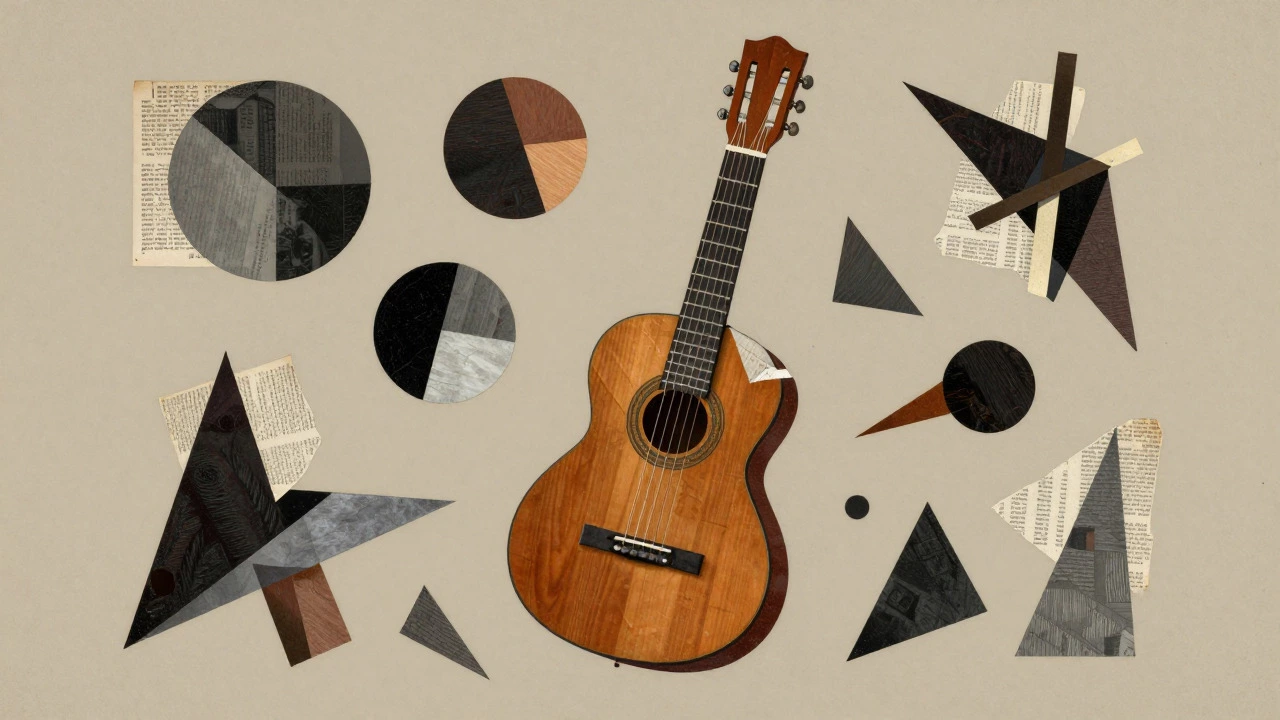
Cubism is a revolutionary approach that depicted subjects from multiple viewpoints simultaneously. When Pablo Picasso and Georges Braque started breaking objects apart, they didn’t just change how we paint; they changed how we think about space. A guitar could be seen from the front and side at the same time. This shattered the Renaissance rule of single-point perspective that had dominated Western art for centuries.
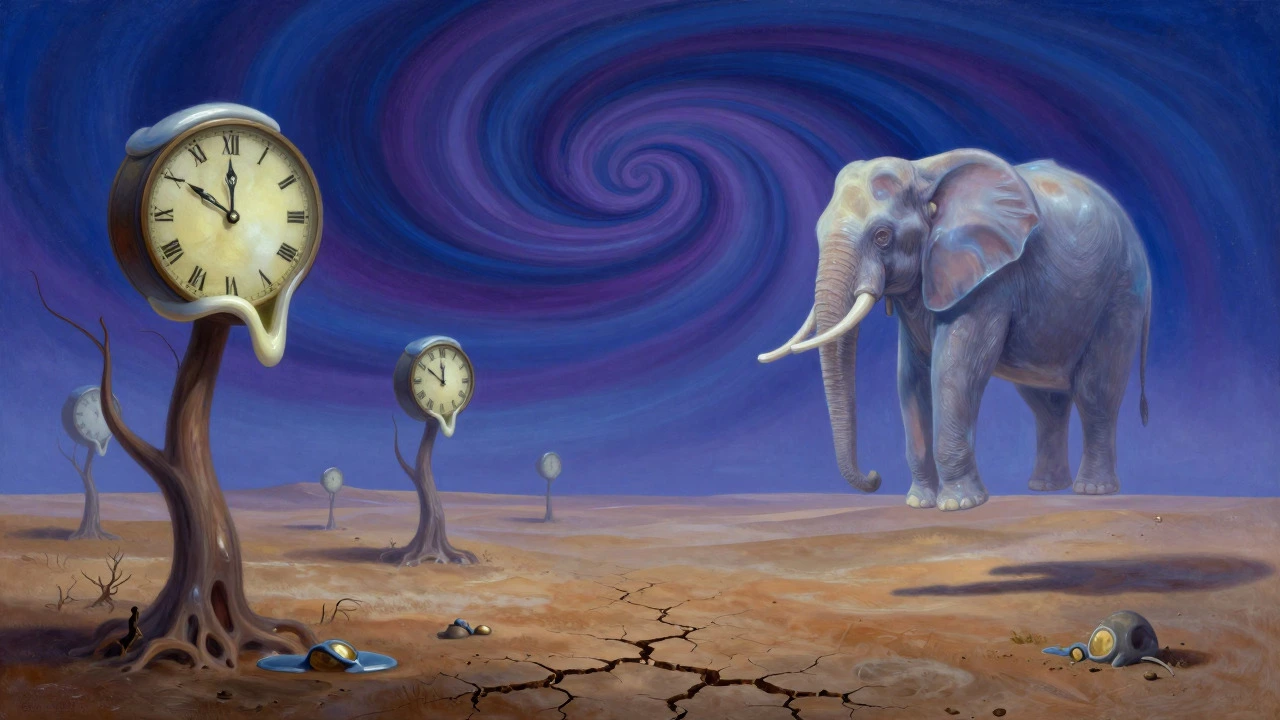
Later, Surrealism turned inward. Influenced by Sigmund Freud’s psychoanalysis, artists like Salvador Dalí painted dreamscapes where melting clocks and floating elephants challenged logical reality. The goal wasn’t to show what you see, but what you feel when you sleep.
Modern vs. Contemporary: What’s the Difference?
This is the most common point of confusion. People use the terms interchangeably, but in art history, they mean different things.
Modern Art is a historical period. It has a start and an end. It is defined by a specific set of reactions against tradition. When you study modern art, you are studying a closed chapter in history, much like studying the Industrial Revolution.
Contemporary Art is everything happening right now. It doesn’t have a fixed style. A contemporary artist in 2026 might be working with AI, video installation, or traditional oil painting. The unifying factor is that the work is being made in the current cultural moment. It reflects today’s issues: climate change, digital identity, global politics.
Think of it this way: Modern art asked, "Can art be abstract?" Contemporary art asks, "What is art in a digital age?" One is a revolution; the other is an ongoing dialogue.
Why Does This Distinction Matter to You?
If you are buying art, collecting, or just trying to appreciate what you see in museums, knowing the difference helps you connect with the work.
When you view a Modernist piece, look for the break. Where did the artist stop following the rules? Why did they choose that jagged line instead of a smooth curve? The value lies in the innovation.
When you view Contemporary work, look for the commentary. What is the artist saying about our world today? Is the material chosen for its environmental impact? Is the medium (like a smartphone screen) part of the statement?
Understanding these distinctions transforms your viewing experience. You stop judging art based on whether it looks "pretty" or "realistic." Instead, you engage with the ideas, the history, and the intent behind the creation. That is the true essence of appreciating modern and contemporary art.
Frequently Asked Questions
Is Abstract Art always Modern Art?
Not necessarily. While abstraction is a hallmark of modern art, it existed in earlier forms (like Islamic geometric patterns). However, in the Western context, the systematic exploration of non-representational form as a primary goal is a modern development starting in the early 20th century. If an abstract piece was made in 1990, it is technically Contemporary, even though it uses modern techniques.
Who decided when Modern Art ended?
There is no single authority. Art historians generally mark the transition around the 1970s. This is when Postmodernism began to challenge the very idea of "progress" and "originality