Modern Art Movement Identifier
Select a movement below to learn its key visual cues and how to spot it in a gallery.
You walk into a museum, stand in front of a canvas that looks like someone sneezed paint onto it, and think: "I could do that." You are probably right. But you didn't. That gap between "could do" and "did do" is where modern art lives. It isn't about technical perfection anymore. It’s about breaking the rules so hard they shatter.
Most people feel intimidated by modern art because they look for realism. They ask, "Does it look like a tree?" If the answer is no, they assume it’s bad or fake. That’s a mistake. Modern art, roughly spanning from the 1860s to the 1970s, wasn’t trying to copy reality. Photography had already stolen that job. Instead, artists started asking deeper questions: What does emotion look like? How do we see time? Why do we care what things look like?
| Movement | Core Idea | Key Artist | Visual Cue |
|---|---|---|---|
| Impressionism | Capturing light and fleeting moments | Claude Monet | Blurry edges, visible brushstrokes |
| Cubism | Showing multiple angles at once | Pablo Picasso | Geometric shapes, fragmented faces |
| Surrealism | Dream logic and the unconscious mind | Salvador Dalí | Melting clocks, bizarre juxtapositions |
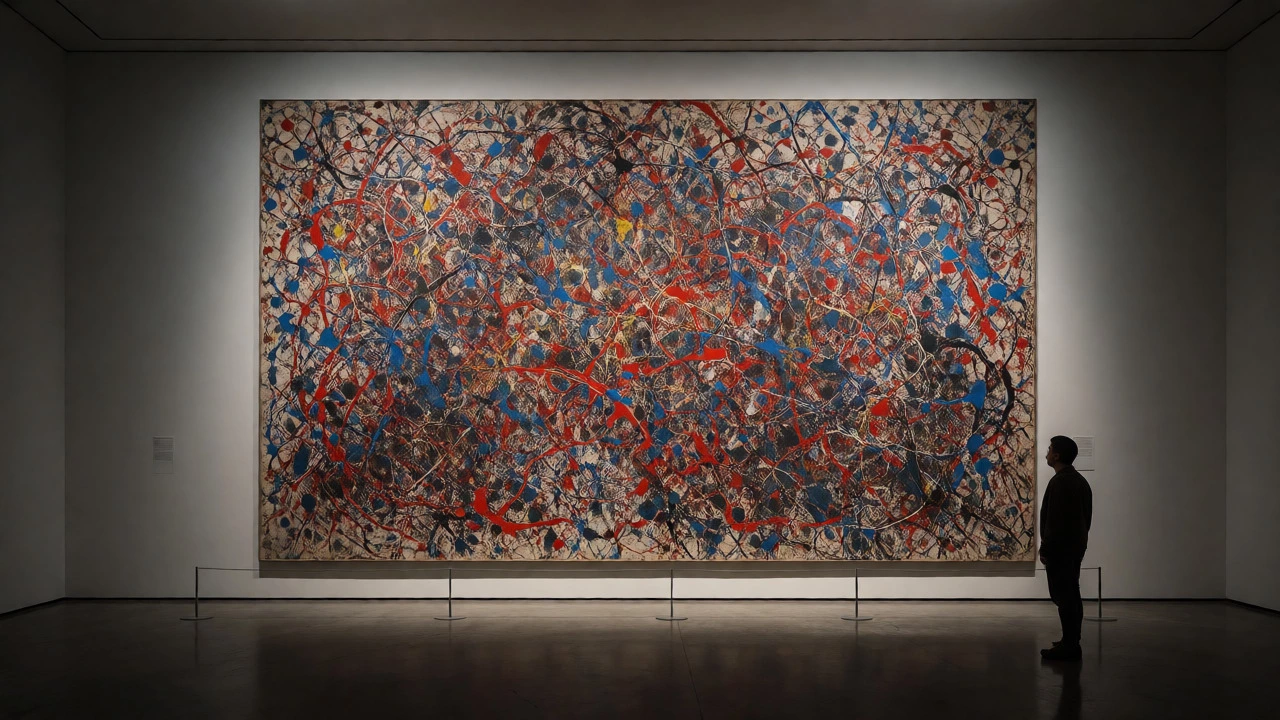
| Abstract Expressionism | Emotion through pure form and color | Jackson Pollock | Splatters, large scale, no recognizable objects |
The Death of Realism
Before modern art, art was mostly about documentation. Kings wanted portraits. Churches wanted biblical scenes. Artists were craftsmen serving patrons. Then two things happened: photography got good, and the world got crazy. The Industrial Revolution changed how people lived, and World War I shattered faith in traditional values.
Artists realized they didn’t need to be human cameras. They could show what photography couldn’t: feelings, thoughts, and subjective experiences. This shift is called abstraction. It doesn’t mean "abstract" as in confusing. It means pulling away from literal representation. When Kandinsky painted circles and triangles, he wasn’t being lazy. He was trying to paint music. He believed colors had sounds. Yellow was sharp; blue was deep. By removing the object, he let the viewer feel the emotion directly.
This freedom scared critics. They called it degenerate. Today, we call it progress. The key takeaway here is simple: if a painting doesn’t look real, stop asking "what is it?" and start asking "how does it make me feel?"
Breaking Perspective with Cubism
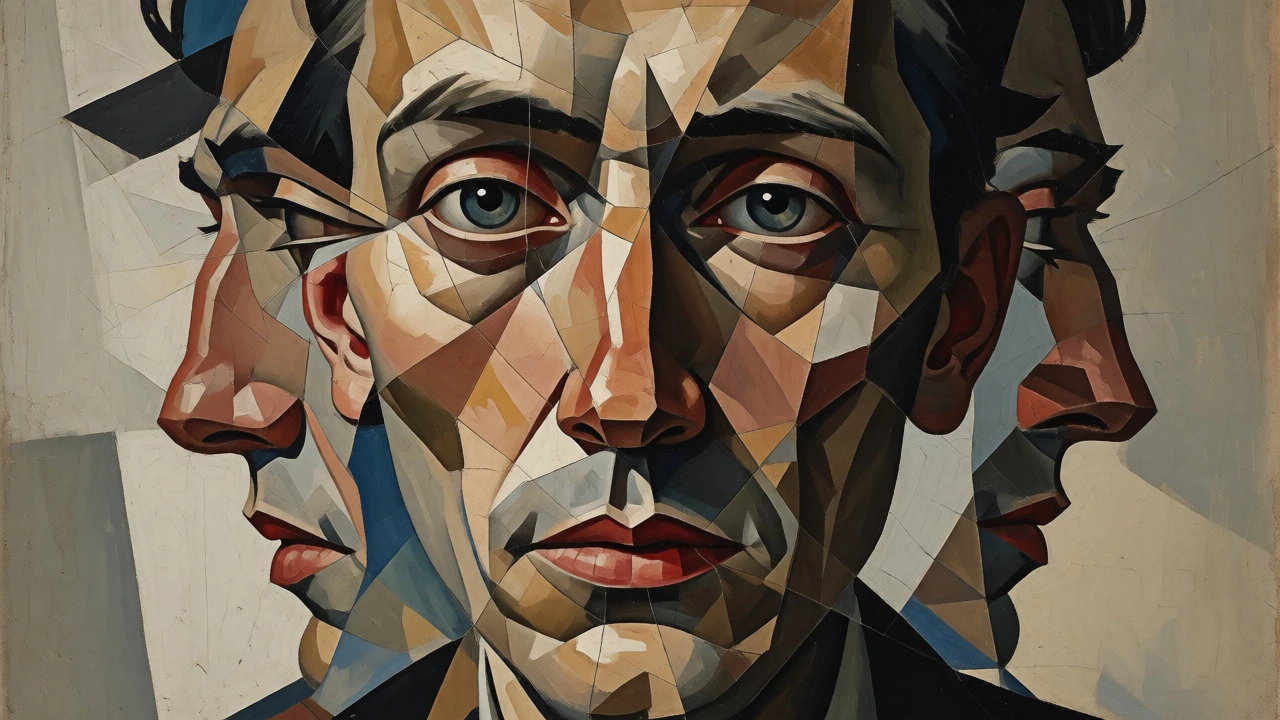
For centuries, painters used linear perspective. Lines converged at a vanishing point to create depth. It worked great until Pablo Picasso and Georges Braque decided it was a lie. We don’t see the world from one static viewpoint. We move. We turn our heads. We remember things from different angles.
Cubism attempts to show all sides of an object simultaneously. Look at Picasso’s "Guernica." The horses and people are distorted, fragmented, and reassembled. It’s chaotic because war is chaotic. Cubism forces your brain to work harder. You have to piece together the image. This active engagement makes the viewing experience more intense. It’s not passive consumption; it’s cognitive participation.
Think of it like this: if you take a photo of a cube, you see three faces. But you know it has six. Cubism tries to paint the sixth face you can’t see but know is there. It’s about truth beyond optics.
The Unconscious Mind and Surrealism
If Cubism broke space, Surrealism broke logic. Led by André Breton in the 1920s, Surrealists were obsessed with Sigmund Freud’s theories about the subconscious. They wanted to bypass rational thought and tap into dreams, fears, and desires.
René Magritte’s famous pipe painting says "This is not a pipe." And he’s right. It’s a picture of a pipe. The word contradicts the image. This disconnect creates a mental stumble. You realize language and reality aren’t the same thing. Salvador Dalí took this further with hyper-realistic paintings of impossible things. Melting watches, elephants on stick legs-these aren’t random. They represent the fluidity of time and the fragility of memory in dreams.
Surrealism teaches us that reality is malleable. Your perception shapes your world. When you look at a Surrealist work, you’re invited to question your own sanity. Are you awake? Are you sure? That discomfort is the point.
Art About Art: Formalism and Greenberg
By the mid-20th century, critics like Clement Greenberg argued that art should focus on its own materials. Paint is flat. Canvas is rectangular. Stop pretending it’s a window into another world. Embrace the flatness.
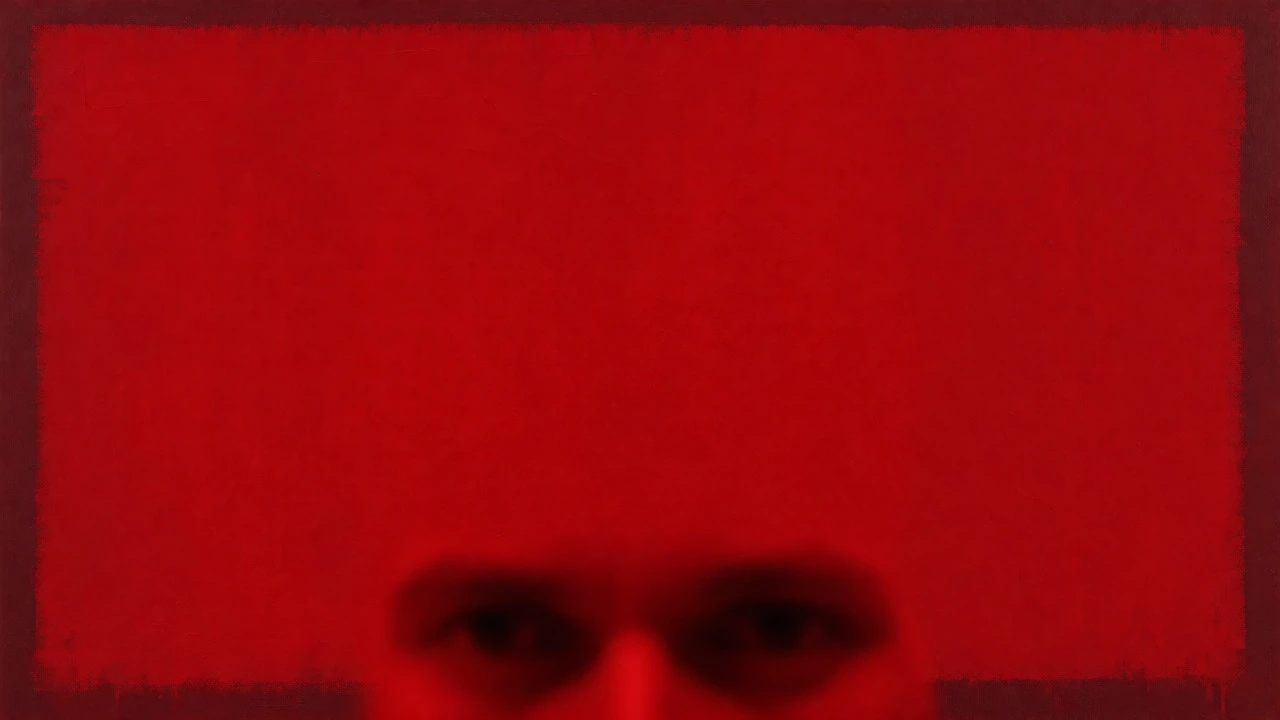
This led to Minimalism and Color Field Painting. Mark Rothko didn’t paint pictures; he painted fields of color. His goal was emotional immersion. Stand close to a Rothko, and you’re surrounded by red or black. It’s meditative. It strips away narrative. There’s no story, no character, no plot. Just presence.
Formalism sounds academic, but it’s practical. It tells you to look at the texture of the paint, the balance of colors, and the composition. Ignore the title. Ignore the history. Just look. Does the red vibrate against the orange? Does the line lead your eye? These formal elements trigger physical reactions in the brain, long before you process meaning.
The Avant-Garde Shock Value
Modern art loves to provoke. The term avant-garde comes from military terminology, referring to the advance guard. In art, it means pushing boundaries so far that society hasn’t caught up yet. Marcel Duchamp famously put a urinal in a gallery and signed it "R. Mutt." He called it "Fountain." Was it art? Yes, because he said it was, and he challenged the definition of authorship.
This concept is crucial. Modern art shifted the power from the maker to the idea. Skill became less important than intent. If you can articulate why something matters, it might be art. This opened the door for readymades, performance art, and eventually digital art. It democratized creation but also confused evaluation. How do you judge a banana taped to a wall? You judge the conversation it starts, not the craftsmanship of the tape.
How to Actually Look at Modern Art
So next time you’re at the Vancouver Art Gallery or MoMA, try this approach:
- Stop looking for the subject. Ask instead: What is the artist doing with color or shape?
- Check the date. Knowing if it’s 1910 or 1950 changes everything. Context is half the battle.
- Read the label last. Let your initial reaction happen first. Then compare it to the artist’s intent. Did they get it right?
- Accept confusion. Not every piece needs to be understood instantly. Some are meant to linger in your subconscious for weeks.
Modern art isn’t a test you pass or fail. It’s a dialogue. The artists spoke back then; now it’s your turn to listen-or argue.
What is the difference between modern and contemporary art?
Modern art generally refers to works created from the 1860s to the 1970s. Contemporary art refers to art produced from the 1970s to the present day. Modern art focuses on abstraction and breaking traditional forms, while contemporary art often deals with global issues, identity, technology, and uses diverse media like video and installation.
Why does modern art look so simple?
Simplicity is often intentional. Movements like Minimalism stripped away unnecessary details to focus on essential elements like color, shape, and material. The simplicity invites the viewer to engage with the core concept rather than getting lost in intricate details. It’s about reduction, not lack of skill.
Do I need to know art history to enjoy modern art?
No, you don’t. While knowing the context helps appreciate the innovation, modern art is designed to evoke emotional or intellectual responses directly. Trust your instincts. If a piece moves you, confuses you, or annoys you, it’s working. History adds layers, but personal connection is primary.
Is abstract art just random?
Rarely. Abstract art usually follows principles of composition, color theory, and balance. Even Jackson Pollock’s drip paintings were carefully controlled. The randomness is often an aesthetic choice to mimic natural processes or emotional states, but the underlying structure is deliberate.
Why did artists stop painting realistically?
The invention of photography freed artists from the duty of documenting reality. Additionally, major societal shifts like industrialization and world wars made traditional representations feel inadequate. Artists sought new ways to express complex modern experiences, emotions, and psychological states that realism couldn’t capture.