Realism Style Identifier
Answer the questions below to identify the specific style of a realistic portrait.
1. What is the primary source material?
2. How does the detail level compare to reality?
3. What is the emotional tone?
Select your answers to reveal the art style.
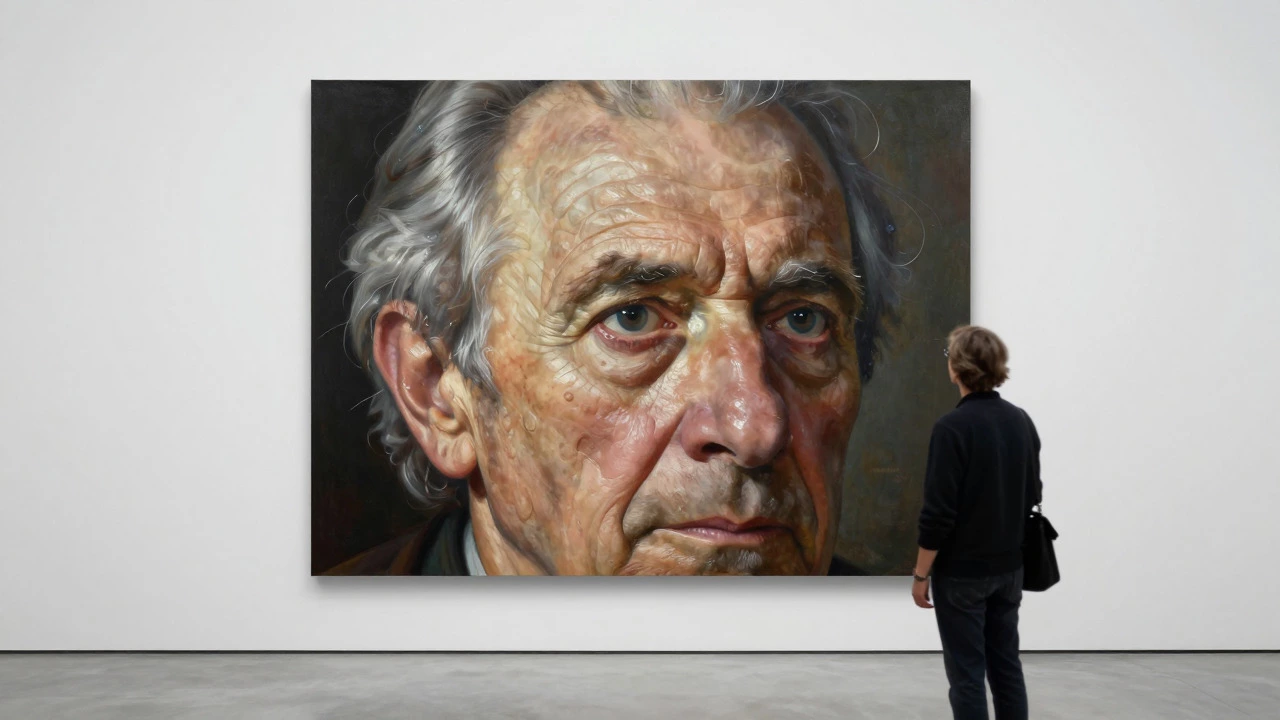
You’ve seen them before. Maybe in a gallery, maybe on social media. They look so real you might step back, thinking it’s a photograph. The pores on the skin, the reflection in the eye, the stray hair-it’s all there. But when you lean in, you realize it’s paint on canvas. It’s oil on wood. It’s pencil on paper. So, what do you call these images? If you’re looking for the right word to describe that jaw-dropping level of detail, you aren’t just talking about “realistic art.” You are stepping into specific movements with distinct histories and techniques.
The short answer is that realistic portraits generally fall under photorealism, hyperrealism, or verism. However, each term carries a different weight. Using the wrong one can confuse collectors, curators, and fellow artists. Understanding the difference between a photo-based copy and an interpretive realism changes how we value the work. Let’s break down exactly what these terms mean, where they come from, and how to spot the difference.
The Umbrella Term: Realism
Before we get into the technical specifics, we need to address the broad category. In art history, Realism is a movement that began in France in the 1840s, focusing on depicting ordinary subjects with accuracy and without idealization. This was a rebellion against Romanticism, which favored drama and emotion over factual representation. Artists like Gustave Courbet painted peasants and workers as they actually looked-dirty, tired, and unglamorous.
When people today say they want a “realistic portrait,” they usually mean something that looks like a high-resolution photograph. However, historical Realism is more about subject matter than technical precision. A realist painter might use loose brushstrokes but still capture the true character of a person. For our purposes, though, we are interested in the sub-genres that prioritize optical accuracy above all else.
Photorealism: The Mechanical Eye
If your portrait looks exactly like a photograph because it was copied from one, you are likely looking at Photorealism is an art movement that emerged in the late 1960s and early 1970s, characterized by paintings and drawings created from photographs using mechanical aids. This style relies heavily on technology. The artist projects an image onto a canvas or uses a grid system to transfer details pixel by pixel.
Key figures in this movement include Chuck Close and Richard Estes. Close, for instance, used large-scale projections to create massive portraits. He didn’t try to interpret the face; he tried to replicate the light and shadow captured by the camera lens. The result is often flat, lacking the emotional depth of traditional portraiture. The focus is on surface texture-the shine of skin, the weave of fabric-rather than the soul of the subject.
- Technique: Uses projectors, grids, or airbrushes to transfer photographic images.
- Source Material: Almost exclusively photographs.
- Aesthetic: Sharp focus, uniform lighting, lack of visible brushstrokes.
- Goal: To mimic the mechanical reproduction of photography.
Photorealism challenges the viewer. It asks why we should value a painting if a machine could take the picture faster. The answer lies in the skill required to translate two-dimensional pixels into three-dimensional paint without losing fidelity. It is a feat of manual dexterity and patience.

Hyperrealism: Beyond the Lens
Now, let’s talk about the buzzword. You hear it everywhere on Instagram. Hyperrealism is a contemporary evolution of photorealism that seeks to exceed the resolution and detail of the original photograph. While photorealism copies the photo, hyperrealism enhances it. The artist adds details that the camera missed or couldn’t capture clearly.
Think about a photograph of a wet street. The camera sees reflections. A hyperrealist painter sees individual water droplets, the texture of the asphalt beneath the water, and the way light refracts through each drop. Artists like Gottfried Helnwein or John Sinna push boundaries here. They often combine multiple photos to create a single image that feels more real than reality itself.
| Feature | Photorealism | Hyperrealism |
|---|---|---|
| Era | 1960s-1970s | 2000s-Present |
| Relationship to Photo | Direct replication | Enhancement and interpretation |
| Detail Level | High, but limited by source | Extreme, exceeding source |
| Emotional Tone | Cold, detached | Often dramatic or unsettling |
Hyperrealism is not just about technical skill; it is about perception. The artist decides what matters. They might sharpen the eyes while blurring the background, mimicking human vision rather than camera optics. This makes the portrait feel alive in a way that standard photorealism does not. It bridges the gap between the mechanical and the organic.
Verism: The Ancient Roots of Truth
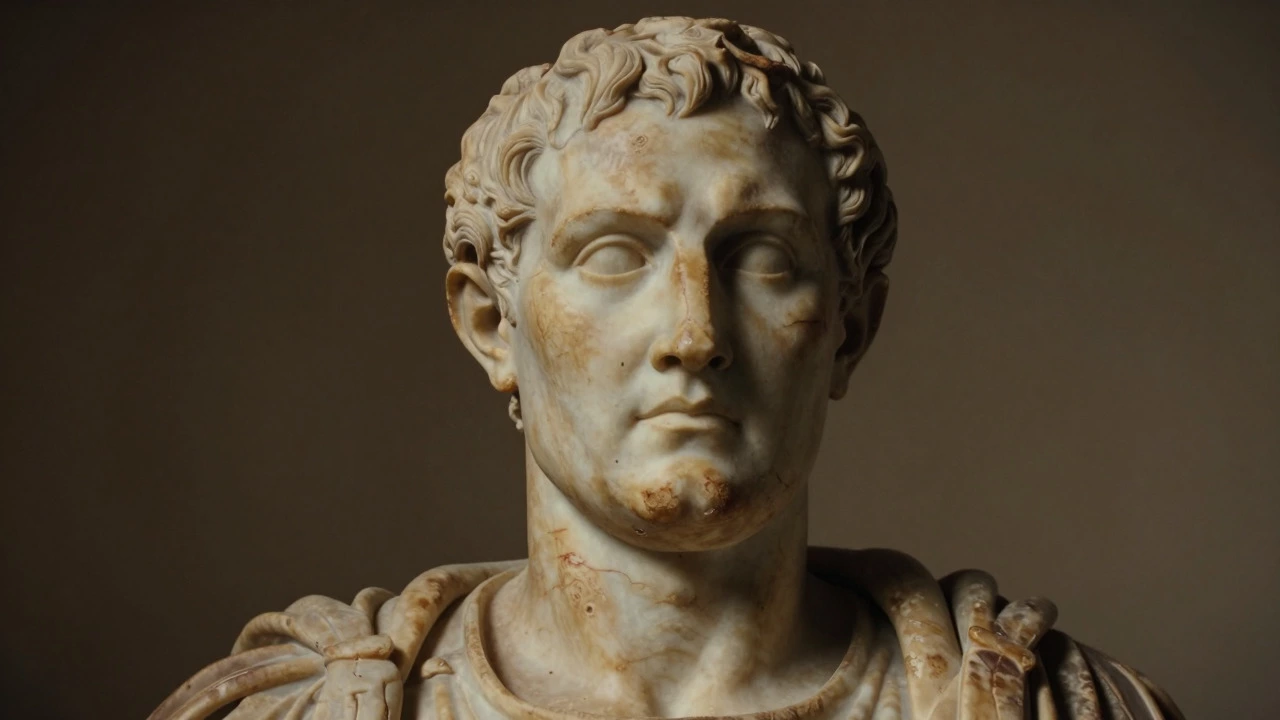
If you scroll back further in history, you find Verism is an ancient Roman artistic style focused on extreme naturalism, particularly in portraiture, emphasizing wrinkles, scars, and age spots to convey wisdom and authority. This isn’t about copying a photo. It is about capturing the truth of a person’s life experience. Roman consuls were depicted with every wrinkle and sagging eyelid intact. Why? Because those flaws showed their struggle, their service, and their humanity.
In modern painting, verism is less common as a labeled style, but its spirit lives on. When an artist paints a portrait that highlights the imperfections of aging skin without smoothing them out for aesthetic pleasure, they are practicing verism. It is raw and honest. Unlike photorealism, which can feel sterile, verism feels intimate. It forces the viewer to confront the physical reality of the subject.
Other Terms You Might Encounter
Art terminology can be messy. Here are a few other labels you might see attached to realistic portraits, and what they actually mean.
- Academic Realism: Refers to the rigorous training methods of European academies in the 19th century. Artists like William-Adolphe Bouguereau painted idealized figures with smooth finishes. It is realistic but polished, removing blemishes to create beauty.
- Social Realism: Focuses on the struggles of everyday people. The technique may be realistic, but the intent is political or social commentary, not just visual accuracy.
- Illusionism: A broader term for any art that tricks the eye. This includes trompe-l'œil, where objects appear three-dimensional. It applies to still lifes as much as portraits.
Confusing these terms can lead to misunderstandings. Calling a hyperrealist piece “academic” misses the point of its contemporary edge. Labeling a verist portrait as “photorealistic” ignores its historical context. Precision in language helps us appreciate the artist’s intent.
How to Identify the Style Yourself
Next time you see a stunningly realistic portrait, ask yourself three questions. First, does it look like a direct copy of a photograph? If yes, it is likely photorealism. Second, does it have more detail than a photo could capture? If yes, it is hyperrealism. Third, does it emphasize age, wear, and character flaws without digital enhancement? If yes, it leans toward verism or academic realism.
Look at the edges. Photorealism often has sharp, defined edges because cameras focus sharply. Hyperrealism might soften edges to mimic human attention. Verism will highlight textures that show decay or strength. Look at the lighting. Photorealism uses the lighting from the source photo. Hyperrealism might adjust lighting to create mood. Verism uses lighting to reveal form and texture.
Understanding these distinctions enriches your viewing experience. It moves you from saying “wow, that’s real” to understanding why it feels real. Whether you are an artist choosing a style or a collector buying a piece, knowing the name gives you power. It connects you to a lineage of painters who mastered the illusion of reality.
Is photorealism the same as hyperrealism?
No, they are related but distinct. Photorealism, emerging in the 1960s, aims to replicate a photograph exactly, often using mechanical aids like projectors. Hyperrealism, a later development, goes beyond the photograph by adding details that the camera missed, creating an image that appears more real than reality itself.
What is the difference between realism and photorealism?
Realism is a broad 19th-century movement focused on depicting ordinary life accurately, without idealization. Brushstrokes may be visible, and the goal is truthful representation of subject matter. Photorealism is a 20th-century style that specifically mimics the appearance of photographs, prioritizing optical precision and surface detail over narrative or emotional content.
Who are some famous hyperrealist portrait artists?
Notable hyperrealist artists include Gottfried Helnwein, known for his disturbing and highly detailed portraits; John Sinna, who specializes in extreme close-ups of faces; and Robert Genn, whose work explores the boundary between painting and photography. These artists push the limits of technical skill to create immersive visual experiences.
Why do artists choose to paint realistically instead of digitally?
Artists choose painting to demonstrate manual mastery and to add a human touch that digital tools lack. Painting allows for subtle interpretations of light and texture that software might automate. Additionally, the physical presence of paint on canvas offers a tactile quality and uniqueness that digital files cannot replicate, adding value to the artwork.
Can a portrait be both verist and photorealistic?
Yes, though it is rare. A portrait could use photorealistic techniques to achieve extreme detail while adopting the verist philosophy of highlighting age and imperfection. However, photorealism typically relies on neutral, flattering lighting from photos, whereas verism seeks to expose harsh truths. Combining them requires careful artistic intention.