Portrait Quality Analyzer
Use this tool to analyze a portrait you are working on or viewing. Check off the criteria that apply to see how well it meets the standards of professional portraiture.
1. Likeness & Character
2. Anatomy & Structure
3. Light, Shadow & Value
4. Emotion & Expression
5. Composition & Brushwork
Quality Score
Start Evaluating
Select criteria below to calculate your portrait's strength.
- Likeness: 0/2
- Anatomy: 0/2
- Light/Shadow: 0/2
- Emotion: 0/2
- Composition: 0/2
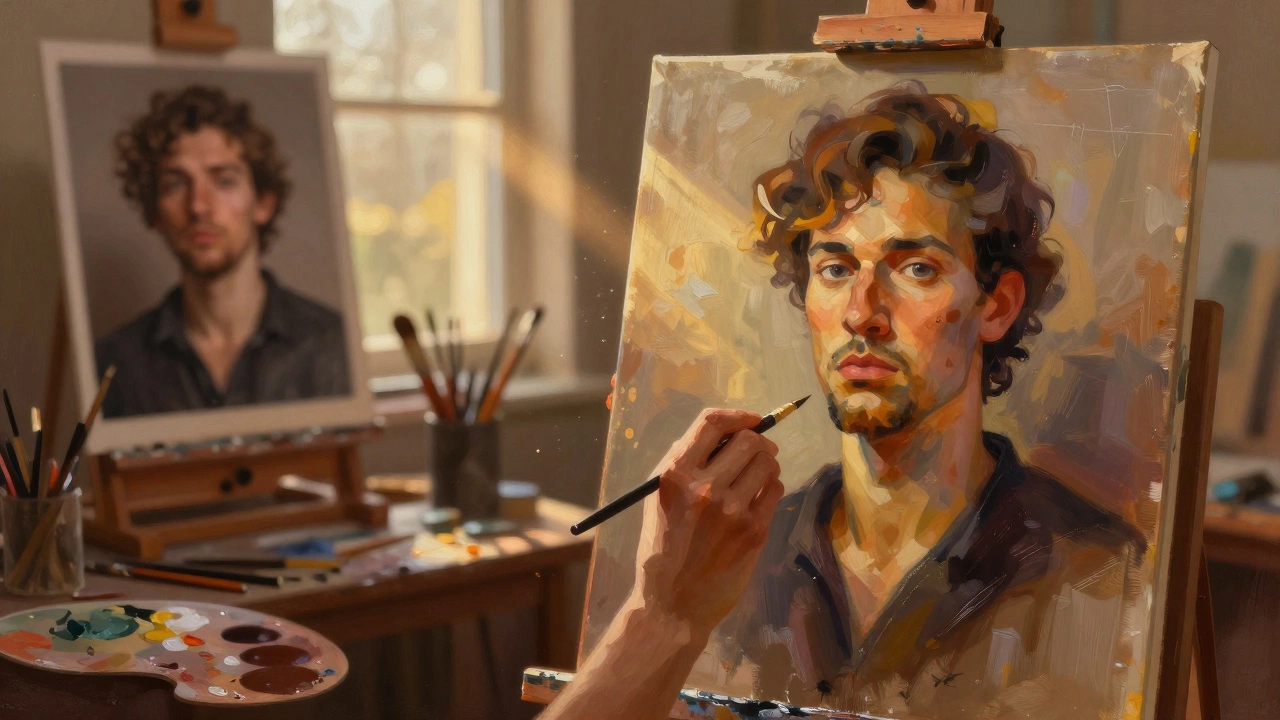
Have you ever looked at a painting and felt like the person staring back knew your secrets? That’s the magic of a great painted portrait. It isn’t just about drawing a face that looks like someone. Anyone can take a photo for that. A good portrait captures something deeper-the spirit, the mood, the very essence of the subject. But how do artists pull this off? Is it technical skill, artistic flair, or something else entirely?
Whether you are an aspiring artist trying to improve your work or an art lover wanting to understand what makes a piece stand out, knowing the building blocks of portraiture changes everything. It moves you from simply looking at a picture to understanding the craft behind it. Let’s break down exactly what separates a mediocre sketch from a masterpiece.
The Power of Likeness vs. The Illusion of Reality
When we talk about a "good" portrait, the first thing that usually comes to mind is accuracy. Does it look like the person? This concept is called Likeness, which is the visual resemblance between the artwork and the actual subject. However, there is a trap here. Many beginners obsess over perfect symmetry and exact measurements, thinking that mathematical precision equals beauty. In reality, strict realism often results in stiff, lifeless images.
A truly effective likeness balances accuracy with character. Think about how you recognize a friend in a crowd. You don’t measure the distance between their eyes; you notice the way they squint when they smile or the specific shape of their jawline. Artists who master this focus on the unique proportions and distinctive features rather than generic templates. If you paint every nose the same way, no one will look real. The goal is not to copy a photograph pixel by pixel, but to capture the structural truth of the face so the viewer’s brain accepts it as familiar.
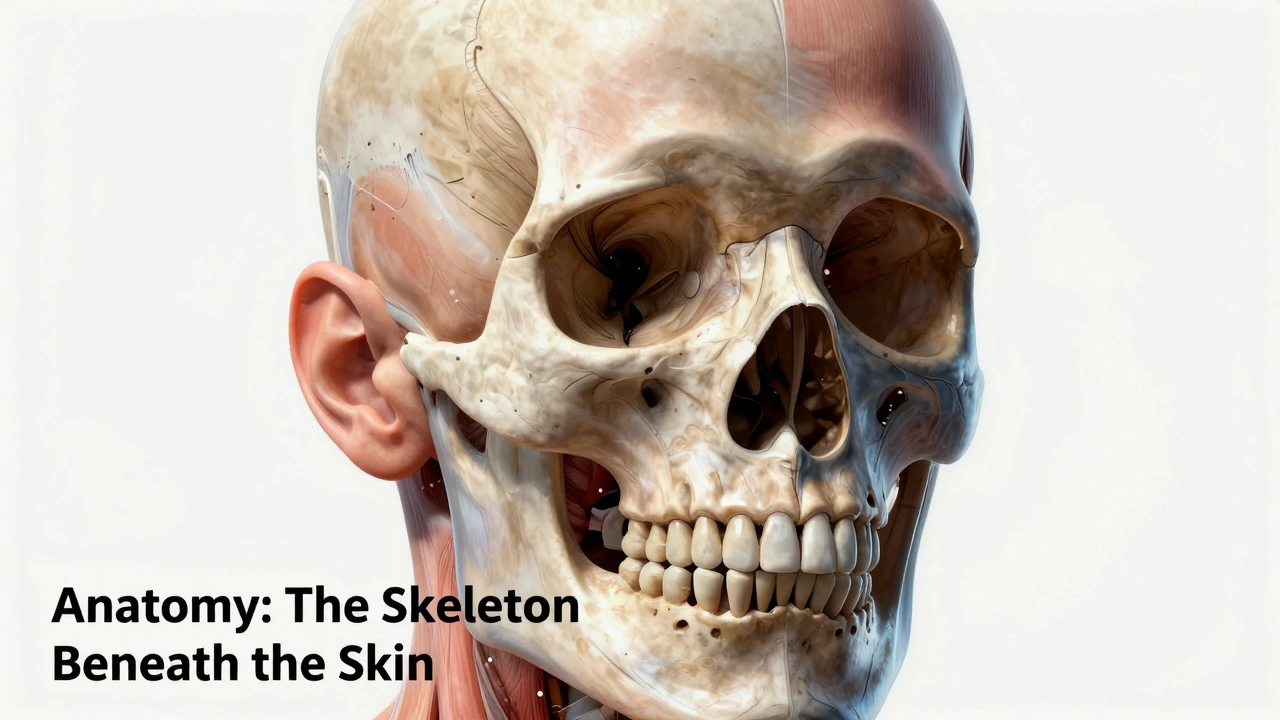
Anatomy: The Skeleton Beneath the Skin
You cannot paint what you do not understand. This is why Facial Anatomy is the study of the bone structure and muscle placement of the human head is non-negotiable for serious portrait painters. Most amateur portraits fail because the artist treats the face as a flat surface. They paint shadows where there are none, or they miss the underlying forms that create those shadows.
Consider the cranium, the maxilla (upper jaw), and the mandible (lower jaw). These bones dictate the shape of the entire face. When light hits a cheekbone, it doesn’t just create a dark patch; it rolls over a spherical form before dropping into the hollow of the cheek. Understanding these planes allows you to render volume convincingly. For example, the eye socket is a deep cavity, while the eyeball itself is a sphere sitting inside it. Knowing this difference helps you paint the eyelid correctly instead of making it look like a sticker placed on top of the skin. Without this anatomical knowledge, even the most beautiful colors won’t save a portrait from looking distorted or unnatural.
Light and Shadow: Sculpting with Color
If anatomy provides the structure, light provides the drama. The way you handle Chiaroscuro, the technique of using strong contrasts between light and dark to achieve a sense of volume in modeling three-dimensional objects defines the mood of your painting. Light does more than illuminate; it directs the viewer’s eye. In a well-composed portrait, the brightest area is usually the focal point-often the eyes or the bridge of the nose.
Pay attention to the quality of light. Is it harsh and direct, creating sharp edges and deep blacks? Or is it soft and diffused, resulting in gentle transitions and muted grays? Each choice tells a different story. A hard light might suggest intensity or conflict, while soft light often implies intimacy or calmness. Furthermore, remember that shadows are not just black. They contain reflected light from surrounding objects. A shadow on a red wall will pick up a hint of red. Capturing these subtle color shifts in the shadows adds depth and realism that flat shading never achieves. Mastering value-the relative lightness or darkness of a color-is arguably more important than hue. Get the values right, and the portrait will read clearly even if the colors are slightly off.
Capturing Emotion and Expression
A technically perfect face with dead eyes is still a failure. The soul of a portrait lies in its emotional resonance. This involves capturing Micro-expressions, which are brief, involuntary facial expressions that reveal genuine emotions. These tiny movements-a slight furrow in the brow, a tension in the corners of the mouth, or the relaxation of the eyelids-communicate volumes without words.
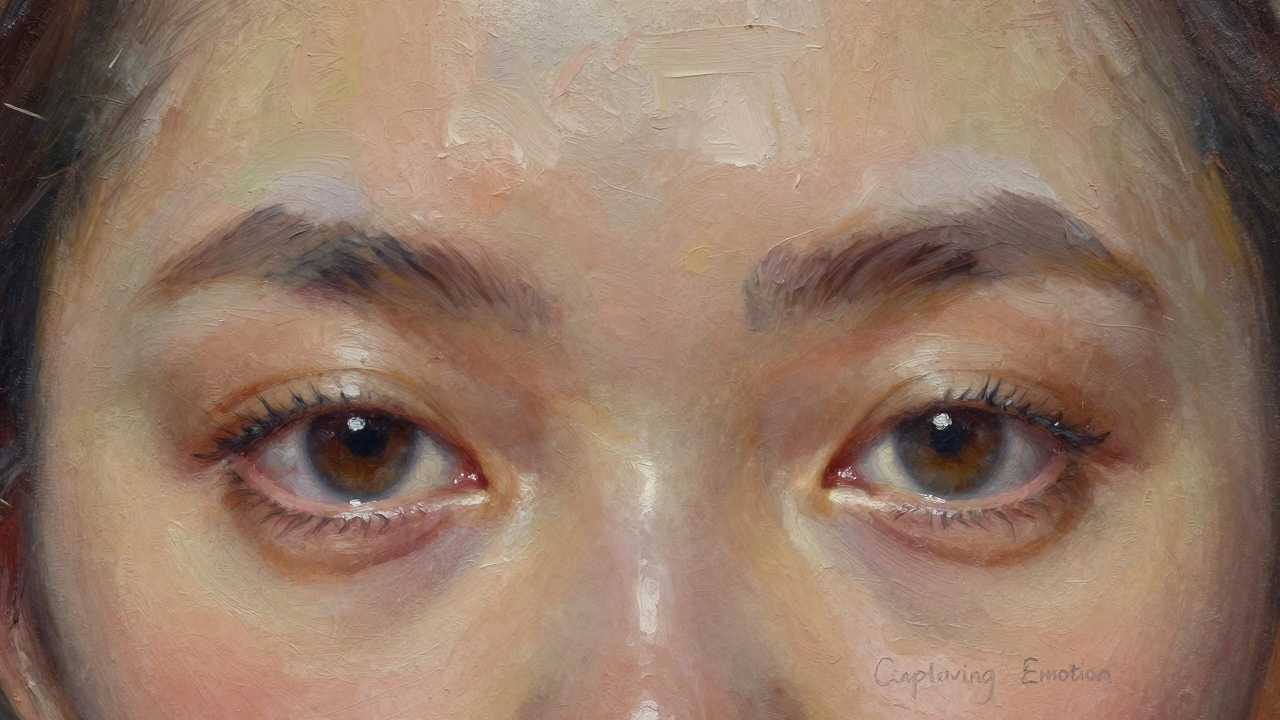
Artists often spend hours studying reference photos or sitting with live models to catch these fleeting moments. Why? Because a posed smile rarely feels authentic. The best portraits feel candid, as if the camera-or the painter-caught the subject in a moment of unguarded thought. Consider the eyes specifically. The iris is not a static circle; it reflects light and focuses on specific points. Painting the glint of light in the eye correctly brings the subject to life. Conversely, missing this detail can make the subject appear blind or vacant. Connecting with the subject’s personality allows the artist to translate internal states onto the canvas, creating a bond between the sitter and the viewer.
Composition and Context
How you frame the face matters just as much as how you paint it. Composition refers to the arrangement of visual elements within the frame of the artwork. A tight crop focusing only on the eyes and forehead creates intimacy and intensity. A wider shot including the shoulders and background provides context about the subject’s environment, status, or profession.
Think about the rule of thirds. Placing the eyes along the upper third line naturally draws the viewer’s gaze. Also, consider negative space. Leaving areas of the canvas empty or loosely painted can emphasize the detailed rendering of the face. Backgrounds should support, not compete. A busy, colorful background can distract from the subtle nuances of skin tones. Often, a simple, tonal background that complements the lighting scheme works best. It pushes the subject forward, ensuring they remain the undisputed hero of the piece.
Technical Execution: Brushwork and Texture
Finally, the physical application of paint plays a role in the perceived quality of the portrait. Your brushwork can convey texture and energy. Smooth, blended strokes might suit a young, flawless complexion, while rougher, impasto techniques can add character to weathered skin or beards. The key is intentionality. Every mark should serve a purpose.
Don’t be afraid to vary your tools. Use fine liners for eyelashes and details around the eyes, but switch to broader brushes for cheeks and foreheads to keep the paint moving and avoid overworking the surface. Over-blending is a common mistake that kills vitality. It smears the distinct edges needed to define features, resulting in a muddy, indistinct appearance. Trust your initial instincts. Sometimes, a loose, confident stroke communicates form better than ten careful ones. The texture of the paint itself becomes part of the narrative, showing the hand of the artist and adding tactile interest to the visual experience.
| Element | Key Question to Ask | Sign of Quality |
|---|---|---|
| Likeness | Does it feel familiar? | Unique proportions captured, not generic templates. |
| Anatomy | Is the structure logical? | Bone structure influences shadow shapes correctly. |
| Light & Value | Where is the focal point? | Clear contrast hierarchy guides the eye to the eyes. |
| Emotion | Do I feel connected? | Eyes have life; expression feels natural, not posed. |
| Brushwork | Is the texture appropriate? | Strokes match the subject's age and material (skin vs hair). |
Frequently Asked Questions
What is the most important feature to get right in a portrait?
While all features matter, the eyes are generally considered the most critical. They are the primary point of connection for the viewer. If the eyes lack life, reflection, or proper placement, the rest of the portrait will struggle to engage the audience. Getting the value contrast around the eyes correct ensures they pop out from the canvas.
Can a portrait be good if it doesn't look exactly like the person?
Yes, absolutely. Artistic license allows for exaggeration or stylization. As long as the underlying anatomy is respected and the character or emotion of the subject is conveyed effectively, a portrait can be powerful without being photorealistic. Many famous artists, like Van Gogh or Picasso, created iconic portraits that were not strictly accurate but were emotionally truthful.
How do I fix a portrait that looks flat?
Flatness usually stems from a lack of value contrast. Check your darkest darks and lightest lights. If the range is too narrow, the face will look two-dimensional. Deepen the shadows in the eye sockets, under the nose, and below the chin. Ensure your highlights are bright enough to create a sense of form rolling through space.
What is the best medium for beginner portrait painters?
Oil paint is often recommended for beginners because of its slow drying time, which allows for easy blending and correction. Acrylics dry quickly, which can be stressful for new artists trying to smooth out transitions. However, charcoal or graphite are excellent for practicing values and anatomy before committing to expensive paints.
Why do my portraits look creepy or uncanny?
The "uncanny valley" effect often happens when proportions are slightly off, particularly the spacing of the eyes or the size of the ears. It can also result from over-rendering certain areas while leaving others vague, confusing the brain. Double-check your measurements against your reference, and ensure your anatomy knowledge aligns with what you are painting.