Fine Art Print Pricing Calculator
Print Specifications
Cost Breakdown
Suggested Retail Price
You have the camera. You have the eye. You take photos that stop people in their tracks on social media. But when you look at your bank account, those likes aren’t paying the rent. This is the classic trap for aspiring fine artists who are creatives who produce original works intended for aesthetic appreciation rather than commercial utility. The jump from "hobbyist with good taste" to "professional selling originals and prints" is not about getting better at taking pictures. It is about building a business.
If you want to build a sustainable career in fine art photography is a genre of photography created to express a vision or idea, often exhibited in galleries and sold as collectible art., you need to treat your work like a product line. This guide cuts through the noise. We will skip the vague advice about "following your passion" and focus on the concrete steps required to get paid. From defining your niche to negotiating with galleries, here is how you actually start.
Define Your Visual Identity and Niche
The biggest mistake new artists make is trying to appeal to everyone. If your portfolio contains landscapes, portraits, abstract light leaks, and documentary street shots, you don’t have a brand. You have a scrapbook. Collectors buy consistency. They buy into a specific worldview.
To stand out, you must narrow your focus. Ask yourself what visual thread connects your best work. Is it the use of shadow? A specific color palette? A recurring theme of isolation in urban spaces? Once you identify this, commit to it. For example, if you love moody, black-and-white architecture, stop shooting colorful sunsets. Double down on the shadows. This specialization makes you memorable. When a collector thinks of "urban decay photography," they should think of you.
- Audit your past work: Look at your last 100 images. Delete or hide anything that doesn't fit your core theme.
- Create a series: Don't just shoot single images. Create bodies of work consisting of 5-10 related pieces. Galleries prefer series over random singles.
- Write an artist statement: Keep it short. Explain the 'why' behind your work, not just the 'how.' Avoid jargon. Write like a human talking to another human.
Build a Professional Portfolio That Converts
Your portfolio is your storefront. If it looks messy, people assume your art is messy too. You do not need a fancy website designer, but you do need a clean, fast-loading platform. Instagram is for discovery; your website is for sales.
Use a dedicated portfolio platform like Format, Squarespace, or Cargo. These platforms are built for creatives. They handle image optimization automatically, which is crucial because slow-loading sites kill conversion rates. Ensure your site has three clear sections: Work, About, and Contact. Do not clutter the navigation with blogs or news unless you update them weekly.
When displaying your work, quality matters more than quantity. Show only your top 10-15 images. Each image should be high-resolution enough to see detail but optimized for web speed. Include metadata in the file names (e.g., `dorian-ashwell-mountain-series-01.jpg`) before uploading. This helps with SEO and ensures your credit stays attached if someone downloads the image.
Understand Pricing and Editioning
Pricing your art feels awkward. You might fear asking too much and scaring buyers off, or asking too little and undervaluing your labor. The key is to have a formula. Never price arbitrarily.
For fine art photography, you typically sell two types of products: Originals (if you print on unique materials like platinum/palladium) and Limited Edition Prints. Most digital fine art photographers sell limited editions. This means you print a set number of copies (e.g., 5, 10, or 20) and then destroy the negative or archive the file. Scarcity creates value.
| Factor | Consideration | Actionable Tip |
|---|---|---|
| Size | Larger prints command higher prices due to material costs and wall presence. | Price per square inch. A 24x36 print should cost significantly more than an 8x10. |
| Edition Size | Fewer copies mean higher exclusivity and price. | Start with editions of 5-10 for new artists. Do not exceed 20 unless you have proven demand. |
| Materials | Paper type and printing method affect cost and perceived value. | Use archival pigment printers and museum-grade paper (e.g., Hahnemühle, Canson). Factor this into your base cost. |
| Experience | More exhibitions and press coverage increase your market rate. | Re-evaluate prices after every major milestone (first gallery show, magazine feature). |
A common rule of thumb for beginners is to calculate your base cost (paper, ink, framing, packaging) and multiply by 2. Then, add your hourly wage for the time spent shooting, editing, and marketing. This gives you a floor price. From there, adjust based on what comparable artists in your niche are charging. If similar artists charge $500 for a 20x30 print, do not charge $100. It signals low quality.
Get Your Work Seen: Exhibitions and Networks
Selling art is rarely about cold emailing strangers. It is about trust. Trust is built through visibility. You need to put your work in front of people who already buy art. This starts locally.
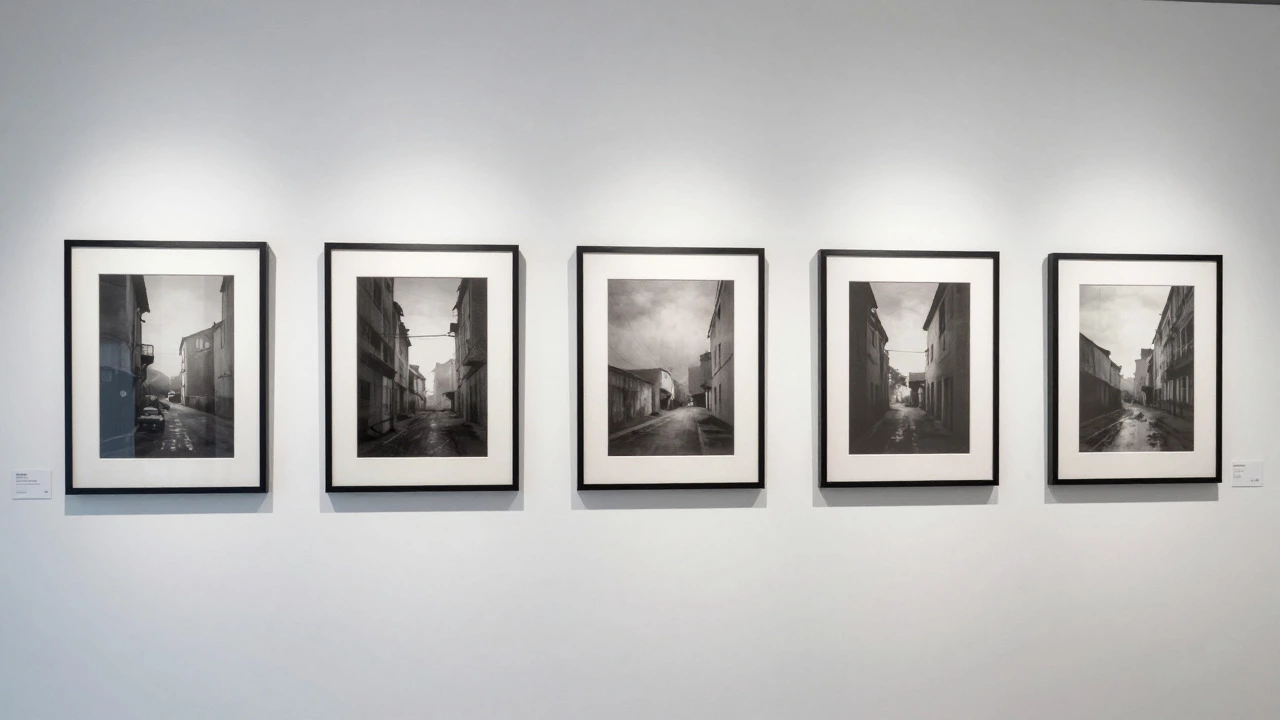
Look for open calls for exhibitions in your city. Vancouver, for instance, has a vibrant scene with galleries like the Vancouver Art Gallery holding public competitions, and smaller spaces like Exit Art or local co-ops welcoming emerging voices. Submitting to these shows gets your name in catalogs and puts your work in physical spaces where serious collectors browse.
Networking isn’t just handing out business cards. It’s engaging with curators, other artists, and collectors. Attend opening nights. Talk to the gallery owners. Ask them what they are looking for. Many galleries represent artists whose work they discovered because the artist was respectful, professional, and present at the community events.
Don’t ignore online communities either. Platforms like Artsy and Saatchi Art allow you to list your work globally. However, be selective. Applying to curated online galleries adds credibility. Being listed on a generic marketplace does not. Aim for platforms that vet artists, as this filters out noise and attracts serious buyers.
Navigate the Business Side: Contracts and Taxes
This is the part most artists hate, but it is essential for survival. You are now a small business owner. Treat it like one.
Always use contracts. Whether you are selling a print directly or working with a gallery, have a written agreement. For direct sales, a simple invoice that states the terms of sale (no returns, shipping responsibility) is sufficient. For gallery representation, understand the split. Standard gallery splits are 50/50, meaning the gallery keeps 50% of the sale price. Some may offer 60/40 in favor of the artist if the artist covers framing and shipping, but 50/50 is the industry standard for primary sales.
Keep meticulous records. Track every expense: camera gear, software subscriptions, travel to locations, printing costs, and marketing. In Canada, you can claim many of these as business expenses if you register as a sole proprietorship. Consult with a CPA who specializes in arts. They can help you understand GST/HST obligations and ensure you are setting aside enough for income tax. Do not wait until April to figure this out.

Develop a Consistent Marketing Rhythm
You cannot create art all day and expect money to appear. You need a marketing routine. Consistency beats intensity. Posting once a month won’t cut it. Posting daily with no strategy is exhausting and ineffective.
Focus on storytelling. People buy the story behind the image, not just the pixels. Share your process. Show the location where you shot. Explain the technical challenge you overcame. Behind-the-scenes content builds a connection with your audience. Use email marketing as your primary tool. Social media algorithms change; your email list does not. Offer a discount on your first print purchase in exchange for email sign-ups on your website. This builds a direct line to potential buyers.
Engage with your followers. Reply to comments. Ask questions. Make your social media a conversation, not a broadcast. When you launch a new series, notify your email list first. Give them exclusive access for 24 hours before announcing it publicly. This rewards your loyal fans and drives initial sales momentum.
Stay Resilient and Keep Creating
Rejection is part of the job. Galleries will say no. Open calls will close without selecting you. Buyers will ask for discounts. This is normal. Do not take it personally. Every "no" brings you closer to a "yes."
The most successful fine artists are not necessarily the most talented. They are the most persistent. They keep showing up. They keep creating. They keep refining their craft and their business acumen. Start small. Sell one print. Then ten. Then a hundred. Build your reputation brick by brick. Your career is a marathon, not a sprint. Focus on the next step, not the entire journey.
Do I need a degree in fine art to start a career?
No. While art school provides networking opportunities and critical feedback, it is not a requirement. Many successful self-taught artists build careers through consistent output, online presence, and strategic exhibition. What matters more is the strength of your portfolio and your ability to communicate your vision.
How many prints should I make in a limited edition?
For emerging artists, starting with editions of 5 to 10 is recommended. This creates scarcity without limiting your reach too much. As your demand grows, you can release new editions or increase the size for future works. Always number your prints (e.g., 1/10) and sign them to authenticate them.
Should I sell my work on Etsy or my own website?
Both have their place. Etsy brings traffic but charges fees and competes with mass-produced art. Your own website establishes brand authority and allows you to keep more profit. Ideally, use Etsy for lower-priced open editions and your website for limited editions and originals. Drive traffic from social media to your website for higher-value sales.
How do I approach galleries for representation?
Research galleries that align with your style. Do not send generic emails. Reference specific artists they represent and explain why your work fits their roster. Send a concise email with a link to your online portfolio and a few high-res images. Be patient and professional. Building relationships takes time.
What equipment do I need to start selling fine art prints?
You need a high-quality camera capable of capturing large files, a computer with color-calibrated monitor for editing, and access to a professional printer. You do not need to buy a large-format printer immediately. Partner with a reputable lab for initial runs. Invest in archival paper and pigment inks to ensure longevity, which is crucial for art collectors.