Ansel Adams Zone System Exposure Calculator
Learn the Zone System
Ansel Adams' Zone System allows precise control of exposure and development. Each zone represents a f-stop difference in brightness. Zone 0 = pure black, Zone V = middle gray (18% reflectance), Zone X = pure white.
Exposure Value
-
This is your Zone System value. Adams often used EV 11-14 for mountain landscapes.
Zone System Equivalent
There’s no single answer to who the most famous photographer of all time is-but if you ask anyone who knows fine art photography, one name comes up more than any other: Ansel Adams. His black-and-white landscapes of Yosemite, the American Southwest, and the Sierra Nevada didn’t just capture scenery-they changed how people saw nature, and how photography was treated as art.
Why Ansel Adams Stands Above the Rest
Ansel Adams didn’t just take pictures. He engineered light. He developed the Zone System with Fred Archer in the 1940s-a method to control exposure and development so every shadow and highlight carried intentional detail. That system became the foundation for technical mastery in photography. His prints weren’t snapshots. They were hand-developed, meticulously printed, and signed. Each one was a unique object, treated like a painting.
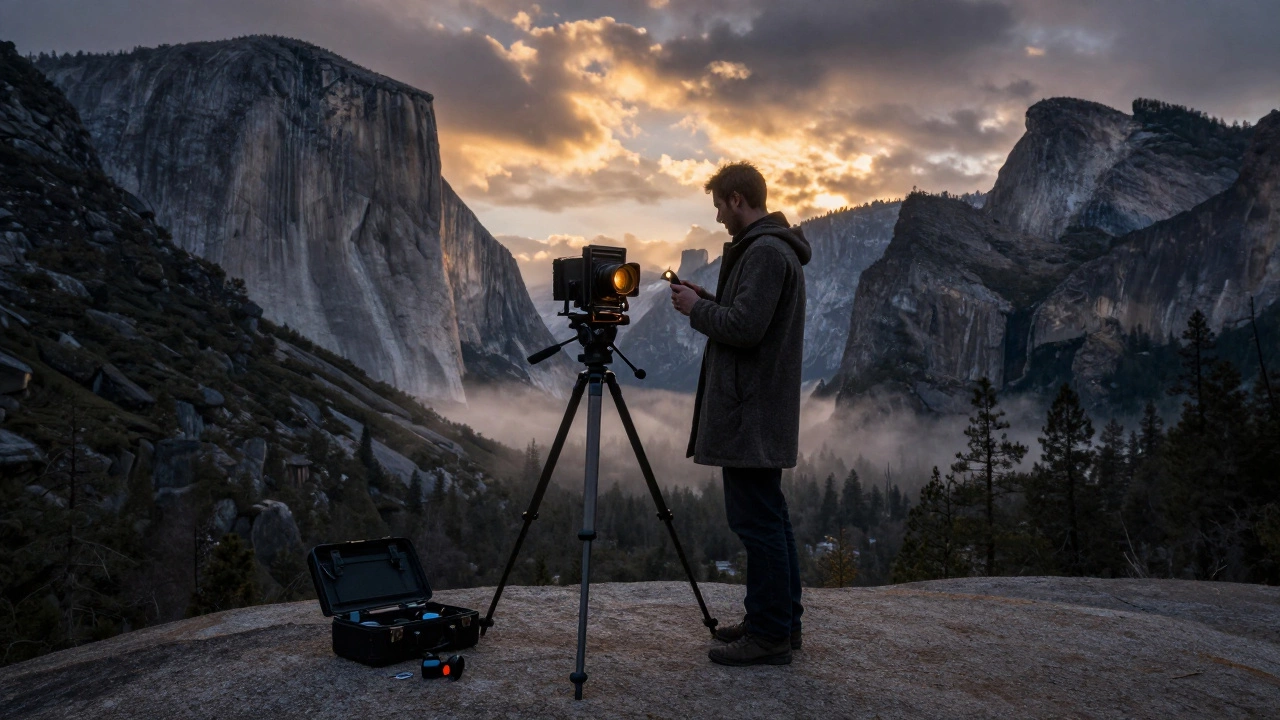
His image Clearing Winter Storm, Yosemite National Park (1944) is studied in art schools today. The way the storm breaks across granite peaks, the contrast between dark pines and glowing clouds-it wasn’t luck. It was patience. He waited days for the right light. He carried 40-pound camera equipment up mountain trails. He didn’t shoot 100 frames hoping one would work. He shot one. And he made it count.
The Cultural Impact of His Work
Adams didn’t just make beautiful photos-he used them to change policy. His photographs were instrumental in the creation of Kings Canyon National Park in 1940. He worked with the Sierra Club, publishing books like Sierra Nevada: The John Muir Trail that brought wilderness into living rooms across America. At a time when most people had never seen a national park, his images made them feel like they’d been there.
His work was exhibited at the Museum of Modern Art in New York in 1943-the first solo photography exhibition ever held there. That’s not just fame. That’s legitimacy. Before Adams, photography was seen as a technical craft, not fine art. After him, galleries started hanging photographs on the same walls as paintings.
Other Contenders in the Conversation
Of course, Adams isn’t the only name that comes up. Henri Cartier-Bresson, the French photographer, popularized the idea of the “decisive moment”-that split second when form and content align perfectly. His photo of a man leaping over a puddle behind the Gare Saint-Lazare in 1932 is one of the most reproduced images in history. But his work was street-level, human, fleeting. It didn’t aim for the sublime.
Diane Arbus captured society’s outsiders with raw, unsettling intimacy. Robert Frank’s The Americans broke rules of composition and subject matter, influencing generations of documentary photographers. But neither of them had the same reach across culture, science, and policy as Adams.
Even Steve McCurry’s Afghan Girl-a powerful, iconic portrait-was a single image that went viral before viral was a thing. Adams produced over 1,000 published images, each one carefully crafted, and hundreds more held in museum collections worldwide.
What Made His Photography Different?
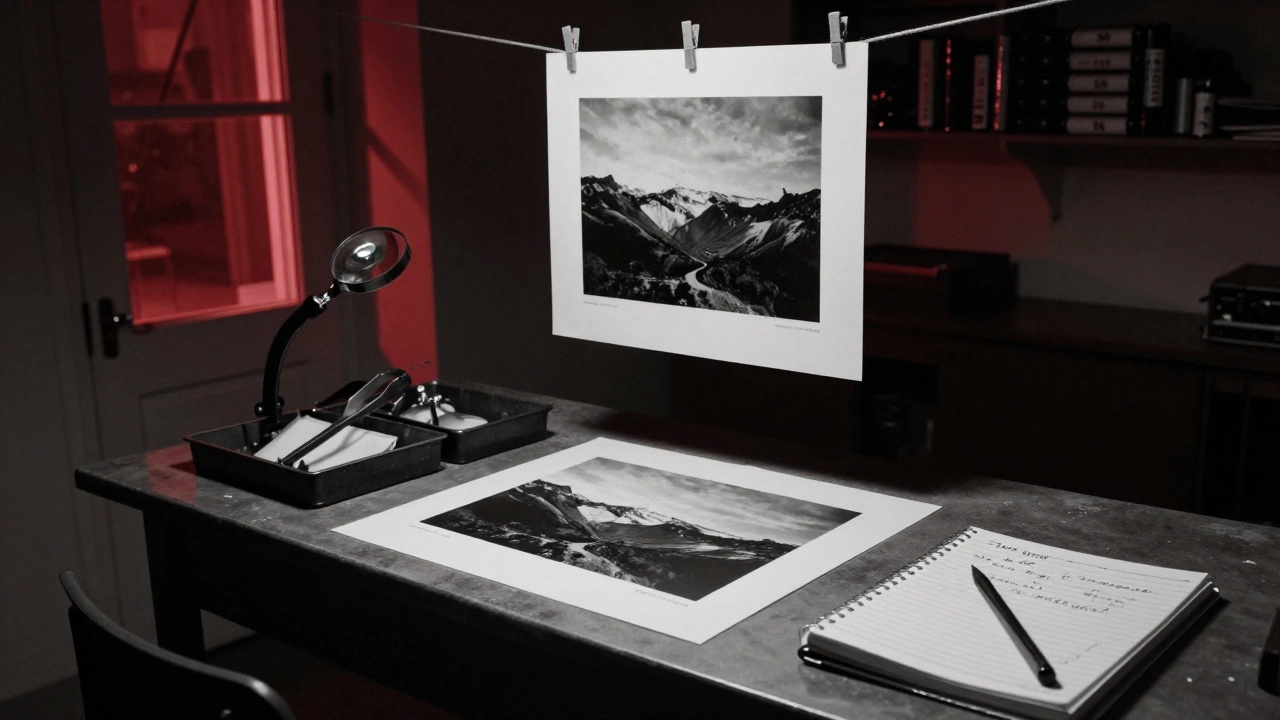
Adams worked in a time when cameras were heavy, film was expensive, and there was no such thing as editing on a screen. He had to get it right in the field. His technical rigor set him apart. He didn’t rely on filters or digital tricks. He used filters-red, orange, yellow-to darken skies and enhance cloud contrast. He developed his own developers. He printed on fiber-based paper, sometimes spending hours in the darkroom adjusting dodges and burns by hand.
His images are still reproduced today-not as cheap posters, but as limited-edition prints sold for tens of thousands of dollars. The Museum of Fine Arts in Boston, the Getty, and the Smithsonian all hold his original prints. The Library of Congress has his entire archive: negatives, correspondence, notebooks, and contact sheets.
Compare that to other photographers whose fame peaked with a single image or a trend. Adams built a body of work that spanned six decades, influenced environmental policy, and redefined what photography could be.
Why He Still Matters in 2026
Today, everyone has a camera. Millions of photos are uploaded every minute. But how many of them are made with intention? How many are meant to last?
Adams reminds us that photography isn’t about volume. It’s about presence. It’s about waiting. It’s about seeing the world not just as it is, but as it could be remembered.
His legacy lives on in every photographer who chooses to slow down, who values process over speed, who believes an image can carry meaning beyond aesthetics. You can’t scroll past an Ansel Adams print. You stop. You breathe. You look closer.
That’s why, in 2026, when we ask who the most famous photographer of all time is, the answer still points to him-not because he was the first, or the most prolific, but because he made photography matter.
Where to See His Work Today
If you want to experience his work in person, the Ansel Adams Gallery in Yosemite still sells original prints from his estate. The Center for Creative Photography in Tucson holds his complete archive. Major museums like the Metropolitan Museum of Art and the San Francisco Museum of Modern Art rotate his prints in their permanent collections.
His books are still in print. Examples: The Making of 40 Photographs is a masterclass in technique and philosophy. You don’t just read it-you study it.
How His Legacy Influences Modern Photography
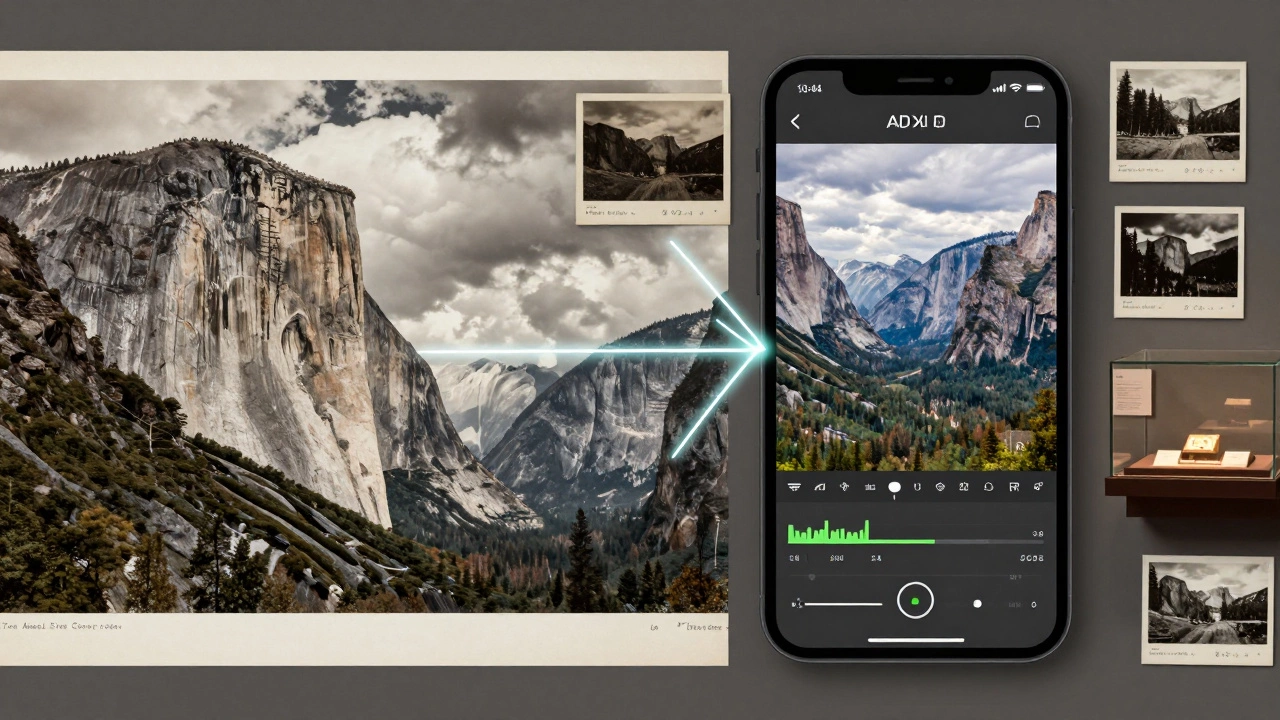
Modern photographers still use the Zone System, even if they don’t call it that. Lightroom’s histogram and exposure sliders are digital versions of Adams’ darkroom tools. The push for high dynamic range (HDR) in smartphone cameras? That’s Adams’ vision of capturing full tonal range in one frame.
Environmental photographers like James Balog and Paul Nicklen cite Adams as their inspiration. His belief that photography could protect nature is now a core tenet of conservation photography.
Even fashion and commercial photographers who never shot a mountain still learn from his discipline. His approach to composition-using leading lines, framing with natural elements, balancing light and shadow-is taught in every introductory photography course.
Final Thoughts: Fame Isn’t Just About Popularity
Fame can be fleeting. A viral photo can fade in months. But influence lasts.
Ansel Adams didn’t chase trends. He chased clarity. He didn’t seek likes-he sought permanence. His work wasn’t meant to entertain. It was meant to awaken.
That’s why, decades after his death in 1984, his name still rises above the rest. Not because he was the only great one-but because he was the one who turned photography into something people couldn’t look away from.
Is Ansel Adams the only photographer who made fine art from nature?
No, but he’s the most influential. Edward Weston captured abstract forms in shells and peppers. Minor White used photography for spiritual expression. But Adams combined technical precision with emotional scale in a way that reached millions. His images became symbols of wilderness itself.
Did Ansel Adams ever use color film?
He did experiment with color in the 1950s and 60s, but he never published it widely. He believed black-and-white better expressed the emotional weight and structure of landscapes. His color work exists in archives but is rarely displayed-it’s not what he’s known for.
What camera did Ansel Adams use?
He primarily used a large-format 8x10 view camera, often a Graflex or a Deardorff. These cameras required a tripod, precise focusing, and a dark cloth over his head to compose. Each exposure took minutes. He carried up to 20 film holders at a time, each holding one image.
Why are Ansel Adams prints so expensive today?
Because they’re original, hand-printed by Adams himself or under his direct supervision. Only about 1,000 original prints were made during his lifetime. Each one is signed, dated, and numbered. Museums and collectors compete for them. A single print can sell for $20,000 to $100,000 depending on rarity and condition.
Did Ansel Adams ever photograph people?
Rarely. He focused on landscapes and natural forms. He did photograph Native American communities in the Southwest for government projects, but he avoided portraits. His goal was to show the land as a living entity-not as a backdrop for humans.