Golden Ratio Calculator for Art Composition
Enter your canvas or image width to calculate proportional elements based on the Golden Ratio (φ ≈ 1.618). This helps place horizons, focal points, and vertical elements for subconscious harmony.
Have you ever looked at a painting or a photograph and felt an instant sense of calm or balance, without knowing exactly why? It might not be magic. It could be math. Specifically, it could be the Fibonacci sequence, a number pattern that appears everywhere from sunflower seeds to the spiral arms of galaxies, and yes, in the masterpieces hanging in museums.
For centuries, artists have used this mathematical tool to create compositions that feel natural and pleasing to the human eye. But what exactly is it, and how does a string of numbers translate into brushstrokes on canvas? Let’s break down how this ancient code shapes modern and classical art alike.
The Numbers Behind the Beauty
To understand how the Fibonacci sequence works in art, we first need to look at the numbers themselves. The sequence starts with 0 and 1, and each subsequent number is the sum of the two preceding ones: 0, 1, 1, 2, 3, 5, 8, 13, 21, 34, 55, 89, and so on, stretching toward infinity.
This isn’t just a random list. When you draw squares with these side lengths and connect their corners with a smooth curve, you get the famous Golden Spiral. This spiral expands outward by a factor of approximately 1.618 for every quarter turn it makes. This ratio is known as the Golden Ratio, often represented by the Greek letter Phi (φ).
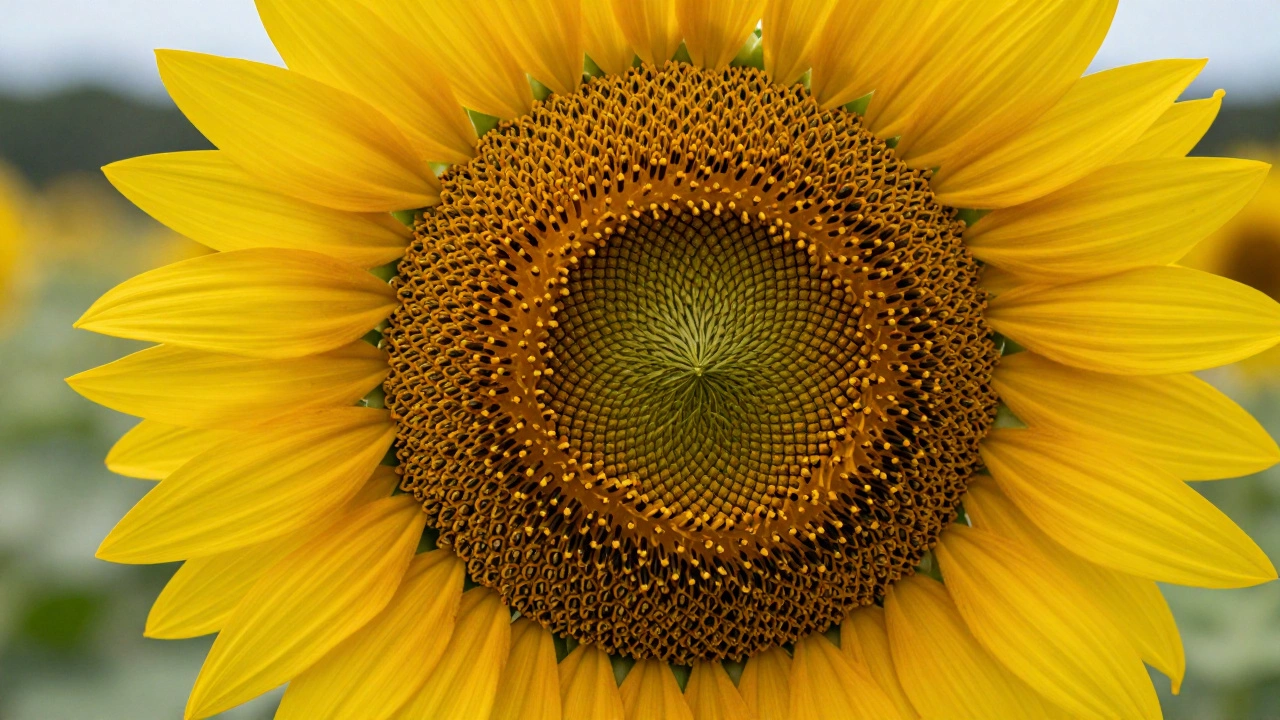
In nature, this spiral helps plants grow efficiently, packing seeds tightly in a sunflower head or arranging leaves to catch maximum sunlight. Artists borrowed this logic because our eyes are evolved to recognize these patterns. We find them inherently satisfying because they reflect the order found in the natural world around us.
From Canvas to Camera: Where You See It
You don’t need a degree in mathematics to spot the Fibonacci sequence in art. It shows up in two main ways: through the Golden Spiral itself and through the Golden Rectangle (a rectangle whose sides are in the ratio of 1:1.618).
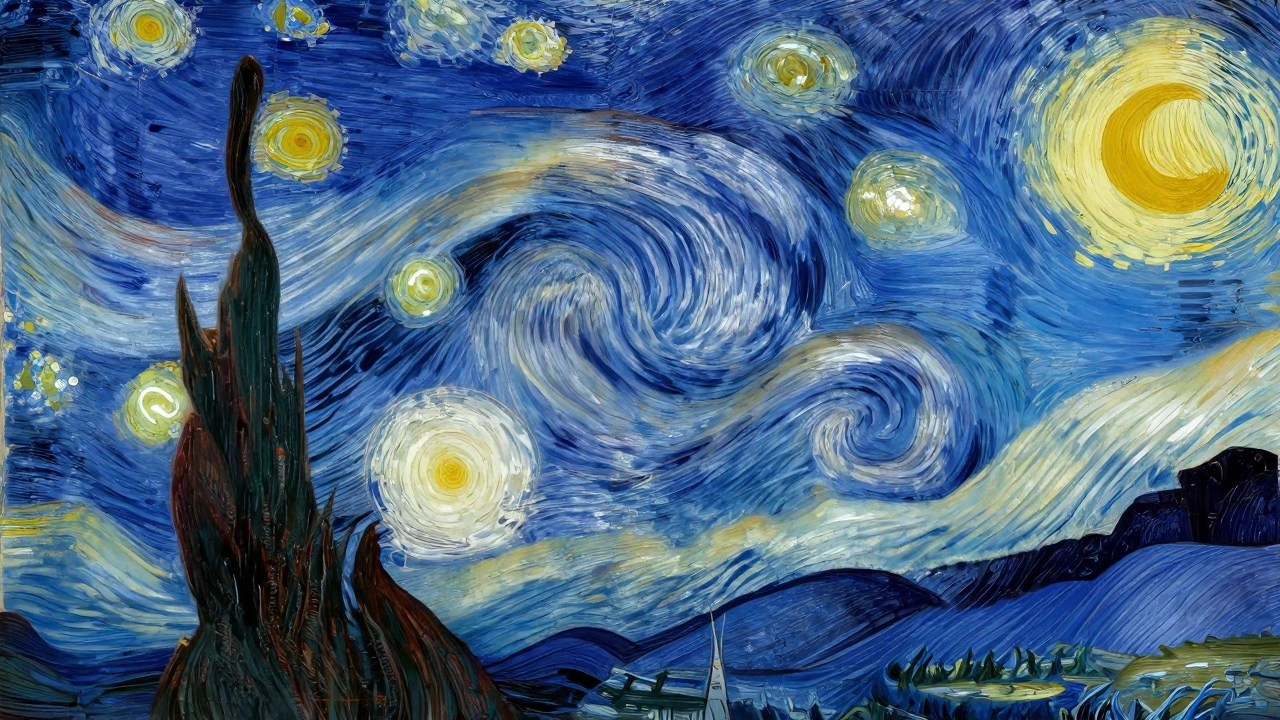
Consider Leonardo da Vinci’s The Vitruvian Man. While debated by scholars, many believe he used proportional systems rooted in these ratios to depict the ideal human form. In Vincent van Gogh’s The Starry Night, the swirling sky follows a clear spiral path that draws your eye from the center out to the edges, creating movement and depth. Even in photography, the rule of thirds-a common compositional guideline-is actually a simplified approximation of the Golden Ratio grid.
Here is how different mediums utilize this concept:
- Painting: Placing the focal point where the spiral tightens ensures the viewer’s attention lands there naturally.
- Photography: Using the spiral overlay to align horizons or subjects creates dynamic tension rather than static symmetry.
- Architecture: Buildings like the Parthenon in Athens feature facades that fit neatly within Golden Rectangles, giving them a sense of stability and grandeur.
- Digital Design: Logos and user interfaces often use these proportions to ensure elements feel balanced and easy to navigate.
Why Does It Work? The Psychology of Proportion
Why do we prefer images arranged according to the Fibonacci sequence over those that are perfectly symmetrical or completely chaotic? The answer lies in cognitive ease. Perfect symmetry can feel rigid and artificial, while total randomness feels stressful and hard to process. The Golden Ratio sits in the sweet spot between order and variety.
Studies in visual perception suggest that the human brain processes information more efficiently when it follows certain predictable patterns. The Fibonacci spiral provides a visual hierarchy. It guides the eye along a specific path, revealing details gradually rather than all at once. This creates a narrative flow within a static image.
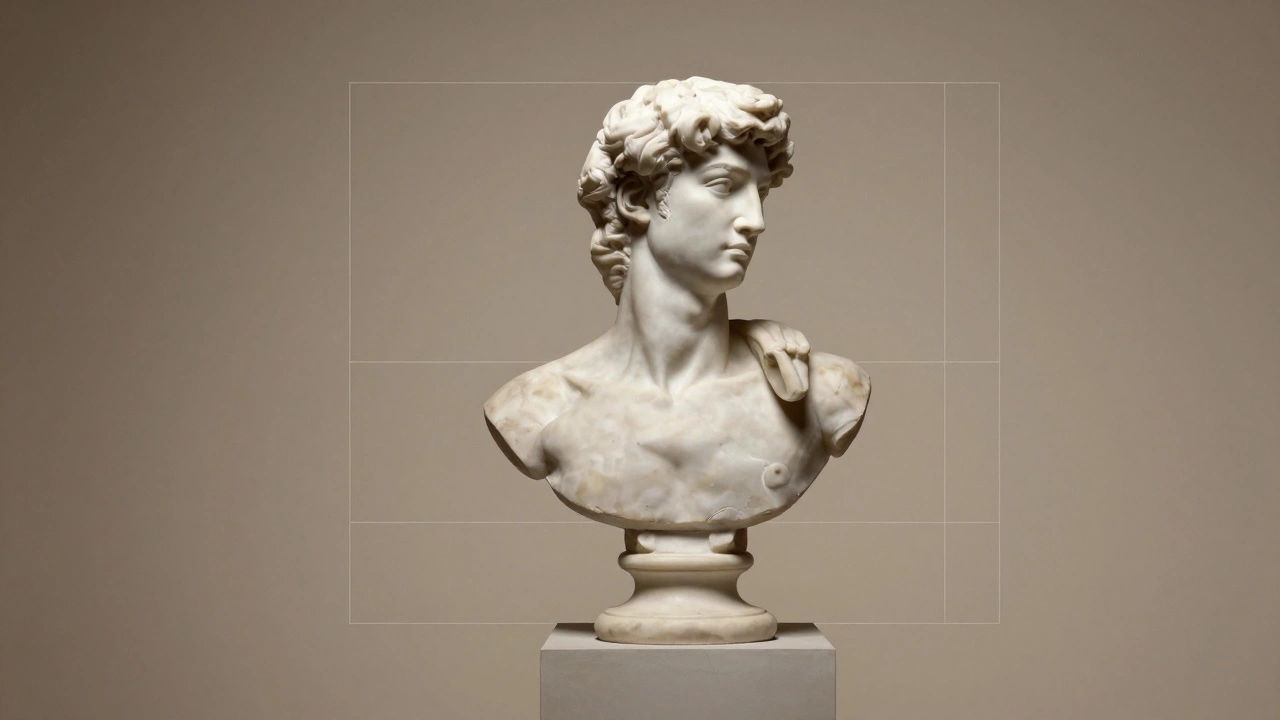
Think about a portrait. If you place the subject’s eyes exactly in the center, it can feel like a mugshot. But if you shift them slightly off-center, following the guidelines of a Golden Rectangle, the face becomes more engaging. The empty space (negative space) gains importance, adding context and mood to the piece.
Applying Fibonacci to Your Own Art
You don’t need to calculate complex equations to use the Fibonacci sequence in your own work. Most digital art software, including Adobe Photoshop and Lightroom, comes with overlay grids based on the Golden Ratio. For traditional painters, you can sketch a light spiral directly onto your canvas before applying paint.
Here is a simple step-by-step approach to using the Golden Spiral in composition:
- Identify your focal point: Decide what the most important element of your image is. Is it a person’s face, a blooming flower, or a distant mountain?
- Overlay the spiral: Imagine or draw the spiral starting from the corner opposite your focal point, tightening toward the center.
- Align key features: Position your focal point near the smallest part of the spiral (the eye of the storm). Align secondary elements, like limbs, branches, or architectural lines, with the curves of the spiral.
- Check the balance: Step back. Does the eye move smoothly through the image? If it feels stuck or pulled too strongly in one direction, adjust the placement of lighter or darker tones to guide the viewer.
Even if you aren’t drawing a literal spiral, you can use the Golden Ratio to size your elements. For example, if your canvas is 24 inches wide, dividing that by 1.618 gives you roughly 14.8 inches. You might place a horizon line or a major vertical element at that mark to create subconscious harmony.
| Tool | Complexity | Best Used For | Visual Effect |
|---|---|---|---|
| Rule of Thirds | Low | Quick snapshots, beginners | Balanced, clean, safe |
| Golden Ratio / Fibonacci | Medium | Landscapes, portraits, detailed paintings | Dynamic, organic, engaging |
| Symmetry | Low | Architecture, formal portraits | Stable, serious, sometimes rigid |
Misconceptions and Myths
It is important to note that the Fibonacci sequence is not a strict law of art. Many famous artworks do not follow it precisely, and some that are claimed to do so were likely retrofitted by analysts looking for patterns. The human mind is excellent at finding connections, even where none exist (a phenomenon known as apophenia).
However, dismissing it entirely would be a mistake. Whether intentional or subconscious, artists who achieve high levels of aesthetic success often adhere to these proportional principles. The value of the Fibonacci sequence in art is not in its mathematical purity, but in its utility as a heuristic-a mental shortcut for achieving visual balance.
Don’t let the math intimidate you. Use it as a guide, not a rulebook. Sometimes breaking the pattern creates more interest than following it. The goal is to create art that resonates with viewers, and understanding these underlying structures gives you another tool in your creative kit.
Beyond Visual Arts: Music and Literature
The influence of the Fibonacci sequence extends beyond visual media. In music, composers like Béla Bartók and Edgard Varèse structured their pieces using time signatures and phrase lengths based on Fibonacci numbers. This creates rhythmic patterns that feel evolving and unpredictable yet coherent.
In literature, authors may structure chapters or scenes to build tension in increments that mirror the sequence. A short scene followed by a longer one, then a significantly longer climax, mimics the expanding nature of the spiral. This cross-disciplinary application proves that the appeal of these ratios is fundamental to how humans perceive rhythm, narrative, and beauty.
Is the Fibonacci sequence the same as the Golden Ratio?
They are closely related but not identical. The Fibonacci sequence is a series of numbers (0, 1, 1, 2, 3, 5...). The Golden Ratio (Phi, ≈1.618) is the limit of the ratio between consecutive Fibonacci numbers as they get larger. In art, the Golden Ratio is often used to determine proportions, while the Fibonacci sequence helps construct the Golden Spiral.
Do I need to use the Fibonacci sequence in every painting?
No. Art is subjective, and rules are meant to be broken. The Fibonacci sequence is a tool for creating balance and guiding the viewer's eye. Some abstract or expressive styles benefit from chaos or asymmetry. Use it when you want to add a sense of natural harmony or focus attention on a specific area.
How can I apply the Golden Ratio in digital photography?
Most photo editing apps and cameras allow you to enable grid overlays. Look for a "Golden Ratio" or "Phi Grid" option instead of the standard Rule of Thirds. Align your horizon, subject’s eyes, or leading lines with the intersections of this grid during composition or cropping.
Did Leonardo da Vinci intentionally use the Fibonacci sequence?
There is no definitive proof that da Vinci explicitly used the term "Fibonacci sequence," as the mathematician Fibonacci lived earlier. However, da Vinci was deeply interested in geometry and proportion. His works, such as The Last Supper and The Vitruvian Man, demonstrate a sophisticated understanding of proportional systems that align closely with Golden Ratio principles.
Can the Fibonacci sequence help with logo design?
Yes. Many successful logos, including those of Twitter and Apple, are rumored to incorporate Golden Ratio spirals. Using these proportions can make a logo feel stable, memorable, and aesthetically pleasing. Designers often use circles and rectangles scaled by 1.618 to ensure consistent spacing and sizing.