Horizon Line Simulator
Adjust the Horizon
Mood & Effect: Balanced composition with equal sky and land
Depth Cues: Objects above horizon appear higher, below appear lower
When you look at a great landscape painting, it doesn’t just show you a field or a mountain-it pulls you into it. You feel the breeze, sense the distance, and almost hear the quiet. But how do artists make that happen? The answer starts with one simple, non-negotiable rule: the horizon line determines everything.
The Horizon Line Is the Foundation
The horizon line isn’t just where the sky meets the ground. In landscape painting, it’s the anchor point for every other element. It’s the invisible ruler that tells your eye how far away things are, how tall trees should be, and where shadows fall. Get this wrong, and your whole painting feels off-even if the colors are perfect.
Think about it: if you’re standing on a flat field, your eye level lines up with the horizon. If you’re on a hill, it rises. If you’re in a valley, it drops. Artists don’t just paint what they see-they paint what they feel their position to be. That’s why a landscape painted from a low angle (like lying on the ground) feels immersive. A high-angle view (like looking down from a cliff) feels expansive. The horizon line controls that feeling.
Where You Place It Changes the Mood
Most beginners place the horizon line right in the middle of the canvas. It’s safe. But it’s also boring. A centered horizon cuts the painting in half, giving equal weight to sky and land. That rarely matches how we actually experience nature.
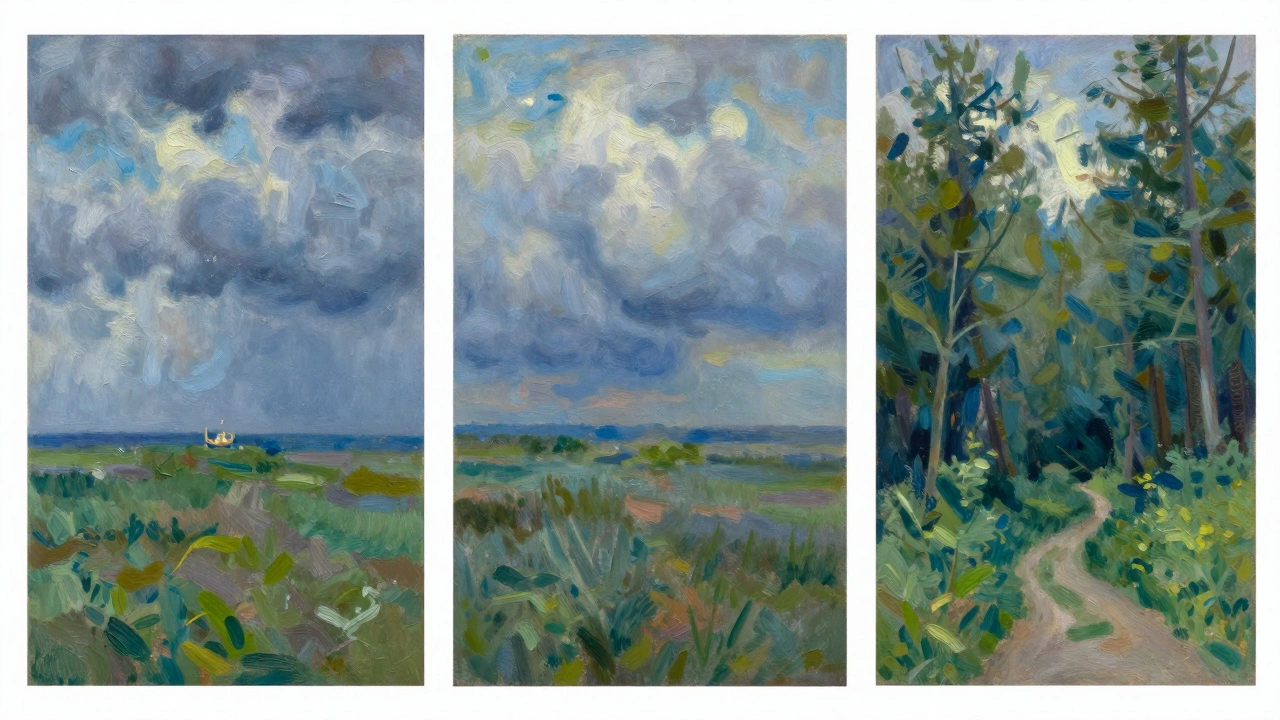
Try this: move the horizon line up. Now the sky takes up most of the space. You feel open, free, maybe even lonely. That’s how Turner painted stormy seas-with vast skies pressing down on tiny boats. Move it down, and the land dominates. You’re suddenly in a deep valley, surrounded by trees and rocks. That’s what Constable did in his quiet English fields.
There’s no rule that says the horizon must be horizontal, either. A slight tilt-just a few degrees-can suggest movement. A wind-swept field, a rolling hill, even a storm approaching. Artists like Monet and Hockney used this subtly to make calm scenes feel alive.
It Controls Scale and Depth
Without the horizon line, objects lose their sense of size. A tree painted too tall above a low horizon looks like a giant. A house too small below a high horizon looks like a dollhouse. The horizon line is your scale reference.
Here’s how it works: if you know your eye level is at the horizon, then anything above it is above you, and anything below it is below you. That’s why a distant mountain painted just above the horizon feels far away. If you paint it halfway up the canvas, it suddenly looks like it’s floating. Artists use this to create depth without perspective lines. You don’t need vanishing points-just a well-placed horizon.
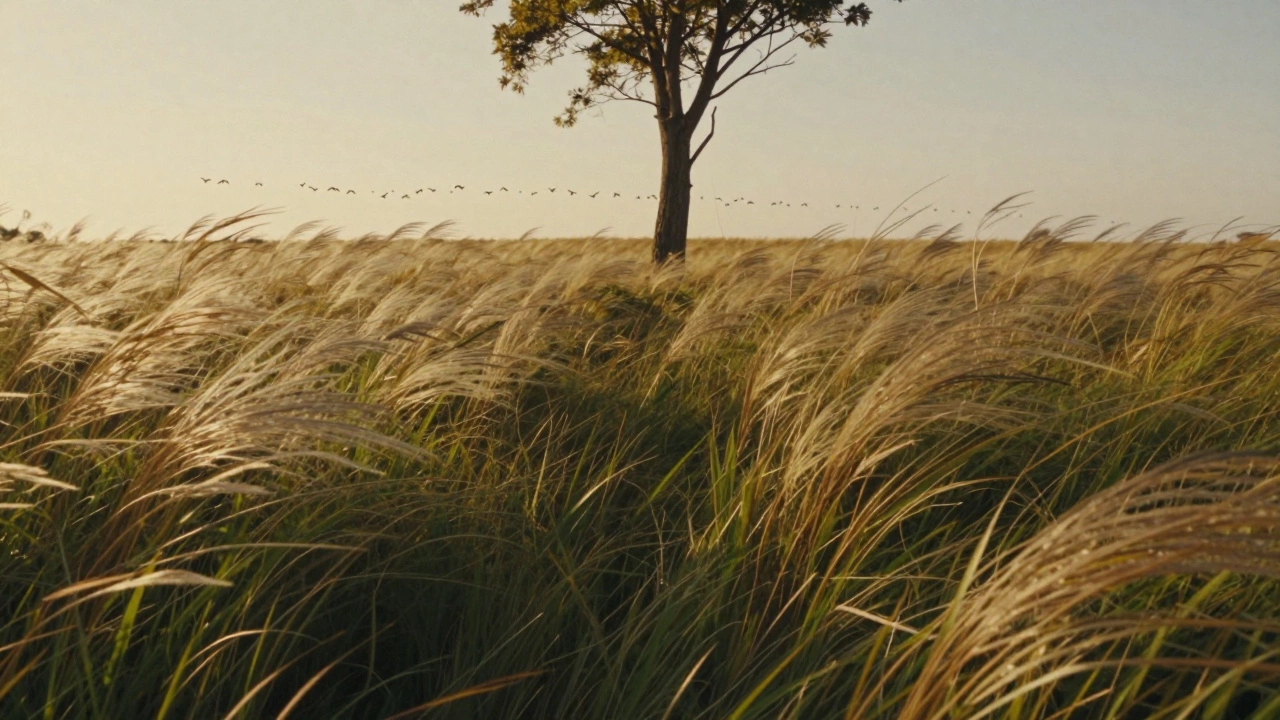
Even small details rely on it. A bird flying across the sky? Its position relative to the horizon tells you how high it is. A path winding through grass? Its angle relative to the horizon tells you if it’s climbing or descending.
Common Mistakes and How to Fix Them
Many amateur painters struggle with this. Here are the three most common errors-and how to fix them.
- Mistake: The horizon line wobbles. Fix: Use a ruler or the edge of a brush handle to draw a light, straight line before you paint. Don’t trust your hand alone.
- Mistake: Everything sits at the same level. Fix: Let objects overlap the horizon. A tree trunk should break through. A roof should peek above. That creates layers.
- Mistake: Ignoring the atmosphere. Fix: The horizon line isn’t sharp in real life. Distant hills fade. Add a soft blur or lighter tone near the horizon to mimic air perspective.
Why This Rule Matters More Than Color or Brushwork
You can paint with muddy colors and still make a powerful landscape. You can use rough brushstrokes and still feel the wind. But if the horizon line is wrong, the whole scene collapses. It’s not about beauty-it’s about logic. Your brain expects the world to follow certain rules. The horizon line is one of them.
Look at the work of Andrew Wyeth. His landscapes feel real because the horizon is always exactly where you’d expect it to be. You don’t question it. You just feel it. That’s the power of getting the first rule right.
How to Practice
Try this exercise: take five photos of landscapes-different times of day, different vantage points. Draw the horizon line on each one with a pencil. Now paint three small studies (6x8 inches), each with the horizon in a different position: high, low, and centered. Notice how each changes the emotion of the scene.
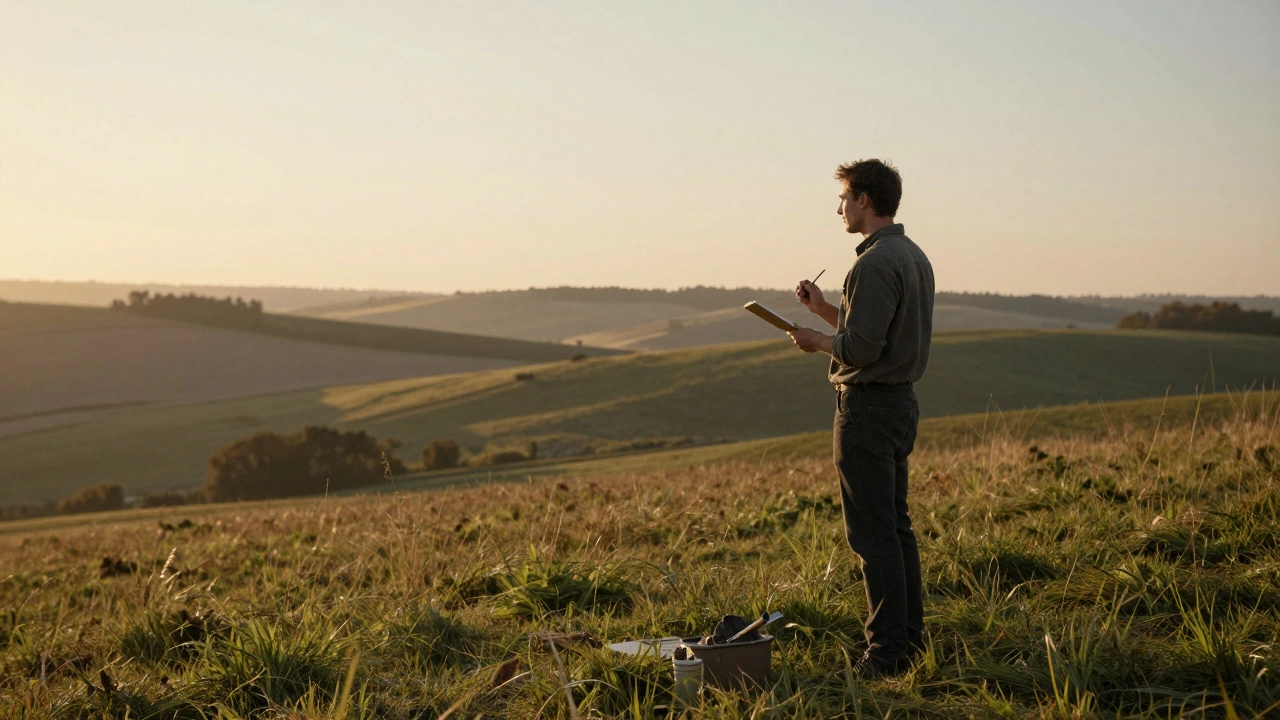
Or go outside. Stand in one spot. Look straight ahead. Mark where the horizon is. Now squat down. Where is it now? Stand on a chair. Where is it? You’re not just changing your view-you’re changing the painting.
Landscaping in painting isn’t about copying nature. It’s about rebuilding it with intention. And it all starts with that one line.
Is the horizon line always visible in a landscape painting?
No, it doesn’t have to be visible, but it must exist. Even if clouds cover the sky or trees block the ground, the implied horizon line still guides placement. A painter might hide it behind a hill, but the angle of the path or the tilt of a fence still follows its invisible position.
Can you paint a landscape without a horizon line?
Technically, yes-but it becomes abstract. Without any reference to eye level, depth vanishes. The painting turns into a flat arrangement of shapes. Most traditional landscape paintings rely on the horizon to create realism. Artists who avoid it usually do so intentionally, like in abstract or surreal works, not in representational landscapes.
Do all landscape painters follow this rule?
Almost all realist and impressionist painters do. Even those who break the rules-like Gauguin or Matisse-still use the horizon line as a starting point before distorting it. It’s not about rigid rules; it’s about understanding the system before you bend it. You can’t break a rule you don’t know exists.
How does the horizon line relate to the rule of thirds?
The horizon line often aligns with the top or bottom third line in the rule of thirds. Placing it there creates balance without symmetry. For example, if you put the horizon on the lower third, you give two-thirds of the canvas to the sky-great for dramatic clouds. If it’s on the upper third, you emphasize the land. It’s not a replacement for the rule of thirds-it’s the foundation it builds on.
What if I’m painting a seascape with no visible land?
The horizon line still exists. It’s the meeting point between sea and sky. Even in open ocean, that boundary is there. You might soften it with haze or mist, but its position tells the viewer if the boat is rising or sinking, if the waves are rolling toward or away. Without it, the scene feels disoriented.