Modern Art Skill Decoder
Click on an artwork to reveal the specific skills required to create it. Then test your understanding with the quick quiz below.
Color Field Painting
Mark Rothko
Hidden Technical MasteryThe Myth: "It's just blocks of color."
The Reality: Achieving emotional resonance requires layering translucent glazes. One wrong layer collapses the mood. It is technical precision disguised as simplicity.
Drip Paintings
Jackson Pollock
Controlled AccidentThe Myth: "My kid could do that."
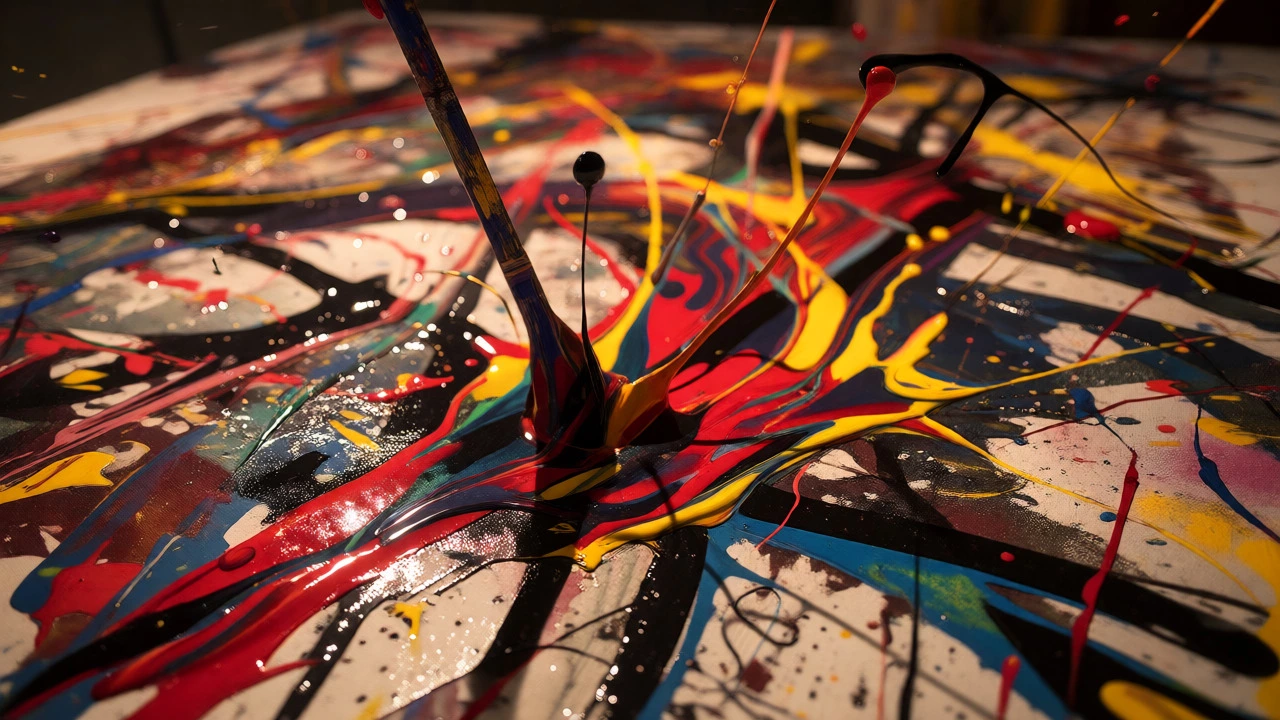
The Reality: Controlling paint viscosity while dancing around a canvas requires unique physical rhythm and chemical knowledge. It’s choreography, not randomness.
Infinity Rooms
Yayoi Kusama
Spatial & PsychologicalThe Myth: "Just mirrors and lights."
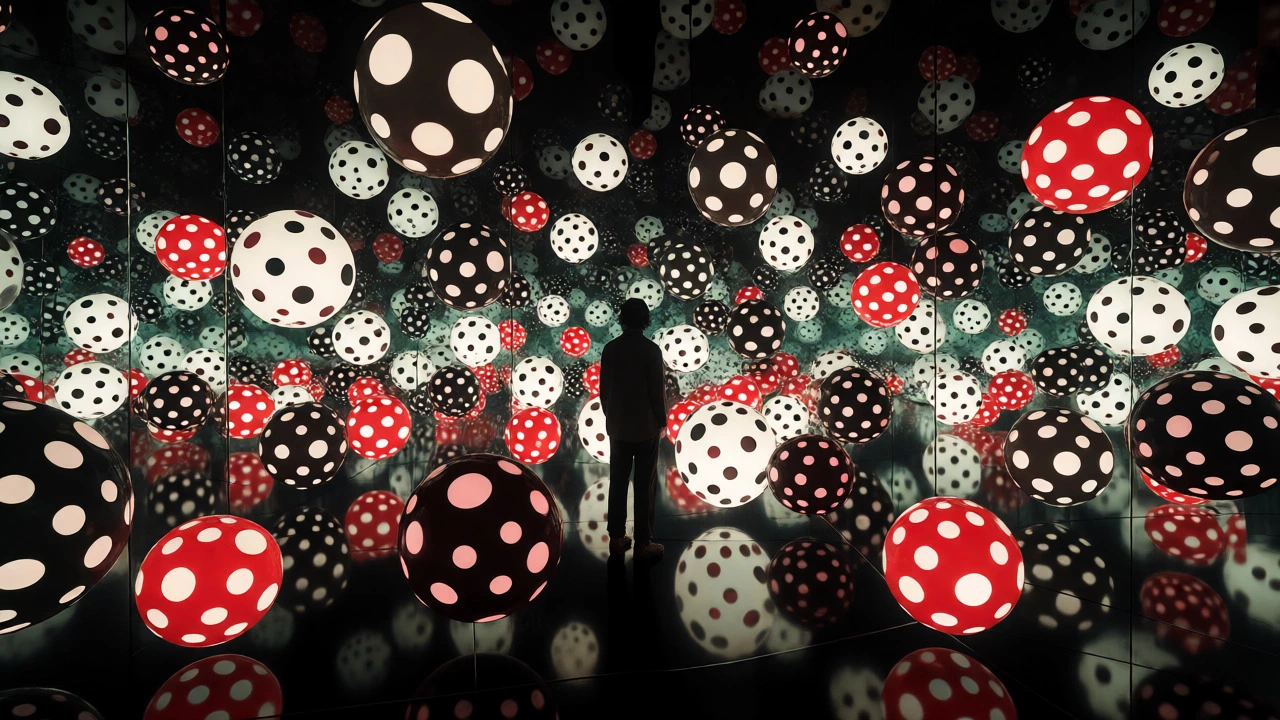
The Reality: Requires precise calculation of mirror angles and LED placement to manipulate human perception. If one bulb fails, the illusion breaks.
Knowledge Check
According to the article, what is the primary difference between traditional and modern art evaluation?
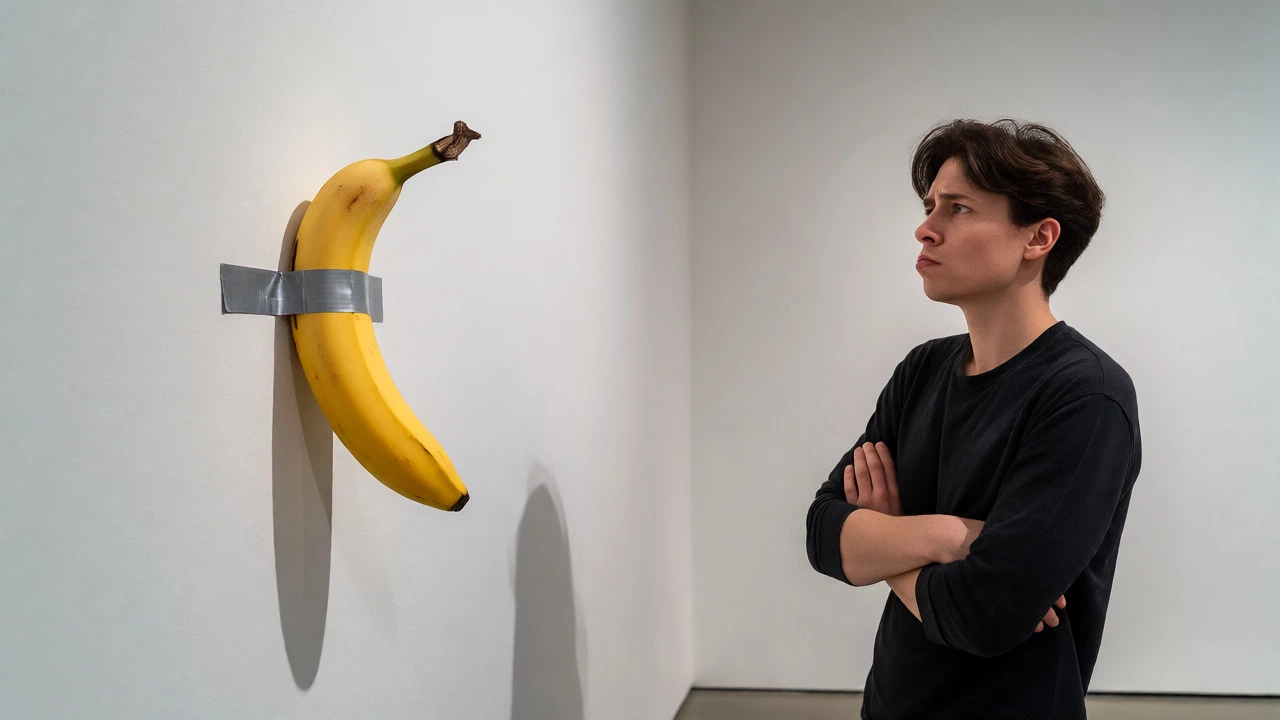
You stand in front of a canvas that looks like it was painted by a toddler who just discovered crayons. Or maybe you see a banana duct-taped to a wall selling for $120,000. Your immediate reaction isn't awe; it's suspicion. You think, "I could do that." And honestly? Maybe you could. But here is the twist: does modern art take skill? The short answer is yes, but not the kind of skill you learned in high school shop class.
The confusion stems from a fundamental misunderstanding of what "skill" means in the context of the last century of art history. We are trained to value technical realism-the ability to make a paint blob look exactly like a bowl of fruit or a human face. When artists stopped trying to copy reality, many viewers assumed they also stopped working hard. That’s a massive oversimplification. Modern art didn’t abandon skill; it shifted the focus from manual dexterity to intellectual rigor, material mastery, and conceptual precision.
The Shift From Hand to Head
To understand why modern art feels "easy," we have to look at where it came from. For centuries, the primary job of an artist was documentation. If you wanted a portrait of your grandfather, you hired someone who could replicate his features with photographic accuracy before cameras existed. This required years of apprenticeship, mastering anatomy, perspective, and light. It was a craft trade.
Then photography arrived. Suddenly, capturing a realistic image wasn't special anymore. Artists had to ask themselves: What can I do that a camera cannot? The answer wasn't better copying. It was interpretation, emotion, abstraction, and idea generation. This pivot birthed movements like Impressionism, Cubism, and eventually Abstract Expressionism. The skill set changed from "how well can you draw this apple?" to "how effectively can you communicate this feeling about the apple using color and shape?"
Think of it like music. Classical training focuses on playing complex compositions perfectly. Jazz improvisation requires knowing the rules so well you can break them in real-time. Both require immense skill, but the output looks and sounds different. Modern art is the jazz of visual culture. It demands a deep understanding of the medium to know exactly when to stop painting, when to leave a line rough, or when to use no brush at all.
Technical Mastery Hidden in Plain Sight
A common critique is that abstract paintings lack technique. Look closely at a Mark Rothko color field painting. It looks simple-just big blocks of color. But achieving that specific emotional resonance through layering translucent glazes is incredibly difficult. Rothko spent hours adjusting a single shade of red until it vibrated correctly against the blue next to it. One wrong layer, and the mood collapses. This is technical mastery disguised as simplicity.
Consider Jackson Pollock’s drip paintings. Critics often say, "My kid could do that." But try it. Try to control the viscosity of enamel paint while dancing around a canvas on the floor, ensuring the splatters create a balanced composition without becoming muddy chaos. Pollock developed a unique physical rhythm and toolset (sticks, hardened brushes) specifically for this process. His work isn't random; it’s controlled accident. He studied Native American sand painting and Surrealist automatic drawing to refine his method. The skill lies in the choreography and the chemical knowledge of how pigments interact.
Marcel Duchamp is a French-American artist who challenged the definition of art itself by presenting manufactured objects as artworks. His famous piece, "Fountain" (a urinal signed "R. Mutt"), wasn't about carving marble. It was about the skill of selection and context. Duchamp forced the art world to decide what mattered more: the object or the idea behind it. This conceptual shift required a new type of intelligence-critical thinking and cultural literacy.
Conceptual Skill: The Heavy Lifting
In much of contemporary art, the execution might be delegated to fabricators, but the concept is the product. This doesn't mean the artist did nothing. It means their skill is curatorial and philosophical. They act as directors rather than just builders.
Take Damien Hirst’s shark in formaldehyde. Did he carve the shark? No. Did he build the tank? Probably not. But did he conceive the juxtaposition of death, preservation, and luxury? Yes. Did he navigate the legal, scientific, and logistical nightmares of keeping a tiger shark preserved for decades? Absolutely. The skill here is project management, conceptual clarity, and the ability to provoke a reaction. Is that less valid than mixing paints? Not necessarily. It’s a different domain of expertise.
Yayoi Kusama’s infinity rooms offer another example. Her skill isn't just painting polka dots. It’s spatial design, lighting engineering, and psychological manipulation. She understands how repetition affects the human mind. Creating an immersive environment that disorients and delights visitors requires precise calculations of mirror angles and LED placement. If one bulb fails or one mirror is misaligned, the illusion breaks. That is technical precision serving a conceptual goal.
Material Innovation and Risk
Modern artists often push materials beyond their traditional limits. This involves experimentation, failure, and recovery. Traditional oil painting has a predictable workflow. Working with resin, neon, video code, or biological matter does not.
Anish Kapoor’s cloud gate sculpture in Chicago reflects the city because of its highly polished stainless steel surface. Getting that surface perfect-free of scratches, fingerprints, or uneven reflections-required advanced industrial fabrication techniques usually reserved for aerospace engineering. The artist had to collaborate with engineers to ensure the metal didn't warp under temperature changes. The skill involved understanding metallurgy and physics, not just aesthetics.
Similarly, digital artists today need to master software like Blender or Adobe After Effects, which have steep learning curves comparable to learning a musical instrument. A glitch artist, for instance, must understand data corruption algorithms to intentionally break images in aesthetically pleasing ways. This is coding as a creative medium. It’s rigorous, logical, and technically demanding.
Why It Feels Like Cheating
If modern art takes skill, why does it feel like cheating? Because the barrier to entry for appreciation is higher than the barrier to entry for creation in some cases. In classical art, the quality is visible. A bad drawing looks bad. In conceptual art, the quality is hidden in the intent and context. If you don't know the backstory, the work might seem lazy.
This creates a gap between the artist and the audience. Artists speak a language of references, theory, and historical dialogue. Viewers often want a straightforward visual reward. When an artist makes a white square on a white background (like Robert Rauschenberg’s "White Paintings"), they aren't saying, "Look at my empty canvas." They are saying, "Watch how shadows move across this surface throughout the day." If you miss that point, you see laziness. If you get it, you see sensitivity to light and time.
| Skill Category | Traditional Art (Pre-1900) | Modern/Contemporary Art (Post-1900) |
|---|---|---|
| Primary Focus | Representation & Realism | Concept & Expression |
| Technical Requirement | Draftsmanship, Anatomy, Perspective | Composition, Material Science, Coding |
| Evaluation Metric | Accuracy to Subject | Originality & Impact |
| Training Path | Apprenticeship & Repetition | Critical Theory & Experimentation |
| Role of Artist | Craftsman/Documentarian | Philosopher/Innovator |
Can Anyone Do It?
The phrase "my kid could do that" is actually a compliment if used correctly. It implies the artist achieved such pure expression that it feels natural. But there’s a difference between a child’s drawing and an adult’s intentional simplification. Children draw what they know. Adults strip away complexity to reveal essence. That stripping away is a deliberate, skilled choice.
Try to mimic a Cy Twombly scribble. It looks like messy pencil marks. But Twombly spent decades refining his gesture. His lines carry weight and history. A random person’s scribble lacks that intentionality. The skill is in the restraint. Knowing what to leave out is harder than adding details.
Furthermore, consistency matters. Producing one weird object is easy. Building a cohesive body of work over 30 years that maintains a distinct voice is hard. Many people can write one poem. Few can sustain a poetic career. The same applies to visual art. The market values artists who can consistently deliver on a vision, which requires discipline, self-editing, and resilience.
Verdict: Skill Evolves, It Doesn't Vanish
So, does modern art take skill? Absolutely. It just asks for a different toolkit. It demands critical thinking, risk-taking, material knowledge, and conceptual clarity. It rejects the idea that art is only about decorative beauty. Instead, it treats art as a form of research and communication.
Next time you see a controversial piece, pause before dismissing it. Ask yourself: What is the artist trying to say? Why did they choose this material? How does it make me feel? If you can answer those questions, you’ll likely find that the skill was there all along, hiding behind the simplicity.
Is modern art easier to create than classical art?
Not necessarily easier, just different. Classical art requires years of technical practice to master realism. Modern art requires strong conceptual thinking and often experimental techniques. While the manual labor might be less repetitive, the intellectual and creative challenges are significant.
Why do some modern artworks look unfinished?
Many modern artists intentionally leave works "unfinished" to engage the viewer's imagination or to emphasize the process over the product. Movements like Abstract Expressionism valued the energy of creation, so visible brushstrokes or raw materials were part of the aesthetic statement, not mistakes.
Do modern artists still learn to draw?
Yes, most professional modern artists undergo rigorous art education that includes drawing fundamentals. Even if their final work is abstract or conceptual, understanding proportion, composition, and visual balance is crucial. They simply choose to deviate from strict realism for expressive reasons.
What is the difference between modern and contemporary art?
Modern art generally refers to works created from the 1860s to the 1970s, characterized by a rejection of tradition and experimentation. Contemporary art refers to art produced from the late 20th century to the present. Contemporary art is even more diverse, often incorporating digital media, global perspectives, and social issues.
Is conceptual art really art if the artist didn't make it?
This is a debated topic. Proponents argue that the idea is the artwork, and the physical object is just a vessel. Detractors believe craftsmanship is essential. However, institutions like MoMA and Tate accept these works, validating the notion that curation and conception are artistic acts.