Digital Art Legal Risk Checker
Analyze Your Work
Select all options that apply to the piece of art you intend to sell.
Current Risk Level
Low Risk
Your work appears to be original and compliant with standard copyright laws. You generally do not need a special license to sell this.
- Tip: Keep your source files (PSD/AI) as proof of creation.
- Tip: Register with the Copyright Office if the piece is high-value.
You spent weeks perfecting that character design. The lighting is right, the colors pop, and you’re ready to put it on a T-shirt or sell as an NFT. But then a doubt creeps in: Do you actually need a license to sell your own digital art? It’s a question that keeps many creators up at night, fearing legal trouble or having their work pulled from marketplaces.
Here is the short answer: In most cases, no. If you created the art yourself, using tools you legally own or subscribe to, you hold the copyright automatically. You do not need a government-issued "license" to sell your original work. However, the word "license" can mean different things depending on context-like software licenses, font licenses, or model releases. Mixing these up can turn a simple sale into a legal headache.
Do I need a business license to sell digital art?
Generally, no specific "art license" exists. However, you may need a general business license or seller's permit depending on your local laws and whether you are operating as a sole proprietorship or LLC. This is for tax and regulatory compliance, not for the artistic content itself.
Understanding Automatic Copyright Protection
When you create an original work of authorship fixed in a tangible medium (like a digital file), you own the copyright from that moment. This is true in the United States under the Copyright Act of 1976 and in most countries that are part of the Berne Convention. You don’t need to register the work with the U.S. Copyright Office to own it, though registration helps if you ever need to sue for infringement.
Copyright is a legal concept that gives creators exclusive rights to reproduce, distribute, and display their original works. For digital artists, this means you control who can print your image, who can use it in ads, and who can resell it.This automatic protection covers paintings, drawings, illustrations, and digital graphics. So, if you drew a landscape in Photoshop, you own the rights to sell prints of that landscape. No special permit is required. The barrier isn't permission to sell; it's ensuring nothing in your creation violates someone else's rights.
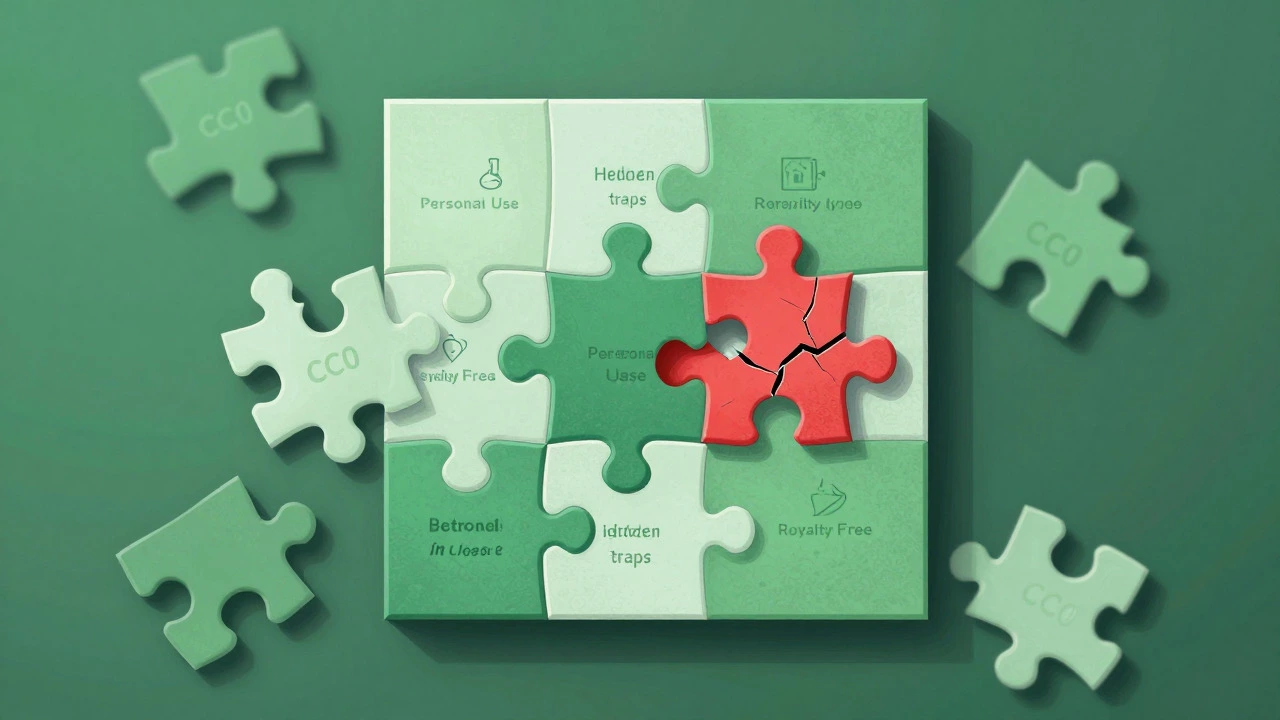
The Hidden Traps: Assets and Software Licenses
While you own your final artwork, you might not own every piece that went into making it. Many digital artists use brushes, textures, fonts, or 3D models downloaded from online stores. These come with licenses that dictate how you can use them commercially.
For example, a free brush pack might say "Personal Use Only." If you use that brush to create a logo for a client and charge $500, you’ve violated the license. Similarly, some stock photo sites allow you to use images in designs but forbid selling the image as a standalone wall art print. Always check the End User License Agreement (EULA) for any asset you incorporate.
| License Type | Commercial Use Allowed? | Resale Restrictions |
|---|---|---|
| Public Domain (CC0) | Yes | None |
| Creative Commons Attribution (CC BY) | Yes | Must credit creator |
| Royalty-Free Stock | Yes | Cannot resell as-is |
| Editorial Use Only | Limited | No commercial branding |
| Personal Use Only | No | Prohibited |
Software itself also has a license. When you buy Adobe Creative Cloud or Procreate, you are licensing the software, not owning it. As long as you comply with their terms (e.g., not sharing your account), the output you create belongs to you. There is no "software license" needed to sell the art made with it, provided the software license doesn't explicitly restrict commercial output (which is rare for mainstream creative apps).
Trademark Issues: Selling Fan Art and Logos
Copyright protects expression; trademarks protect brand identity. This is where many artists get into trouble. You might own the copyright to a drawing of Mickey Mouse, but Disney owns the trademark. Selling that drawing implies endorsement by Disney, which is false advertising and trademark infringement.
If you want to sell fan art, you are walking a tightrope. Some companies tolerate small-scale fan art, while others send cease-and-desist letters immediately. To stay safe, avoid using logos, character names, or distinctive costumes unless you have explicit permission. Original characters are always safer because they don’t infringe on existing trademarks.
Similarly, if you design a logo for a client, ensure the name and style don’t conflict with existing businesses in the same industry. A quick search on the USPTO database can save you from future lawsuits. Remember, just because you didn’t see another company with a similar logo doesn’t mean they don’t exist.
Model Releases: Using People in Your Art
If your digital art features real people, especially recognizable faces, you may need a model release. This is crucial if you plan to use the image for advertising, packaging, or endorsements. For fine art prints sold on galleries, rules are looser, but for commercial products like T-shirts or billboards, a signed release form is standard practice.
A model release is a contract where the person grants you permission to use their likeness for commercial purposes. Without it, they could claim invasion of privacy or right of publicity violations. Even if you draw a celebrity, their likeness is protected under right of publicity laws in many states. Parody offers some protection, but it’s a complex legal defense best left to lawyers.
Selling Platforms and Their Requirements
Marketplaces like Etsy, Redbubble, and Society6 handle much of the legal groundwork for you. They require you to certify that you own the rights to what you upload. If someone claims infringement, the platform usually removes the item first and asks questions later. This shifts the burden back to you to keep records.
Keep proof of your process. Save layered PSD files, sketch drafts, and timestamps. If someone accuses you of stealing, showing your creation history is powerful evidence. Also, read the platform’s terms of service. Some platforms take a percentage of sales, while others charge listing fees. None of these require a government license, but they do require you to adhere to their community guidelines.
Taxes and Business Registration
While you don’t need an "art license," you likely need to register your income. In the U.S., if you earn more than $600 from a single marketplace in a year, you’ll receive a 1099-K form. You must report this income to the IRS. Depending on your state, you might need a seller’s permit to collect sales tax on physical goods like prints or merchandise.
Operating as a sole proprietorship is common for beginners. It’s simple and requires no extra paperwork beyond registering a DBA (Doing Business As) if you use a business name. As you grow, forming an LLC can protect your personal assets from business liabilities. Consult a local accountant to understand your specific obligations.
Protecting Your Work Without a License
Since copyright is automatic, how do you enforce it? Watermarking your previews on social media helps deter casual theft. Registering your work with the U.S. Copyright Office costs about $45-$65 per work and allows you to seek statutory damages and attorney fees in court. This is worth considering for high-value pieces.
Use clear terms on your website. State whether buyers can use your art for personal or commercial purposes. Offering different tiers of licenses (e.g., Personal Use vs. Commercial License) can increase revenue and clarify expectations. Make sure these terms are visible before purchase.
Can I sell AI-generated art without a license?
It depends on the AI tool's terms. Midjourney and Stable Diffusion have different policies regarding commercial ownership. Currently, pure AI-generated images may not be copyrightable in the U.S. unless significant human editing is involved. Check the specific platform's EULA.
Do I need a license to sell digital art prints?
No special license is needed. You just need to ensure you own the copyright to the image. If you used stock elements, verify their commercial use permissions. Sales tax collection may require a seller's permit depending on your location.
Is it illegal to sell fan art?
Technically, yes, if it infringes on copyright or trademark. However, enforcement varies. Some companies ignore small sellers, while others aggressively protect their IP. To minimize risk, avoid logos and distinctive character traits, or seek official partnerships.
What is a model release form?
A legal document signed by a person allowing their likeness to be used for commercial purposes. It is essential when selling photos or illustrations featuring identifiable people for advertising, packaging, or promotional materials.
How do I prove I own my digital art?
Keep original source files (PSD, AI, etc.), time-stamped drafts, and metadata. Registering with the U.S. Copyright Office provides legal proof. Blockchain timestamping services can also serve as evidence of creation date.