Digital Art Income Calculator
Calculate Your Digital Art Earnings
See how much you could earn from selling digital art on different platforms. Based on real examples from the article.
Enter your numbers to see your estimated earnings.
What the article says about earnings
Can digital art really make money? If you’re an artist working on a tablet or a designer spending hours on Photoshop, you’ve probably asked yourself this. The answer isn’t a simple yes or no-it’s more like digital art is now one of the most flexible, accessible, and surprisingly profitable forms of creative work out there. But only if you know how to approach it.
How Digital Art Turns Into Income
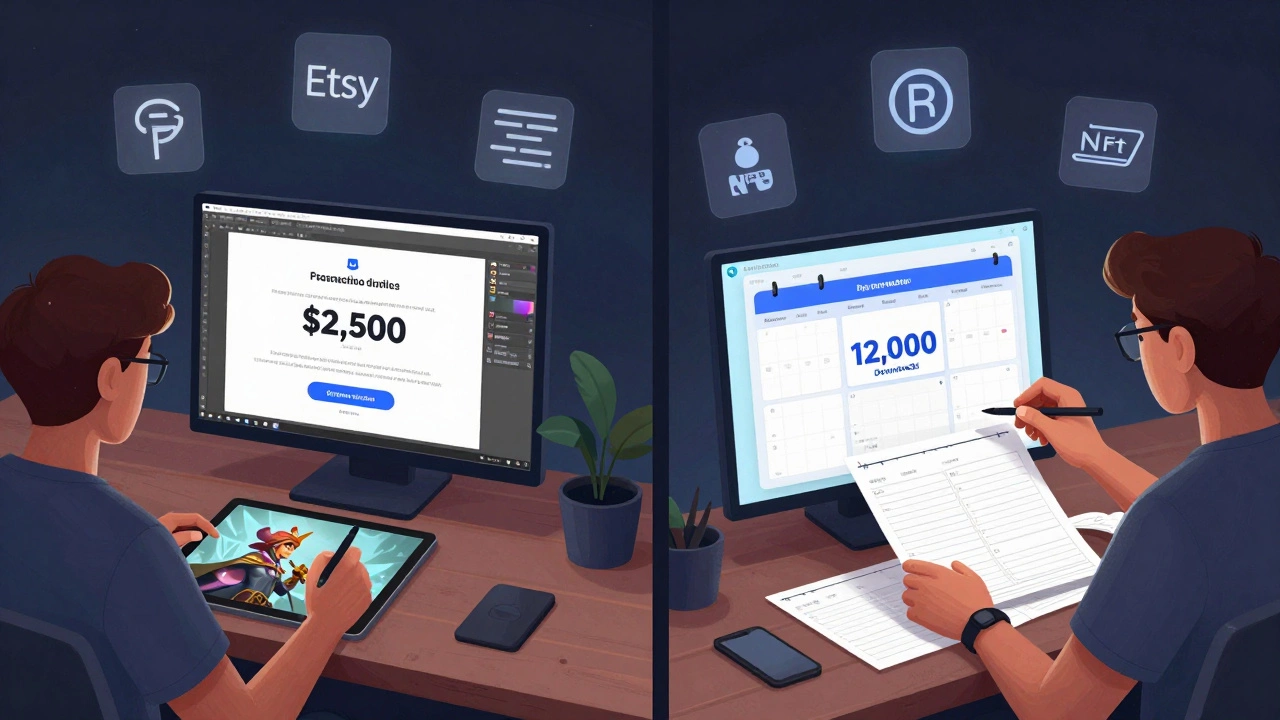
Digital art isn’t just cool graphics or animated memes. It’s a real product. People pay for it-daily. Think about it: every phone wallpaper you bought on Etsy, every character design for a indie game, every NFT sold on OpenSea-that’s digital art making money. The key difference between traditional art and digital art? You can sell the same file a hundred times. No canvas. No shipping. No gallery cut.
Here’s how artists are actually earning:
- Selling prints and downloads on platforms like Etsy, Gumroad, or Ko-fi
- Licensing artwork to brands, apps, or publishers
- Creating and selling NFTs on marketplaces like Foundation or SuperRare
- Offering custom commissions through Instagram or ArtStation
- Building a Patreon or Substack audience for exclusive content
- Designing assets for video games, apps, or animations
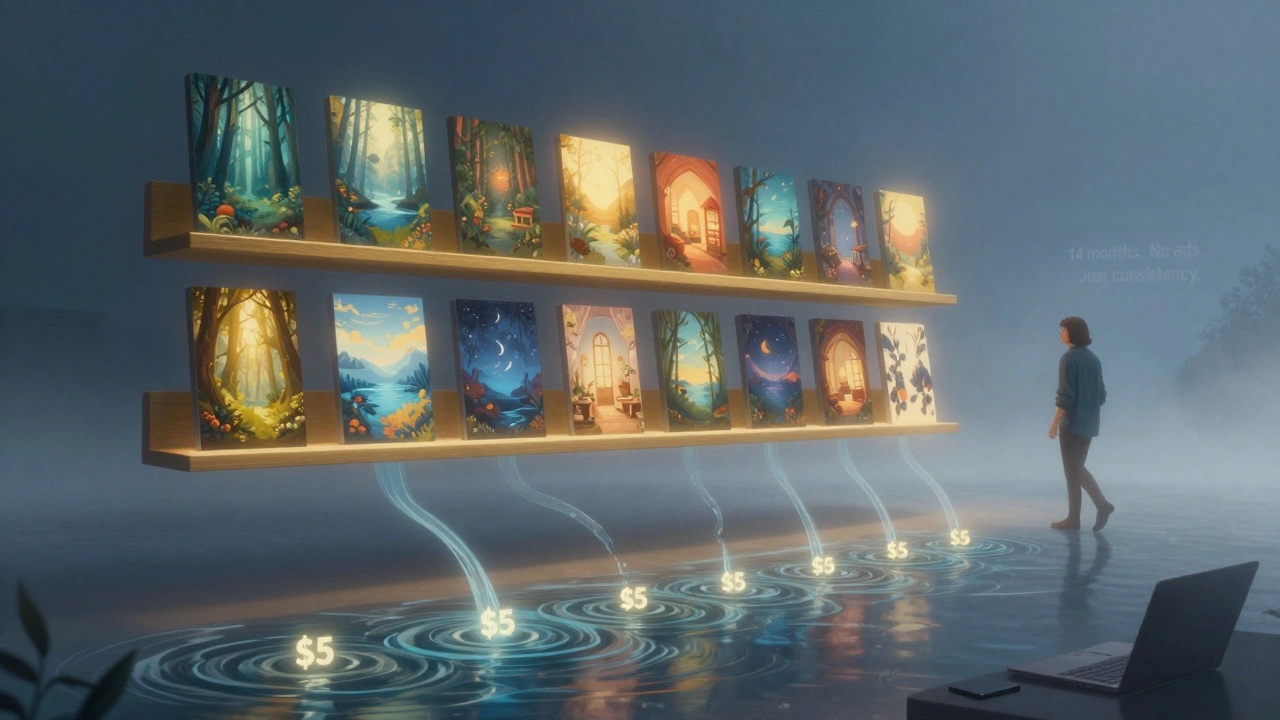
One artist in Toronto, Maya Lin, makes $8,000 a month just from selling downloadable digital wallpapers. She doesn’t do commissions. Doesn’t do NFTs. Just 12 designs, updated every quarter, priced between $3 and $7. She posted them on Etsy and let the algorithm do the work. After 14 months, she quit her day job.
The NFT Myth (and Reality)
NFTs got a lot of hype between 2021 and 2023. People thought every digital drawing was a lottery ticket. It wasn’t. Most NFTs sold for under $50. A few made headlines. But the real winners weren’t the artists who went viral-they were the ones who treated NFTs like limited-edition prints.
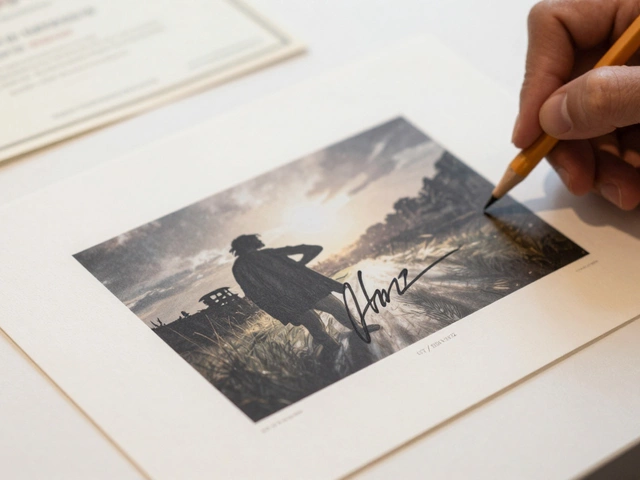
Take James Rivera, a concept artist from Vancouver. He released a 10-piece collection called “Coastal Dreams” on Foundation in late 2023. Each piece was hand-numbered, came with a high-res file, and included a signed digital certificate. He priced them between $120 and $300. Sold out in 72 hours. He didn’t rely on hype. He built an email list of 3,000 followers over two years. Then he emailed them directly. No auction. No trending hashtags. Just trust.
NFTs aren’t magic. They’re a tool. If you use them like a storefront-not a casino-you can make money. If you think they’re a get-rich-quick scheme, you’ll lose time and money.
Where People Actually Buy Digital Art
You can’t just post on Instagram and wait. You need to go where buyers are.
- Etsy: Still the #1 marketplace for digital downloads. Buyers look for wall art, planners, stickers, and printable coloring pages. Top sellers make $2,000-$10,000/month.
- ArtStation: The go-to for game studios and animation companies. If you’re good at character design, environments, or UI assets, companies here pay $500-$5,000 per commission.
- Gumroad: Great for selling bundles, courses, or downloadable packs. No middleman. You keep 95% of sales.
- Patreon: 4,000 digital artists earn over $1,000/month here. The trick? Consistency. Weekly sketches, behind-the-scenes videos, early access.
- Redbubble and Society6: You upload art, they print it on shirts, mugs, phone cases. You earn 10-20% per sale. Low effort, low reward.
Most successful artists use 2-3 of these platforms together. One for downloads. One for commissions. One for passive income. That’s the formula.
What Sells-and What Doesn’t
Not all digital art sells. Here’s what’s in demand in 2026:
- Minimalist nature scenes (mountains, oceans, forests)
- Cozy, warm-toned interiors (candles, bookshelves, coffee cups)
- Abstract patterns for phone wallpapers
- Character designs for fantasy, sci-fi, or indie games
- Printable planners and journal templates
- Animated loops for social media (TikTok, Instagram Reels)
What doesn’t sell? Generic anime girls. Overused cyberpunk tropes. Low-res memes. And anything that looks like AI-generated filler. Buyers can tell the difference. They’re not just buying art-they’re buying emotion, mood, or utility.
One designer in Berlin, Lukas Meier, started by drawing 100 “cozy room” scenes. He sold 12,000 copies in six months. Why? Because people wanted to feel calm. His art wasn’t flashy. It was quiet. And that’s what sold.
Building an Audience Without Ads
You don’t need a million followers to make money. You need 1,000 true fans.
That’s the 1,000 True Fans theory by Kevin Kelly. It means if 1,000 people each pay you $10/month, you make $120,000 a year. Sounds impossible? It’s not. Digital artists do it all the time.
How? Here’s how:
- Post one high-quality piece every week on Instagram or X
- Reply to every comment. Build real relationships.
- Start a simple email newsletter. Offer a free download to sign up.
- Engage in niche communities-like r/DigitalPainting or indie game dev Discord servers.
- Collaborate with small creators. Swap exposure. No money needed.
One artist in Portland built a following by posting daily “Sketch of the Day” on Instagram. No fancy filters. Just raw pencil lines. After 18 months, she had 14,000 followers. 1,200 of them bought her $15 monthly Patreon. She makes $18,000/year. And she never ran an ad.
The Hidden Advantage of Digital Art
The biggest edge digital artists have? Speed. You can create, test, and sell in days-not years.
Compare this: A painter spends six months on a canvas. Then waits for a gallery to notice it. Then hopes someone buys it. Meanwhile, a digital artist can make a wallpaper, upload it to Etsy, and get their first sale in 48 hours. They can test 50 ideas in a month. The best ones scale. The rest? They get deleted.
That’s why so many digital artists make steady income. They’re not waiting for luck. They’re running experiments. One design fails? They make another. Another sells? They make 10 more like it.
Is It Worth It?
Yes-if you treat it like a business, not a hobby.
Digital art won’t make you rich overnight. But it can pay your rent, fund your next project, or replace your 9-to-5. The artists who make money aren’t the most talented. They’re the most consistent. They show up. They test. They listen. They adapt.
Start small. Pick one platform. Release one product. Track what sells. Then do it again. In 12 months, you’ll have a real income stream. Not because you’re famous. But because you showed up, day after day.
Art doesn’t need permission to make money. It just needs to be seen by the right people.
Can you make a full-time income from digital art?
Yes. Thousands of artists do. It usually takes 1-3 years to build steady income, but it’s possible with consistent effort. Top earners combine multiple income streams: downloads, commissions, licensing, and memberships. One artist in Australia makes $6,000/month from Etsy prints alone. Another earns $10,000/month from game asset commissions.
Do I need to learn NFTs to make money?
No. NFTs are just one option. Most successful digital artists don’t use them at all. Etsy, Gumroad, ArtStation, and Patreon are far more reliable for steady income. NFTs work best if you already have a loyal audience. Without that, they’re a gamble.
What’s the easiest way to start making money with digital art?
Start with Etsy. Create 3-5 simple, high-quality digital downloads-like wall art, phone wallpapers, or printable planners. Price them between $3 and $10. Upload them, optimize the titles with keywords like “minimalist nature art” or “calm bedroom wallpaper,” and wait. Most first-time sellers get their first sale within 30 days. No website. No social media. Just Etsy.
How much do digital artists make on average?
It varies wildly. Most part-time artists make $200-$1,000/month. Full-time artists with multiple streams earn $3,000-$10,000/month. The top 1% make over $50,000/month, but they’re the exception. Realistic goals: $1,000/month in 12 months, $5,000/month in 3 years.
Do I need expensive tools to make digital art?
No. You can start with a free app like Krita or Medibang Paint on a $50 tablet. Even a smartphone with Procreate Pocket works. The tools matter less than your consistency. Many top sellers started with basic hardware. What matters is your style, your niche, and how often you release new work.