Interactive Timeline of Music Genres
Click on a era below to learn about its characteristics, evidence, and significance in music history.
Ancient Sumerian Hymns
Significance: Home to the Hurrian Hymn No. 6, often cited as the oldest known melody with specific notation. It demonstrates early intent in composition, using cuneiform script to specify intervals and rhythm for lyre performance.
Evidence: Clay tablets found in Ugarit (modern-day Syria).
Characteristics: Liturgical, structured intervals, accompaniment by lyre.
Egyptian Temple Songs
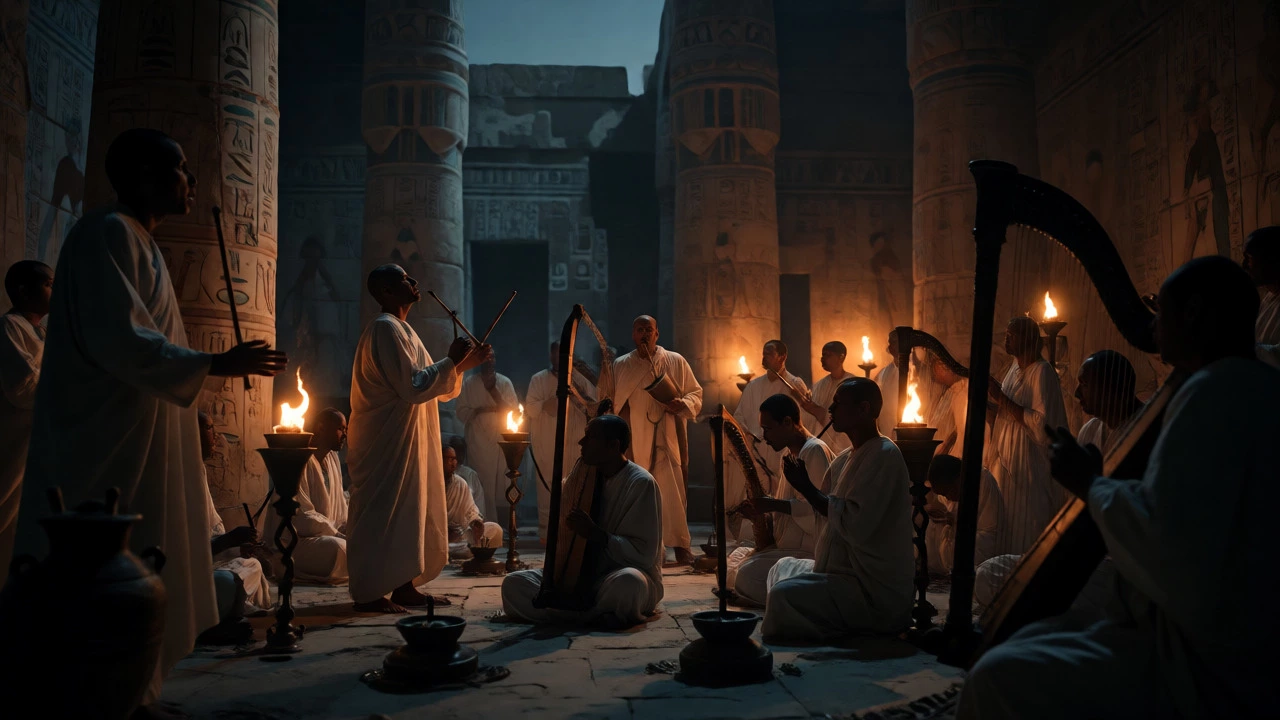
Significance: Showcases the functional use of music in large ensembles. Contrary to myths of simplicity, these songs involved complex polyphony and specific instruments like oboes and harps.
Evidence: Wall inscriptions and preserved instruments in tombs.
Characteristics: Processional, percussive, call-and-response structures.
Vedic Chants
Significance: Represents one of the oldest continuous oral traditions. The strict preservation methods ensured accuracy over millennia, making it a prime example of a stable "genre" defined by ritual repetition.
Evidence: Oral tradition later written down in Sanskrit texts.
Characteristics: Tonal precision, mantra-based, typically unaccompanied vocalization.
Greek Monody
Significance: Developed theoretical frameworks for harmony that influenced European music for two thousand years. It marks the transition toward more formalized poetic-musical structures.
Evidence: Poetry fragments and early notation systems.
Characteristics: Melodic line tied to poetic meter, kithara accompaniment.
Oral Folk Traditions
Significance: Arguably the oldest form of social song, predating literacy. While no specific "genre" labels exist from deep pre-history, structural elements like pentatonic scales appear globally, suggesting ancient roots.
Evidence: Bone flutes (40,000+ years old), though melodies are lost.
Characteristics: Communal, non-liturgical, work songs, lullabies, ballads.
Jazz & Blues
Significance: A relatively recent addition to the human timeline compared to ancient forms. Emerged in New Orleans in the late 19th/early 20th century, rooted in African American spirituals and field hollers.
Evidence: Historical records, early recordings, cultural documentation.
Characteristics: Improvisation, syncopation, blue notes, complex harmony.
You might think rock and roll is old. Or maybe you picture Beethoven’s symphonies as ancient echoes. But if we’re talking about the oldest song genre, we have to go back way further than vinyl records or even printed sheet music. We are talking about clay tablets, thousands of years ago, in a region that no longer exists on modern maps.
The question isn’t just about which song was written first. It’s about when humans started organizing sound into repeatable patterns that others could recognize and reproduce. That organization is what defines a genre. So, who gets the title? The answer points to ancient Mesopotamia, but it’s more complicated than picking one date on a calendar.
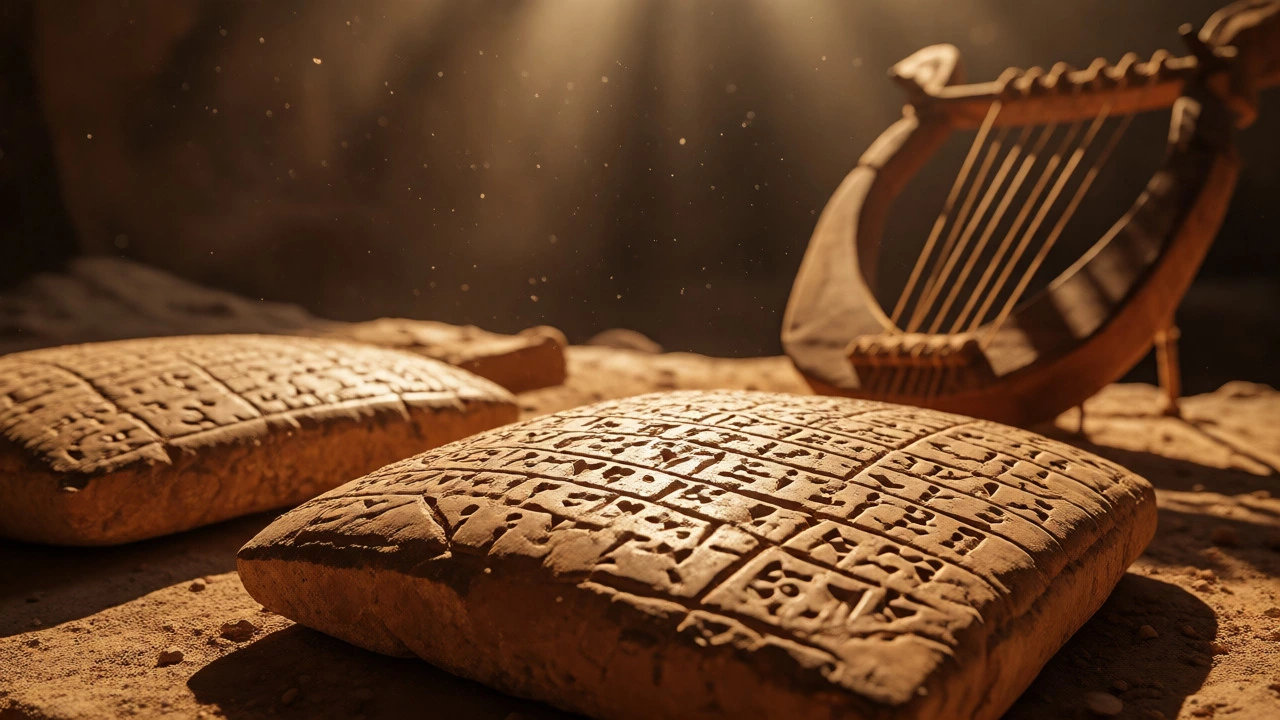
Ancient Sumerian Hymns are widely considered the earliest identifiable musical tradition with surviving notation. These aren't just random noises; they were structured compositions used for religious rituals. While we can’t hear them exactly as intended, we have the instructions. This makes them distinct from earlier, purely oral traditions like primitive vocalizations, which left no physical trace.
The Hurrian Hymn No. 6: A Musical Time Capsule
In 1950, archaeologists digging in Ugarit (modern-day Syria) uncovered a set of clay tablets dating back to around 1400 BCE. Among them was the Hurrian Hymn No. 6. This piece is often cited as the oldest known melody. It wasn’t just a hummed tune; it had specific intervals and a rhythmic structure inscribed in cuneiform script.
Why does this matter for genre? Because it shows intent. The scribe didn’t just write down "sing happy." They specified how to play it on a lyre. This level of detail suggests a established convention-a shared language between composer and performer. That shared language is the seed of a genre.
Before this discovery, people assumed music before the Greeks was primitive noise. The Hurrian Hymn proved otherwise. It reveals a sophisticated culture where music served specific social and spiritual functions, creating a recognizable category of art separate from speech or dance.
Defining "Genre" in Ancient Contexts
We need to be careful here. Modern genres like "Jazz" or "Hip-Hop" rely on radio formats, record labels, and global distribution. Ancient genres relied on community memory and ritual repetition. When scholars talk about the oldest genre, they are usually referring to Ritualistic Chanting. This was the dominant form of organized sound across early civilizations, including Egypt, India, and China.
Unlike pop songs, which change every few years, ritual chants stayed consistent for centuries. Priests passed them down with strict rules to preserve accuracy. This stability allowed the "genre" to survive long enough to be identified by historians. If everyone changed the words every time, there would be no genre-just chaos.
| Tradition | Approximate Date | Evidence Type | Genre Characteristics |
|---|---|---|---|
| Sumerian Hymns | c. 1400 BCE | Cuneiform Tablets | Liturgical, Lyre-accompanied, Structured Intervals |
| Egyptian Temple Songs | c. 1500 BCE | Wall Inscriptions & Instruments | Processional, Percussive, Call-and-Response |
| Vedic Chants (India) | c. 1500-1200 BCE | Oral Tradition (written later) | Tonal Precision, Mantra-based, Unaccompanied |
| Greek Monody | c. 800 BCE | Poetry & Notation Fragments | Melodic Line, Poetic Meter, Kithara Accompaniment |
Folk Music: The Oral Ancestor
If we exclude written notation and look at living traditions, Folk Music claims the throne. Folk isn’t a single style; it’s a method of transmission. Before literacy spread, all music was effectively folk. People sang work songs, lullabies, and ballads that evolved over generations.
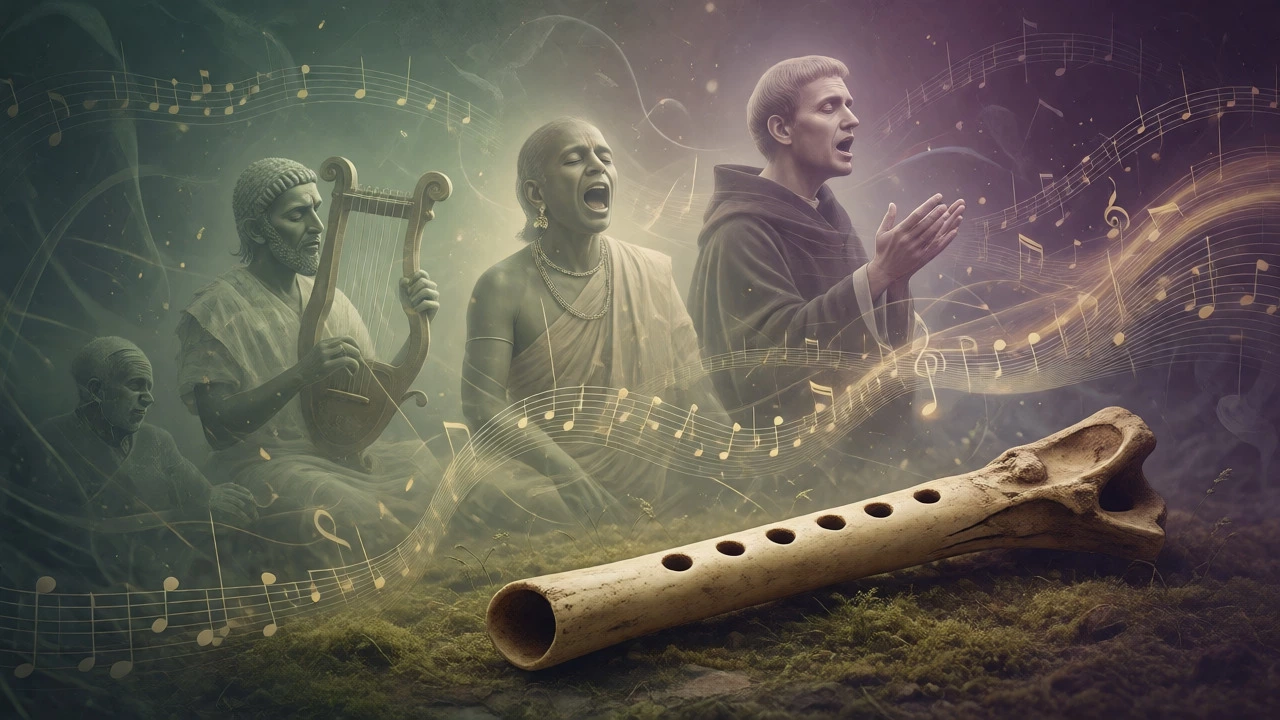
The problem with pinpointing the "oldest" folk genre is that it leaves no paper trail. You can find bone flutes from 40,000 years ago, but you can’t know the genre of the songs played on them. Was it a mourning song? A hunting tune? We don’t know. However, certain structural elements persist. Pentatonic scales (five-note scales) appear in folk traditions worldwide, from Scotland to Japan. This suggests a deep-rooted preference in human hearing that likely dates back millennia.
So, while we can’t name the specific folk genre of 3000 BCE, we can argue that the concept of communal, non-liturgical song is older than any written hymn. It just lacks the label.
Why Classical and Jazz Are Too Young
Many music fans assume Western Classical music is the pinnacle of age. Bach wrote in the 1700s. Mozart in the late 1700s. Compared to the Hurrian Hymn, these guys are newborns. Even Gregorian Chant, which shaped medieval Europe, only dates back to roughly the 6th century CE.
Jazz, often called America’s classical music, emerged in New Orleans in the late 19th and early 20th centuries. Blues has roots in African American spirituals and field hollers from the post-Civil War era. These are powerful, complex genres, but they are recent additions to the human timeline. To understand the oldest genres, you have to strip away instruments, recording technology, and even written language.
The Role of Instruments in Defining Genre
Instruments shape genre. The availability of materials dictated sound. In Mesopotamia, the lyre and harp dominated. In Africa, drums and stringed bows appeared early. In Asia, bamboo flutes and silk strings became standard.
This geographic isolation created distinct sonic identities. A song played on a Chinese Guqin sounds different from one played on a Greek Lyre, not just because of tuning, but because of the timbre. Over time, these instrumental preferences hardened into genres. For example, Dhrupad in Indian classical music relies heavily on the Rudra Veena. Its slow, meditative pace is defined by the instrument’s sustain. You couldn’t have Dhrupad without that specific tool. This link between tool and style is a key marker of genre formation.
How We Know What We Know
Musicology is detective work. We use three main sources:
- Archaeological Artifacts: Flutes made of vulture bone found in Germany date back 42,000 years. They prove humans made music then, but not what it sounded like.
- Iconography: Paintings on Egyptian tombs show musicians holding instruments in specific poses. This helps us reconstruct playing techniques.
- Textual Evidence: Cuneiform tablets and Sanskrit texts provide actual notes or descriptions of pitch. This is our best bet for identifying genre.
The transition from iconography to text is crucial. Once we have text, we can compare songs across time. We see patterns repeating. Those patterns are the genres.
Common Misconceptions About Ancient Music
People often imagine ancient music as simple or monotonous. Hollywood movies reinforce this with generic flute melodies. In reality, ancient societies had complex polyphony (multiple voice parts). The Egyptians used large ensembles with oboes, harps, and percussion. The Greeks developed theoretical frameworks for harmony that influenced European music for 2,000 years.
Another myth is that music was only for entertainment. In most ancient cultures, music was functional. It healed, it marked time, it honored gods, and it coordinated labor. The "genre" was often defined by its purpose rather than its style. A "harvest song" was a genre because of when it was sung, not necessarily because of a unique chord progression.
Conclusion: It’s a Spectrum, Not a Single Answer
There is no single winner for the oldest song genre. If you want the oldest written genre, look to Sumerian liturgical hymns. If you want the oldest continuous tradition, look to Vedic chanting in India. If you want the oldest social form, it’s folk music, lost to time but alive in DNA.
What matters isn’t picking one date. It’s recognizing that music has always been structured. Humans don’t just make noise; we organize it. That impulse is the true origin of every genre we listen to today.
What is the oldest known song?
The Hurrian Hymn No. 6, dating to approximately 1400 BCE, is generally considered the oldest known complete melody with available notation. It was discovered on clay tablets in Ugarit, Syria, and provides specific instructions for performance on a lyre.
Was there music before writing was invented?
Yes, absolutely. Archaeological finds like bone flutes from 40,000 years ago prove humans made music long before writing. However, because these songs weren't recorded in text, we cannot identify their specific genres or melodies, only that music existed.
Is folk music older than classical music?
Yes. Folk music represents the oral tradition of common people, which predates formalized classical structures. While "Classical" as a defined Western genre began in the medieval period, folk traditions have roots stretching back to pre-history, evolving alongside human civilization.
Can we hear ancient Sumerian music?
We can hear reconstructions, but not the original recordings. Scholars use the cuneiform instructions to recreate the intervals and rhythms. These interpretations vary among experts, so what you hear online is an educated guess based on historical data, not an exact audio capture.
Why is there no single oldest genre?
Music evolved independently in different cultures. Sumer, Egypt, India, and China developed distinct musical systems simultaneously. Since genres are cultural constructs, there isn't one universal "first" genre, but rather several parallel origins depending on whether you prioritize written notation or oral continuity.