Landscape Painting Concepts Quiz
Test Your Knowledge
Answer these questions to see how well you've understood the three core concepts in landscape paintings.
Question 1: What is the most important role of composition in landscape painting?
Question 2: How does atmospheric perspective create the illusion of depth?
Question 3: Why is the foreground important in landscape paintings?
When you look at a landscape painting, you don’t just see trees, mountains, and rivers. You’re seeing centuries of artistic thinking packed into a single image. The best landscape paintings don’t just copy nature-they organize it. They guide your eye, create mood, and make you feel like you’re standing there. Three concepts make this possible: composition, atmospheric perspective, and the foreground-middle-ground-background structure.
Composition: The Invisible Framework
Composition is the hidden skeleton of a landscape painting. It’s not about what’s painted, but how it’s arranged. Artists don’t just plop trees and hills onto the canvas. They use rules that have been tested for hundreds of years to make the scene feel natural, balanced, and engaging.
One of the most common tools is the rule of thirds. Imagine the canvas divided into nine equal parts by two horizontal and two vertical lines. The most important elements-like a lone tree, a distant peak, or a winding river-are placed along those lines or at their intersections. This creates visual tension that draws the eye, rather than letting it rest in the center, which feels flat.
Another classic technique is the use of leading lines. A path, a river, or even the slope of a hill can guide your gaze from the front of the painting all the way to the horizon. Think of the work of J.M.W. Turner or Albert Bierstadt. Their paintings don’t just show a scene-they pull you into it, step by step.
Composition also controls rhythm. Too many similar shapes? The painting feels boring. Too many competing elements? It becomes chaotic. The best landscape artists balance repetition with variation. A row of similar trees might be broken by one bent or leaning tree. A cluster of dark rocks might be offset by a single patch of bright sky.
Atmospheric Perspective: Making Distance Feel Real
Have you ever noticed how distant mountains look bluer and fainter than the hills right in front of you? That’s not just how the light works-it’s one of the most powerful tools in landscape painting: atmospheric perspective.
This concept is based on real physics. As light travels through air, tiny particles scatter blue light more than other colors. Distant objects also lose contrast and detail because of haze, moisture, and dust. Artists mimic this to create depth without using perspective lines like in architectural drawings.
In practice, this means:
- Foreground elements are sharp, detailed, and have high contrast-dark greens, rich browns, crisp edges.
- Midground elements soften slightly-colors become less saturated, edges blur a bit.
- Background elements turn cool and pale-blues, grays, and muted greens dominate. Details vanish. A tree might become just a dark smudge.
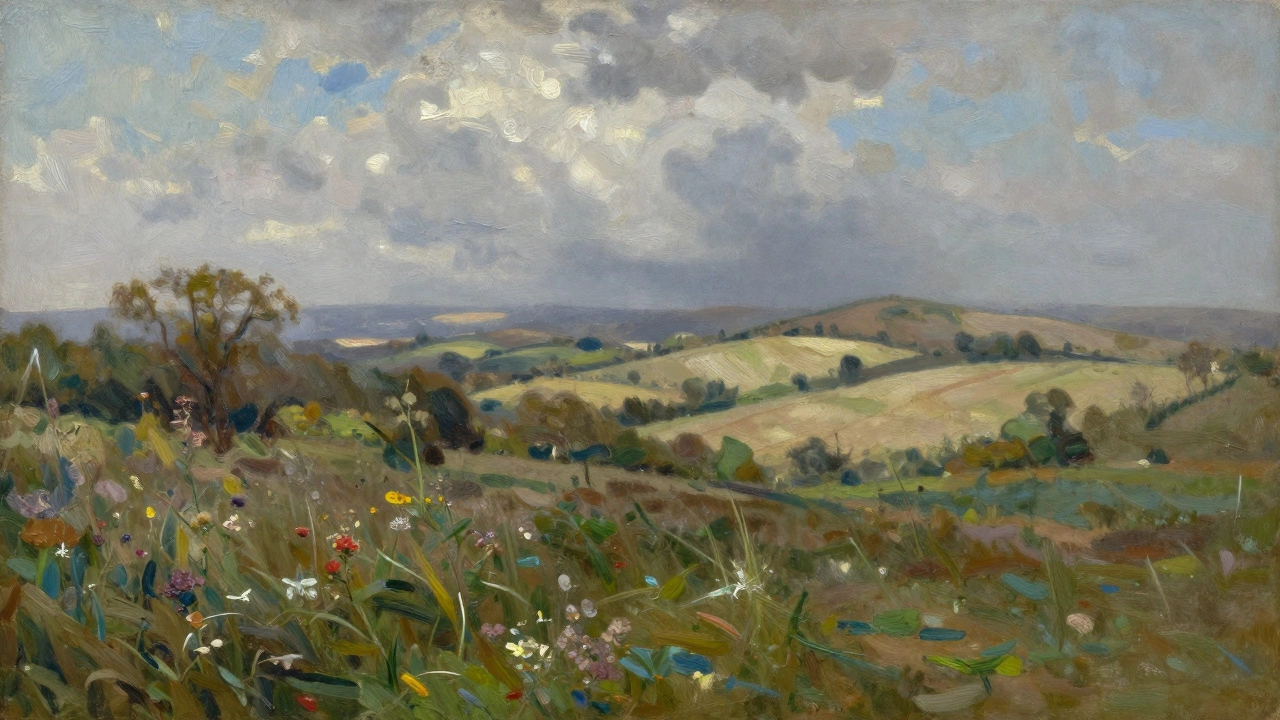
John Constable mastered this. Look at his sketches of the English countryside. The fields near the viewer are textured with visible brushstrokes. The hills on the horizon are washed in pale blue-gray, almost blending into the sky. That’s not laziness-it’s precision. He’s telling your brain: that’s far away.
Without atmospheric perspective, a landscape looks flat. Even if you paint every leaf on every tree, if the distant hills are just as dark and detailed as the ones in front, your eye won’t know where to focus. Depth disappears.
Foreground, Middle Ground, Background: The Layers of Depth
Every great landscape painting is built in layers. These aren’t just visual zones-they’re emotional anchors. Each layer serves a different purpose in how you experience the scene.
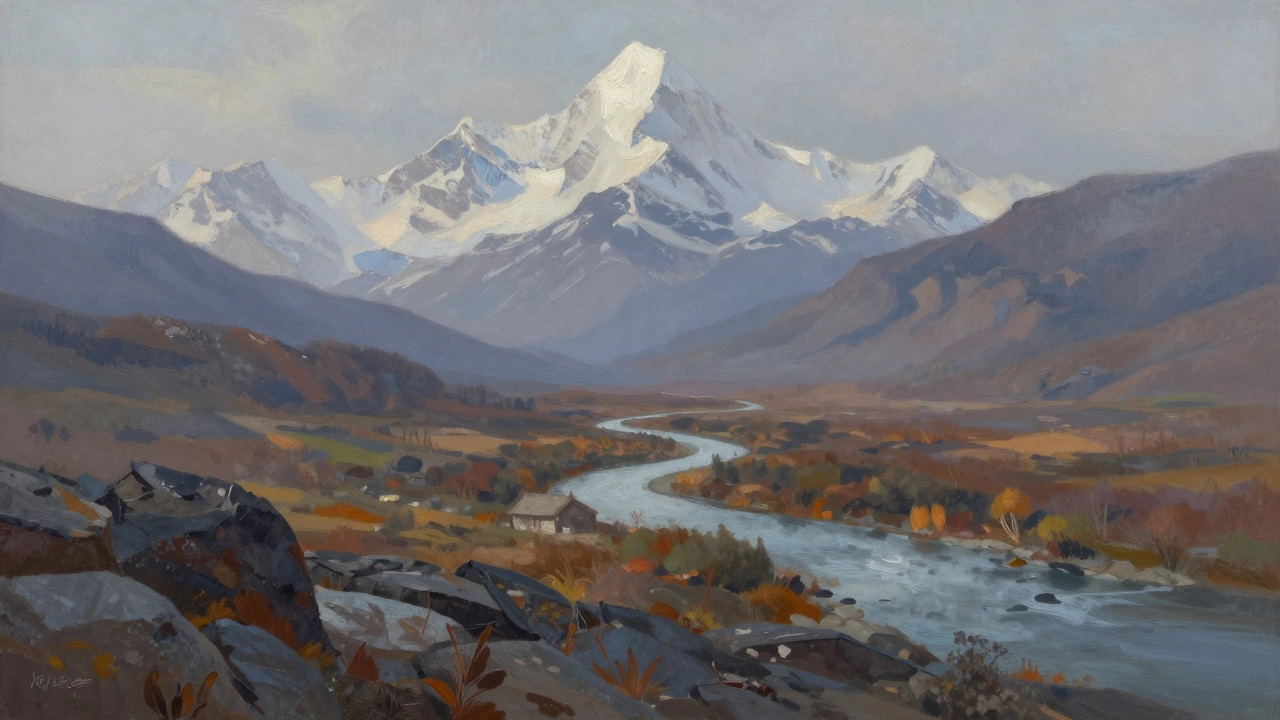
The foreground is your entry point. It’s what your eye lands on first. Artists often place something tactile here-a rock, a fallen log, wildflowers, ripples in a stream. It grounds the viewer. It makes the scene feel reachable. Without a strong foreground, the painting feels like a postcard stuck to a wall.
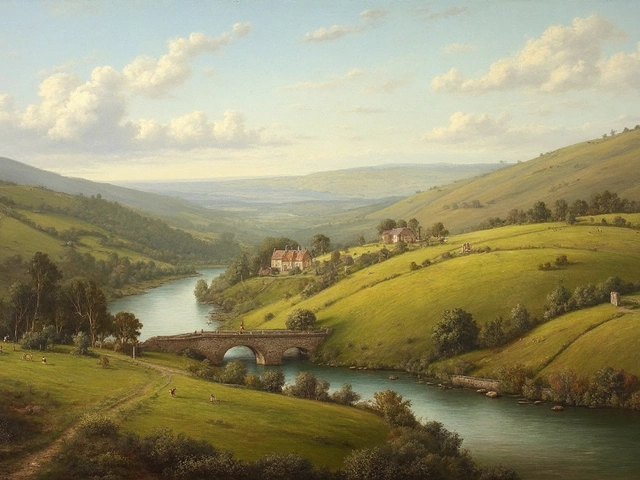
The middle ground is where the story unfolds. This is usually where the main subject lives-a cottage, a bridge, a herd of deer, a winding road. It’s the part of the painting you’d describe if someone asked, What’s happening here? This layer connects the foreground to the background. It’s where detail meets atmosphere.
The background sets the stage. Mountains, clouds, the horizon line. It doesn’t need to be detailed. In fact, it’s better if it’s not. The background gives scale. It tells you how vast the world is beyond what you can touch. A tiny cabin in the foreground feels insignificant without towering peaks behind it.
Think of Thomas Moran’s paintings of Yellowstone. The foreground shows rough, textured rock and grass. The middle ground has a river winding through a valley with trees. The background? Massive, snow-capped peaks fading into mist. You don’t just see the scene-you feel its immensity.
These three layers work together. The foreground invites you in. The middle ground holds your attention. The background gives you awe. Skip one, and the painting loses its power.
How These Concepts Work Together
These three ideas aren’t separate. They’re layers of the same system.
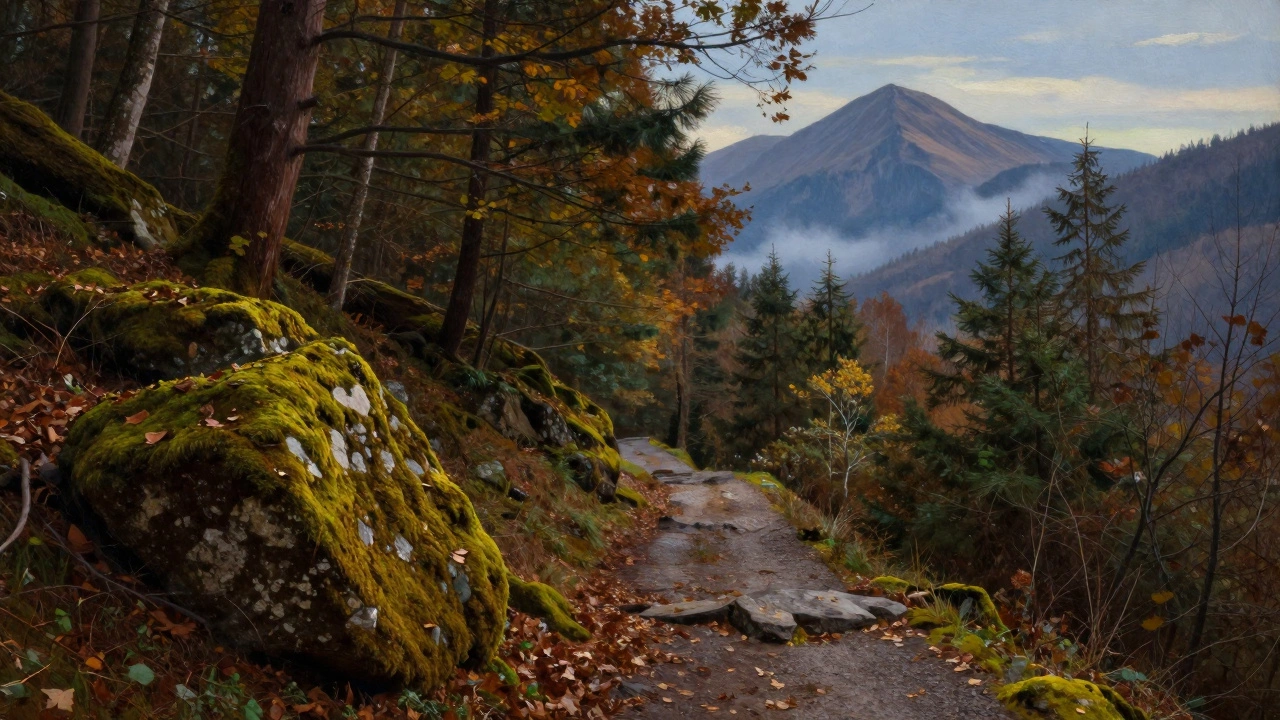
Take a painting with a winding path. The path starts in the foreground with sharp, dark stones and grass blades. As it moves back, the stones fade into softer grays. The trees beside it grow less detailed. The sky above becomes lighter. The path leads your eye to a distant cabin-small, barely defined, but unmistakable. That’s composition guiding your gaze, atmospheric perspective creating distance, and the three-layer structure giving you a complete journey.
Modern landscape painters still use these tools. Even when they break the rules-using bold colors, abstract shapes, or unconventional angles-they’re still responding to the same principles. They might push the background closer, or make the foreground surreal, but they’re still managing depth, focus, and emotional impact.
These aren’t just art school tricks. They’re how human vision works. Your brain expects certain cues to understand space. Landscape artists learned to give it exactly what it needs.
What Happens When These Concepts Are Ignored
Beginners often make the same mistakes. They paint everything with equal detail. The distant mountain has the same texture as the tree in front. The sky is just a flat blue. The whole scene feels stuck on a wall, not like a window into another world.
Or they place the horizon right in the middle of the canvas-cutting the scene in half. That’s a visual dead zone. It stops the eye. No movement. No tension. No feeling of space.
Another common error? Forgetting the foreground. A beautiful mountain range with no rocks, no grass, no stream at the bottom feels like a poster. It’s impressive, but it doesn’t invite you in. You’re looking at it, not into it.
These aren’t just technical flaws-they’re emotional failures. A landscape painting should make you want to step into it. If it doesn’t, it’s just a picture.
How to Use These Concepts in Your Own Work
If you paint or photograph landscapes, try this exercise:
- Take a photo or sketch a scene. Divide it mentally into three horizontal bands: bottom third (foreground), middle third (middle ground), top third (background).
- Ask yourself: What’s the strongest element in each? Does the foreground have something to hold your eye? Does the middle ground tell a story? Does the background give scale?
- Now, adjust the colors. Make the foreground richer. Make the background cooler and lighter. Soften the edges as things recede.
- Find one line-a trail, a river, a row of trees-that leads from front to back. Strengthen it.
You’ll be amazed how much more alive the scene becomes.
These three concepts-composition, atmospheric perspective, and layered depth-are the foundation of every great landscape painting. They’re not rules to follow blindly. They’re tools to help you speak the language of space, light, and emotion. Master them, and your landscapes won’t just look real. They’ll feel real.
What are the three main elements in a landscape painting?
The three main elements are composition (how elements are arranged), atmospheric perspective (how distance affects color and clarity), and the foreground-middle-ground-background structure (the layered depth that creates realism). These work together to guide the viewer’s eye and create a sense of space.
Why is atmospheric perspective important in landscape painting?
Atmospheric perspective makes distant objects appear lighter, bluer, and less detailed than nearby ones, mimicking how air and particles scatter light in real life. This tricks the brain into perceiving depth, turning a flat canvas into a three-dimensional scene. Without it, landscapes look flat or like cut-out images.
Can you have a good landscape painting without a foreground?
It’s possible, but rare. The foreground acts as an entry point-it grounds the viewer and creates a sense of physical space. Without it, the painting feels like a distant view from a window, not something you could step into. Most powerful landscapes include at least one tangible element in the front, like rocks, grass, or water.
Do modern landscape artists still use these concepts?
Yes. Even artists who use abstract forms, bold colors, or digital tools rely on these principles. They might stretch, distort, or simplify them, but the core ideas-guiding the eye, creating depth, and using color to show distance-remain essential. These aren’t outdated rules; they’re timeless visual language.
How do I practice these concepts as a beginner?
Start by sketching simple scenes using three layers: foreground (a rock or bush), middle ground (a tree or path), background (a hill or sky). Use a photo reference and mute the colors in your mind-imagine how the farthest part would look bluer and softer. Then paint or draw it with reduced detail and cooler tones as you move back. Repeat this with different scenes until it becomes second nature.