Portrait Artist Income Calculator
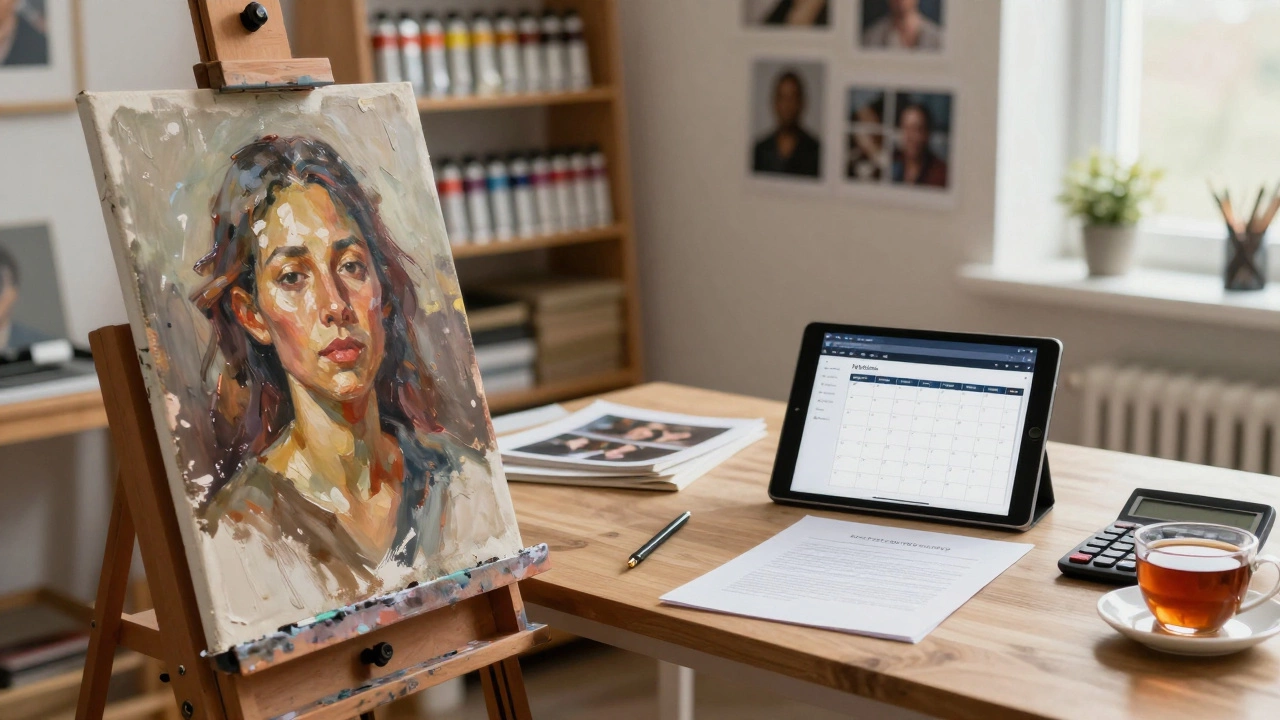
Calculate how many portraits you need to sell to reach your annual income goal, accounting for administrative time.
It’s a question that keeps many artists up at night. You love capturing the human face. You spend hours mixing skin tones and studying light. But can you actually pay your rent with it? The short answer is yes. The long answer involves treating your brush like a business tool, not just a creative outlet.
In 2026, the landscape for visual artists has shifted dramatically. Social media algorithms change weekly, AI image generators are everywhere, and clients have shorter attention spans than ever. Yet, there is still a massive hunger for authentic, hand-painted connection. People want to feel seen. They want a physical object that holds memory and emotion. If you can bridge the gap between artistic skill and client service, you can build a sustainable career. I’ve watched painters in Vancouver go from hobbyists to full-time earners by mastering this balance. It’s not about being the "best" painter; it’s about being the most reliable partner to your clients.
How much do portrait painters charge?
Rates vary wildly based on medium, size, and experience. In major cities like Vancouver or New York, a small oil sketch might start at $300-$500. A full-length, highly detailed oil portrait often ranges from $1,500 to $5,000+. Watercolor portraits tend to be slightly less expensive, usually starting around $400. Digital commissions are cheaper, often $100-$300, but they scale differently because of lower material costs. Always factor in your time, materials, and overhead when setting prices.
The Math Behind the Masterpiece
Most artists fail because they price their work based on what they think it’s worth emotionally, rather than what the market will bear financially. Let’s break down the economics. To make a living, you need a target annual income. Say you want $60,000 after taxes. That means you need roughly $80,000 in gross revenue. If you charge an average of $1,000 per portrait, you only need 80 clients a year. That’s less than two paintings a week. Sounds manageable, right?
Here’s where it gets tricky. Not every hour you spend is billable. You spend time marketing, invoicing, cleaning brushes, and dealing with difficult clients. A realistic rule of thumb is that only 50% of your working hours are spent actually painting. So, if you work 40 hours a week, you’re only billing for 20 hours. This means your hourly rate needs to be double what you initially calculated to account for administrative tasks.
| Average Price Per Portrait | Portraits Needed Per Month | Hours Spent Painting (Est.) | Total Hours Worked (Inc. Admin) |
|---|---|---|---|
| $500 | 13 | 65 hours | 130 hours |
| $1,000 | 7 | 35 hours | 70 hours |
| $2,500 | 3 | 15 hours | 30 hours |
Notice how raising your price significantly reduces the number of clients you need. High-ticket clients often require more communication and higher stakes, but they also mean less volume stress. For many artists, moving from $500 sketches to $2,500 fine art portraits is the key to escaping the burnout cycle.
Finding Your Niche: Who Actually Buys?
You cannot sell to everyone. "I paint anyone who wants a portrait" is a weak value proposition. Successful portrait painters niche down. Here are three profitable niches in 2026:
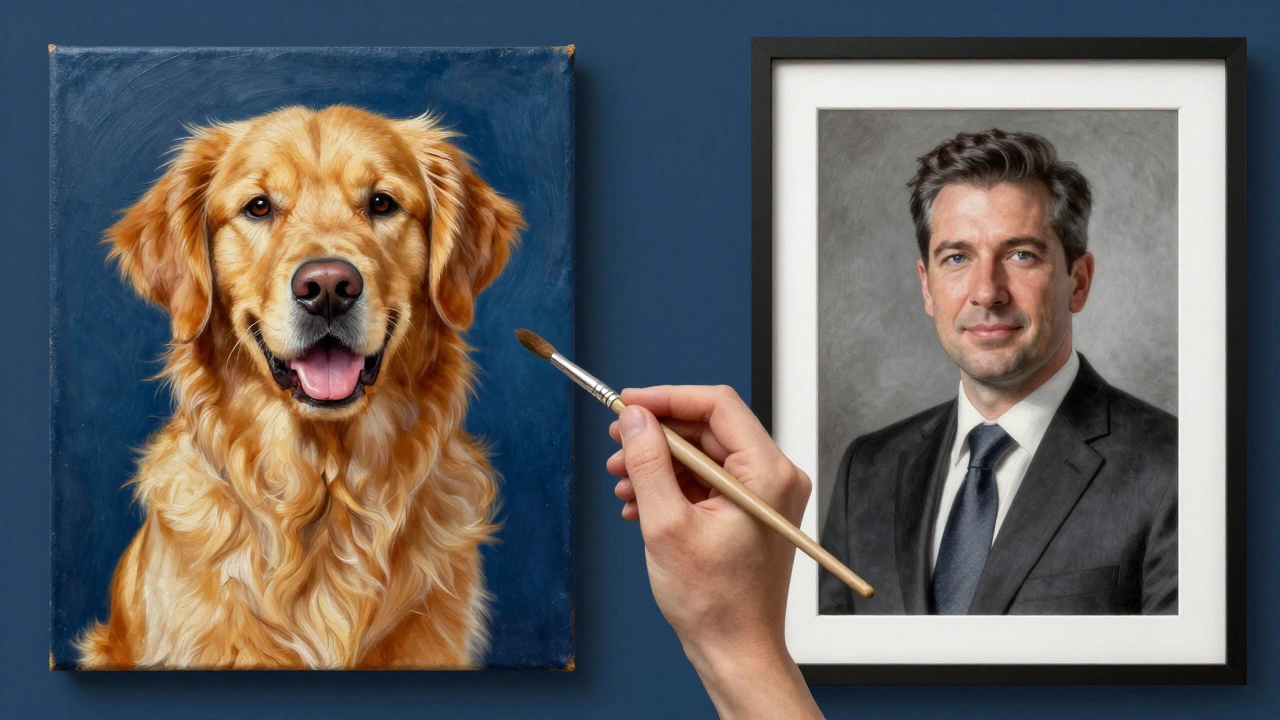
- Pet Portraits: People treat their dogs and cats like children. They are emotionally invested and less critical of technical perfection compared to human portraits. Turnaround times are faster, and social sharing is high.
- Corporate Headshots & Executive Portraits: Companies need professional imagery for LinkedIn and websites. While photography dominates here, painted portraits convey prestige and tradition. Law firms, medical practices, and luxury brands are prime targets.
- Wedding & Anniversary Gifts: Couples looking for unique gifts for parents or grandparents. These are emotional purchases, meaning price sensitivity is lower. Timing is crucial here-Q4 and Valentine’s Day are goldmines.
When you niche down, your marketing becomes easier. Instead of saying "I paint portraits," you say "I help pet owners preserve the memory of their furry friends through oil painting." That speaks directly to a pain point and a desire.
Marketing Without Selling Your Soul
You don’t need to dance on TikTok to get clients. Authenticity wins. Show your process. People love seeing the transformation from a blank canvas to a finished piece. Post time-lapses of your work. Share stories behind the subjects. Why did the client want this painting? What was the challenge?
Word-of-mouth is still king in the portrait industry. Every happy client is a potential referral source. Make it easy for them to refer you. Offer a 10% discount to anyone who brings a new client. Include a small card with your delivery that says, "Know someone who’d love a custom portrait? Send them my way and we’ll both celebrate."
If you’re looking for inspiration on how different industries handle direct booking and client verification, you can look at how structured directories operate globally, such as this directory, which shows the importance of clear profiles and verified listings in building trust quickly. While the context is different, the principle applies: clarity and professionalism drive bookings.
The Client Experience: From Inquiry to Delivery
Your art might be beautiful, but if your client experience is messy, you won’t survive. Treat every commission like a product launch. Here is a streamlined workflow:
- Consultation Call: Never skip this. Use Zoom or phone. Discuss expectations, timeline, and usage rights. Ask for reference photos during the call.
- Contract & Deposit: Use a simple contract. Require 50% upfront. No exceptions. This filters out tire-kickers and covers your material costs.
- Sketch Approval: Send a digital or charcoal sketch before applying color. Get written approval. This prevents costly revisions later.
- Progress Updates: Send one photo halfway through. Keep it brief. Don’t invite endless feedback loops.
- Final Delivery: Photograph the final piece professionally. Ship it with insurance. Follow up with a thank-you note.
Revisions are the profit-killer. Define exactly what is included in your price. Usually, one round of minor adjustments is standard. Major changes should cost extra. Be polite but firm. "I’m happy to tweak the lighting, but changing the pose entirely would require a new fee of $X."
Tools of the Trade: Mediums That Sell
Not all mediums are created equal when it comes to sales velocity. Oil paints take weeks to dry, which slows down your cash flow. Acrylics dry fast, allowing you to turn around commissions quicker. Watercolors are lightweight and cheap to ship, which is a huge advantage for international clients.
Digital portraits are growing rapidly. They have zero shipping costs and instant delivery. However, they compete with AI tools. To stand out, offer something AI can’t easily replicate: deep emotional nuance, specific stylistic flair, or bundled services like a framed print delivered to their door. Many successful artists now offer a hybrid model: a digital file for social media use plus a high-quality giclée print.

Scaling Beyond One-on-One Commissions
Trading time for money has a ceiling. Once you hit your max capacity, how do you grow? Consider these leverage points:
- Prints: Create original portraits of iconic figures, pets, or local landmarks. Sell limited edition prints online. This creates passive income.
- Online Courses: Teach others how to paint portraits. Platforms like Skillshare or Patreon allow you to monetize your knowledge repeatedly.
- Workshops: Host weekend workshops where people paint alongside you. Charge for the experience, the instruction, and the materials.
Diversifying your income streams protects you from dry spells. If commissions slow down in January, your course sales might pick up. Build multiple engines so one doesn’t stall your entire livelihood.
Legal and Financial Basics
Don’t ignore the boring stuff. Register your business. Separate your personal and business bank accounts. Track every expense-from canvases to software subscriptions. In Canada and the US, you can deduct home office expenses, equipment, and even portions of your internet bill.
Understand copyright law. When you sell a painting, you usually transfer ownership of the physical object, not the copyright. The client owns the canvas; you own the image. Clarify this in your contract. If they want to reproduce your painting on mugs or t-shirts, that requires a licensing fee. Protect your intellectual property.
Mental Health and Sustainability
Burnout is real. The pressure to create constantly while managing a business can lead to creative exhaustion. Set boundaries. Decide on your working hours and stick to them. Take vacations. Say no to projects that drain you or undervalue your work.
Remember why you started painting. Keep creating art for yourself, not just for clients. This personal work fuels your creativity and keeps your style fresh. If you only paint what sells, you’ll become stagnant. Balance commercial work with passion projects to stay inspired and resilient.
Do I need a degree to sell portraits?
No. Clients care about the result, not your diploma. A strong portfolio and consistent quality matter far more than formal education. Self-taught artists succeed daily by leveraging social media and word-of-mouth.
How do I handle difficult clients?
Set clear expectations early with a contract. Communicate proactively. If a client becomes abusive or unreasonable, end the relationship professionally. Refund any unused deposit if necessary, but prioritize your peace of mind. One bad client can ruin your motivation for months.
Is AI going to replace portrait painters?
AI can generate images, but it cannot replicate the human connection, the story, and the physical presence of a handmade artwork. High-end clients value the artist’s journey and the uniqueness of the piece. Position your work as a bespoke, human-crafted experience to differentiate from AI.
What is the best platform to sell portraits?
Instagram and Pinterest are top drivers for visual discovery. Etsy works well for smaller, standardized pieces. For high-ticket commissions, a simple website with a contact form and portfolio is best. Direct relationships yield higher retention and referrals than marketplace algorithms.
How long does a portrait commission take?
Typically 4-8 weeks for oil paintings due to drying times. Acrylics and watercolors can be done in 2-4 weeks. Always add buffer time for unexpected delays. Underpromise and overdeliver on timelines to build trust.