Watercolor Buckling Solution Finder
Project Details
Environment Constraints
Effectiveness Score
You’ve just laid down a glorious wash of ultramarine blue. The color is perfect. The gradient is smooth. But as the paint dries, you hear that dreaded *crinkle*. You lift your brush, only to find your paper has warped into a topographic map of hills and valleys. This is the classic struggle of every watercolorist: dealing with buckling. Traditionally, the solution is stretching-gluing wet paper to a board and letting it dry flat. It works, but it’s messy, time-consuming, and can damage expensive cold-pressed sheets if done wrong.
So, what is the alternative to stretching watercolor paper? You don’t actually have to stretch every sheet you own. In fact, many professional artists avoid traditional starch or gummed tape stretching for quick studies, plein air work, or even finished pieces. There are several effective methods to keep your paper flat without the hassle of full stretching. Let’s look at the most practical options, from simple taping techniques to using rigid boards that eliminate the problem entirely.
The Masking Tape Method
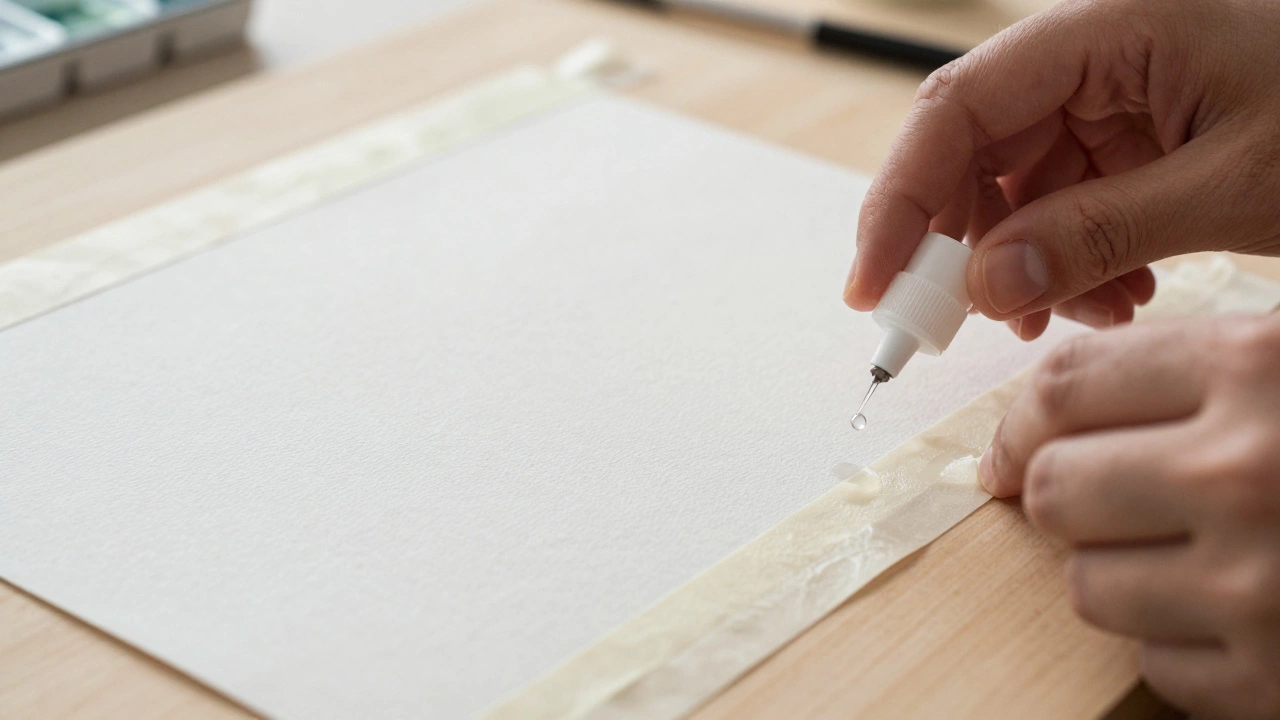
If you want the closest result to stretched paper without the mess of glue or starch, masking tape is your best friend. This method is widely used because it’s reversible and gentle on the paper fibers. Unlike duct tape or packing tape, which can tear the surface when removed, low-tack masking tape holds the edges firmly while allowing the paper to expand slightly as it gets wet.
To do this, you need a rigid backing. A piece of hardboard, plywood, or even a sturdy cardboard box works well. Place your watercolor paper is a specialized paper designed to absorb large amounts of water without disintegrating on the board. Then, apply strips of masking tape along all four edges, pressing them down firmly. The key here is tension. Before you start painting, spray the entire surface of the paper with water until it is fully saturated. As the paper absorbs the water, it will try to expand. Because the edges are taped down, the center pulls tight against the board, creating a drum-like surface.
This method is particularly effective for hot-pressed paper, which is smoother and thinner. For heavier cold-pressed papers (300 gsm or more), the tape might not hold enough tension to prevent minor buckling in the center, but it will significantly reduce warping compared to leaving the paper loose.
- Best for: Hot-pressed paper, mixed media, and quick studies.
- Tools needed: Masking tape, rigid board, spray bottle.
- Pro tip: Use painter’s tape instead of standard masking tape if you’re worried about residue. It comes off cleaner.
Painting Directly on Board
Why fight the warp if you can just skip the paper altogether? One of the most underrated alternatives to stretching is painting directly onto a rigid surface. Artists often use hardboard is a dense fiberboard made from compressed wood fibers, Masonite, or even sealed plywood. These surfaces don’t bend, so there’s no buckling to worry about.
However, you can’t just paint raw watercolor on bare wood; it will soak in like a sponge and ruin your colors. You need to prepare the surface. The most common approach is to apply a layer of acrylic gesso. Gesso seals the pores of the board and provides a toothy surface for the paint to grip. Once the gesso is dry, you can treat it exactly like stretched paper. Some artists prefer the way watercolor behaves on gessoed board-it tends to be less absorbent than paper, allowing for more blending and lifting.
Another option is mounting pre-sized watercolor paper onto the board using a wheat paste or archival glue. This is technically a form of stretching, but it’s permanent and gives you a rock-solid surface that never needs re-stretching. If you’re doing a series of paintings where consistency is key, this saves hours of prep time between sessions.
| Method | Surface Feel | Cost | Reversibility | Buckling Risk |
|---|---|---|---|---|
| Masking Tape | Natural Paper | Low | High (Paper saved) | Low (if wetted first) |
| Gessoed Hardboard | Slightly Toothier | Medium | None (Permanent) | Zero |
| Wet Mounting | Natural Paper | Medium | Low (Destructive) | Zero |
| Heavy Weight Paper | Natural Paper | High | High | Moderate |
The Heavyweight Paper Strategy
Sometimes, the best alternative to stretching is simply buying better paper. Most student-grade watercolor paper comes in 140 lb (300 gsm) weight. While this is decent, it still buckles under heavy washes. Professional-grade papers often come in 300 lb (640 gsm) weights. At this thickness, the paper has enough structural integrity to resist significant warping, even without being taped or stretched.
When you use 300 lb paper, you can often get away with just weighing the corners down with books or coins while it dries. The weight prevents the edges from curling up, and once dry, the paper usually returns to a relatively flat state. It won’t be as perfectly taut as stretched paper, but for most applications, the difference is negligible. This method saves time and eliminates the risk of damaging the paper during the stretching process.
Keep in mind that heavyweight paper is more expensive per square foot. If you’re doing small sketches or experiments, this isn’t cost-effective. But for final pieces where you plan to frame the work, investing in 300 lb paper reduces the need for complex prep work.
Using a Painting Pad
If you’re working outdoors or need mobility, stretching is impractical. In these cases, artist-grade painting pads are the go-to alternative. These pads consist of multiple sheets of watercolor paper glued together on three sides, with the fourth side open for removal. The glue acts as a hinge, holding the pages flat while you paint.
The advantage here is convenience. You don’t need a board, tape, or any setup time. Just open the pad and start painting. The glued edges provide enough resistance to keep the page mostly flat, especially if you use moderate amounts of water. However, if you go heavy on the wet-on-wet technique, the unglued edge may still buckle slightly. To mitigate this, some artists place a heavy object on the free edge while painting.
Painting pads are also great for preserving your work. Since the pages are bound, they’re less likely to get lost or damaged during transport. Many brands offer different textures, including cold-press and hot-press, so you can choose the feel that suits your style.
Wet-on-Wet vs. Dry Brush Techniques
Your technique plays a huge role in how much your paper buckles. If you’re constantly laying down large, thin washes, you’re inviting warping. Alternatives to stretching often involve adjusting your workflow to minimize water usage. Dry brush techniques, glazing, and layered approaches use less water overall, reducing the expansion of paper fibers.
For example, instead of one massive wash, try building up color in layers. Apply a light wash, let it dry completely, then add another layer. Each individual layer uses less water, so the paper doesn’t swell as much. This method also gives you more control over values and details, which is often preferable to the unpredictability of wet-on-wet.
If you must use wet-on-wet, consider limiting the area you saturate. Instead of wetting the whole sheet, focus on specific sections. This localized wetting causes less overall distortion. You can also use a sponge to blot excess water after applying a wash, speeding up drying time and reducing the window for buckling.
Common Mistakes to Avoid
Even with these alternatives, mistakes happen. Here are some pitfalls to watch out for:
- Using the wrong tape: Duct tape or electrical tape will rip the paper surface when removed. Always use low-tack masking tape or painter’s tape.
- Not wetting the paper before taping: If you tape dry paper and then apply wet paint, the paper expands unevenly, leading to wrinkles. Always saturate the paper first.
- Ignoring grain direction: Paper expands more across the grain than with it. When taping, align the paper so the longer dimension runs parallel to the board’s strongest axis.
- Over-gluing on board: If you mount paper to hardboard, too much glue can create bubbles. Use a roller to smooth out the surface evenly.
Choosing the Right Alternative for Your Project
There’s no one-size-fits-all solution. The best alternative depends on your goals. If you’re doing a quick sketch, a painting pad is fastest. If you’re working on a detailed portrait, masking tape on hardboard gives you the control you need. If budget is a concern, sticking to dry brush techniques on mid-weight paper minimizes waste.
Experiment with each method. Try taping a sheet of hot-press paper and see how it handles heavy washes. Paint on a gessoed board and notice how the pigment sits on the surface. Test heavyweight paper without any support. Over time, you’ll develop a sense of which method fits your style and workflow.
Remember, the goal isn’t perfection-it’s functionality. A slightly wavy painting is still a beautiful painting. Don’t let the fear of buckling stop you from creating. With the right tools and techniques, you can manage warping effectively and focus on what matters: your art.
Can I use regular scotch tape to secure watercolor paper?
No, regular scotch tape or clear adhesive tape is not recommended. It has high tackiness and can tear the surface of the paper when removed, ruining your artwork. Always use low-tack masking tape or painter’s tape designed for delicate surfaces.
Does spraying water before taping really prevent buckling?
Yes, it does. Spraying the paper with water allows it to expand fully while secured by the tape. As it dries, the paper contracts slightly, pulling itself taut against the board. This creates a smooth, drum-like surface that resists further buckling during painting.
What is the best type of board for painting directly on?
Hardboard, such as Masonite, is the most popular choice due to its rigidity and affordability. Plywood is also excellent but heavier. Ensure the board is sealed with acrylic gesso to prevent water absorption and provide a suitable painting surface.
Is 300 lb watercolor paper worth the extra cost?
For finished pieces, yes. 300 lb (640 gsm) paper is thick enough to resist significant buckling without needing to be stretched. It saves time and reduces the risk of damaging the paper during prep. For sketches or practice, 140 lb paper is more economical.
Can I remove tape from watercolor paper without damage?
Yes, if you use low-tack masking tape or painter’s tape. Remove the tape slowly and carefully, peeling it back at a sharp angle. If the paper was properly wetted and dried, the tape should come off cleanly without tearing the surface.