Gallery Sketching Compliance Checker
Planning to sketch at a museum or gallery? Check your gear and plan against standard institutional policies before you go.
Your Setup & Plan
Make selections and click "Check My Status" to see if you are ready to sketch!
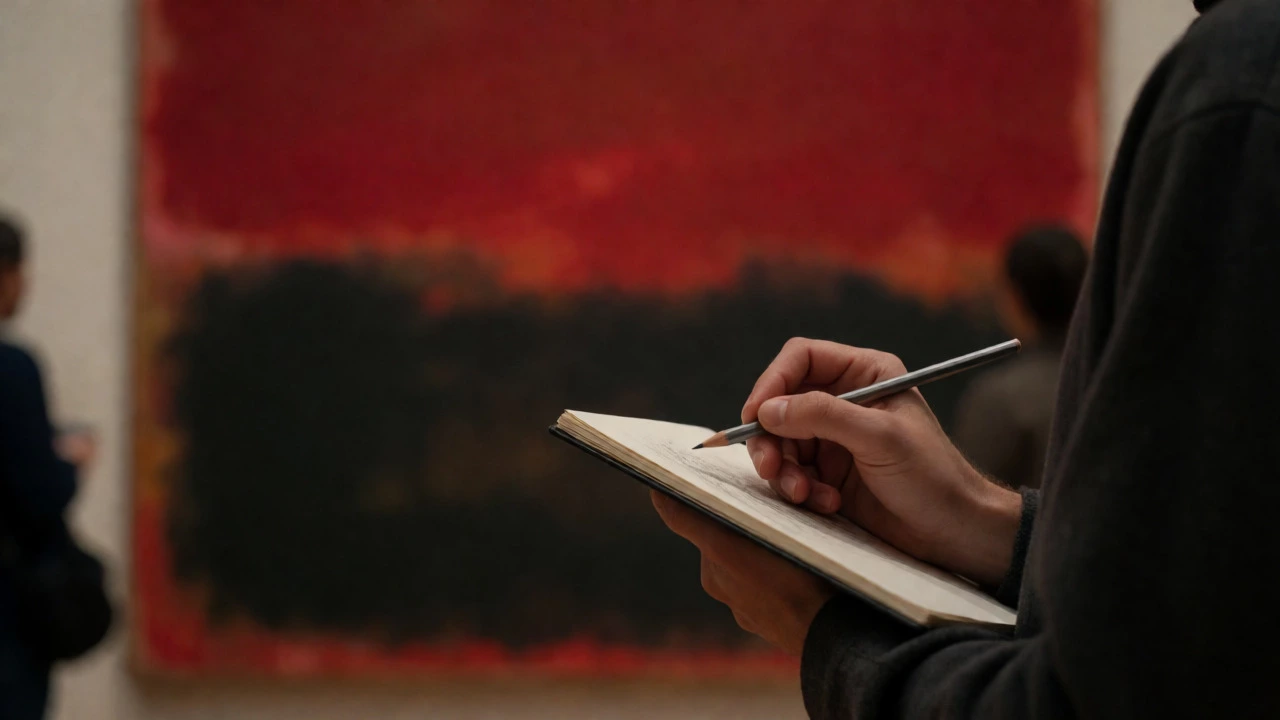
You are standing in front of a Rothko. The colors bleed into each other, massive and silent. Your hand twitches. You want to capture that gradient on paper, to feel the weight of it with your pencil. But you freeze. Is this allowed? Will a guard shoo you away? Are you breaking some unwritten code of the art world?
Here is the short answer: Yes, you can draw in most art galleries. But it is not a free-for-all. There are strict boundaries involving space, materials, and respect for the artwork. If you know the rules, sketching becomes one of the best ways to engage with art. If you ignore them, you become the annoying tourist everyone avoids.
The General Rule: Pencil Yes, Ink No
Galleries and museums have different policies, but they share a common fear: damage. Wet media like ink, watercolors, or oils pose a risk. A dropped pen can stain a floor or, worse, splash onto a canvas. Dry media, specifically graphite pencils, are generally safe because they don't leak, drip, or require liquid containers.
Most major institutions, from the Louvre to the Vancouver Art Gallery, explicitly permit drawing with pencils. Some allow charcoal if you use fixative spray outside the building first, but never bring a spray can inside. The logic is simple: protect the art and the other visitors.
Graphite Pencils are the standard tool permitted in most museums due to their dry nature and lack of chemical solvents. Unlike markers or pens, they do not emit fumes or risk permanent stains if accidentally touched against a wall or frame.
Know Your Venue: Where Can You Actually Sketch?
Not all spaces are created equal. A small commercial gallery selling contemporary prints might ban all drawing because they need every inch of wall space for sales, and a crowd of sketchers blocks potential buyers. Conversely, large public museums often encourage it as an educational activity.
Check these factors before you set up:
- Commercial vs. Public: Public museums (like the National Gallery of Canada) usually welcome sketchers. Commercial galleries (private businesses) may restrict it to avoid clutter.
- Special Exhibitions: Even if the main museum allows drawing, a special loan exhibition (e.g., "Van Gogh Immersive") might prohibit it due to copyright issues or high security.
- Signage: Look for icons at the entrance. A camera with a slash means no photos; a pencil with a slash means no drawing. If there is no sign, ask the front desk.
Etiquette: How Not to Be That Person
Just because you are allowed to draw doesn't mean you can do whatever you want. Space is premium real estate in a gallery. Here is how to be a polite guest.
Respect the Buffer Zone
Do not stand directly under a painting if others want to view it. Stand back enough so your elbow doesn't bump into anyone. If a group arrives, move aside. You are there to study the art, not to block the view for five minutes while you shade a corner.
No Easels or Tripods
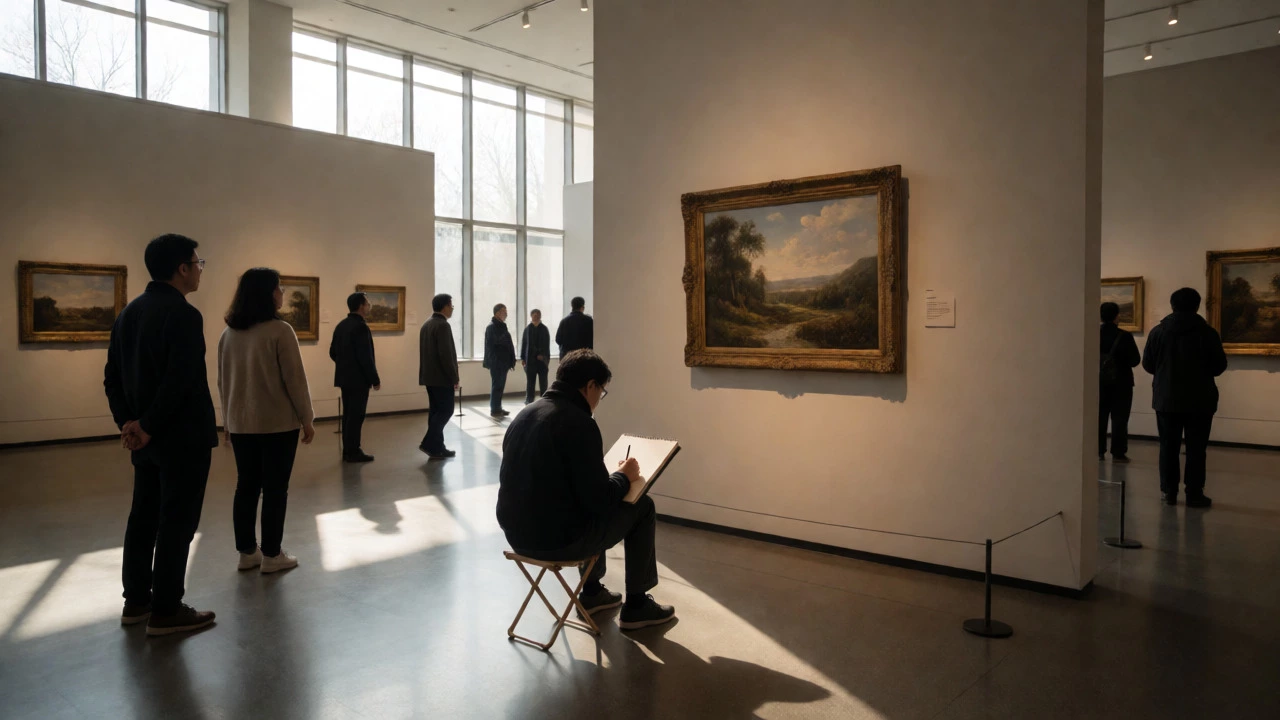
This is a hard rule in almost every venue. Tripods take up too much floor space and create tripping hazards. If you need support, lean your sketchbook against a wall or hold it steady. Some museums provide folding stools for long sessions, but you must bring your own lightweight stool if you want to sit. Never place your bag on the floor where people walk.
Silence is Golden
Art galleries are quiet places. Do not talk loudly on the phone. Do not narrate your drawing process to your friend. If you are working with a group, whisper. The sound of scratching graphite is fine; the sound of a loud debate about brushstrokes is not.
Materials Checklist: What to Bring
Packing light is key. You don't need a full studio kit. In fact, bulky bags are often banned from galleries anyway. Keep your gear minimal and secure.
| Item | Why It's Needed | Pro Tip |
|---|---|---|
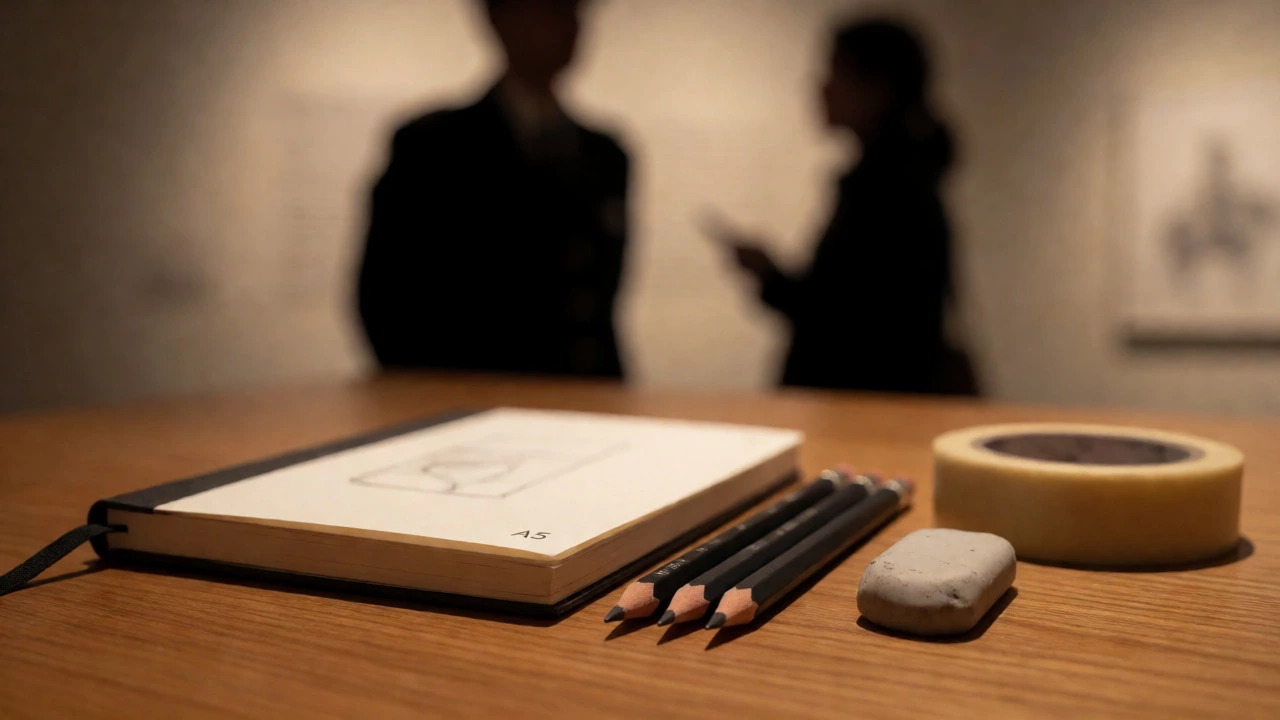
| Sketchbook | Hard cover protects pages; size fits on lap. | A5 or B5 size is ideal. Avoid loose sheets. |
| Graphite Pencils | Permitted medium; smooth application. | Bring HB, 2B, and 4B. Sharpen before you go. |
| Kneaded Eraser | Cleans without smudging or damaging paper. | Never use pink rubber erasers-they leave crumbs. |
| Tape or Clips | Keeps pages flat if you have no table. | Masking tape works well on wood frames. |
| Small Stool | Comfort for long sessions. | Folding camp stools are lightweight and packable. |
Why You Should Draw From Life
Photography captures a moment; drawing forces you to understand structure. When you copy a masterpiece, you stop glancing and start looking. You notice how the artist mixed the shadows. You see the direction of the brushstrokes. This active engagement builds visual literacy faster than any textbook.
Leonardo da Vinci learned by copying masters. Today, artists like John Singer Sargent filled sketchbooks during museum visits. These sketches weren't just practice; they were research. They helped artists deconstruct techniques they wanted to steal for their own work.
Common Pitfalls to Avoid
I've seen plenty of mistakes made by eager sketchers. Here are the big ones:
- Using Pens: Unless the museum explicitly says otherwise, assume pens are banned. One leak can ruin a visit.
- Touching Frames: Never lean your body or your book against the artwork's frame. Sweat and oils transfer easily. Keep a respectful distance.
- Ignoring Security Guards: If a guard asks you to move, do it immediately and politely. Don't argue. They have the final say on site-specific rules.
- Flash Photography: While not related to drawing, remember that if you are taking reference photos, turn off your flash. Flash damages pigments over time.
Local Context: Sketching in Vancouver
If you are in Vancouver, the rules are fairly consistent across major venues. The Vancouver Art Gallery generally permits drawing with pencils in its permanent collection areas. However, always check the current policy upon entry, as special exhibitions may have stricter guidelines.
The Museum of Anthropology (MOA) at UBC is another fantastic spot. Their focus on Indigenous art offers unique forms to study. Just remember, MOA has specific cultural protocols regarding photography and recording. While drawing is usually fine, being respectful of sacred objects is paramount. Ask staff if you are unsure about a specific piece.
Final Thoughts: Embrace the Imperfection
Your drawing won't look exactly like the painting. That's the point. You aren't trying to reproduce the image perfectly. You are trying to learn from it. So grab your pencil, find a quiet corner, and start observing. The worst that happens is someone smiles and walks around you. The best case? You discover something new about the art-and yourself.
Can I use colored pencils in art galleries?
It depends on the venue. Many museums allow colored pencils because they are dry media, similar to graphite. However, some prefer only black-and-white mediums to minimize distraction or color contamination risks. Always check the specific museum's website or ask staff before starting.
Are easels allowed in museums?
Generally, no. Most museums ban easels because they take up too much floor space and create safety hazards for other visitors. You should hold your sketchbook or rest it on your lap. Folding stools are often acceptable if they are small and portable.
What happens if I break a rule?
Usually, a security guard will simply ask you to stop or move. If you persistently violate rules, you may be asked to leave. In rare cases involving damage to property, you could face fines, but this is uncommon for simple drawing violations.
Is it rude to draw while others are viewing?
No, it is not rude if you are mindful of space. Just ensure you aren't blocking the view of the artwork for others. If a crowd gathers, step aside briefly. Being considerate makes your presence welcome rather than intrusive.
Can I sell my sketches made in galleries?
Yes, you typically own the copyright to your original sketches. However, you cannot claim ownership of the underlying artwork. Selling prints of your sketches is generally fine, but check local copyright laws regarding derivative works if you plan to commercialize heavily.