Art Print Cost Calculator
Estimate Your Print Production Cost
Calculate how factors like edition size, materials, and labor affect the true cost of a fine art print.
Ever stared at a $500 art print and wondered how a piece of paper with ink on it could cost more than your monthly phone bill? You’re not alone. Art prints can seem wildly overpriced-until you understand what you’re actually paying for. It’s not just about the image. It’s about the process, the person behind it, and the value that gets built into every step.
It’s Not a Mass-Produced Poster
Most people confuse art prints with posters you buy at Target or IKEA. But fine art prints are a different breed. They’re made in small batches, often numbered and signed by the artist. A typical limited edition run might be just 25, 50, or 100 pieces. Once they’re sold, that’s it. No more. That scarcity drives value. Compare that to a poster printed in batches of 10,000 using cheap ink and paper-there’s no exclusivity, no ownership, no connection to the artist. That’s why one costs $15 and the other costs $500.The Artist’s Time and Skill Don’t Come Cheap
Creating a print isn’t just hitting ‘print’ on your home printer. Many artists spend months preparing a print. They might start with an original painting, then translate it into a digital file, adjust colors by hand, test multiple papers, and run dozens of trial prints. Each version is checked under different lighting, compared to the original, and tweaked until it matches perfectly. That’s not automation-that’s craftsmanship. And that labor? It’s priced in. An artist who spends 80 hours on a single print series isn’t just selling paper. They’re selling expertise, patience, and vision.Materials Matter More Than You Think
The paper and ink used in fine art prints aren’t off-the-shelf supplies. Artists use archival, acid-free cotton rag paper-think museum-quality, designed to last 100+ years without fading or yellowing. The ink? Pigment-based, not dye-based. It’s fade-resistant, color-stable, and designed for gallery display. A single sheet of this paper can cost $15 to $30. A set of professional pigment inks? $200 a bottle. Multiply that by 50 prints, add the cost of a high-end giclée printer (which runs $10,000+), and suddenly the $500 price tag starts to make sense. You’re not paying for the image. You’re paying for durability.Gallery and Exhibition Costs Are Built In
If you bought a print from a gallery, that price includes more than just the artwork. Galleries take 30% to 50% commission. That’s how they pay for rent, lighting, staff, marketing, framing, and insurance. That $500 print? The artist might have gotten $250. The rest? It’s the cost of getting your art seen by collectors, critics, and curators. Without galleries, most artists wouldn’t reach buyers. And without buyers, they couldn’t keep making art.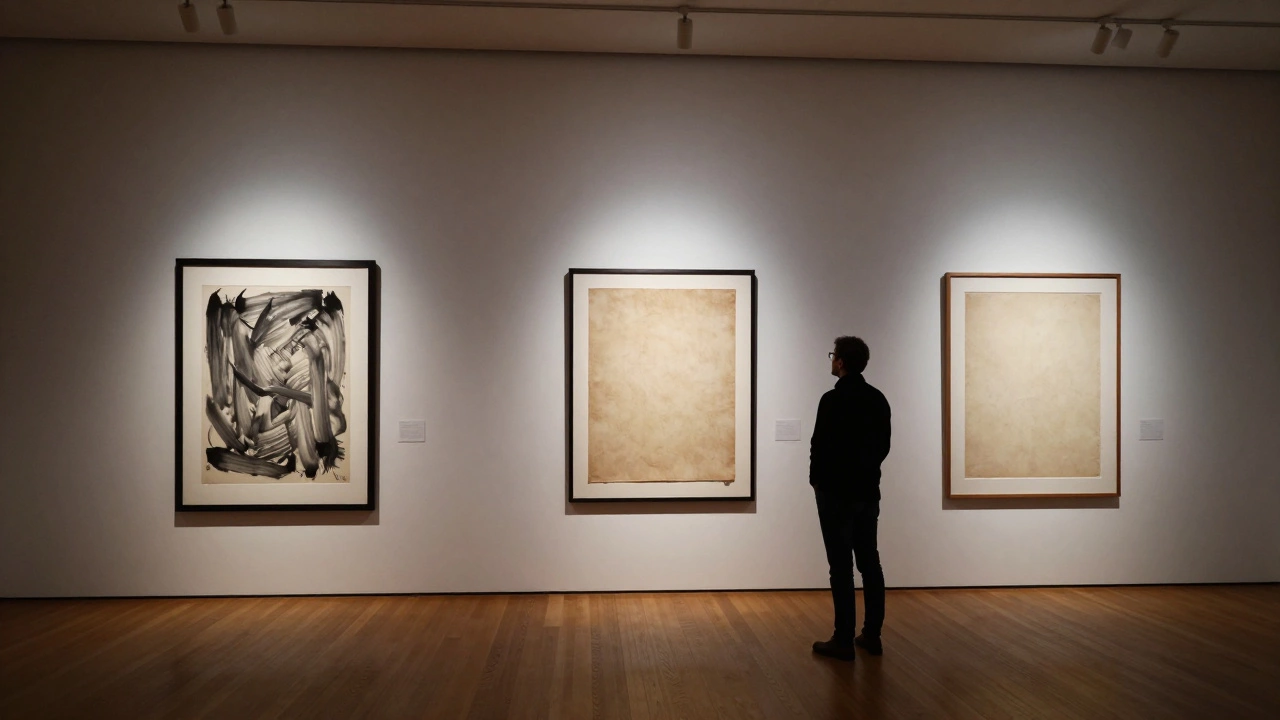
Provenance and Signatures Add Real Value
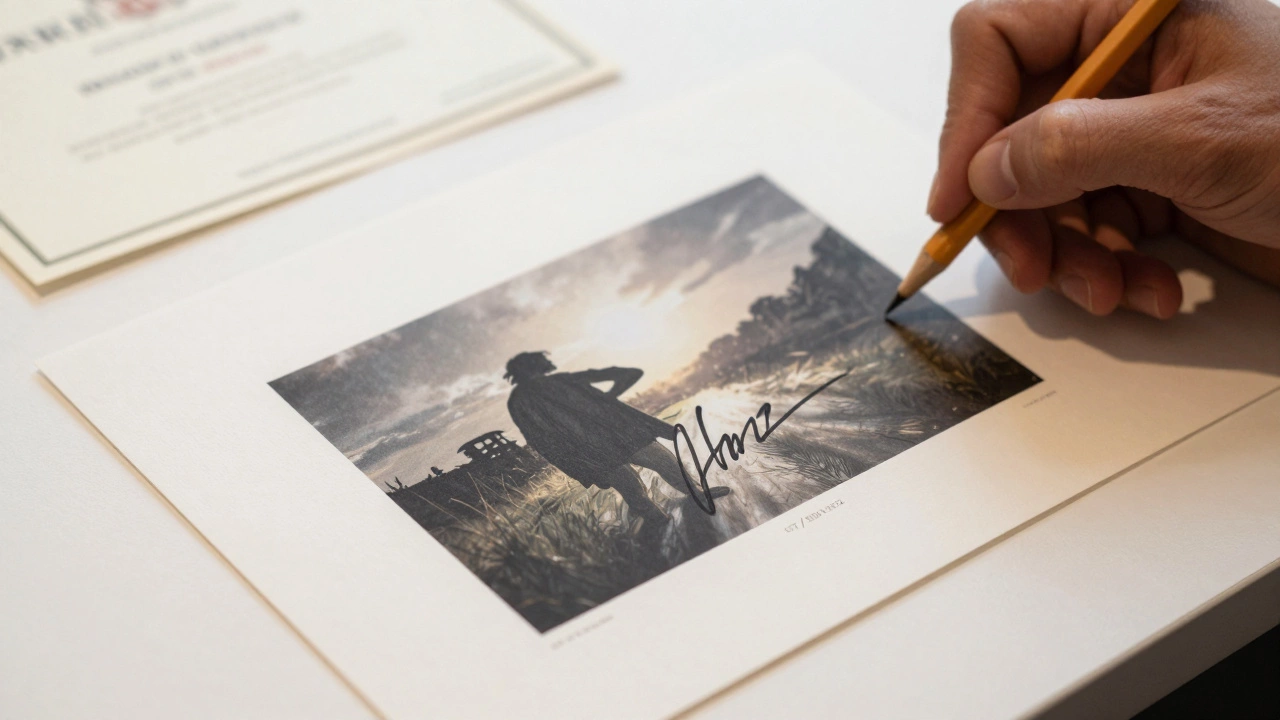
A signed, numbered print isn’t just a gimmick. It’s proof of authenticity. That signature? It’s a guarantee the artist approved the final result. The number-like “17/50”-tells you exactly where your print sits in the edition. Collectors care about this. A print from a limited run with a clear chain of ownership holds value. If you ever want to resell it, that documentation matters. A print without a signature or provenance? It’s worth maybe 20% of the authenticated version. That’s why auction houses list prints with certificates of authenticity-and why buyers pay more for them.Artist Reputation Changes Everything
A print by an unknown local artist might cost $80. The same print, signed by someone whose work hangs in the Tate Modern or the Museum of Modern Art? That jumps to $1,200. Why? Because reputation builds demand. When an artist has been featured in major publications, shown in prestigious exhibitions, or collected by institutions, their work carries weight. Buyers aren’t just buying art-they’re buying into a story, a legacy, a cultural moment. That’s not hype. It’s market reality. Art prices, even for prints, follow the same rules as any collectible: scarcity, demand, and recognition.Prints Are Investment Pieces, Not Decor
Let’s be clear: not every art print is meant to be an investment. But many are. Some collectors buy prints because they’re more accessible than original paintings. A $500 print by a rising artist might be the only way to own something by them before their prices skyrocket. Look at the work of artists like Yayoi Kusama or Jean-Michel Basquiat. Their early prints, once sold for under $1,000, now fetch tens of thousands. That’s not luck. It’s strategy. When you buy a print from a respected artist early, you’re not just decorating your wall-you’re investing in their career. And sometimes, that pays off.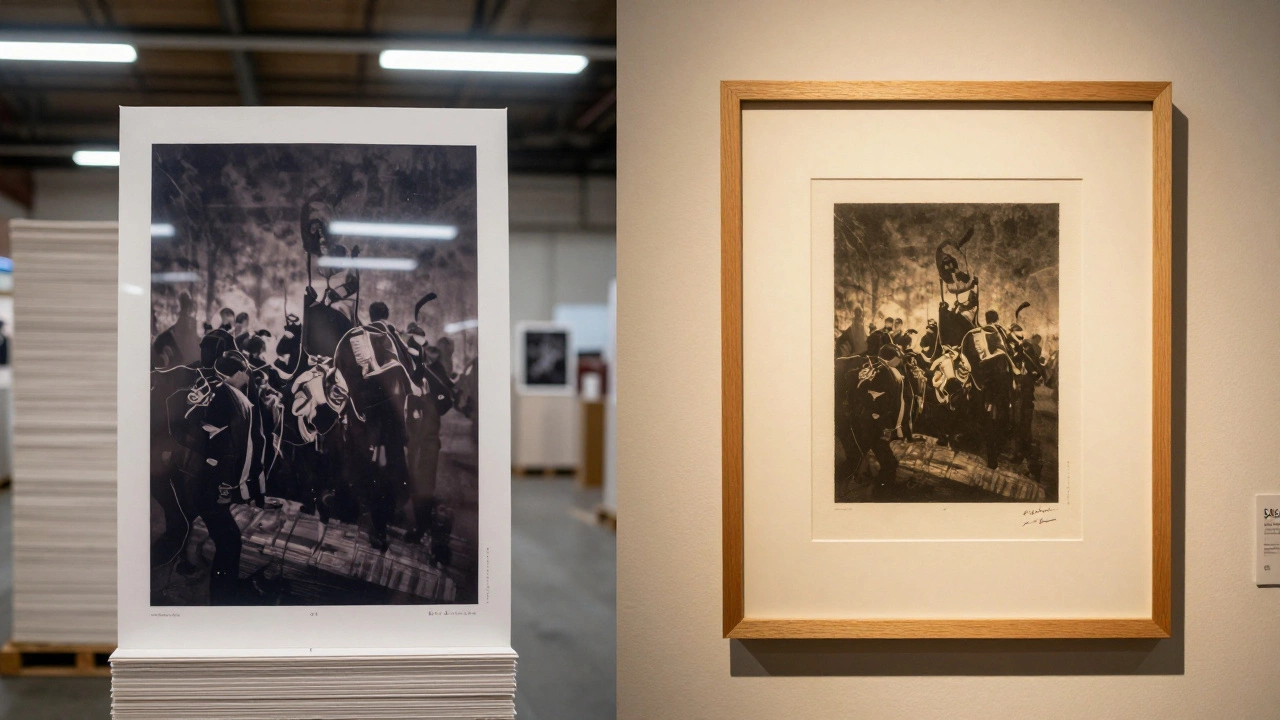
What You’re Really Paying For
You’re not paying for ink on paper. You’re paying for:- Time: Hours of skilled labor from the artist and printmaker
- Materials: Museum-grade paper and archival ink that lasts generations
- Exclusivity: Limited runs that can’t be reproduced
- Authenticity: Signed, numbered, and documented proof of origin
- Legacy: Supporting an artist whose work may one day be in a museum
When an Art Print Isn’t Worth the Price
Not every expensive print deserves its cost. Watch out for these red flags:- Prints labeled “limited edition” but with no number or signature
- Prints sold in huge quantities (500+ copies) with no artist involvement
- Reproductions of public domain artwork sold as “original prints”
- Prints with no provenance or certificate of authenticity
- Prints by artists with no exhibition history or public recognition
How to Spot a Real Fine Art Print
Here’s how to tell the difference:- Check for a signature-usually hand-signed in pencil, not printed
- Look for an edition number: “X/Y” where Y is the total run
- Ask for a certificate of authenticity-it should include the artist’s name, title, date, medium, and edition size
- Feel the paper. Real fine art paper is thick, textured, and feels like linen
- Research the artist. Do they have a website? Gallery representation? Exhibition history?
Are art prints a good investment?
Some are, but not all. Prints by established or rising artists with limited editions, signatures, and provenance can appreciate in value over time. For example, early prints by artists like Chuck Close or Kiki Smith have doubled or tripled in value over the past 15 years. But prints with no artist involvement, large editions, or no documentation rarely increase in value. Buy for love first, investment second.
Can I get a good art print for under $100?
Absolutely. Many emerging artists sell signed, limited-edition prints for $50-$150. Local galleries, art fairs, and artist websites often have affordable options. Look for prints with fewer than 50 copies, hand-signed, and printed on archival paper. You don’t need to pay $500 to own a meaningful, high-quality print.
What’s the difference between a giclée and a regular print?
A giclée (pronounced zhee-CLAY) is a high-resolution inkjet print made with archival pigment inks on fine art paper. It’s the gold standard for fine art reproduction. Regular prints, like those from a photo lab, use dye-based inks on glossy paper-they fade faster, lack color depth, and aren’t meant for long-term display. Giclées are what you’ll find in galleries. Regular prints are what you’ll find in gift shops.
Why do some prints cost more than the original painting?
It happens, and it’s not a mistake. Sometimes the original painting was sold years ago and is now in a private collection or museum. The print might be the only way to own a version of that artwork. Also, prints can be produced in higher quality or with more detail than the original if the artist reworked the file. In rare cases, the print edition becomes more sought-after than the original due to cultural timing or collector demand.
Should I frame an art print behind glass?
For archival prints, it’s better to use UV-protective acrylic instead of glass. Glass can trap moisture and cause condensation, which damages paper over time. Acrylic is lighter, safer, and blocks 99% of UV light. If you must use glass, choose museum-grade, non-reflective, UV-filtering glass. Never let the print touch the glass directly-use a mat or spacer.