Art Revolution Score Calculator
Measure how revolutionary different artists were compared to Édouard Manet's groundbreaking impact on modern art. Rate each artist across four key revolutionary factors:
How Your Artist Compares to Manet
Artistic Legacy Analysis
When people talk about the birth of modern art, they don’t mean a sudden explosion of color and chaos. They mean a quiet revolution - one that started with a single painter who dared to paint the world as it was, not as it was supposed to be. That painter was Édouard Manet. He didn’t invent modern art, but he lit the fuse. Today, art historians, curators, and even casual gallery-goers point to him as the godfather of modern art - not because he was the first, but because he was the first to break the rules in a way that changed everything.
What Made Manet Different?
In the 1860s, the Paris Salon ruled art like a royal court. To be accepted, paintings had to follow strict rules: historical or mythological scenes, idealized figures, smooth brushwork, and moral lessons. Manet’s paintings broke all of them. His 1863 painting Le Déjeuner sur l’herbe (Luncheon on the Grass) showed a naked woman sitting with two fully clothed men in a park. No goddess. No allegory. Just a real woman, in a real setting, looking right at you. The Salon rejected it. The public laughed. Critics called it obscene. But artists noticed. Something had shifted.
Manet didn’t paint saints or kings. He painted café patrons, street musicians, barmaids, and sailors. He painted women in modern dresses, not flowing togas. He used flat areas of color, bold outlines, and visible brushstrokes - techniques that looked unfinished to traditional eyes. But that was the point. He wanted to capture the fleeting moment, the everyday truth, not the polished fantasy.
He Didn’t Paint Like the Old Masters - and That Was the Point
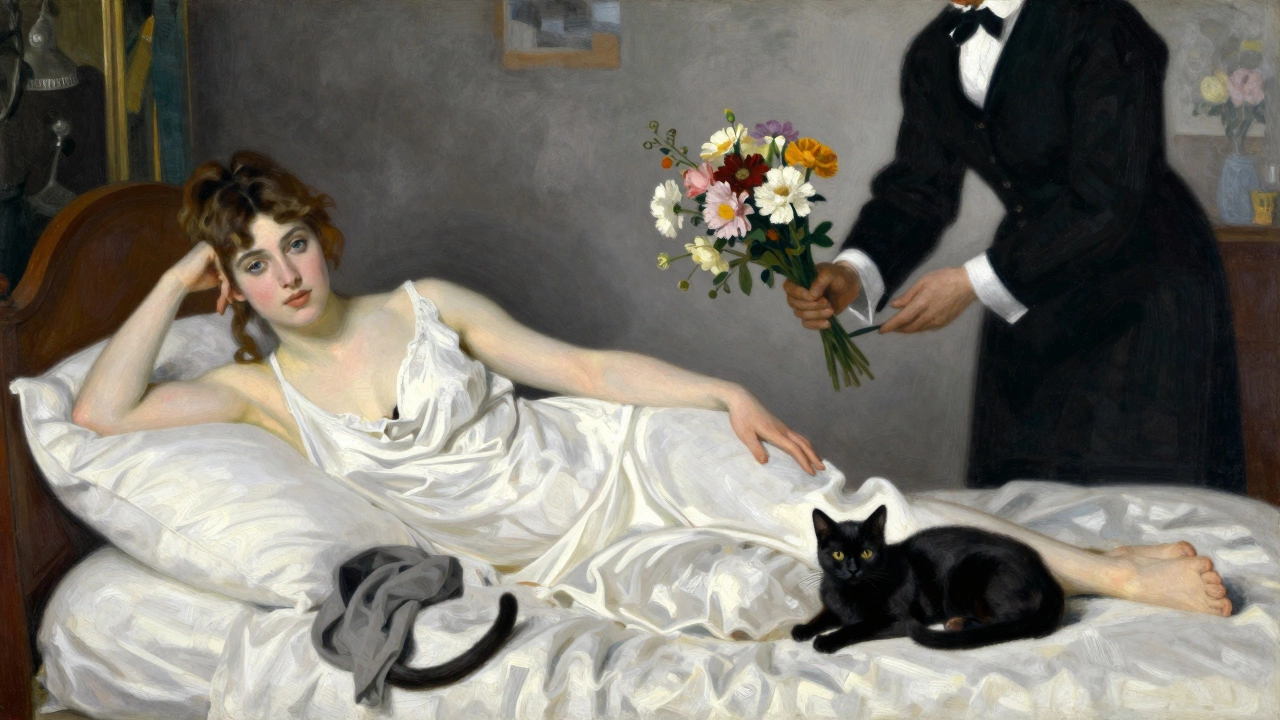
Manet studied the old masters. He copied Velázquez, Goya, and Titian. But he didn’t copy their style. He borrowed their compositions and then twisted them. His Olympia (1865) was a direct challenge to Titian’s Venus of Urbino. Both show a reclining nude woman. But Titian’s goddess looks dreamy, distant. Manet’s Olympia stares back - cool, unapologetic, even confrontational. Her black cat, her bare feet, her servant handing her flowers - all screamed modernity. This wasn’t mythology. This was a real woman, likely a courtesan, living in Paris in 1865.
Artists like Monet, Degas, and Renoir saw what Manet was doing. They didn’t copy him, but they followed his lead. They started painting outdoors. They started using brighter colors. They stopped hiding their brushstrokes. Manet didn’t join the Impressionists officially - he still wanted Salon approval - but his work gave them permission to exist. Without Manet, Impressionism might have stayed a fringe movement. With him, it became a movement.
Why Not Monet or Picasso?
Some people ask: Why not Monet? He painted light and water like no one else. Why not Picasso? He shattered form and built new worlds. But Monet was a follower. He learned from Manet’s use of light and color. Picasso was a later generation - he built on Cubism, which came decades after Manet’s death. Manet was the bridge.
Think of it like music. Beethoven didn’t invent classical music, but he broke its rules and opened the door to Romanticism. Manet did the same for painting. He turned art from storytelling into observation. He made the artist’s eye - not the academy’s rules - the authority.
Manet’s influence wasn’t just in technique. It was in attitude. He proved that art didn’t need to be noble to be powerful. A woman on a balcony, a boy with a pipe, a racehorse at the track - these were worthy subjects. He didn’t wait for permission. He just painted.
His Legacy Lives in Every Modern Painting
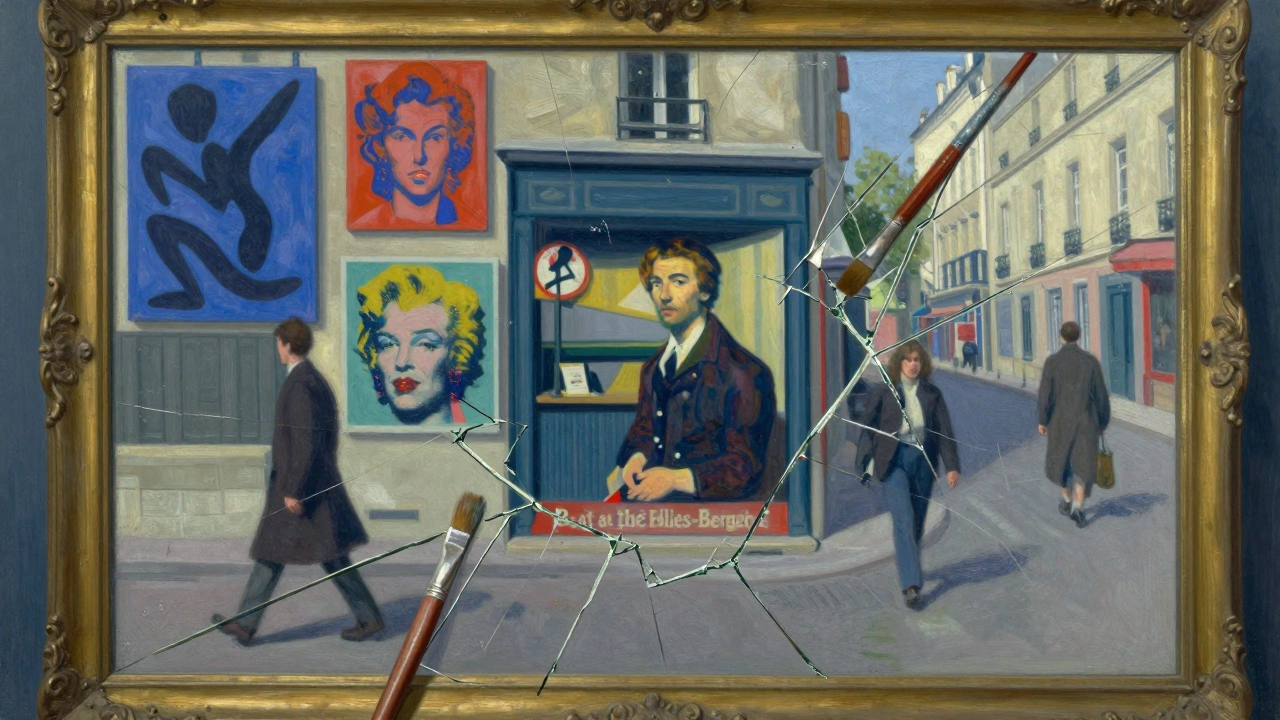
Look at any modern painting - from Matisse’s bold colors to Warhol’s flat pop imagery - and you’ll see Manet’s fingerprints. Matisse called him the "father of modern painting." Warhol admired his use of everyday subjects. Even today, when artists paint street scenes, portraits of strangers, or urban life without romanticizing it, they’re following Manet’s path.
Modern art isn’t about abstraction or weird shapes. It’s about honesty. It’s about looking at the world and saying: this is what it looks like. Manet was the first to say it loudly enough that the art world had to listen.
What He Didn’t Do
Manet didn’t invent Impressionism. He didn’t paint plein air like Monet. He didn’t abandon the Salon like the Impressionists did. He still submitted paintings. He still wanted medals. He was, in many ways, a reluctant revolutionary. But that’s what made him more powerful. He didn’t need to leave the system to change it. He just walked in and started painting differently.
He also didn’t paint abstractly. He never abandoned representation. His figures were always recognizable. His scenes were always grounded. That’s why his work feels so immediate. You don’t need to decode symbolism. You just see a man drinking, a woman reading, a dog sleeping. And you understand it.
Why He’s Still Relevant Today
Modern life moves fast. We scroll through images, take photos on our phones, capture moments without staging them. That’s Manet’s world. He didn’t paint perfect compositions. He painted snapshots of real life - the kind we take now, without thinking.
When you see a photo of someone on a subway, looking out the window, lost in thought - that’s Manet’s vision. When a street artist paints a person on a bench, not as a hero, but as a human - that’s Manet’s legacy. He didn’t make art for museums. He made it for the world.
Art schools still teach his work. Major museums like the Musée d’Orsay and the Metropolitan Museum of Art hang his paintings in central positions. Not because they’re pretty. But because they’re true.
His Paintings You Should Know
- Le Déjeuner sur l’herbe (1863) - The painting that shocked Paris and started the revolution.
- Olympia (1865) - A defiant portrait of modern womanhood.
- Bar at the Folies-Bergère (1882) - A haunting reflection of isolation in urban life.
- The Railway (1873) - A child and a woman beside a train, capturing the quiet rhythm of modernity.
- A Bar at the Folies-Bergère - Often overlooked, but one of his most complex studies of perspective and alienation.
These aren’t just paintings. They’re moments frozen in time - moments that asked the world to see differently.
Final Thought: The Godfather Didn’t Want the Title
Manet never called himself the godfather of modern art. He didn’t even call himself a modernist. He just painted what he saw. But in doing so, he changed the rules of what art could be. He didn’t need to lead a movement. He just needed to make one good painting - and then another. And then, slowly, the whole world followed.
Is Édouard Manet the only candidate for the godfather of modern art?
While other artists like Courbet and Delacroix pushed boundaries before him, Manet was the first to combine realism with modern subject matter in a way that directly influenced the next generation. Courbet championed realism, but his work still followed traditional composition. Manet broke the rules of composition, lighting, and perspective - and his peers saw it as a new path forward. No other artist in the mid-19th century had the same combination of technical daring and cultural relevance.
Did Manet influence only French artists?
No. Manet’s impact spread quickly across Europe and later to the U.S. American painters like Mary Cassatt and James McNeill Whistler studied his work closely. Whistler’s tonal compositions and Cassatt’s intimate domestic scenes owe a clear debt to Manet’s approach. Even later artists like Cézanne and Gauguin - who moved beyond Impressionism - built on his foundation. His legacy isn’t national; it’s foundational to modern painting worldwide.
Why do some people say Whistler or Courbet should be called the godfather?
Courbet was the first to paint ordinary people without idealizing them, and Whistler brought a new sense of harmony and mood. But neither changed the structure of painting the way Manet did. Courbet’s work was still rooted in academic tradition. Whistler focused more on aesthetic harmony than social observation. Manet did both: he painted real life and broke the rules of how it should be painted. That dual innovation is why he’s the one historians consistently point to.
Was Manet really rejected by the art world?
Yes - at first. His major works were rejected by the Paris Salon in 1863, leading to the creation of the Salon des Refusés. Critics called his paintings crude, unfinished, and immoral. But by the 1880s, younger artists and progressive collectors began to defend him. He won medals later in life, and by the time he died in 1883, he was already being recognized as a pivotal figure. His rejection was the price of innovation - and it proved that the art world could change.
Can someone today be called the godfather of modern art?
Not really. The title belongs to Manet because he was the turning point - the moment painting stopped being about idealized history and started being about real life. After him, art kept evolving - Cubism, Surrealism, Abstract Expressionism - but they all built on his breakthrough. No one since has had that same foundational impact. Modern art had its godfather. He came in the 1860s. His name was Édouard Manet.