Ancient Greek Kore Color Restoration Tool
How Were Korai Originally Painted?
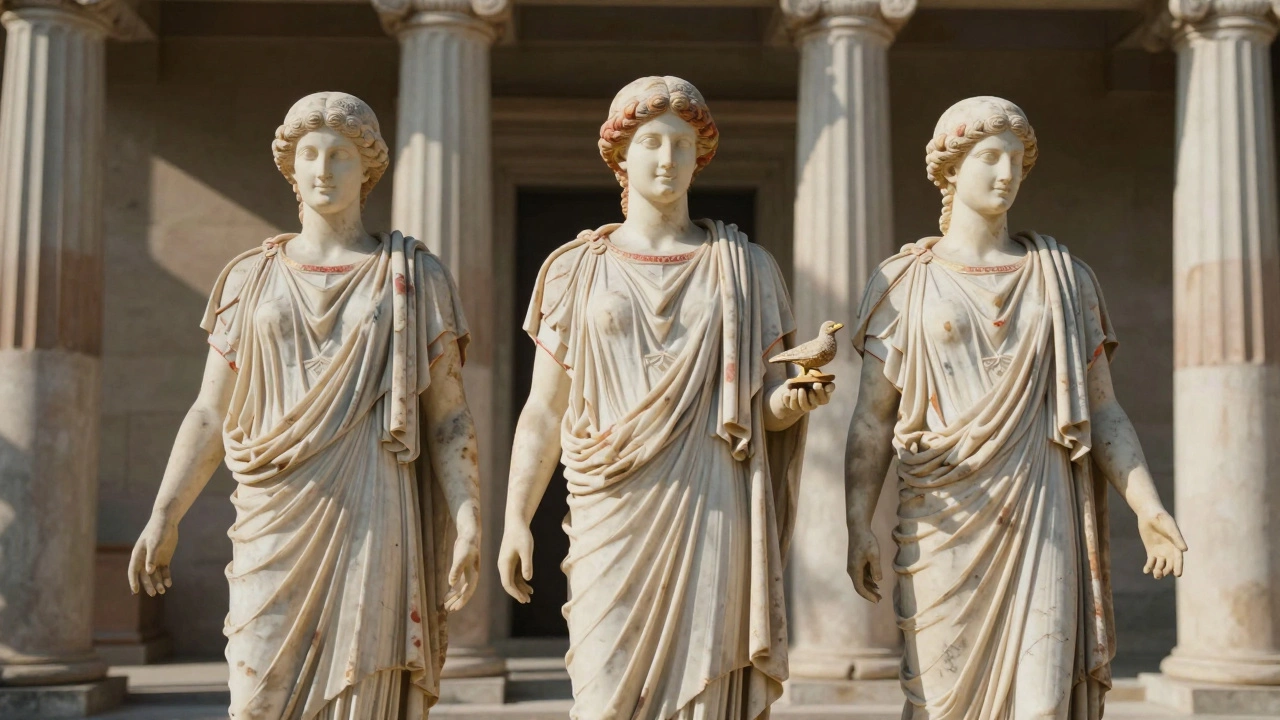
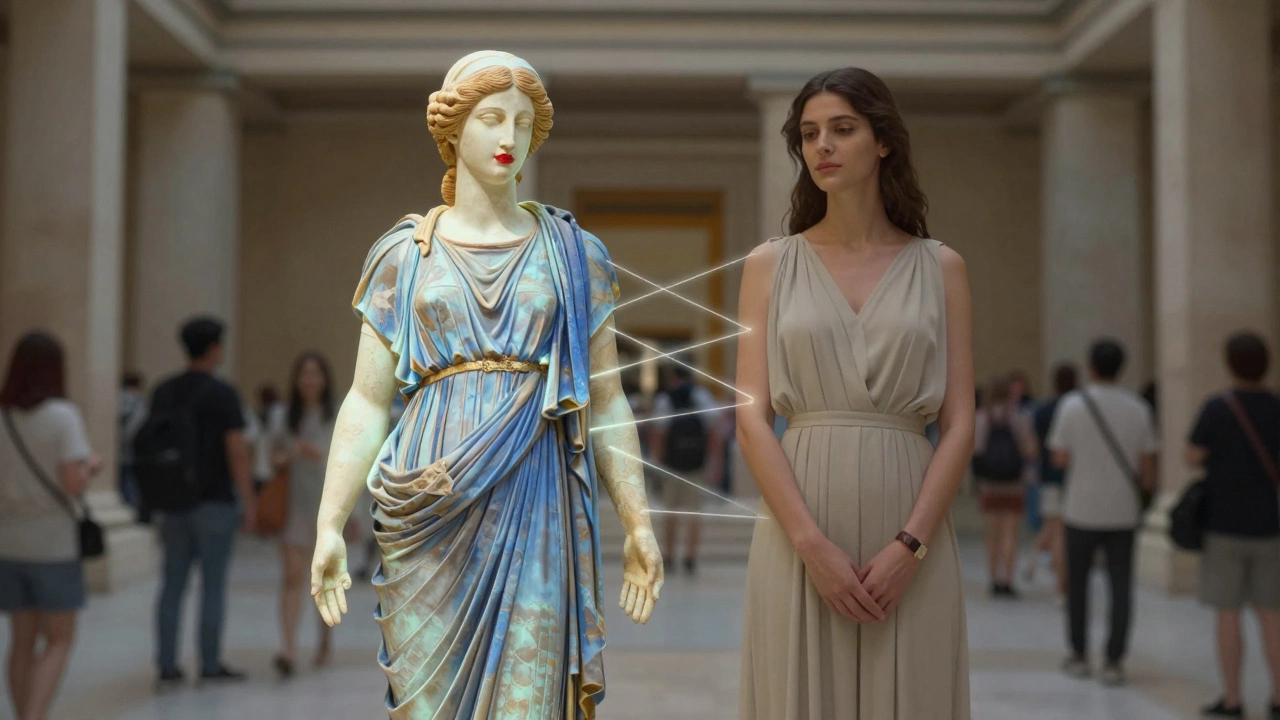
Ancient korai were never plain white marble. Archaeologists have discovered traces of pigments in over 200 korai found on the Acropolis. These vibrant colors weren't just decorative—they held religious significance and reflected Greek artistic traditions.
Original Appearance Preview
Preview how korai might have looked in their original vibrant state
What the Colors Meant
Lips and cheeks - symbolized vitality and divine presence
Hair - represented celestial power and connection to gods
Garment accents - indicated sacred status and wealth
When you think of ancient Greek sculpture, you probably picture muscular men in perfect poses-athletes, gods, warriors. But women were everywhere in ancient art too. They weren’t just background figures. They were central. So what were these female sculptures called? The answer isn’t just ‘statues of women.’ It’s something far more specific: kore (plural: korai).
The Word That Defined Ancient Greek Women in Stone
The term kore comes from the ancient Greek word for ‘girl’ or ‘young woman.’ It wasn’t a generic label. It was a technical term used by archaeologists and art historians to describe a very specific type of statue made between 650 and 480 BCE. These weren’t just any female figures. They were freestanding, life-sized or larger, carved from marble, and always shown standing upright, often with one foot slightly forward.
Unlike male statues of the same era-called kouroi, which depicted nude young men-korai were always clothed. They wore long, flowing garments like the peplos or chiton, often with intricate folds carved to show movement. Their hair was carefully styled, sometimes with braids or curls, and their faces had that signature Archaic smile-calm, serene, slightly mysterious.
These weren’t portraits of real people. They weren’t meant to capture individual likenesses. They were idealized representations. Some scholars think they were offerings to goddesses. Others believe they represented the goddess herself, like Artemis or Athena. A few might have been grave markers. But no matter their purpose, they were everywhere in sanctuaries and cemeteries across Greece.
Where Did They Show Up?
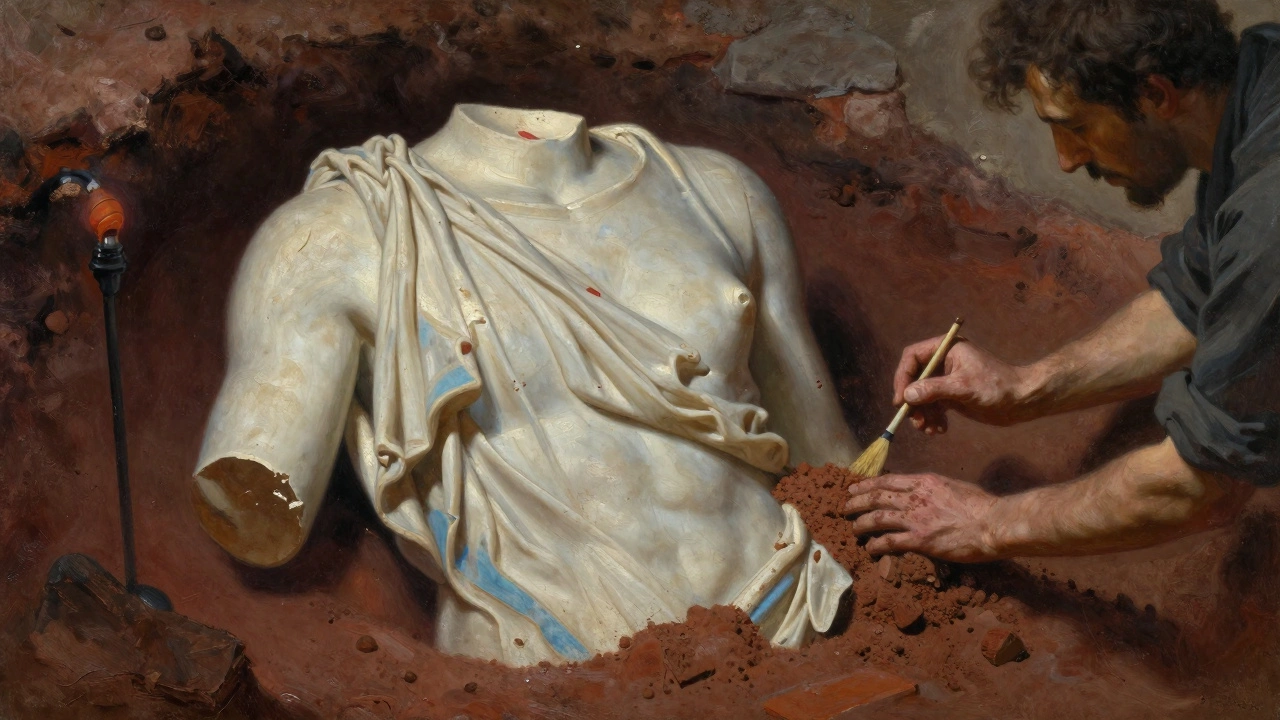
One of the most famous collections of korai is on the Acropolis in Athens. Over 200 of them were found there, buried after the Persian invasion in 480 BCE. The Athenians had smashed them in anger, then carefully buried the pieces to protect them. When archaeologists dug them up in the 1800s, they found pieces of clothing, painted traces of color, and even inscriptions on the bases-names like ‘Phanostrata’ or ‘Aristodike’-suggesting these statues were dedicated by real women or their families.
At the Sanctuary of Artemis on Delos, you’ll find korai holding offerings: birds, baskets, flowers. In Eleusis, near Athens, they stood beside altars, watching over rituals for Demeter. Each one was a quiet act of devotion. A daughter honoring her mother. A wife praying for fertility. A family giving thanks.
These statues didn’t just sit there. They were painted. Bright reds, blues, and golds. The hair was often dark, the lips reddened, the eyes inlaid with shell or glass. Over time, the paint faded, and later generations assumed these statues were always white. That’s why we picture ancient sculpture as pure marble today. But originally? They looked alive.
What Made Them Different From Other Female Figures?
Not all female statues from antiquity are korai. The term only applies to Archaic Greek statues from that specific 170-year window. After 480 BCE, things changed. Sculptors started focusing on natural movement, weight shift, and emotional expression. The rigid, frontal poses gave way to the contrapposto stance. The smiles disappeared.
Later female statues-like the Venus de Milo or the Nike of Samothrace-are not called korai. They belong to the Classical or Hellenistic periods. They’re more dynamic, more sensual, more individual. The kore was about order, tradition, and idealized youth. Later figures were about beauty, power, and emotion.
Even in Roman times, when artists copied Greek styles, they didn’t use the term kore. They called them matronae (married women) or puellae (girls). The Greek term stuck only in modern scholarship because it describes a very precise type of statue.
Why Did Women Stay Covered While Men Went Naked?
This is one of the biggest questions in art history. Why were young men shown nude, but young women always clothed?
The answer isn’t simple. Some say it’s about gender roles. Male nudity symbolized civic virtue, athletic excellence, and public life. Female nudity was tied to sexuality and private space. But that’s too simple. In Egypt and Mesopotamia, female figures were often nude and divine. In Greece, the clothed female form was sacred. It represented purity, modesty, and the domestic sphere.
There’s also a religious angle. Many korai were linked to goddesses. Athena, Artemis, Hera-all wore robes. Even when sculptors later made nude goddesses like Aphrodite, they did it centuries after the kore tradition ended. The clothed female body in the Archaic period wasn’t about repression. It was about reverence.
Who Made Them? And Who Were They For?
Most korai were commissioned by wealthy families. The inscriptions on their bases often name the dedicator: ‘So-and-so, daughter of So-and-so, offered this to the goddess.’ These weren’t anonymous works. They were public declarations of status, piety, and family pride.
But here’s something surprising: we don’t know if any female sculptors made them. The names of sculptors are rarely recorded, and when they are, they’re men. But that doesn’t mean women didn’t influence the designs. The clothes, the hairstyles, the way the hands are folded-those details reflect how real women dressed and presented themselves. The kore was shaped by the women who wore those garments, not just the men who carved them.
What Happened to the Korai?
By the late 5th century BCE, the kore style had faded. New ideals took over. Sculptors wanted movement, realism, emotion. The stiff, smiling girl gave way to the flowing drapery of the Parthenon friezes, where women moved with grace, not stillness.
Many korai were destroyed during wars. Others were reused as building material. A few were buried on purpose-like those on the Acropolis-because they were too sacred to leave in ruins. Today, museums like the Acropolis Museum in Athens, the Metropolitan Museum in New York, and the Louvre in Paris hold the best surviving examples.
They’re not just relics. They’re voices. Quiet, stone voices, speaking across 2,500 years. They tell us what women were valued for. What they wore. What they offered. What they believed in.
Why Does This Matter Today?
We still see the legacy of korai in how we think about women in art. For centuries, art history focused on male nudes as the pinnacle of beauty and skill. Female figures were often seen as decorative, passive, or erotic. But the kore challenges that. She wasn’t passive. She was powerful. She was present. She was honored.
Modern artists like Barbara Kruger and Kiki Smith have drawn from the kore to reclaim the female form-not as an object of desire, but as a subject of dignity. In galleries today, you’ll see contemporary works that echo the upright stance, the folded hands, the quiet strength of those ancient girls in stone.
The kore reminds us that women were never invisible in art. They were just labeled differently. And once you know the word, you can’t unsee them.
Are all ancient female statues called korai?
No. The term 'kore' only applies to female statues from ancient Greece made between 650 and 480 BCE. Later female figures, like the Venus de Milo or Roman matron statues, belong to different periods and styles and are not called korai.
Why are korai always clothed while kouroi are nude?
Male statues (kouroi) showed nudity to represent civic ideals like athleticism and heroism. Female statues (korai) were clothed to reflect ideals of modesty, domestic life, and religious purity. This wasn’t about restriction-it was about cultural meaning. Female divinity in Greek religion was often shown in robes, not nakedness.
Were korai painted?
Yes. Most korai were originally painted in bright colors-red lips, blue or gold hair, colored garments. Over centuries, the paint faded or wore off, leading to the myth that ancient sculpture was always white. Modern scans and pigment analysis have revealed these traces, showing how vivid they once looked.
Who commissioned korai?
Wealthy families, often women or their male relatives, commissioned korai as offerings to gods and goddesses. Inscriptions on the bases sometimes name the dedicator, like 'Daughter of X dedicated this to Athena.' These were public acts of piety and social status.
Do we know the names of the sculptors who made korai?
Very few. Most ancient sculptors were not recorded by name. When names survive, they’re male. But the details in the clothing and hairstyles suggest real women’s lives influenced the designs. The sculptors may have been men, but the models were likely women and girls from their communities.