Timeline of the First Music
Select a candidate below to explore the evidence for the origins of music.
Select a Candidate
--Click on any of the items in the list to view detailed information about that specific musical milestone.
Imagine trying to hear a sound from 40,000 years ago. It’s impossible, right? The air has moved on, and the vibrations are long gone. But humans have been making noise with rhythm and pitch for tens of thousands of years. So, what exactly was the first music in the world? Was it a bone flute found in a cave in Slovenia? A clay tablet from ancient Mesopotamia? Or something much older that left no physical trace at all?
The answer isn't simple because "music" changes definition depending on who you ask. If we mean written notation, we have a specific winner. If we mean physical instruments, we have archaeological candidates. If we mean the human act of singing or rhythmic clapping, the evidence vanishes into prehistory. Let's break down the contenders for this title, separating hard facts from educated guesses.
The Oldest Written Song: The Hurrian Hymn No. 6
If you define music as a composed piece with a specific melody that can be reconstructed, there is a clear champion. That would be the Hurrian Hymn No. 6, which is the oldest substantially complete piece of notation music surviving from antiquity.
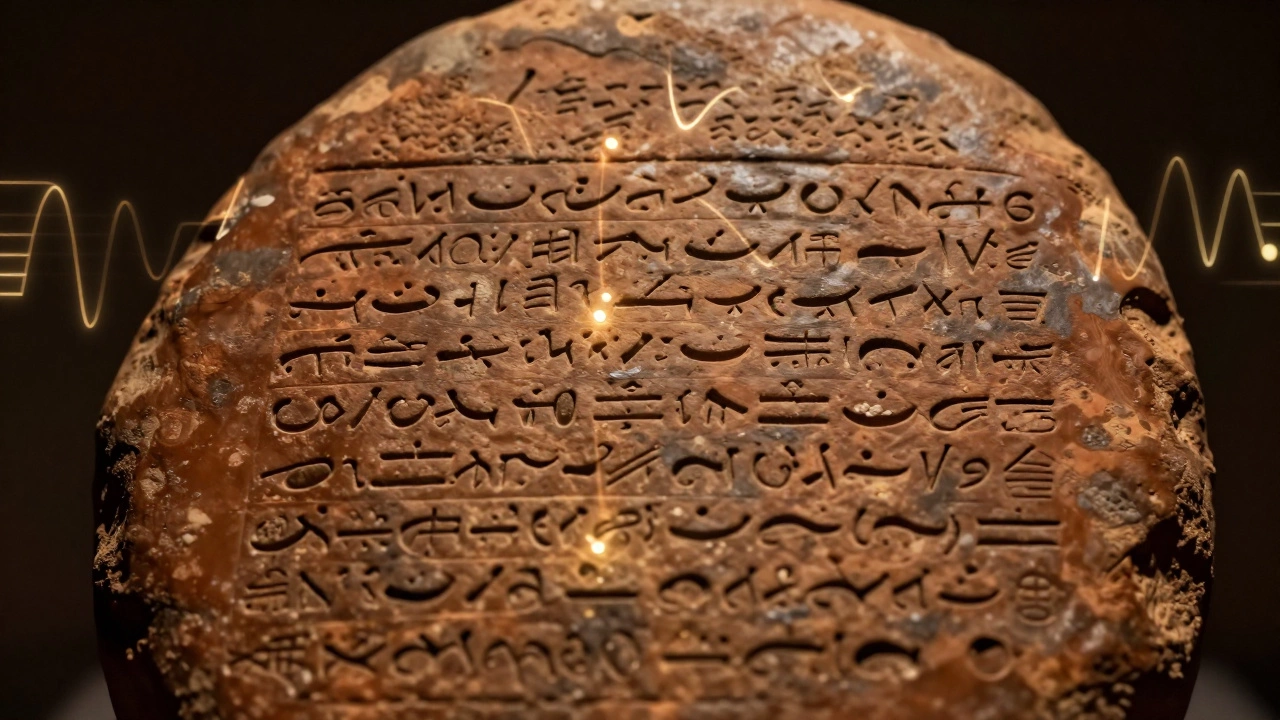
This hymn dates back to approximately 1400 BCE. It was discovered in the late 1950s during excavations at Ugarit, an ancient city-state located in modern-day Syria. The text wasn't written on paper or parchment but etched onto four clay tablets using cuneiform script. These tablets were part of a larger collection of musical instructions known as the Ugaritic music theory texts.
Why is this significant? Before this discovery, scholars had fragments of Greek music theory and some Egyptian depictions of musicians, but nothing that told us exactly *what* notes to play. The Hurrian Hymn provides both the lyrics (a prayer to the goddess Nikkal) and the musical notation. Researchers like Anne Draffkorn Kilmer and later Michael Levy worked to decipher these symbols. They determined that the notation indicated intervals-how far apart the notes were-rather than absolute pitches. This means we know the shape of the melody, even if we can't be 100% sure of the exact starting note.
You can actually listen to reconstructions of the Hurrian Hymn today. It sounds hauntingly simple, often played on lyres or flutes. It proves that by 1400 BCE, complex musical composition was already a formalized art form in the Near East.
The Oldest Physical Instrument: The Divje Babe Flute
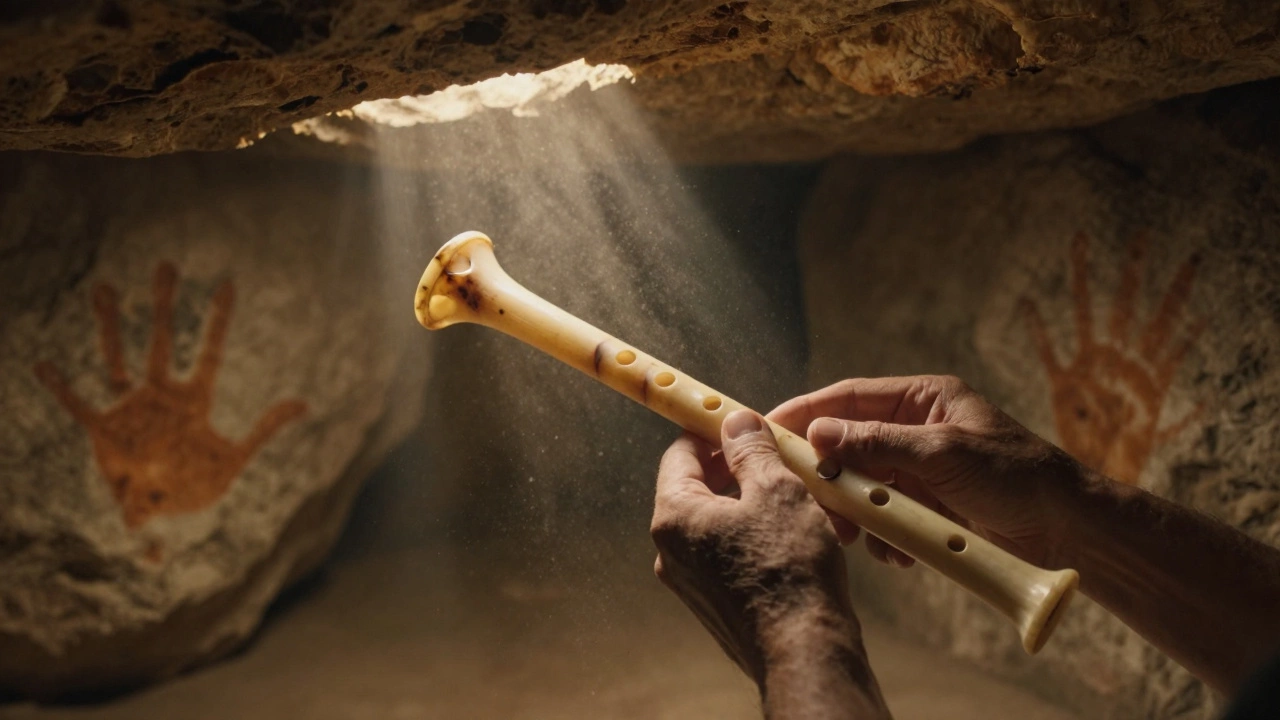
Written music requires literacy. Instruments do not. This brings us to the realm of archaeology, where we look for physical objects designed to create sound. The most famous candidate for the oldest musical instrument is the Divje Babe flute, which is a cave bear femur with two holes pierced through it, found in Slovenia.
Discovered in 1995 in the Divje Babe cave near Cerkno, Slovenia, this artifact is attributed to Neanderthals, dating back roughly 43,000 to 67,000 years. The bone has two distinct perforations and one broken end that may have served as a mouthpiece. Proponents argue that the spacing of the holes corresponds to musical intervals, suggesting it was used to play a scale.
However, this claim is fiercely debated. Many paleontologists argue that the holes were made by the teeth of a carnivore, likely a hyena or a wolf, gnawing on the bone. When animals chew bones, they often leave puncture marks that can look surprisingly regular. If the Divje Babe flute is just a chewed bone, it doesn't count as music.
A less controversial contender comes from Germany. The Geißenklösterle flutes are flutes made from vulture wing bones and mammoth ivory found in the Swabian Jura region.
Dated to about 42,000 years ago, these artifacts are widely accepted by the scientific community as true musical instruments. They were crafted by early Homo sapiens who had recently migrated into Europe. The precision of the holes and the uniformity of the bore suggest intentional design. These flutes could play pentatonic scales, indicating that early humans didn't just make random noises; they understood structure and harmony.
Before Instruments: The Human Voice and Body Percussion
Here is the catch: instruments rot. Wood decays, reeds dry up, and skin drums disintegrate. The oldest *possible* music wouldn't leave any physical trace at all. It would be vocal music.
Anthropologists and evolutionary biologists believe that music predates tools. Long before we carved flutes out of bird bones, our ancestors were likely humming, chanting, and clapping. Why? Because music serves social functions. It binds groups together, synchronizes movement during hunting or dancing, and helps soothe infants.
Some researchers point to the development of the FOXP2 gene, which is a gene associated with speech and language development in humans. Mutations in this gene appeared around 200,000 years ago, coinciding with the emergence of anatomically modern humans. While FOXP2 is primarily linked to speech, many experts argue that speech evolved from musical protolanguage-a system of communication based on tone, rhythm, and emotion rather than syntax. In this view, the first music was simply emotional vocalization.
We see echoes of this in modern indigenous cultures. For example, Aboriginal Australians have oral traditions that date back tens of thousands of years. Their "Songlines" are maps of the land encoded in song. While we cannot prove these songs existed 40,000 years ago, the continuity suggests that vocal music is as old as human culture itself.
Why Did Music Evolve? The Functions of Early Sound
Understanding *when* music started helps, but understanding *why* gives us context. Evolutionary psychologists propose several theories for why early humans developed music:
- Social Cohesion: Singing together releases oxytocin, the bonding hormone. Groups that sang together were more cohesive and better at cooperating against rivals.
- Mating Display: Similar to birdsong, complex vocal abilities might have signaled genetic fitness to potential mates.
- Pain Management: Rhythmic drumming and chanting can alter brain states, potentially helping shamans or healers manage pain or induce trance states for ritual purposes.
- Cognitive Development: Processing rhythm and pitch engages multiple areas of the brain. Music may have helped develop neural pathways that later supported complex language.
In short, music wasn't a luxury for early humans. It was a survival tool. It helped them organize, communicate, and cope with the harsh realities of the Stone Age.
Comparison of Key Candidates
| Candidate | Approximate Date | Type | Evidence Status |
|---|---|---|---|
| Vocal Protolanguage | 200,000+ years ago | Human Voice | Theoretical / Biological inference |
| Divje Babe Flute | 43,000-67,000 years ago | Bone Artifact | Controversial (possibly animal damage) |
| Geißenklösterle Flutes | ~42,000 years ago | Bone/Ivory Instrument | Accepted by most scientists |
| Hurrian Hymn No. 6 | ~1400 BCE | Written Notation | Factual / Reconstructible |
The Role of Ritual and Shamanism
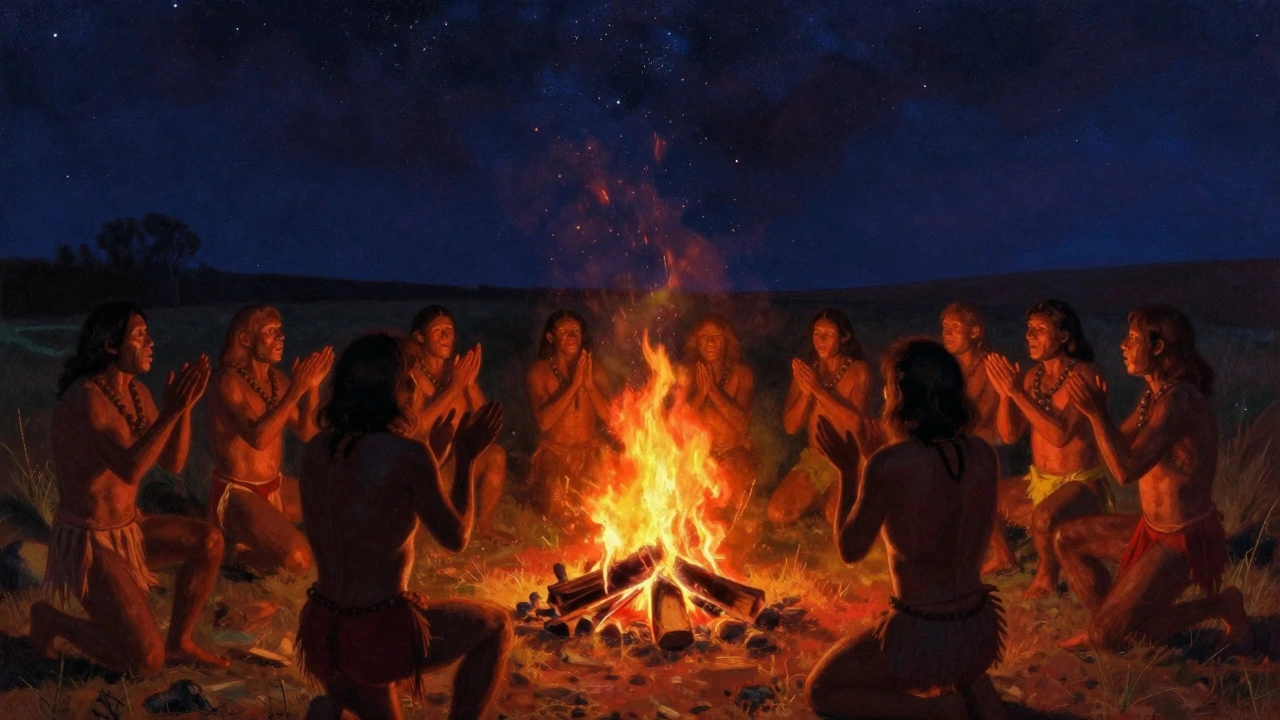
We must also consider the context in which early music was performed. It likely wasn't performed in concert halls. It happened in caves, around fires, and during rituals. Archaeological sites often show signs of ceremonial use, such as ochre deposits or arranged stones, which may have accompanied musical performances.
Shamanistic practices, found in almost every ancient culture, rely heavily on repetitive drumming and chanting to induce altered states of consciousness. If we assume that shamanism is an ancient human trait, then rhythmic percussion is likely one of the earliest forms of instrumental music. Drums made from stretched animal hides would have been easy to construct but difficult to preserve archaeologically. However, rock art in places like South Africa and Australia depicts figures holding sticks or playing drums, suggesting their presence millennia ago.
Conclusion: There Is No Single Answer
So, what is the first music in the world? If you want a tangible object you can hold, it’s the Geißenklösterle flutes from 42,000 years ago. If you want a specific melody you can sing, it’s the Hurrian Hymn from 3,400 years ago. But if you accept that music is a fundamental human behavior rooted in biology and social need, then the first music was likely a Neanderthal or early Homo sapien humming a tune while looking at the stars, leaving no trace behind except the echo in our DNA.
The search for the first music reminds us that sound is ephemeral. We are lucky to have the clay tablets and the bone flutes. They are rare windows into a past that was otherwise silent. As we continue to dig and decode, we may find older artifacts. But until then, the mystery remains part of the charm.
Is the Hurrian Hymn really the oldest song?
Yes, the Hurrian Hymn No. 6 is considered the oldest substantially complete piece of written music notation. Dated to around 1400 BCE, it was found on clay tablets in Ugarit, Syria. While there are older fragments of musical notation, this hymn is the most complete, allowing researchers to reconstruct the melody.
Did Neanderthals make music?
It is highly likely. The Divje Babe flute, found in Slovenia, is attributed to Neanderthals and dates back up to 67,000 years. However, its status as a musical instrument is debated, as some experts believe the holes were made by animal teeth. Regardless, Neanderthals had the cognitive capacity for symbolic thought and likely used vocalizations and simple percussion.
What is the oldest known musical instrument?
The oldest widely accepted musical instruments are the flutes from the Geißenklösterle cave in Germany, dated to approximately 42,000 years ago. Made from vulture wing bones and mammoth ivory, they demonstrate sophisticated craftsmanship and an understanding of musical scales.
Why is it hard to find ancient music?
Most early musical materials were organic, such as wood, skin, and plant fibers, which decompose quickly over time. Only durable materials like bone, stone, and clay survive in the archaeological record. Additionally, music is an auditory experience; without recording technology, melodies are lost unless they are written down, which only happened relatively recently in human history.
Can we hear the Hurrian Hymn today?
Yes, musicians and scholars have created audio reconstructions of the Hurrian Hymn. While the exact instrumentation and tuning are speculative, the melodic structure is preserved in the cuneiform notation. You can find recordings online that interpret the hymn using ancient-style lyres or flutes.
Was music used for rituals in ancient times?
Almost certainly. Anthropological evidence suggests that music played a central role in religious and social rituals. Drumming and chanting were likely used to induce trance states, facilitate healing ceremonies, and strengthen community bonds among early human groups.