Color Emotion Calculator
How Colors Feel
Discover the emotional impact of your color combinations based on abstract art principles from the article.
Abstract art doesn’t follow the same rules as a landscape or a portrait. There’s no right way to draw a tree, no correct perspective for a face. That’s why people often walk away from an abstract painting thinking, My kid could do that. But here’s the truth: abstract art isn’t about skill in reproduction-it’s about intention, emotion, and structure. And yes, there are rules. Just not the ones you learned in high school art class.
There Are No Rules About What to Paint
One of the biggest misunderstandings about abstract art is that it’s random. That you just throw paint at a canvas and call it done. But randomness without direction is chaos, not art. Abstract artists don’t paint because they can’t draw. They paint because they want to say something that can’t be said with recognizable shapes.
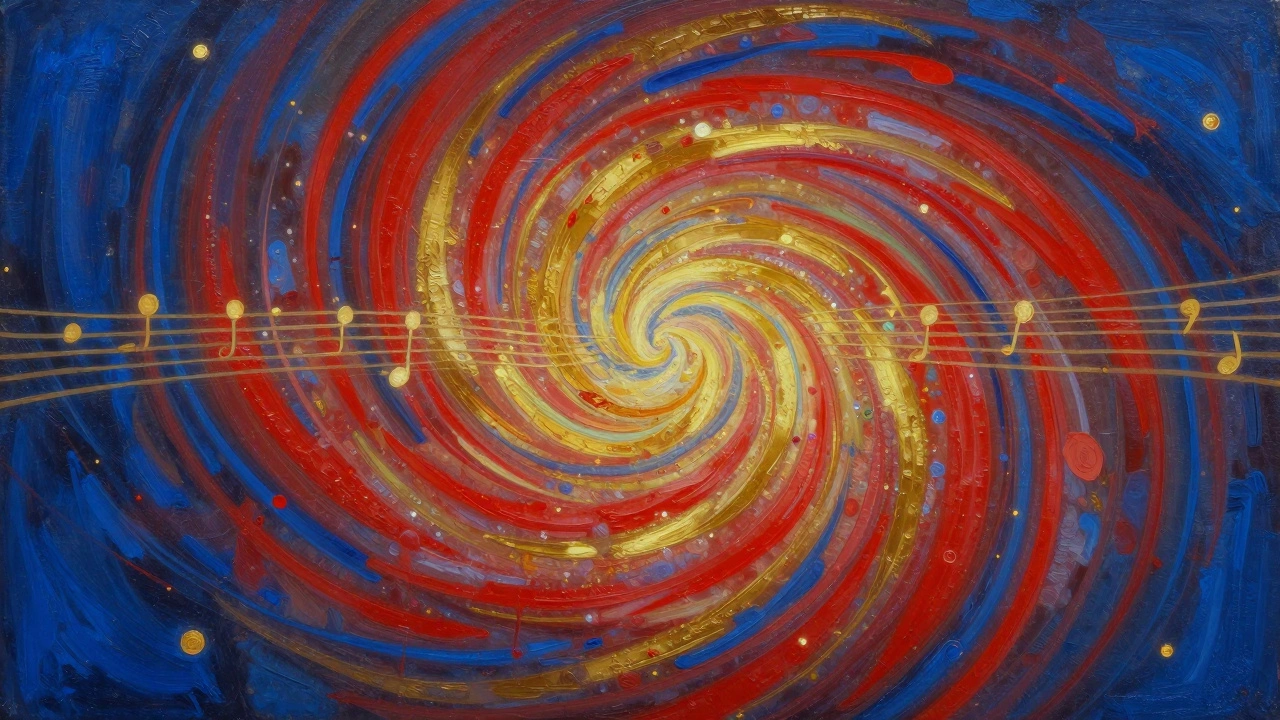
Take Wassily Kandinsky. He didn’t wake up one day and decide to make blobs of color. He was deeply influenced by music, spirituality, and the idea that color could move the soul the way a violin note does. His 1910 painting Composition VII isn’t a mess-it’s a symphony in paint. Every swirl, every slash, every dot has weight and rhythm. The rule? Abstract art must have purpose, even if that purpose isn’t literal.
That’s why you’ll never see a serious abstract artist say, I just felt like splattering red. They might feel like it-but they also know why the red matters. Red might mean urgency. Or pain. Or energy. The subject isn’t the object. The subject is the feeling.
Composition Still Matters
Even without trees or people, abstract art still needs balance. It still needs movement. It still needs a place for the eye to rest and a path to follow.
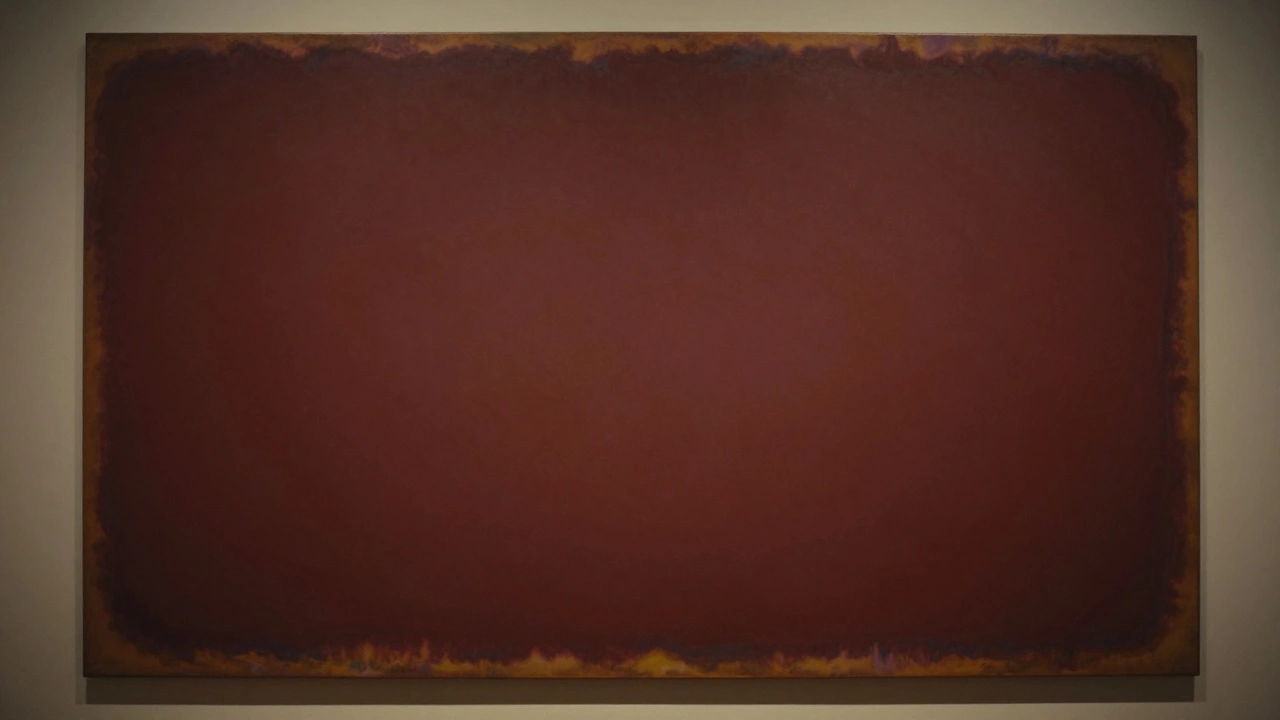
Mark Rothko’s large color fields-huge rectangles of soft-edged color-look simple. But look closer. The edges aren’t crisp. The colors bleed slightly into each other. The paint is layered, sometimes dozens of times. The size of the canvas forces you to stand back, then step in. You don’t just see the color-you feel it. That’s composition. That’s control.
So what are the compositional rules? Not hard-and-fast ones, but guiding principles:
- Balance isn’t always symmetrical. Asymmetry can feel more alive.
- Contrast creates tension. A dark shape next to a light one pulls your eye.
- Repetition builds rhythm. A repeated shape, even if slightly changed, gives structure.
- Space is part of the painting. Empty areas aren’t mistakes-they’re breathing room.
Think of it like jazz. A saxophone solo might sound wild, but it only works because the bass and drums are holding the structure underneath. Abstract art is the same. The freedom exists because the foundation is strong.
Color Isn’t Decorative-It’s Emotional
Color in abstract art isn’t about realism. It’s not about making a sky blue or grass green. It’s about how color makes you feel.
Henri Matisse once said, Color is my day-long obsession, joy, and torment. He didn’t use color to copy nature. He used it to create mood. His 1911 painting The Red Studio is almost entirely red. Furniture, walls, even the floor. But it doesn’t feel overwhelming. It feels alive. Why? Because he used variations of red-warm, cool, muted, bright-and let the brushstrokes carry energy.
Here’s what works:
- Warm colors (red, orange, yellow) pull forward. They feel urgent, loud, intense.
- Cool colors (blue, green, purple) recede. They feel calm, distant, introspective.
- Neutral tones (gray, beige, black, white) don’t shout-but they anchor everything.
- Clashing colors (like orange and blue) create energy. Harmonious colors (like blue and green) create peace.
There’s no rule that says you must use only three colors. But if you use ten, you better have a reason. Too many colors without control turn into noise.
Texture Tells the Story
Abstract art isn’t flat. Even if it looks smooth, there’s often a story in the surface.
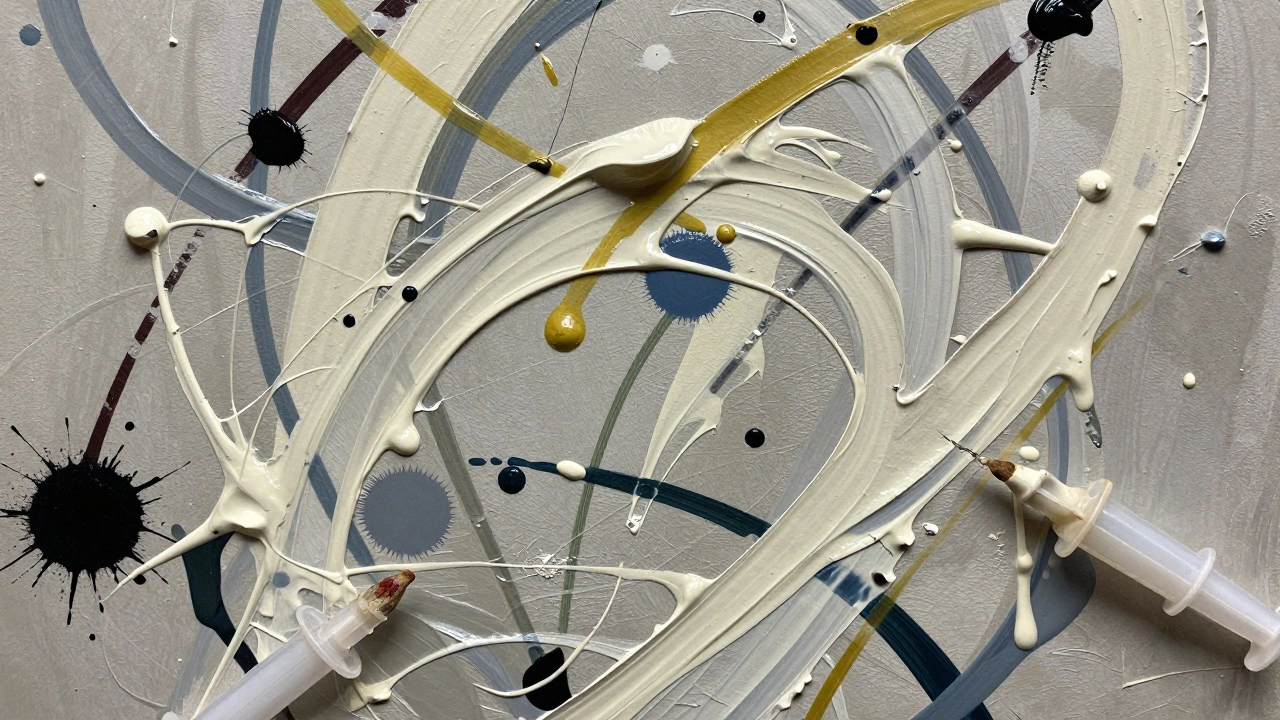
Jackson Pollock’s drip paintings look like spilled paint. But if you stand inches away, you’ll see the thickness of the paint, the way it dripped and hardened, the layers built up over weeks. He didn’t just fling paint-he controlled the speed, the angle, the viscosity. He used sticks, trowels, even basting syringes. The texture wasn’t an accident. It was part of the message: raw, chaotic, human.
Texture can be:
- Smooth and glassy (like a Rothko)
- Rough and scraped (like Anselm Kiefer)
- Thick and layered (like Franz Kline)
- Embedded with sand, fabric, or metal (like Robert Rauschenberg)
Texture adds physical presence. It says: This wasn’t made on a computer. This was made by hands. That matters. Abstract art often fights against the coldness of modern life. Texture brings it back to the body.
Intent Over Technique
Many people think abstract art is about technique. That if you can splatter paint perfectly, you’re an artist. But technique is just a tool. The real question is: Why did you make this?
Take Hilma af Klint. She painted abstract works in 1906-nearly a decade before Kandinsky. Her paintings were full of spirals, glyphs, and symbolic shapes. But she didn’t show them publicly. She believed they were meant for a future generation, a spiritual message. Her intent wasn’t to be famous. It was to communicate something beyond language.
That’s the core rule: Abstract art must come from a place of meaning, not just aesthetics.
It’s easy to mimic the look. But if you don’t know why you’re using that color, that shape, that texture-you’re just decorating. And decoration doesn’t last.
It’s Not About What You See-It’s About What You Feel
When you stand in front of an abstract painting, don’t ask: What is this? Ask: How does this make me feel?
Does it make you anxious? Calm? Excited? Confused? Sad? That’s the answer. Abstract art doesn’t explain. It responds.
There’s no correct interpretation. A Rothko might feel like a sunset to one person and like grief to another. Both are right. The painting doesn’t dictate. It invites.
That’s why abstract art can be so powerful. It doesn’t tell you what to think. It lets you feel what you feel.
What Makes Abstract Art Last?
Not every abstract painting becomes famous. Most don’t. So what separates the ones that endure?
They have:
- Consistency in voice-the artist has a recognizable language
- Depth in layering-both visually and emotionally
- Authenticity-no copying trends, no chasing market tastes
- Time-many great abstract works were ignored in their time
Gerhard Richter painted photorealistic portraits one year and abstract squeegee paintings the next. He didn’t follow a trend. He followed his curiosity. That’s why his work still matters.
Abstract art doesn’t need to be understood. It needs to be experienced. And the ones that stick with you? They stay because they feel true.
Do you need to know how to draw to make abstract art?
No. Many abstract artists never learned traditional drawing. But they did learn how to see-how to notice how color behaves, how shapes interact, how space feels. Drawing is a skill. Seeing is a practice. You can develop seeing without ever holding a pencil to paper.
Is abstract art just random splatters?
Some is-but most serious abstract art isn’t. Randomness without intention is just mess. Artists like Jackson Pollock or Helen Frankenthaler used controlled chaos. They knew exactly how the paint would flow, how the canvas would absorb it, how layers would build. It looks spontaneous, but it’s deeply planned.
Why do galleries charge so much for abstract art?
Not because it’s easy to make. Because it’s hard to do well. The best abstract art carries decades of thinking, experimentation, and emotional honesty. A painting might take three weeks to make-but it’s built on ten years of looking, failing, and refining. You’re paying for that depth, not just the paint.
Can anyone call their art abstract?
Yes. But not everyone’s art becomes meaningful. Calling something abstract doesn’t make it art. Art needs presence-something that holds your attention, makes you pause, makes you feel something. If it doesn’t do that, it’s decoration. And decoration doesn’t change how people see the world.
What’s the difference between abstract art and modern art?
Abstract art is a style. Modern art is a period. Modern art includes abstract art, but also cubism, surrealism, expressionism, and more. All abstract art made between 1900 and 1970 is modern art. But not all modern art is abstract. Think of it like this: all squares are rectangles, but not all rectangles are squares.