Contemporary Art Recognition Checker
How to Use This Tool
Enter details about an artwork to determine if it qualifies as contemporary art based on criteria from the article. The tool will assess the artwork against the key criteria and provide a clear explanation of why it does or does not qualify.
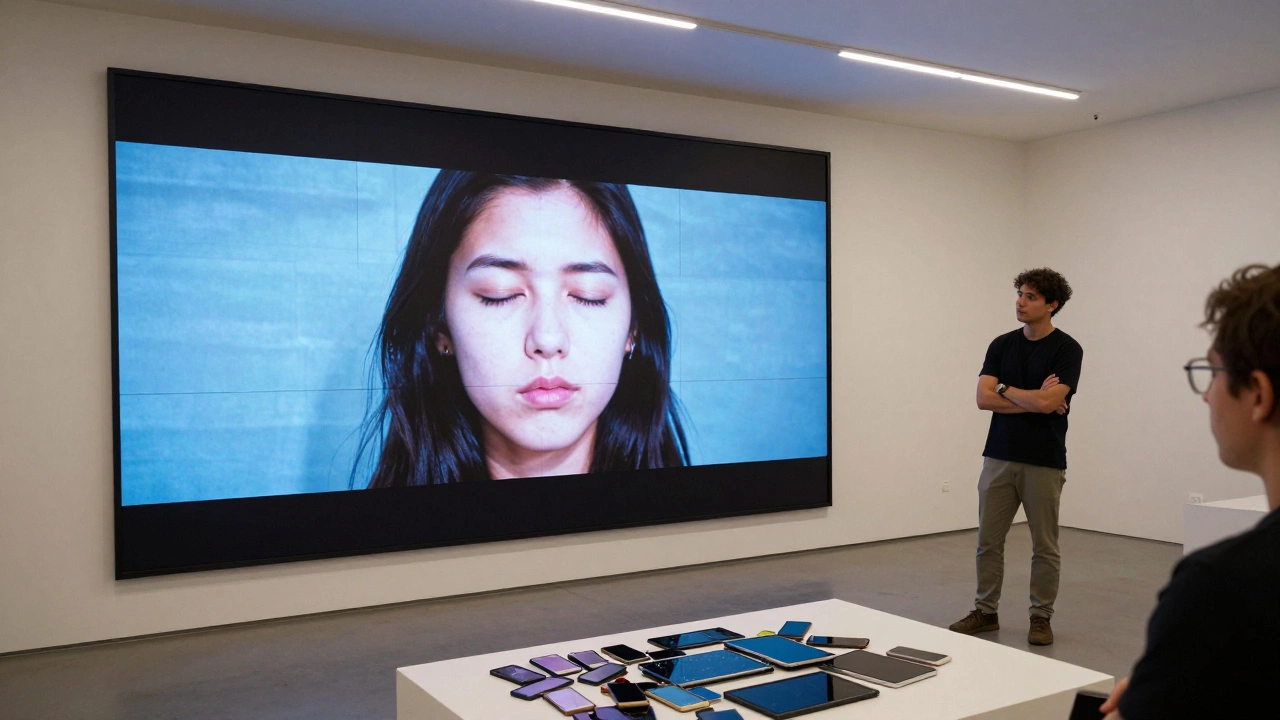
Contemporary art isn’t just art made recently. It’s not the same as modern art. And if you walk into a gallery and see a painting that looks like it could be from the 1980s-or a sculpture made of trash, or a video loop of someone blinking-you might wonder: is this really contemporary art? Or just weird?
The truth is, you don’t need a degree to spot contemporary art. You just need to know what to look for. And it’s not about style, technique, or even how much it costs. It’s about context, intent, and timing.
It was made after 1970
The simplest rule? Contemporary art refers to work made after 1970. That’s the widely accepted cutoff. Before that? Modern art. After? Contemporary.
This isn’t arbitrary. The shift happened because the art world changed. In the 1970s, artists stopped chasing beauty or perfection. They started asking questions: Who owns art? What counts as a medium? Can a chair be a sculpture? Can a video be a painting?
If you see a piece dated 1969? It’s modern. 1971? Contemporary. No gray area. The date is your first clue.
It engages with today’s world
Contemporary art doesn’t hide from the world-it argues with it. You’ll find work that tackles climate change, identity, surveillance, migration, or social media. It doesn’t just reflect culture. It critiques it.
Look at Yoko Ono’s Cut Piece (1964) versus a 2023 installation by a young artist who uses AI-generated faces to expose racial bias in facial recognition software. Both are provocative. But only the second is rooted in current tech, policy, and public anxiety. That’s contemporary.
Ask yourself: Does this piece feel like it could only exist right now? If yes, it’s likely contemporary. If it feels timeless, or like it could’ve been made in 1950, it probably isn’t.
It uses unconventional materials or methods
Contemporary artists don’t wait for permission. They use what’s available: plastic bags, smartphone footage, recycled electronics, live data streams, even social media comments.
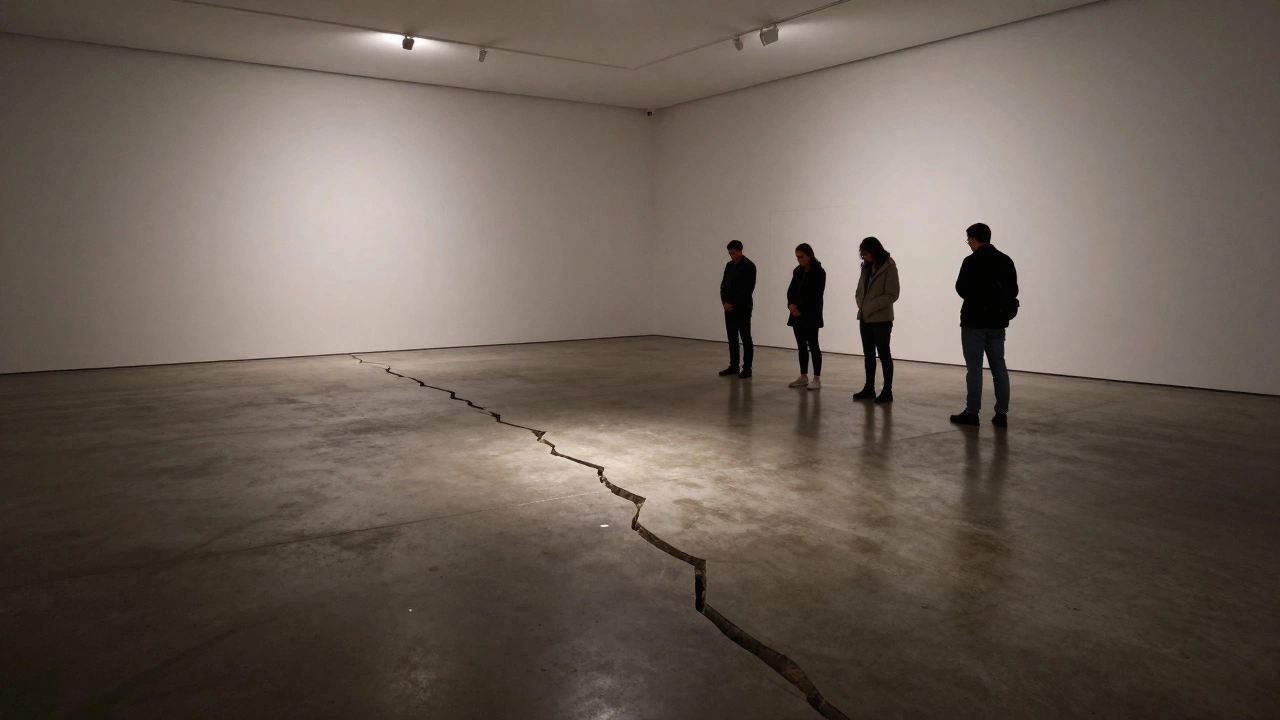
Think of Olafur Eliasson’s The Weather Project (2003) at Tate Modern-a giant sun made of lamps and mist that filled a hall. Or Doris Salcedo’s Shibboleth (2007), a 167-meter crack in the floor of the Tate’s Turbine Hall. Neither used traditional paint or clay. Both responded to urgent ideas: climate, division, exclusion.
If an artwork looks like it was made from something you’d find in a landfill, a computer, or a protest sign-it’s probably contemporary. The medium is part of the message.
It challenges what art even is
Modern art broke rules. Contemporary art asks: Why do we have rules?
Marcel Duchamp’s urinal, Fountain (1917), shocked the art world. But today, you’ll see whole exhibitions where the artwork is a tweet, a meme, or a person sitting silently in a room for eight hours. These aren’t jokes. They’re serious questions about value, presence, and authorship.
Contemporary art often asks: Can art be an action? A conversation? A protest? A website? A glitch?
If you walk away from a piece wondering, "Is this even art?"-you’re probably looking at contemporary work. The discomfort is part of the point.

It’s made by living artists (or artists who died recently)
Contemporary art is almost always made by artists who are alive-or who died after 1970. If the artist died in 1965, their work from the 1950s is modern. Even if they made it in 1969, it’s still classified as modern.
Take Jean-Michel Basquiat. He died in 1988. His work from the 1980s? Contemporary. Why? Because he was active after 1970, and his work engaged with the issues of his time: race, power, urban decay.
But if you see a 1950s abstract painting by Jackson Pollock? Even if it’s hanging in a new gallery, it’s still modern. The artist’s death date matters less than the period they were active and the ideas they engaged with.
It’s shown in contemporary art spaces
Where you see the work tells you a lot. Contemporary art usually appears in spaces like:
- MoMA PS1 (New York)
- Tate Modern (London)
- Centre Pompidou (Paris)
- Contemporary Art Museum (Vancouver)
- Biennales like Venice or Sydney
These places don’t just display art. They commission it. They debate it. They treat it like a live conversation.
If you see a piece in a museum with a label that says "Collection of the artist" or "Commissioned for the 2024 Biennial," it’s almost certainly contemporary. Old masters don’t get commissions. They get labels like "c. 1890."
It’s part of a larger conversation
Contemporary art doesn’t exist in a vacuum. It talks to other art, politics, science, and pop culture.
Look at the work of Kara Walker. Her silhouettes reference 19th-century slavery-but they also respond to modern racial violence, museum curation, and the erasure of Black history. She’s not just making art. She’s entering a debate.
Same with Banksy. His stencils aren’t just street art. They’re responses to capitalism, war, and surveillance. His 2018 piece Girl with Balloon, which self-shredded after auction, wasn’t just a stunt. It was a statement about value, control, and the art market.
If you can trace the artwork’s ideas to current events, movements, or debates-it’s contemporary.
It’s not about aesthetics
This is the biggest trap. People think contemporary art is ugly. Or boring. Or lazy.
But beauty isn’t the goal. Meaning is.
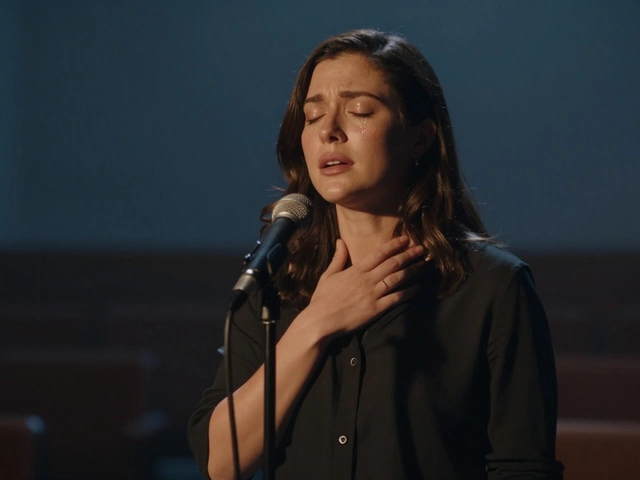
A single white canvas might be a meditation on silence. A pile of bricks might be a comment on labor. A looped video of a person crying? It might be about grief in the digital age.
You don’t need to like it. But you should ask: What is this trying to say? Who is it for? Why now?
Contemporary art isn’t about what you see. It’s about what you think after you see it.
How to check if you’re right
Here’s a quick mental checklist:
- Was it made after 1970? → Yes? Good start.
- Does it use non-traditional materials? → Yes? Likely contemporary.
- Does it respond to current social, political, or tech issues? → Yes? Strong sign.
- Is the artist alive or died after 1970? → Yes? Confirms it.
- Is it displayed in a contemporary art space? → Yes? You’re probably right.
If four out of five say yes? It’s contemporary. Three? Maybe. Two or less? You’re probably looking at modern, postmodern, or just decorative art.
Common mistakes
Many people confuse modern and contemporary. They say "That’s modern art" when it’s really contemporary. Why? Because "modern" sounds more official. But they’re not the same.
Modern art = 1880s to 1970. Think Picasso, Matisse, Mondrian. It’s about form, color, abstraction.
Contemporary art = 1970 to now. Think Ai Weiwei, Yayoi Kusama, Marina Abramović. It’s about ideas, context, and disruption.
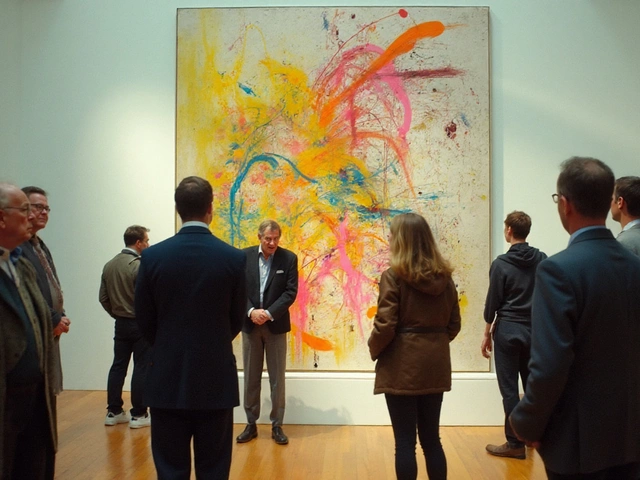
Another mistake: assuming all abstract art is contemporary. A 1960s color-field painting? Modern. A 2022 abstract painting made from AI-generated patterns? Contemporary.
And don’t be fooled by price. A $500,000 painting isn’t automatically contemporary. A $50 digital NFT might be.
Final thought
You don’t need to understand every piece of contemporary art. But you can recognize it. Look at the date. Look at the materials. Look at the context. Ask: Why now? If the answer feels urgent, personal, or strange-that’s contemporary art.
It’s not about being pretty. It’s about being present.
Is contemporary art the same as modern art?
No. Modern art covers work from roughly 1880 to 1970, including artists like Picasso and Pollock. Contemporary art refers to work made after 1970. The difference isn’t just time-it’s intent. Modern art focused on innovation in form and style. Contemporary art focuses on ideas, identity, and social context.
Can something be contemporary if it looks like it’s from the 1980s?
Yes. Contemporary art isn’t about looking "new." It’s about being made after 1970 and engaging with the world of its time. A 1985 video installation using CRT monitors is still contemporary because it reflects the tech and culture of that era. The past, when viewed through the lens of its moment, is still part of the contemporary conversation.
Do I need to like contemporary art to recognize it?
No. You don’t have to enjoy it. Many people find contemporary art confusing, frustrating, or even offensive. But recognition isn’t about taste-it’s about context. If the artwork was made after 1970, uses unconventional materials, and responds to current issues, it’s contemporary-even if it makes you roll your eyes.
Are digital art and NFTs considered contemporary?
Yes. Digital art, NFTs, generative algorithms, and interactive web pieces are all firmly within contemporary art. They use today’s tools to explore today’s questions: ownership, identity, data, and the blurring of real and virtual. Institutions like the Guggenheim and Tate now collect and exhibit digital works as core parts of their contemporary collections.
Why does the date after 1970 matter so much?
Because 1970 marked a turning point. Artists stopped trying to create timeless masterpieces. They started making work that responded directly to politics, technology, and social change. The rise of conceptual art, performance, video, and installation shifted the focus from the object to the idea. That shift defines contemporary art. Before 1970, art was mostly about form. After? It’s about meaning.