Portrait Element Strength Calculator
Select the elements you'd like to include in a faceless portrait. The calculator will determine how effectively these elements capture a person's identity based on artistic principles discussed in the article.
Portrait Elements
Mentioned as showing "what faces forget" - conveys emotion, occupation, and personality.
How someone stands or sits reveals their state of mind and character.
The space around a person tells stories about their life and experiences.
Items that belong to the person carry history and emotional weight.
What someone wears reveals their personality, profession, and cultural context.
How light falls on a scene creates mood and highlights emotional depth.
Portrait Strength Assessment
When you think of a portrait, what comes to mind? A detailed face, eyes locking onto yours, the curve of a smile, the shadow under a chin? For centuries, that’s been the default. But in modern art, portraits don’t need to show a face at all-and they’ve been doing just that for over a century. So, do portraits have to show the face? The answer is no. Not anymore. Not ever, really. The face is just one way to capture a person.
What makes a portrait a portrait?
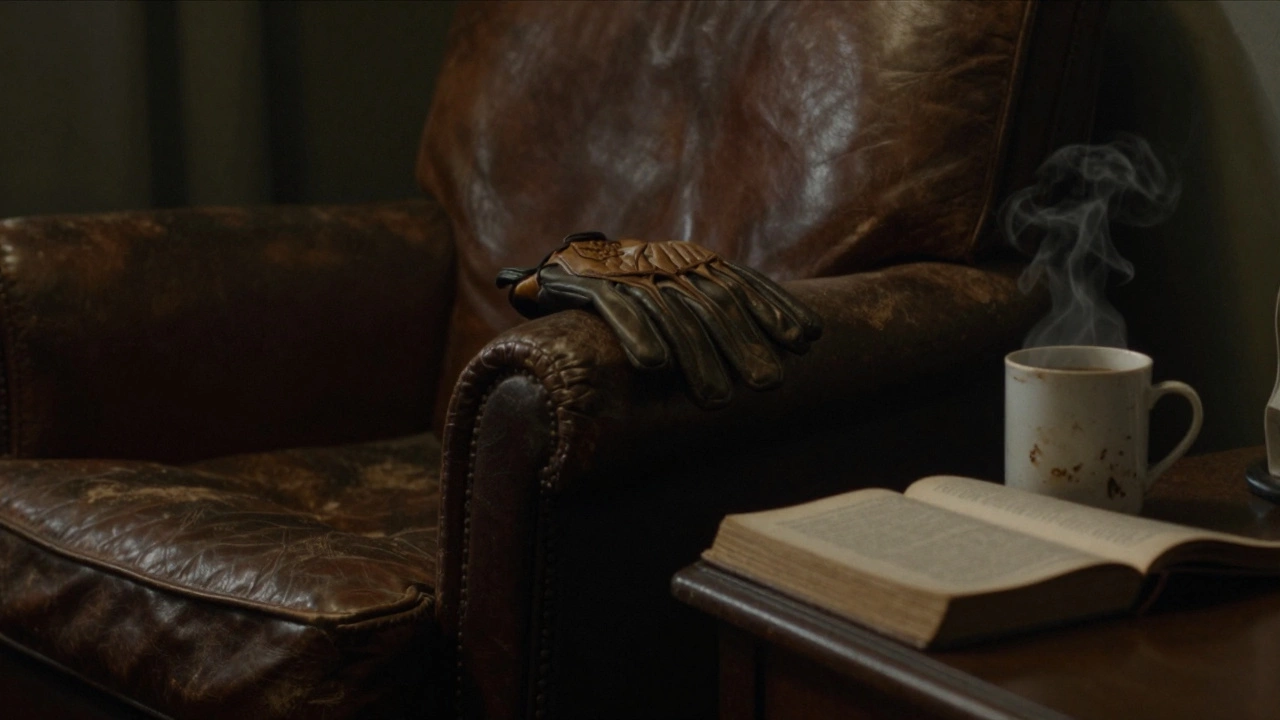
A portrait isn’t a photo of someone’s face. It’s not even necessarily a likeness of their features. A portrait is a representation of a person-intentional, meaningful, and focused on their identity. That identity can live in their hands, their posture, their environment, or even the objects they leave behind. Think of it this way: if you walked into someone’s home and saw their worn-out boots by the door, their coffee mug with a chip on the rim, and a single glove on the armchair-you’d know who lived there. That’s a portrait.
Artists like Lucian Freud and Alice Neel built careers on capturing the raw, unfiltered essence of their subjects. But others, like Edward Hopper and Georgia O’Keeffe, told stories without ever showing a face. Hopper’s Nighthawks has three people, and not one of them has a clear facial expression. Yet, you feel their loneliness. O’Keeffe’s Black Cross, New Mexico isn’t a person, but it’s a portrait of a spiritual presence, of a landscape that held meaning for someone she knew.
Historical examples of faceless portraits
The tradition of painting people without showing their faces goes back further than you might think. In 17th-century Dutch portraiture, artists like Rembrandt often painted figures in profile or in shadow, focusing on gesture and light rather than facial detail. A hand resting on a book, a turned shoulder, the way fabric folds around an elbow-these were enough to suggest character.
In the 19th century, photographers like Julia Margaret Cameron began experimenting with blurred faces, soft focus, and partial views. She once said, “I long to catch the soul, not the features.” Her portraits of Alfred, Lord Tennyson often showed only his back, his head bowed, his hands clasped. No face. But you feel his presence.
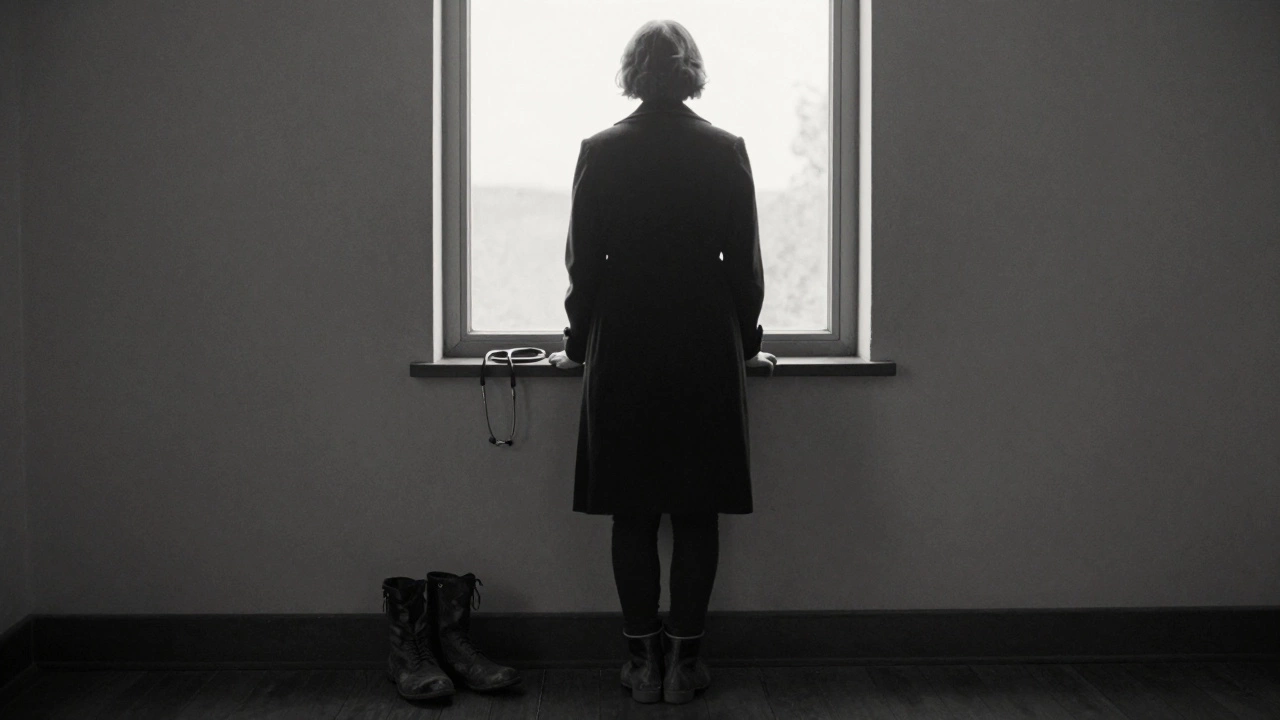
Then came the 20th century. Pablo Picasso’s Portrait of Dora Maar fractures the face, but doesn’t erase it. Others, like Francis Bacon, painted figures in cages, distorted, screaming-but never clearly identifiable. And then there’s Portrait of a Man by Andrew Wyeth, where the subject is seen from behind, standing at a window, looking out. You don’t see his eyes. But you know he’s thinking.
Modern faceless portraits in practice
Today, artists are pushing this further. In 2020, the Tate Modern exhibited a series called Absence, where 12 portraits showed only clothing, shoes, and personal items belonging to the subject. One was a woman who worked as a nurse. Her portrait? A stack of scrubs, a stethoscope draped over a chair, and a half-drunk cup of tea. No face. But you know who she was.
Contemporary painter Kerry James Marshall creates portraits using silhouettes. His subjects are Black Americans, rendered in deep black paint against bright backgrounds. Their faces are gone-but their posture, their stance, their clothing, their surroundings scream identity. He doesn’t hide their humanity. He amplifies it.
Even fashion photography has embraced this. In campaigns for brands like Yves Saint Laurent and Jil Sander, models are shot from behind, in motion, with their heads cropped out. The focus isn’t on their beauty-it’s on the feeling, the mood, the energy of the moment.
How to create a portrait without a face
If you’re trying to paint or photograph a person without showing their face, here’s how to make it work:
- Focus on gesture. A clenched fist, a hand in a pocket, arms crossed-these tell you more than a smile ever could.
- Use environment. What’s in the room? What’s on the table? A half-read book, a child’s toy, a single flower in a vase-these are clues.
- Play with light and shadow. A faceless figure lit from below can feel mysterious. One in silhouette can feel monumental.
- Include personal objects. A wedding ring, a cracked phone screen, a worn-out wallet-these carry history.
- Leave space. Empty space around a figure can be as powerful as detail. It invites the viewer to fill in the gaps.
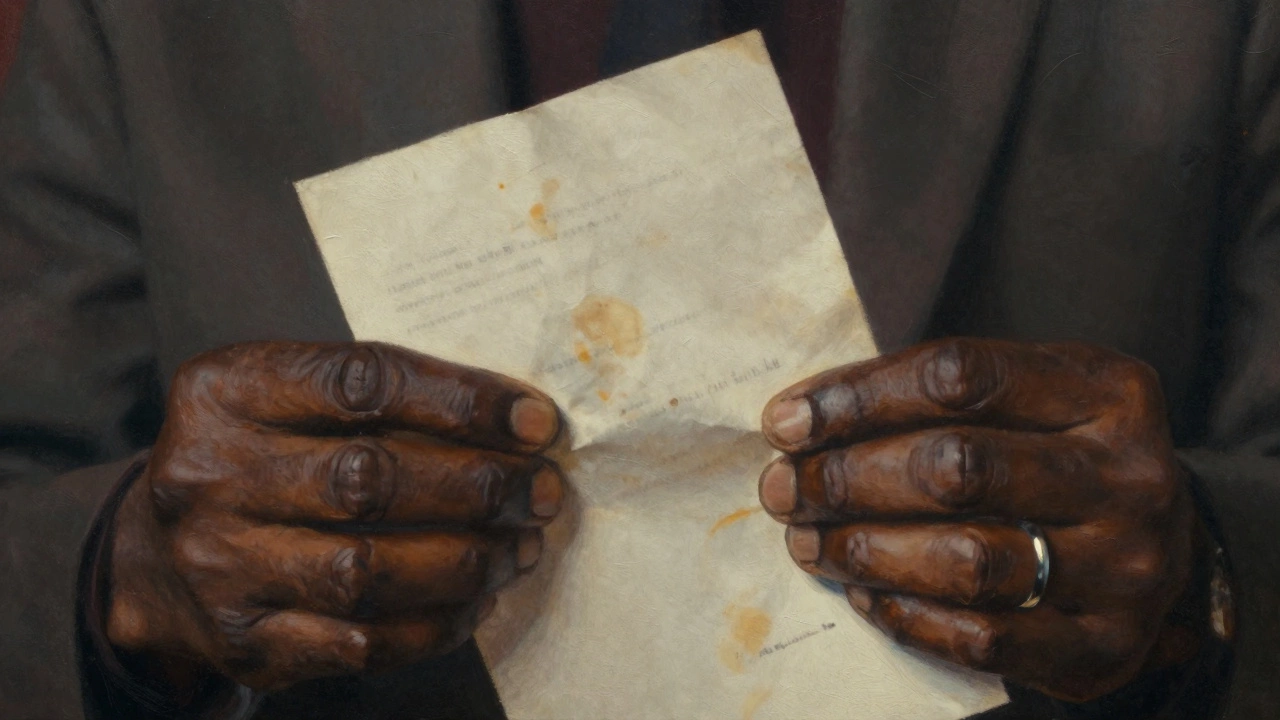
One artist I know paints only hands. She says, “Hands remember what faces forget.” She once painted a man’s hands holding a letter he never sent. The ink smudged. The paper was wrinkled. The fingers were calloused. You didn’t need to see his face to know he was grieving.
Why this matters
Faceless portraits challenge the idea that identity is something you can capture in a snapshot. They remind us that people are more than their features. A face can be copied. A voice can be recorded. But the quiet habits, the unspoken routines, the way someone holds their coffee-that’s what stays with you.
When you paint someone without showing their face, you’re not hiding them. You’re asking the viewer to look deeper. To pay attention to what’s left unsaid. To trust that a person’s essence can live in a gesture, a shadow, a single object.
Portraits have always been about connection. Not recognition. Not perfection. Not even likeness. Connection. And connection doesn’t need eyes to exist.
What you lose-and what you gain
Yes, removing the face means losing some immediacy. You won’t get the shock of a gaze, the warmth of a smile. But you gain something rarer: mystery. Depth. Time. A face tells you who someone is right now. A hand, a chair, a coat left on a hook tells you who they’ve been, what they’ve carried, what they’ve lost.
Think of Vincent van Gogh’s The Chair. No person. Just a simple wooden chair, a pipe, and a candle. But it’s one of the most human paintings he ever made. You feel his solitude. You feel his presence. You feel him.
That’s the power of a faceless portrait. It doesn’t show you a person. It makes you remember one.
Can a portrait be a painting of just an object?
Yes. A portrait doesn’t have to show a person at all. It can show objects that belong to them-clothing, tools, furniture, letters. These items carry the weight of their identity. A single pair of boots, a half-empty glass, a child’s drawing pinned to the wall-these are portraits in disguise. They tell stories without words.
Is a silhouette considered a portrait?
Absolutely. Silhouettes have been used as portraits since the 18th century. They strip away detail to focus on shape and posture. Kerry James Marshall and other contemporary artists use silhouettes to emphasize presence over appearance. The lack of facial features doesn’t erase identity-it highlights it in a different way.
Do faceless portraits work in photography too?
Yes. Many photographers use cropping, shadows, or distance to avoid showing faces. Diane Arbus often shot people from behind or in motion. Robert Frank’s The Americans includes countless faceless figures-drivers, workers, strangers-captured in moments that reveal more about their lives than a posed portrait ever could.
Why do artists choose to hide the face?
Artists hide the face to shift focus from appearance to essence. A face can distract with its familiarity or beauty. By removing it, the viewer is forced to look at behavior, environment, and context. It’s a way to make the viewer participate in the story, not just observe it.
Can a portrait be of someone who isn’t alive?
Yes. Portraits can honor the dead. A locked diary, a pair of glasses on a nightstand, a favorite coat hanging in the closet-these are all portraits of someone who’s gone. They don’t need to be lifelike to be true. They just need to carry memory.