Art Print Material Matcher
You spent weeks perfecting your digital file. The colors are vibrant, the contrast is sharp, and you hit print. But when you pull that sheet out of the printer, something feels off. It looks flat. It looks cheap. Why? Because you likely used standard copy paper or a generic glossy stock that wasn't built to hold ink the way fine art demands.
The material you choose does more than just carry the image; it defines the texture, depth, and longevity of your work. Choosing the wrong substrate can turn a masterpiece into a flyer. This guide breaks down exactly what materials you should use for art prints, why they matter, and how to pick the right one for your specific style without wasting money on trial and error.
Why Paper Choice Matters More Than You Think
Think of paper as the lens through which viewers see your work. If the lens is dirty or distorted, the image suffers. In the world of Fine Art Printing, the process of reproducing original artwork using high-quality inks and substrates to ensure color accuracy and durability, the substrate accounts for up to 40% of the perceived value. Cheap paper yellows quickly because it contains lignin, a component in wood pulp that reacts with oxygen. High-end papers are acid-free and often made from cotton, which ensures your print survives decades without fading or turning brown.
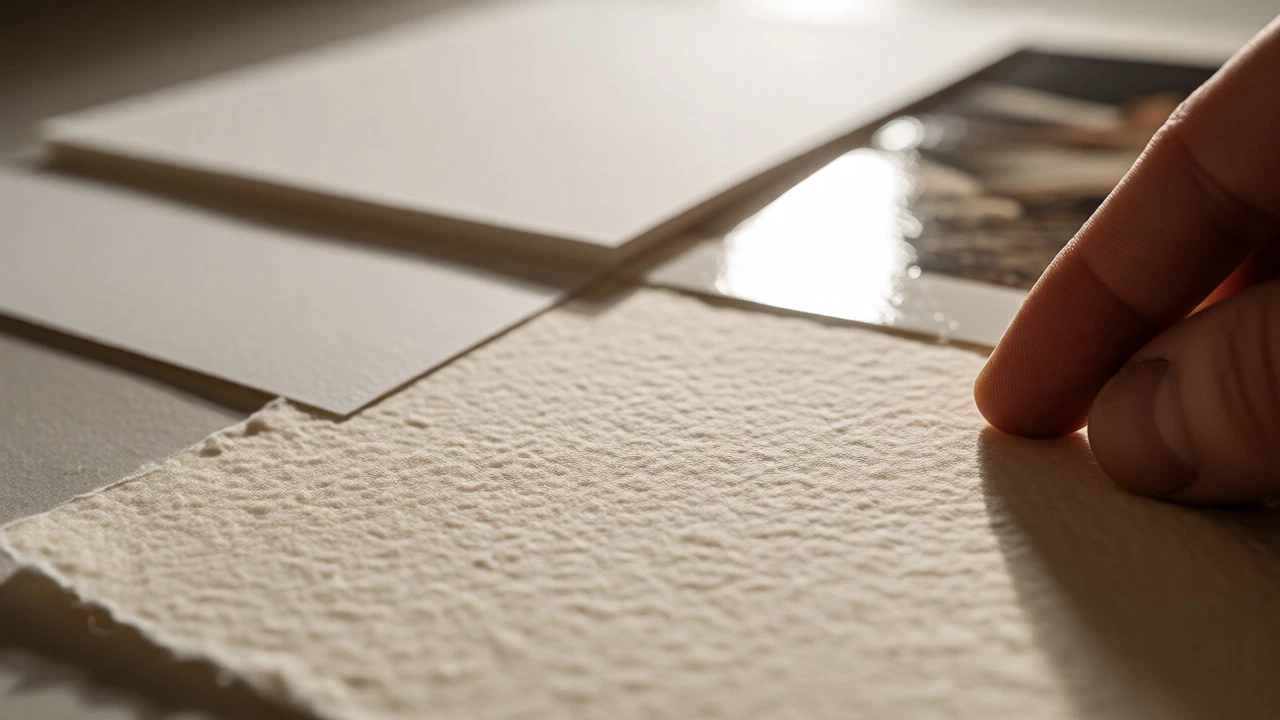
Beyond longevity, the physical feel matters. When someone holds a print, their fingers touch the surface. A smooth, coated paper feels slick and modern, while a textured, uncoated paper feels organic and traditional. This tactile feedback influences whether a buyer perceives the piece as "mass-produced" or "handcrafted."
The Big Three: Cotton Rag, Alpha-Cellulose, and Photo Glossy
Not all paper is created equal. To make sense of the options, we need to look at the three main categories available to artists today.
Cotton Rag (100% Cotton)
This is the gold standard. Brands like Hahnemühle and Canson dominate this space. Made from pure cotton linters, these papers have no wood pulp content. They are naturally white, incredibly durable, and have a distinct, soft texture. Artists love them because they absorb ink differently, allowing for rich blacks and subtle gradients. However, they are expensive. A single A3 sheet can cost $5-$10. Use this for limited editions where you want to charge premium prices.
Alpha-Cellulose (Wood-Free)
If cotton rag is too pricey, alpha-cellulose is your best friend. These papers are made from purified wood pulp where the lignin has been removed. They offer 90% of the archival quality of cotton rag at half the price. The texture is usually smoother, making them ideal for photographic works or detailed illustrations. Look for brands like Epson Premium Matte or Ilford Smooth Pearl. They provide excellent color gamut and are widely accepted by galleries.
Glossy Photo Paper
Standard photo paper is coated with chemicals to keep ink on the surface rather than letting it soak in. This creates a shiny, reflective finish with intense saturation. While great for snapshots, it’s rarely suitable for serious art prints unless you’re going for a very specific pop-art aesthetic. The downside? It reflects light aggressively, making it hard to view under glass, and it can peel if not framed properly. Avoid standard resin-coated (RC) photo paper for fine art; stick to matte or semi-gloss if you must go this route.
| Paper Type | Material Base | Texture | Archival Rating | Best For |
|---|---|---|---|---|
| Cotton Rag | 100% Cotton Linters | Textured, Soft | High (100+ years) | Limited Editions, Paintings |
| Alpha-Cellulose | Purified Wood Pulp | Smooth to Slight Texture | Medium-High (50-80 years) | Photography, Open Editions |
| Glossy Photo | Resin-Coated Paper | Slick, Reflective | Low-Medium (Varies) | Vibrant Graphics, Posters |
Matching Material to Your Art Style
Your choice shouldn’t be random. It needs to complement the visual language of your work. Here is a quick heuristic:
- Digital Photography: Go for Luster or a semi-gloss finish that reduces glare while maintaining color depth. Pure gloss creates hotspots under lights. Matte finishes can sometimes make photos look dull unless you boost contrast in editing. Luster strikes the balance.
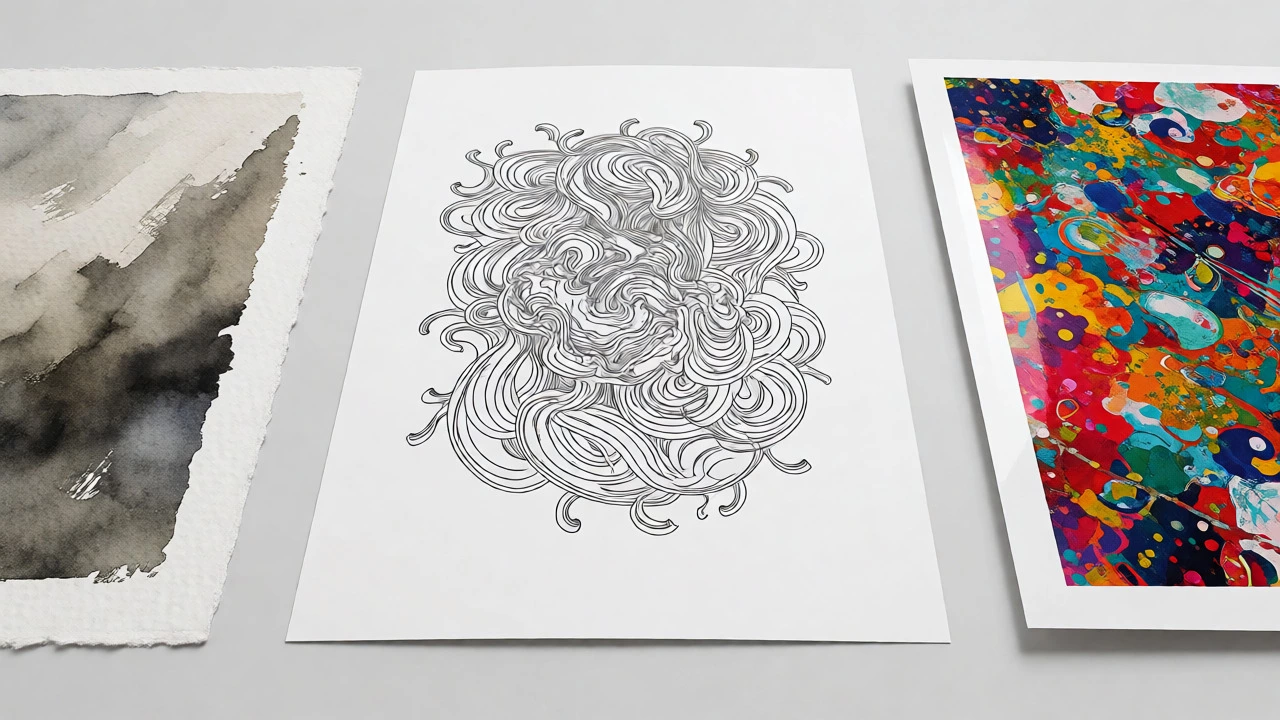
- Watercolor Reproductions: You need texture. A smooth paper will kill the illusion of watercolor bleed. Choose a heavy-weight cotton rag with a "Cold Press" or "Rough" texture. This mimics the actual canvas or paper the original was painted on, tricking the eye into seeing authenticity.
- Line Art and Illustrations: Crisp lines require a smooth surface. Any texture will break up thin black lines, making them look jagged. Use a bright white, smooth alpha-cellulose paper. The high brightness makes the blacks pop deeper.
- Abstract Digital Art: Experiment. If your work relies on neon colors, a semi-gloss might enhance the vibrancy. If it’s moody and dark, a deep matte black paper can add mystery, provided your printer handles black-on-black well.
Weight and Thickness: The Feel of Quality
Flimsy paper feels disposable. Heavy paper feels valuable. In the printing world, weight is measured in grams per square meter (gsm). Standard office paper is around 80gsm. Copy shop posters are often 160gsm. For art prints, you want to aim higher.
Start at 200gsm for anything you plan to sell. This thickness prevents curling and gives the sheet rigidity. For limited editions, consider 300gsm or even 350gsm. These sheets feel like cardstock. They don’t need a mat board immediately to stand up straight, though framing is still recommended. Thicker paper also absorbs less ink spread, keeping details sharper. If you are self-printing, check your printer’s maximum input thickness. Most home inkjets struggle past 250gsm without jamming.
Ink Types: Pigment vs. Dye
The paper doesn’t work alone. It interacts with the ink. If you are buying pre-made prints or using a print-on-demand service, ask about the ink type.
Dye inks are cheaper and produce brighter, more saturated colors. They sit on top of the paper coating. The problem? They fade faster when exposed to UV light. A dye-based print on cheap paper might last 5-10 years before noticeable fading occurs.
Pigment inks are embedded into the paper fibers. They are chemically stable and resistant to UV light. Combined with an archival paper, a pigment print can last over 100 years. If you are selling art, pigment is non-negotiable for serious collectors. Services like Blurb or local professional labs often specify "UltraChrome HD" (Epson) or "Lucia" (Canon) pigments. These are industry standards for longevity.
Common Pitfalls to Avoid
Even experienced artists mess this up. Here are the traps to watch out for:
- Ignoring White Point: Not all white papers are the same. Some are bluish-white (optical brighteners), some are cream. If your art has warm tones, a bluish paper will clash. Order samples first. Do not guess based on online images.
- Underestimating Ink Load: Dark, dense images require more ink. On thick cotton paper, too much ink can cause pooling or slow drying times. Test a small corner first.
- Skipping the Border: Many artists print edge-to-edge. But handling the print touches the image area. Always leave a 2-3 inch border. It protects the art and provides space for signing and numbering, which adds value.
- Wrong Printer Settings: If you set your printer to "Plain Paper" but load "Fine Art," the colors will be muddy. The printer assumes the ink will dry instantly. For art paper, select "Matte Fine Art" or "Photo Paper Pro" in your driver settings to control ink flow.
Where to Buy and How to Start
You don’t need to buy a whole box of expensive paper to test it. Most suppliers sell sample packs. Companies like Hahnemühle, Moab, and Canson offer curated sets of their top 5-10 papers for under $20. Buy one pack. Print your most challenging image on each sheet. Hold them side-by-side under different lighting conditions. See which one makes your colors sing and which one flattens them.
If you aren’t ready to invest in a wide-format printer, find a local professional lab. Ask to see their paper swatch book. Touch the papers. Smell them (yes, really-cotton smells different than wood). Talk to the technician. Good labs will let you do a proof print for a small fee. That $10 proof could save you from ruining a batch of 50 prints.
Is cotton paper always better than wood pulp?
Not necessarily. While cotton is more archival, high-quality alpha-cellulose papers are also acid-free and lignin-free. They offer similar longevity at a lower cost. Cotton is preferred for its texture and prestige, but for smooth photographic prints, alpha-cellulose often yields sharper results.
Can I use regular photo paper for fine art prints?
You can, but it’s not recommended for serious sales. Regular photo paper is often resin-coated and not truly archival. It may yellow over time and lacks the tactile quality expected of fine art. Stick to matte or luster fine art papers for a professional look.
How long do art prints last?
With pigment inks and archival paper, kept out of direct sunlight, prints can last 75-100+ years. With dye inks and standard paper, expect 10-20 years before visible fading. Proper framing with UV-protective glass extends life significantly.
What is the best paper weight for beginners?
Start with 200-250gsm. It’s thick enough to feel substantial but thin enough to pass through most consumer printers without jamming. Once you master color calibration, move to 300gsm+ for premium editions.
Do I need to frame my art prints?
Yes, especially if using paper without a protective coating. Framing protects against dust, moisture, and UV light. Even if you sell unframed, advise buyers to frame with acid-free mats and UV glass to preserve the investment.