Starry Night Ownership Quiz
How much do you know about Starry Night?
Take this quiz to test your understanding of Van Gogh's most famous painting and its ownership history.
Starry Night isn’t just a painting. It’s one of the most recognizable images in the world. You’ve seen it on posters, mugs, T-shirts, and phone cases. But who actually owns it? Not a billionaire. Not a private collector. Not even a family member of Vincent van Gogh. It’s held by a single institution in New York City - and it’s been there for nearly 90 years.
The painting’s journey to New York
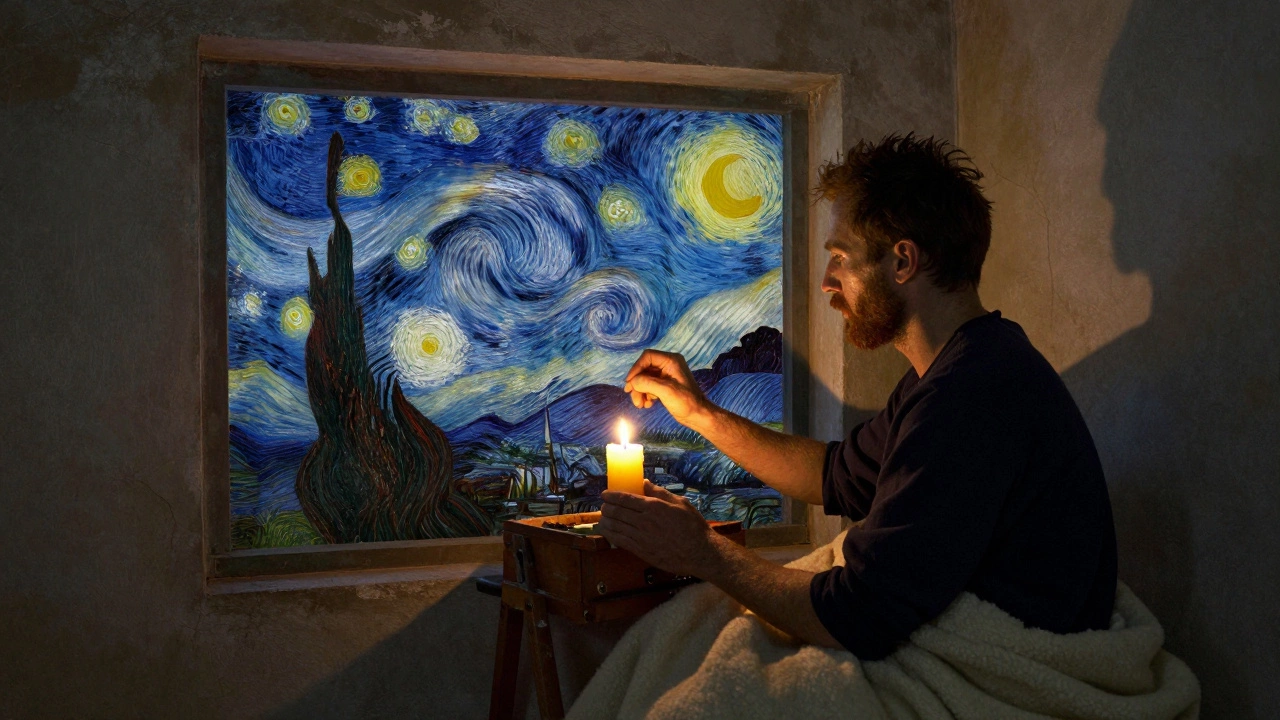
Vincent van Gogh painted Starry Night in June 1889, while staying at the Saint-Paul-de-Mausole asylum in Saint-Rémy-de-Provence, France. He was struggling with mental health, but in those weeks, he created some of his most powerful work. The swirling sky, the glowing stars, the quiet village below - it wasn’t a real place he saw. It was his mind, his emotions, his vision of the night.
After van Gogh’s death in 1890, the painting passed to his brother Theo, then to Theo’s widow, Jo van Gogh-Bonger. She spent years promoting Vincent’s work, selling and trading paintings to build his reputation. In 1901, she sold Starry Night to French art dealer Ambroise Vollard. It changed hands a few times over the next two decades, including a brief period in Germany and Switzerland.
In 1941, the painting was bought by the American collector Lillie P. Bliss. She was one of the founding donors of the Museum of Modern Art (MoMA) in New York. When she died in 1931, her collection was bequeathed to MoMA. But Starry Night wasn’t in her estate yet - it was still in private hands. Her estate trustee, William A. M. Burden, acquired the painting in 1941 and donated it to MoMA the same year.
Why MoMA? Not the Van Gogh Museum
Many assume the painting belongs in Amsterdam, where the Van Gogh Museum holds over 200 of his paintings and 400 drawings. But that’s not where Starry Night ended up. The reason is simple: timing and circumstance.
The Van Gogh Museum didn’t open until 1973. By then, Starry Night had already been in MoMA’s collection for over 30 years. MoMA had the resources, the reputation, and the vision to acquire it during a time when modern art was gaining serious institutional attention in the U.S.
MoMA didn’t just buy a painting - they bought a symbol. In the 1940s, American museums were competing to define what modern art meant. Starry Night was perfect: emotional, bold, innovative. It wasn’t just beautiful - it was revolutionary. It showed that art didn’t need to be realistic to be powerful.
It’s not for sale. Ever.
There’s no price tag on Starry Night. It’s not listed in any auction catalog. It’s not insured for a dollar amount - it’s insured for its cultural value, which is incalculable. MoMA considers it a cornerstone of its collection, and it’s never been loaned out for long-term exhibitions. When it travels, it’s for special, tightly controlled events - like the 2015 MoMA retrospective that traveled to Paris and Amsterdam.
Even if someone offered MoMA $200 million - or $500 million - they wouldn’t sell. The museum’s board has made it clear: this painting is part of the public trust. It belongs to everyone who walks through its doors.
How do we know it’s really there?
You might wonder: how can we be sure MoMA still has it? After all, art theft happens. War destroys collections. But Starry Night has a paper trail as solid as its frame.
MoMA keeps detailed provenance records - every owner, every sale, every movement - going back to van Gogh’s studio. The painting has been photographed, cataloged, and studied by conservators for decades. Its condition is monitored with infrared scans, X-rays, and climate sensors. It’s never been out of MoMA’s control since 1941.
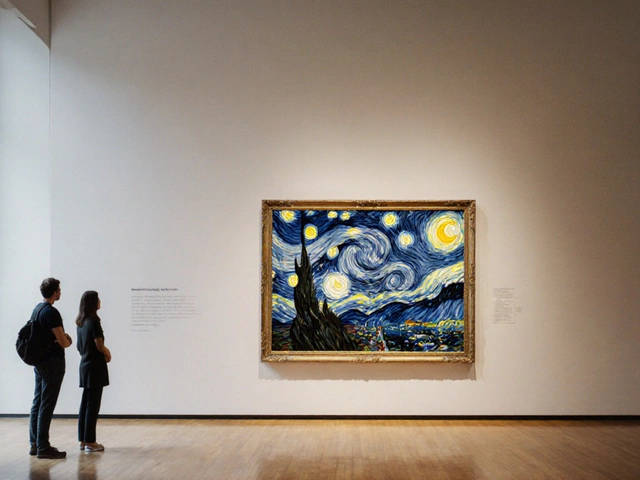
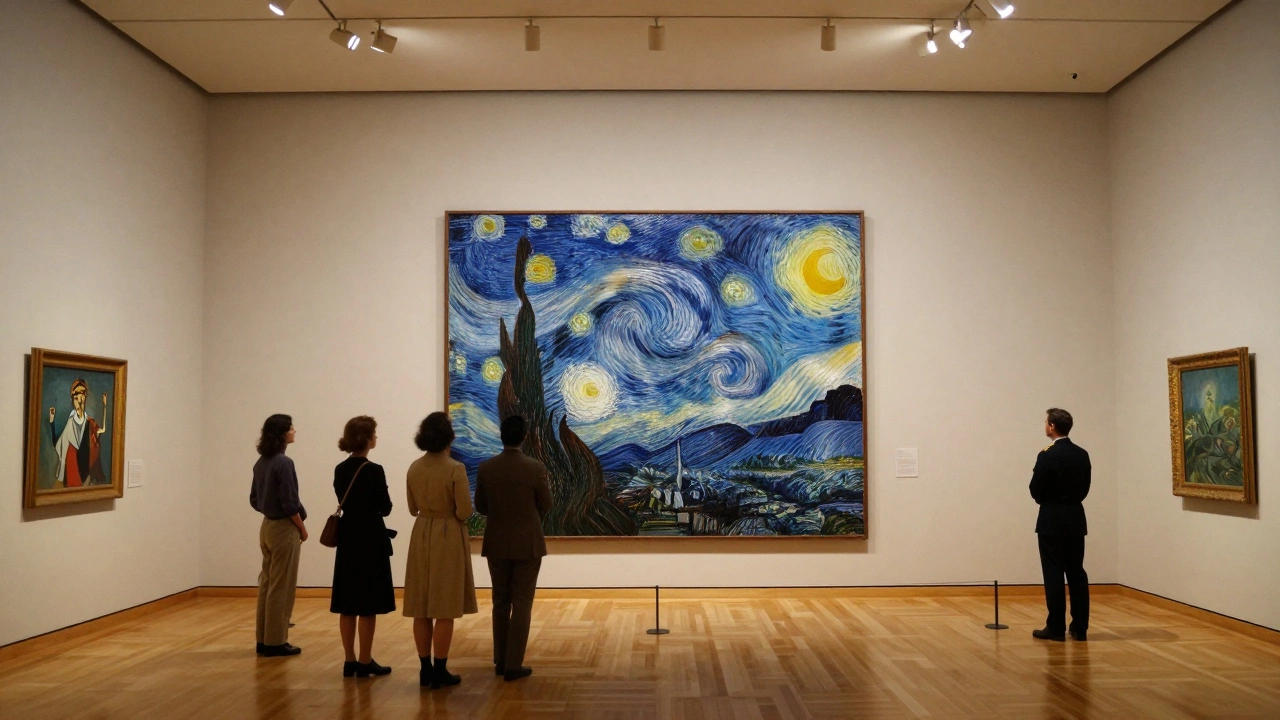
And it’s displayed prominently - in the museum’s second-floor painting gallery, near works by Picasso, Matisse, and Pollock. It’s one of the most visited artworks in the building. Thousands of people stand in front of it every day, quietly taking it in.
Why does ownership matter?
Some people think ownership is about money. But with Starry Night, it’s about legacy. It’s about who gets to decide what art means to the public.
If it were owned by a private collector, it might hang in a penthouse in Dubai or a vault in Zurich. Only a few people would ever see it. But because MoMA owns it, millions do. Students sketch it in notebooks. Tourists take selfies. Teachers use it to explain emotion in art. It’s not locked away - it’s alive in the world.
The painting’s ownership reflects a bigger idea: that great art shouldn’t be a trophy. It should be a conversation.
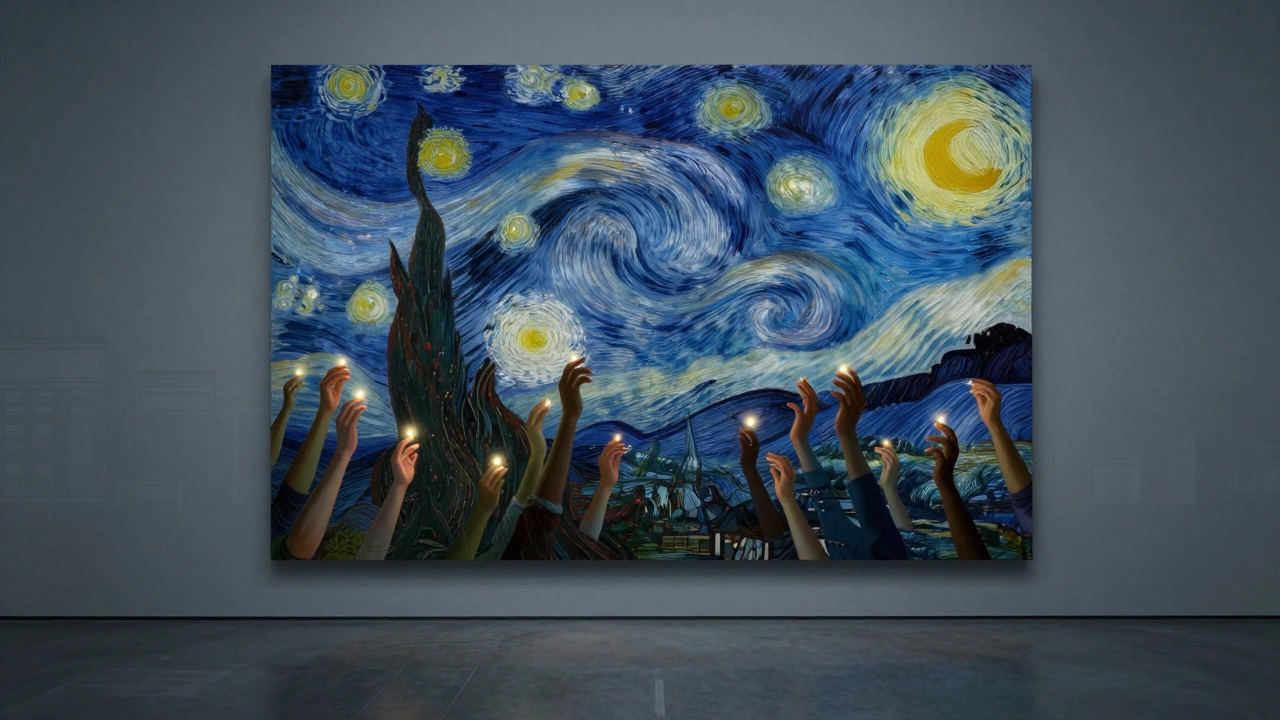
What about reproductions? Can you own a copy?
Yes - and you probably already have. MoMA sells official prints, posters, and postcards of Starry Night in its gift shop. You can buy a high-quality reproduction for under $50. There are also licensed versions from publishers like Art.com and Society6.
But here’s the catch: none of those are the original. The real painting is made of oil on canvas, 29 by 36 inches. The brushstrokes are thick, layered, almost sculpted. You can’t feel that through a screen. You can’t smell the linseed oil. You can’t stand three feet away and feel the movement of the sky.
That’s why people still line up to see it in person. It’s not just about seeing a famous image. It’s about standing in front of something that changed art forever.
Could it ever leave MoMA?
Technically, yes. MoMA could loan it to another museum. But it’s extremely rare. The last time it traveled outside the U.S. was in 2015, for a special exhibition at the Musée d’Orsay in Paris and the Van Gogh Museum in Amsterdam. It was escorted by armed guards, flown in a climate-controlled cargo plane, and displayed behind bulletproof glass.
MoMA’s policy is simple: if it leaves, it’s for a limited time, under strict conditions, and only for a major cultural event. It won’t be moved for profit, publicity, or politics.
What’s next for the painting?
Conservators at MoMA are currently studying the fading pigments in the sky. Van Gogh used a pigment called cobalt blue, which has slowly lost its intensity over time. The stars may have once glowed brighter. The swirls may have been more vivid. Scientists are using digital tools to reconstruct how the painting looked in 1889.
But the original will stay. It won’t be restored to look "new." It will be preserved as it is - with time, with history, with the quiet marks of a man who painted his soul onto canvas.
So who owns Starry Night? The Museum of Modern Art holds the title. But the real owner? It’s anyone who’s ever felt wonder looking up at the night sky - and remembered this painting.
Is Starry Night in the Van Gogh Museum?
No, Starry Night is not in the Van Gogh Museum in Amsterdam. While that museum holds the largest collection of Van Gogh’s works - over 200 paintings and 400 drawings - Starry Night has been owned by the Museum of Modern Art in New York since 1941. The Van Gogh Museum does have other famous works like Sunflowers and The Bedroom, but not this one.
Can you buy Starry Night?
No, you cannot buy the original Starry Night. It is part of the permanent collection of the Museum of Modern Art and is not for sale. MoMA considers it a cultural treasure, not a commodity. Any prints or reproductions you find online are licensed copies - not the original painting.
How much is Starry Night worth?
The original Starry Night has no official market value because it is not for sale. Experts estimate that if it ever came up for auction, it could sell for over $1 billion. But its true value lies in its cultural impact, not its price. It’s one of the most influential paintings in modern art history.
Why does MoMA have it and not a European museum?
MoMA acquired Starry Night in 1941, decades before the Van Gogh Museum opened in Amsterdam. The painting was purchased from American collector Lillie P. Bliss’s estate and donated to MoMA. At the time, American museums were aggressively building collections of modern art, and MoMA had the resources and vision to secure it. European institutions didn’t have the same access or priority during that period.
Has Starry Night ever been stolen?
No, Starry Night has never been stolen. It has been securely housed at MoMA since 1941, with strict conservation and security protocols. Unlike some famous stolen artworks, such as the Mona Lisa or The Scream, Starry Night has never been the target of a major heist. Its location has been consistent and well-documented for over 80 years.