Van Gogh's Color Strategy Simulator
Click on a card below to see how Van Gogh applied these principles and how you can replicate them in watercolor.
Simultaneous Contrast
Yellow & Blue Side-by-SideOptical Mixing
Creating Vibrant GreensThe White Paper
Preserving HighlightsStrategic Red
Creating Focal PointsWalk into any museum displaying Vincent Van Gogh is a Dutch Post-Impressionist painter known for his bold use of color and expressive brushwork, and you’ll likely see two colors dominating the room. They are bright, almost electric, and they don’t just sit on the canvas-they vibrate. If you’re asking what two colors Van Gogh most often used, the answer isn’t subtle. It’s yellow and blue. These weren’t just his favorites; they were the structural backbone of his entire visual language.
But here’s where it gets interesting for us as painters, especially those working in watercolor is a transparent medium that relies on water to dilute pigments, creating luminous layers. Van Gogh worked primarily in oil, a thick, opaque medium. Watercolor behaves completely differently. So, how do we translate his intense chromatic relationships into a medium that’s defined by transparency and flow? Let’s break down exactly how he used these colors and how you can apply those same principles to your next watercolor piece without looking like you’re trying to copy him.
The Psychology Behind the Yellow and Blue
Van Gogh didn’t pick yellow and blue because they looked good together. He picked them because they meant something. In letters to his brother Theo, he wrote extensively about color theory. He saw chromatic contrast is the visual effect created when complementary colors are placed side-by-side as a way to express emotion. Yellow represented sunlight, hope, and sometimes anxiety. Blue represented infinity, night, and melancholy.
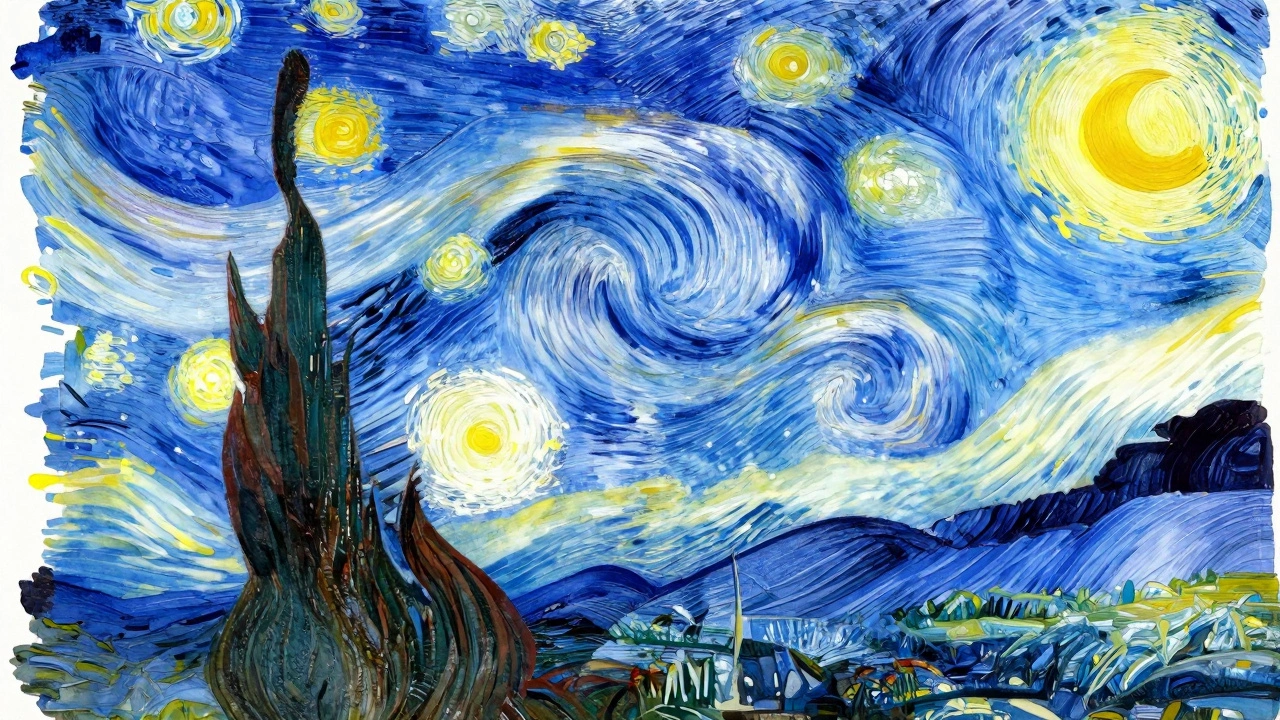
When he put them next to each other, he wasn’t just making a pretty picture. He was creating tension. Think about The Starry Night is a famous 1889 oil painting by Van Gogh featuring swirling blues and bright yellow stars. The sky isn’t just dark; it’s deep cobalt and ultramarine. The stars aren’t just white; they’re cadmium yellow and zinc white. The contrast makes both colors feel louder. This is called simultaneous contrast. Your eye jumps back and forth between the warm and cool tones, creating a sense of movement even though the paint is still.
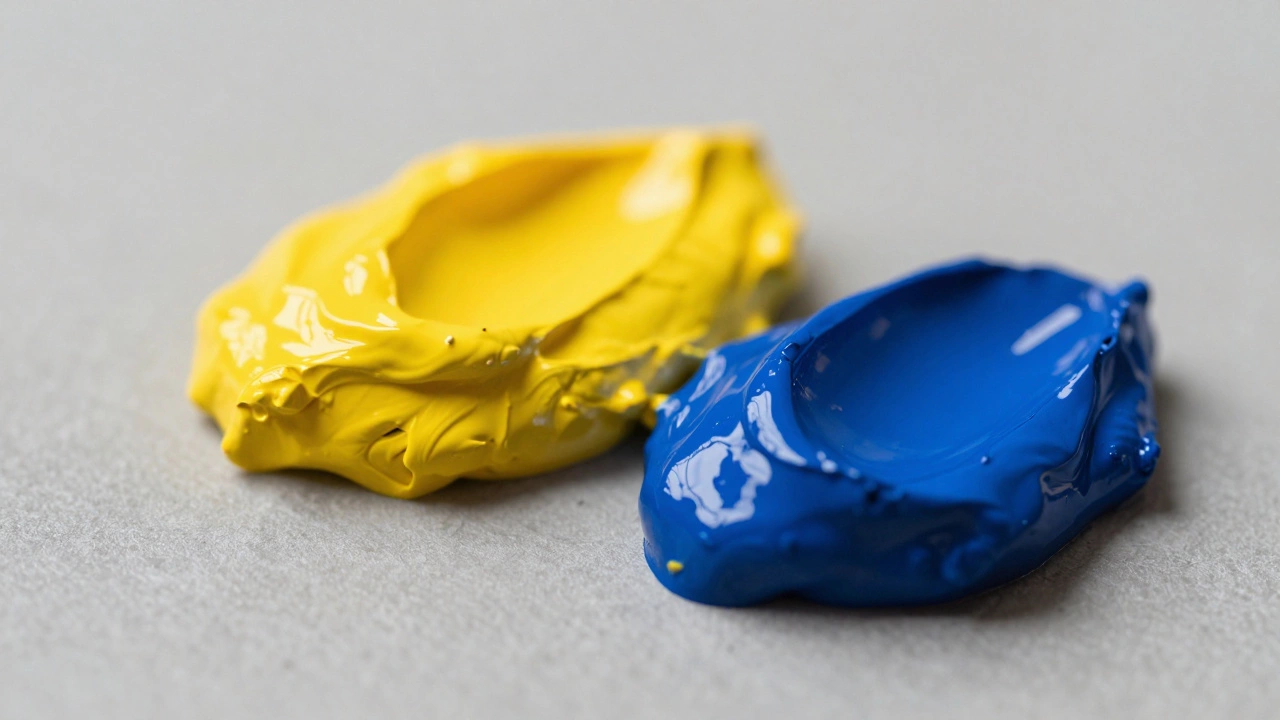
For a watercolorist, this is gold. You don’t need thick impasto to create vibration. You need clean edges and pure pigment. If you muddy your yellow with brown or your blue with gray, you lose that punch. Van Gogh kept his colors pure. He mixed very little. He let the yellow be yellow and the blue be blue. That’s the first lesson: resist the urge to neutralize everything.
Translating Oil Intensity to Watercolor Transparency
Here’s the problem most artists face when trying to emulate Van Gogh’s palette in watercolor: opacity. Oil paint sits on top of the canvas. Watercolor sinks into the paper. If you try to layer heavy washes of yellow over blue in watercolor, you’ll get green. And not the vibrant emerald green Van Gogh might have wanted, but a murky, dirty olive.
To avoid this, you need to understand glazing is a technique of applying thin, transparent layers of paint over dry layers to build depth and intensity. But even glazing has limits with yellow and blue. Instead of mixing them on the palette, you place them side by side on the paper. This is called optical mixing. Your brain does the work, not the pigment.
Let’s look at a practical example. Imagine you’re painting a sunflower field, another iconic subject for Van Gogh. In oil, he’d use thick strokes of chrome yellow and Indian yellow against a background of viridian and ultramarine. In watercolor, you start with the lightest value. Lay down a pale, watery wash of cadmium lemon is a bright, opaque yellow watercolor pigment that resists staining. Let it dry completely. Then, define the shadows not by adding black or brown, but by placing a strong, saturated wash of Prussian blue is a deep, transparent blue pigment ideal for distant shadows and skies right next to the yellow petals. Don’t touch them. Let the edge be hard. The contrast will make the yellow pop forward and the blue recede.
The Third Color: White Paper as a Tool
You might think I’m cheating by saying there are only two main colors, but Van Gogh’s third essential "color" was white. In oil, he mixed titanium white to lighten his yellows and blues. In watercolor, your white is the paper. This changes everything.
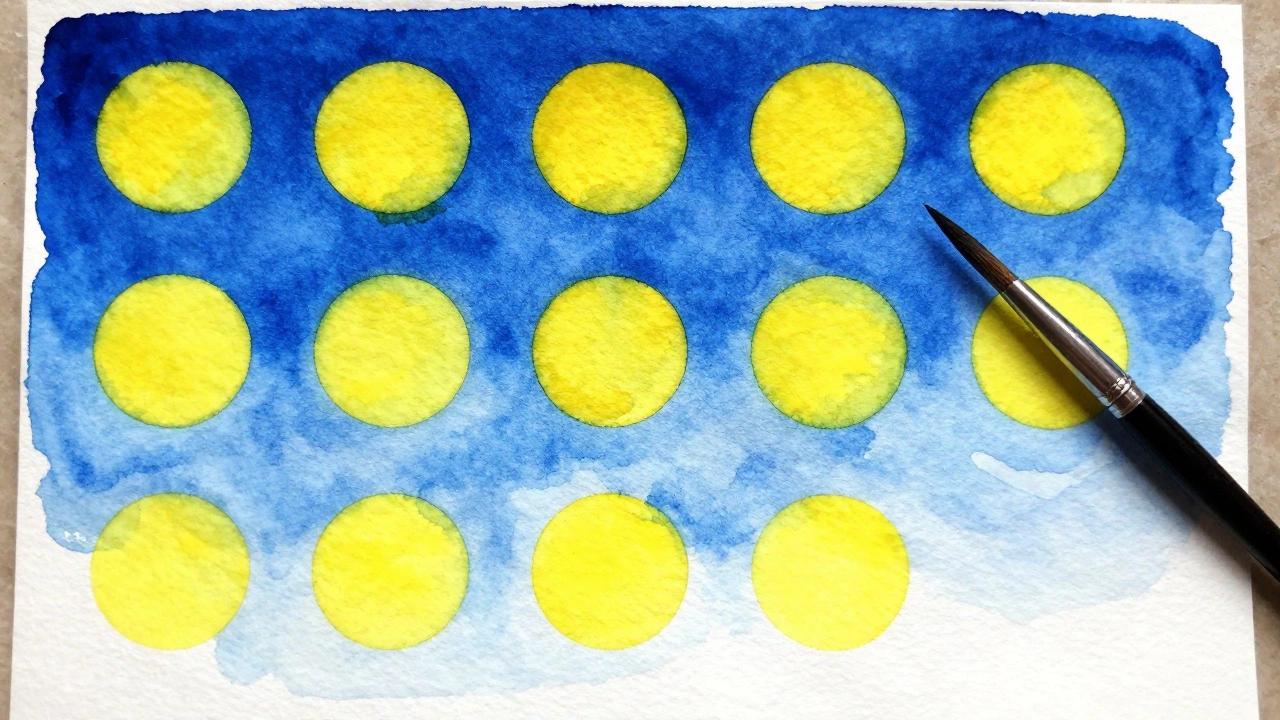
Van Gogh’s yellows are often so bright because they’re close to the pure pigment strength. He rarely diluted them heavily. In watercolor, if you want that same intensity, you have to leave the paper bare in strategic spots. This is why planning is crucial. You can’t paint a bright yellow star and then decide later to add a dark blue sky around it without ruining the yellow. You have to paint the blue sky first, leaving the shape of the star unpainted. Or, you paint the yellow star last, using a masking fluid or careful control to keep the edges crisp.
This constraint forces discipline. It stops you from overworking the painting. Van Gogh’s paintings feel alive because they’re direct. There’s no hesitation. When you’re working in watercolor, every stroke counts. If you scrub the paper too much, you lose the tooth, and subsequent layers won’t hold. Treat the white of the paper like Van Gogh treated his white paint: as an active part of the composition, not just the absence of color.
Beyond Yellow and Blue: The Supporting Cast
While yellow and blue dominate, Van Gogh’s palette wasn’t limited to just two tubes. He used other colors to support the drama. Green appears frequently, but notice how he made it. He rarely mixed blue and yellow on his palette to get green. He often placed strokes of blue and yellow next to each other so your eye mixed them into green. This creates a living, shifting green rather than a flat, static one.
In watercolor, this is easier to achieve than in oil. A wet-on-wet application of cerulean blue is a lighter, cooler blue pigment that mixes well with greens and napthol yellow is a transparent, staining yellow perfect for glazing will bleed into each other naturally. You’ll get a range of greens from lime to forest all in one stroke. This mimics the organic feel of Van Gogh’s cypress trees and wheat fields.
He also used reds, particularly vermilion and alizarin crimson, but usually in smaller doses. Red is the complement of green, which is a mix of yellow and blue. So even his reds play off the dominant yellow-blue structure. In your watercolors, use red sparingly. A small patch of red against a large field of blue-yellow will draw the eye immediately. It’s a focal point tool.
Practical Exercises for Watercolorists
If you want to experience the power of Van Gogh’s color choices, try these three exercises:
- The Sky Study: Take a sheet of cold-press watercolor paper. Paint a gradient of Prussian blue from dark at the top to light at the bottom. While it’s still damp, drop in tiny dots of cadmium yellow. Watch how they bloom and soften. Now, take a second sheet. Let the blue dry completely. Then, paint sharp, bright yellow circles on top. Compare the emotional impact. The wet-in-wet feels dreamy; the dry-on-dry feels energetic, like Van Gogh’s starry nights.
- The Shadow Test: Draw a simple circle. Fill it with a bright yellow wash. Let it dry. Now, instead of shading the circle with gray or brown, paint the area outside the circle with a strong blue wash. Leave a narrow border of white paper between the yellow and blue. Step back. Does the yellow look brighter? Does the blue feel deeper? This is simultaneous contrast in action.
- The Limited Palette Challenge: Restrict yourself to only three colors: Cadmium Yellow Light, Ultramarine Blue, and Alizarin Crimson. Try to paint a landscape. You’ll find that you can create almost any hue by mixing these primaries, but you’ll also learn how much more vibrant your painting stays when you don’t reach for pre-mixed greens or browns. This limitation forces you to rely on the purity of the yellow and blue relationship.
Common Mistakes to Avoid
Even with the best intentions, translating Van Gogh’s style can go wrong. Here’s what to watch out for:
Muddying the Mix: Watercolorists love to mix. It’s part of the charm. But mixing too many colors kills vibrancy. If you mix yellow, blue, and red, you get brown. Van Gogh avoided brown in his brightest works. Keep your mixes simple. Two colors max per mix. If you need a darker value, use less water, not more pigment.
Ignoring Value: Color is important, but value (lightness and darkness) is king. You can have the perfect yellow and blue, but if their values are too close, the painting will look flat. Van Gogh’s yellows are often high-key (light), while his blues are low-key (dark). Ensure you have a strong value contrast. Test your painting by taking a black-and-white photo of it. If you can’t see the shapes, your color choices aren’t carrying the composition.
Overworking the Edges: Van Gogh’s brushstrokes are visible and deliberate. In watercolor, hard edges create focus. Soft edges create atmosphere. Don’t soft-edge everything. Use hard edges where the yellow meets the blue to maximize contrast. Use soft edges where you want forms to blend into the background. Control your water, control your edge.
Why This Still Matters Today
We live in a world of digital filters and muted Instagram aesthetics. It’s easy to fall into the trap of painting everything in safe, harmonious grays and pastels. Van Gogh reminds us that color can be aggressive, joyful, and deeply personal. Using yellow and blue isn’t about nostalgia. It’s about courage. It’s about putting two powerful forces side by side and letting them fight it out on the paper.
When you pick up your brushes, remember that you’re not just applying pigment. You’re arranging energy. Yellow pushes forward. Blue pulls back. Together, they create a dynamic tension that keeps the viewer’s eye moving. Whether you’re painting a quiet garden or a stormy sea, these two colors can anchor your composition and give it life. So, don’t be afraid to make it bright. Don’t be afraid to make it bold. Just like Van Gogh did, trust the contrast.
Did Van Gogh only use yellow and blue?
No, he used a full range of colors including reds, greens, and whites. However, yellow and blue were the dominant hues in his most famous works, serving as the primary framework for his compositions due to their complementary nature and emotional resonance.
What specific shades of yellow and blue did Van Gogh prefer?
He favored bright, intense pigments such as Chrome Yellow, Indian Yellow, and Cadmium Yellow for his yellows. For blues, he preferred Ultramarine Blue, Cobalt Blue, and Prussian Blue. These pigments offered high saturation and stability, allowing for the vivid contrasts seen in his paintings.
How can I achieve Van Gogh's color vibrancy in watercolor?
To achieve vibrancy, avoid mixing yellow and blue directly on the palette, which creates dull green. Instead, place pure washes of yellow and blue side-by-side on the paper to allow optical mixing. Use high-quality, transparent pigments and preserve the white of the paper for highlights to maintain brightness.
Why did Van Gogh use complementary colors like yellow and blue?
Van Gogh believed in the expressive power of color. He used complementary colors like yellow and blue to create simultaneous contrast, which makes each color appear more intense when placed next to its opposite. This technique allowed him to convey emotion and energy through visual tension.
Can I use Van Gogh's color theory for modern subjects?
Absolutely. The principles of color contrast and emotional association are universal. You can apply the yellow-blue dynamic to urban landscapes, portraits, or abstract compositions to create focal points and enhance the visual impact of your work, regardless of the subject matter.