Modern Art Knowledge Quiz
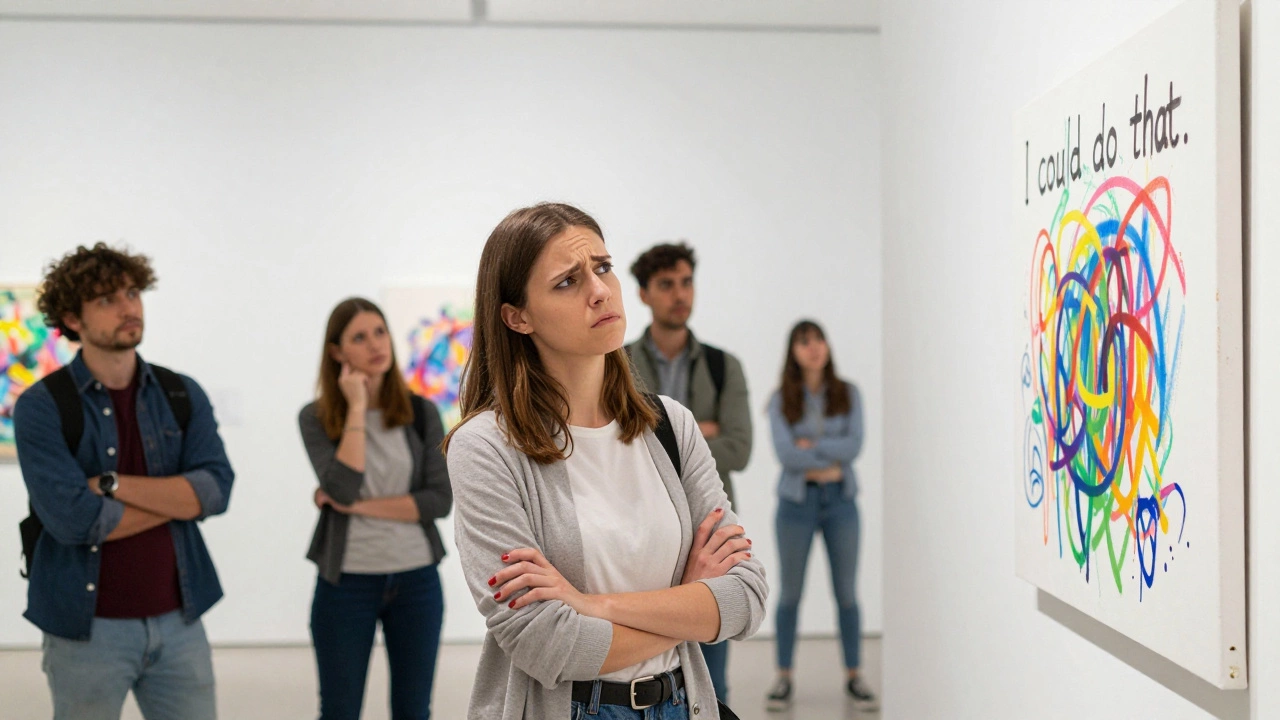
Walk into a gallery today, and you might stand before a canvas that looks like it was painted by a toddler. Or maybe you’ll see a banana duct-taped to a wall. You look around, squinting, trying to find the hidden message, the technical skill, or at least something that resembles a recognizable object. Then comes the familiar thought: "I could do that."
If you’ve ever felt confused or even annoyed by modern art, you are not alone. The gap between what we expect art to be (beautiful landscapes, realistic portraits) and what modern art often is (abstract shapes, conceptual ideas, raw emotion) can feel like a chasm. But here’s the thing: modern art isn’t trying to trick you. It isn’t about hiding talent behind chaos. The main point of modern art is a radical shift in purpose-from showing us what the world looks like to exploring how we experience it.
The Death of Realism: Why Artists Stopped Copying Life
To understand why modern art looks the way it does, we have to look at when it started. Modern art generally refers to art produced from the late 1860s to the 1970s. Before this period, if you wanted an image of a battle, a saint, or a king, you hired a painter to create a hyper-realistic depiction. Art was a record-keeping tool. It was about accuracy.
Then, in 1839, the camera was invented. Suddenly, machines could capture reality faster and more accurately than any human hand. Painters had a crisis on their hands. If a machine could do the copying, what was left for the artist?
The answer was everything else. Artists realized they didn’t need to paint the physical object; they could paint the feeling of the object. They could paint the light hitting the water, the anxiety of a city street, or the pure geometry of a shape. This liberation allowed artists to break free from strict realism. They began experimenting with color, form, and perspective in ways that had never been seen before. The goal shifted from representation to expression.
It’s Not About What You See, It’s About How You Feel
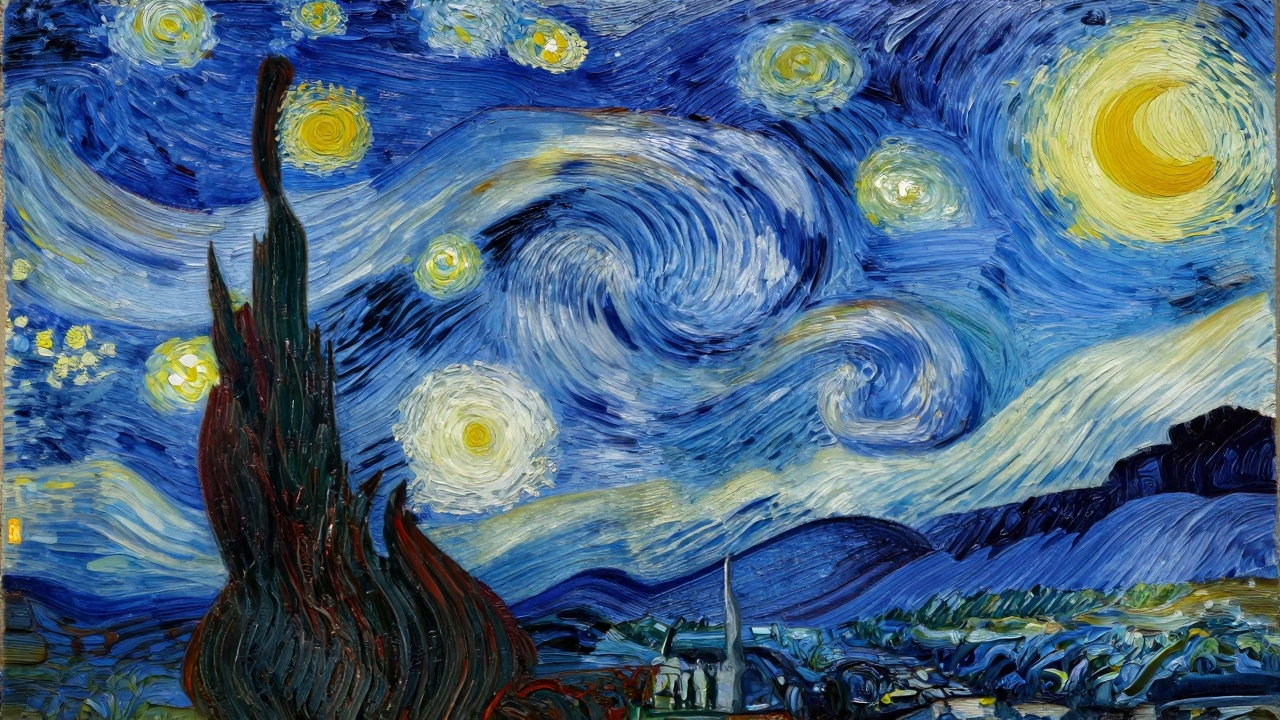
One of the biggest misunderstandings about modern art is that it lacks technique. Take Vincent van Gogh’s Starry Night, which is a swirling, emotional depiction of a night sky rather than a photographic record. To the untrained eye, it looks messy. But look closer. Those thick, rhythmic brushstrokes aren’t random. They are designed to make your eyes move across the canvas, creating a sense of turbulence and energy. Van Gogh wasn’t painting stars; he was painting his own mental state.
This approach defines much of modern art. When Wassily Kandinsky created abstract compositions filled with splashes of red and blue, he wasn’t trying to hide anything. He believed that colors and shapes could speak directly to the soul, much like music. A symphony doesn’t show you a picture of sadness, but it makes you feel sad. Kandinsky wanted his paintings to do the same thing.
So, when you look at a piece of modern art, stop asking, "What is it?" Start asking, "How does it make me feel?" Does the jagged line make you anxious? Does the soft pastel palette calm you down? Your emotional reaction is the intended outcome. The artwork is a mirror reflecting your own internal landscape.
The Rise of Conceptual Art: Ideas Over Objects
As we moved further into the 20th century, the focus shifted even more away from visual beauty and toward ideas. This is where things get tricky for many viewers. In the mid-to-late 20th century, movements like Dadaism and Minimalism challenged the very definition of art. They asked: What makes something art? Is it the skill of the maker? Or is it the idea behind it?
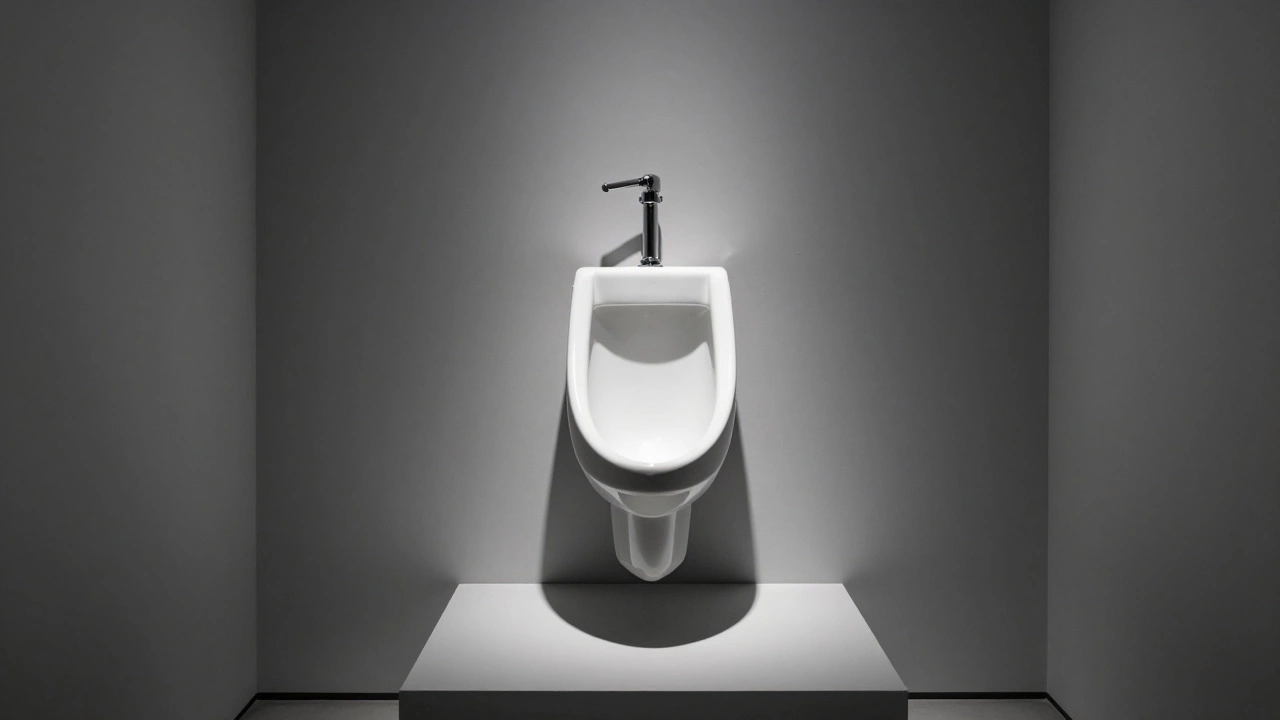
Consider Marcel Duchamp’s Fountain, which is a standard urinal signed with a pseudonym and displayed as a sculpture in 1917. Duchamp didn’t carve the urinal. He bought it. By placing it in a gallery, he forced viewers to question the institution of art itself. Was it art because it was beautiful? No. It was art because he said it was, and because it sparked a conversation about value, context, and authority.
This concept-that the idea matters more than the execution-became central to modern and contemporary art. When you encounter a piece that seems simple or empty, consider the context. The "point" might be to challenge your assumptions, to critique consumer culture, or to highlight the absurdity of everyday life. The art is happening in your head, not just on the wall.
Breaking the Rules: Experimentation as a Goal
Modern art is also defined by its relentless experimentation. Artists during this period were obsessed with breaking rules. They wanted to see what happened if they distorted perspective (Cubism), removed all color except black and white (Minimalism), or used found objects instead of paint (Collage).
| Movement | Time Period | Main Goal / Philosophy |
|---|---|---|
| Impressionism | 1860s-1880s | Capture fleeting moments of light and atmosphere rather than detailed outlines. |
| Cubism | 1907-1914 | Show multiple viewpoints of an object simultaneously, breaking it into geometric shapes. |
| Surrealism | 1920s-1950s | Explore the unconscious mind, dreams, and irrational imagery. |
| Abstract Expressionism | 1940s-1950s | Express raw emotion through spontaneous, automatic, or subconscious creation. |
Take Cubism, pioneered by Pablo Picasso and Georges Braque. Instead of showing a face from one angle, they showed it from the front, side, and top all at once. It looked fragmented and confusing. But the point was to represent a more complete truth of the subject. We don’t just see people from one static angle in real life; we move around them, perceiving them in fragments over time. Cubism tried to mimic that complex perception.
Similarly, Abstract Expressionists like Jackson Pollock didn’t hold brushes traditionally. He dripped and splashed paint onto canvases laid on the floor. The process became the art. The chaotic web of lines records the physical movement of the artist’s body. It’s a dance captured in oil paint. The "point" is the energy of the act itself.
Why Modern Art Feels Elitist (And How to Fix That)
Let’s address the elephant in the room: modern art often feels elitist. Galleries can be intimidating spaces with hushed tones and expensive frames. Critics use dense language that sounds like a foreign code. This creates a barrier that makes average people feel stupid for not "getting it." But here’s the secret: there is no wrong way to interpret modern art. The artist doesn’t have a monopoly on meaning. Once the work leaves the studio, it belongs to the viewer. If a red square makes you think of anger, that’s valid. If it reminds you of a sunset, that’s also valid.
The elitism comes from the assumption that you need a degree in art history to appreciate a painting. You don’t. You only need curiosity. When you visit a museum or gallery, try this exercise: Stand in front of a piece that confuses you for two minutes. Don’t read the placard yet. Just look. Notice the colors, the textures, the scale. Ask yourself why the artist chose those specific elements. Then, read the description. Often, you’ll find that the artist was struggling with the same questions you are: identity, mortality, love, or chaos.
The Legacy of Modern Art Today
Modern art may have ended in the 1970s, giving way to Contemporary Art, but its influence is everywhere. The way we design websites, the fonts we read, the advertising campaigns that sell us products-all of it borrows from the experiments of modern artists. They taught us that communication doesn’t always need to be literal. A logo doesn’t need to depict the product perfectly; it needs to evoke a feeling or an idea.
Moreover, modern art gave voice to marginalized perspectives. Artists began using their work to challenge political norms, gender roles, and social injustices. Art became a platform for protest and personal narrative, not just decoration. This legacy continues today, where art remains a powerful tool for social commentary and cultural reflection.
So, what is the main point of modern art? It is to expand the boundaries of human expression. It invites us to look beyond the surface, to question our perceptions, and to engage with the world in a more thoughtful, emotional, and critical way. It’s not about being smart enough to decode a puzzle. It’s about being open enough to let the art change how you see.
Is modern art the same as contemporary art?
No, they are distinct periods. Modern art generally refers to the period from the 1860s to the 1970s, characterized by a break from traditional realism and a focus on abstraction and new techniques. Contemporary art refers to art made from the late 20th century to the present day. While they share some similarities, contemporary art often focuses more on global issues, digital media, and diverse cultural identities.
Why is modern art so expensive?
The price of modern art is driven by scarcity, historical significance, and market demand. Many famous modern artists have died, meaning no new works will ever be created. Additionally, provenance (the history of ownership) plays a huge role. If a painting was owned by a famous collector or exhibited in a major museum, its value increases significantly. It is less about the cost of materials and more about the cultural capital associated with the piece.
Can I create modern art without formal training?
Absolutely. One of the core tenets of modern art is the democratization of creativity. Many influential modern artists were self-taught or learned through experimentation rather than academic institutions. The focus is on originality, expression, and concept rather than technical perfection. If you have an idea you want to express, you can use any medium available to you.
What is the difference between abstract and non-objective art?
Abstract art is derived from reality but distorts it, simplifying or exaggerating forms (like a simplified portrait). Non-objective art has no reference to the visible world at all; it consists purely of shapes, colors, and lines. Think of abstract art as a blurred photograph, and non-objective art as a pattern of colors with no source image.
How do I start appreciating modern art?
Start by visiting local galleries or museums and allowing yourself to be confused. Don't rush to judge a piece. Spend time observing the details. Read biographies of key artists to understand their motivations. Join online communities or forums where people discuss art openly. Remember, appreciation is a skill that develops over time with exposure and curiosity.