Grisaille Value Scale Calculator
Enter the percentage of each value range in your grisaille composition
Value Scale Reference
Artist Tip
As the article explains: "Don't jump from white to black. Real light doesn't work that way. Even in deep shadow, there's usually a hint of reflected light. Use a range of grays."
When you see a painting that looks like a black-and-white photograph but is actually made with oil paint, you’re probably looking at grisaille. It’s not just a style-it’s a centuries-old method that artists used to build depth, control light, and prepare for color. Grisaille doesn’t use color at all. Instead, it relies on shades of gray to create the illusion of form, volume, and space. This technique was common in medieval altarpieces, Renaissance masterpieces, and even in the preparatory sketches of artists like Rembrandt and Caravaggio.
Where did grisaille come from?
Grisaille traces back to the 12th and 13th centuries, when artists in European monasteries painted religious scenes in monochrome to mimic stained glass windows. Churches often had limited light, and using gray tones helped simulate the effect of colored glass without the cost or complexity of actual pigments. Over time, painters realized that working in grayscale made it easier to focus on composition and lighting before adding color.
By the 15th century, grisaille became a standard step in the painting process. Artists would first paint the entire scene in shades of gray, then apply thin glazes of color on top. This allowed them to perfect the structure of the image before committing to pigment. Some artists, like Jan van Eyck, used grisaille underpainting to make their final colors appear more luminous and realistic.
How is grisaille actually done?
There are two main ways to use grisaille: as an underpainting or as a finished piece.
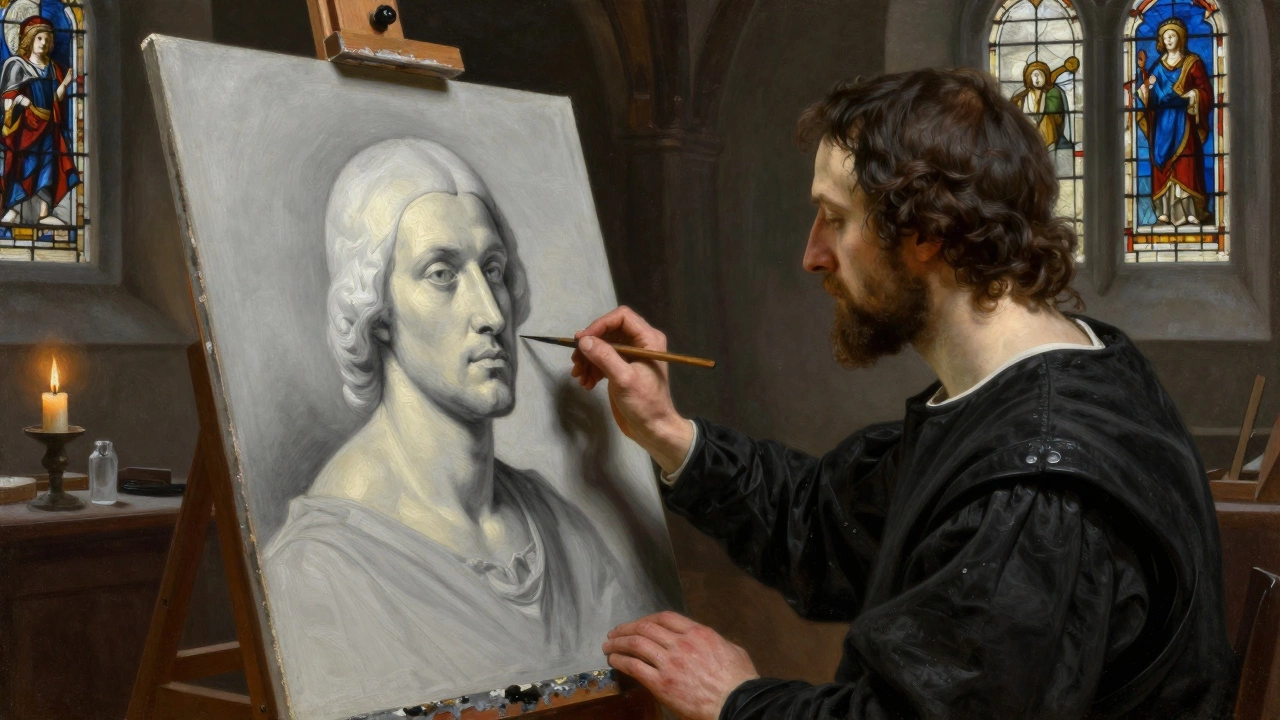
If you’re using it as an underpainting, you start with a neutral-toned canvas-usually a light gray or beige. Then, using only black, white, and a touch of brown or blue, you block in the shapes and values. You don’t worry about color yet. You focus on where the light hits, where shadows fall, and how forms turn in space. Once this layer dries, you glaze transparent color over it. The gray base acts like a foundation, making the colors look more natural and three-dimensional.
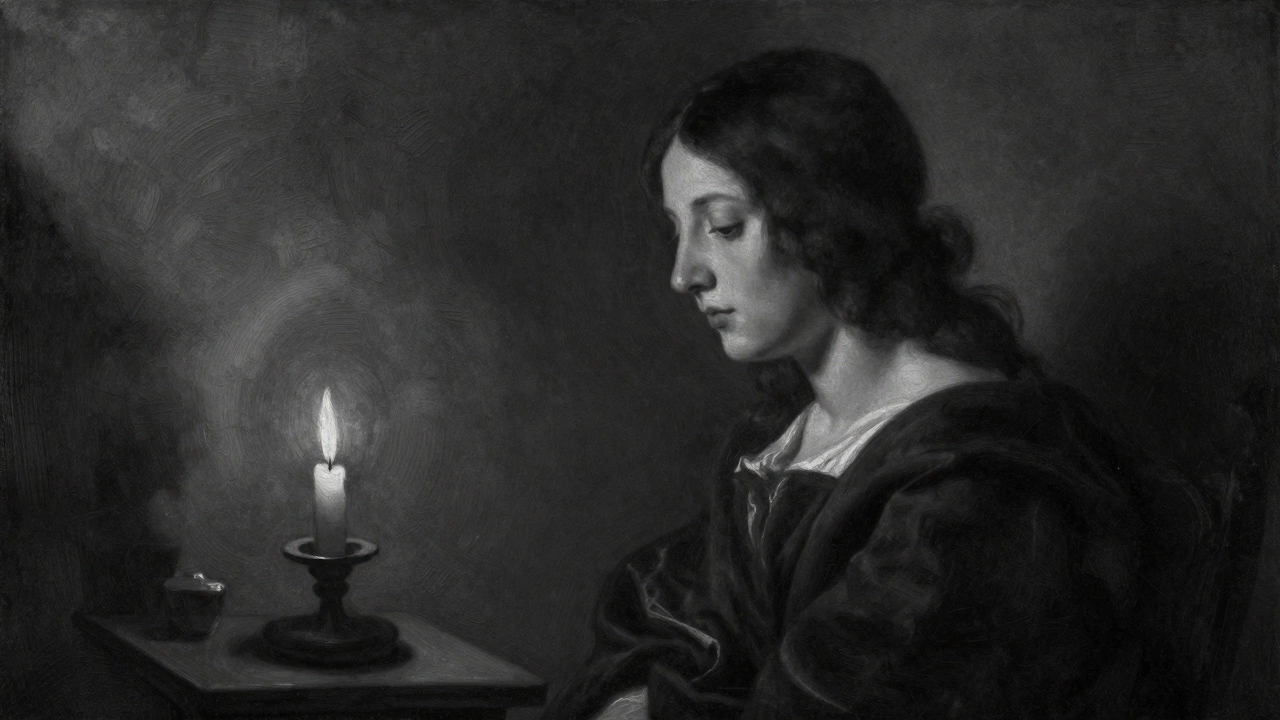
If you’re painting a finished grisaille, you skip the color entirely. You use only grayscale tones to create the whole image. This requires extreme control over value contrast. A well-executed grisaille looks like a high-contrast photograph, but with the texture and brushwork of oil paint. Artists like Georges de La Tour used this approach to create haunting, dramatic scenes-think candlelit interiors with figures emerging from deep shadow.
Why do artists still use it today?
Modern painters still turn to grisaille-not because it’s old-fashioned, but because it works. When you strip away color, you’re forced to see the world in terms of light and dark. Many art schools still teach grisaille as a foundational exercise. It trains your eye to notice subtle shifts in value, which is the single most important skill in realistic painting.
Contemporary artists like Chuck Close and Odd Nerdrum have used grisaille to create powerful portraits. Close’s early black-and-white paintings, based on photographs, were built using a grisaille method to map out every tone before adding color. Nerdrum, known for his dramatic, timeless figures, often works entirely in grayscale to evoke a sense of classical gravitas.
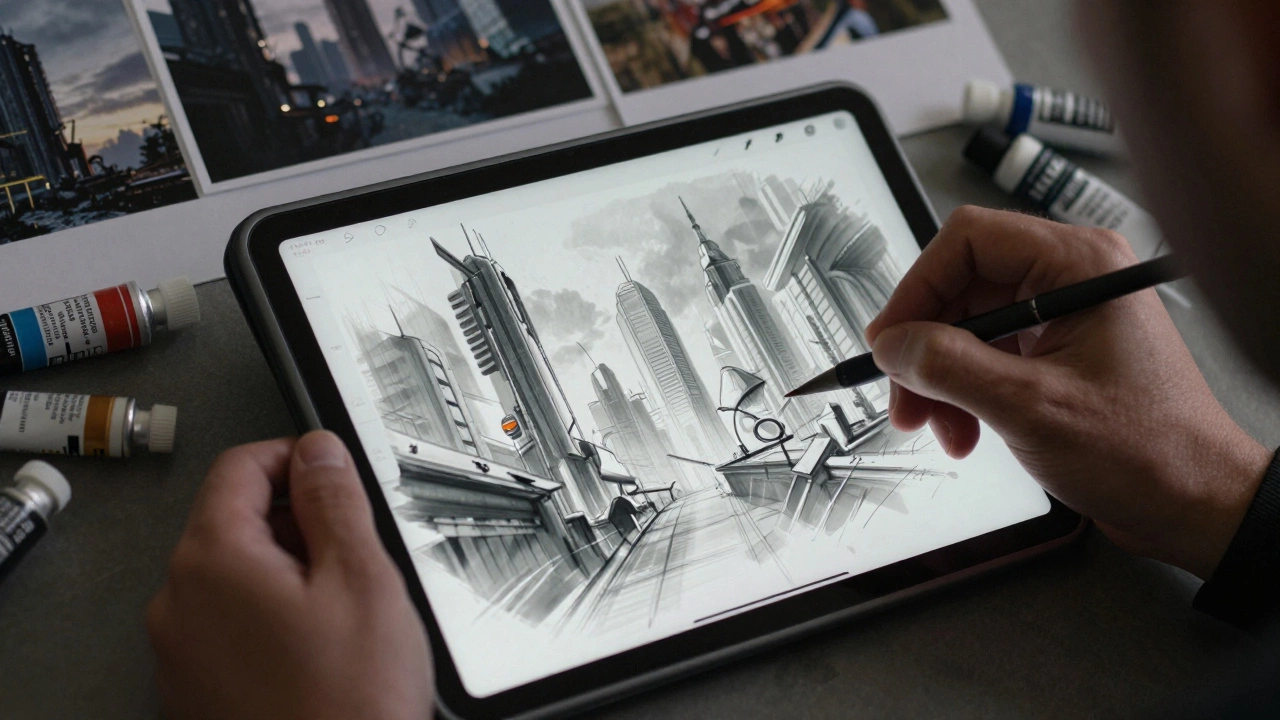
Even digital artists use grisaille principles. Many concept artists for films and video games block out scenes in grayscale first, adjusting lighting and composition before adding color. It’s a universal tool, not just a historical curiosity.
What paints and tools do you need?
You don’t need fancy materials. For grisaille, you need:
- Oil paints: titanium white, ivory black, burnt umber, and maybe a touch of ultramarine blue for cooler shadows
- A limited palette: five colors max. More will distract from the value study
- Brushes: a few medium flats for blocking in shapes, and a small round for details
- A neutral canvas: gessoed linen or a pre-primed panel in light gray
Some artists use a medium like linseed oil or odorless mineral spirits to thin the paint. This helps create smooth transitions between tones. Avoid using too much medium-it can make the paint too runny and lose its structure.
Many painters start with a tonal ground-painting the whole canvas a mid-gray before beginning. This gives you a middle value to work from, making it easier to judge both highlights and shadows.
Common mistakes and how to avoid them
Grisaille sounds simple, but it’s easy to mess up.
Mistake 1: Too much contrast-You might be tempted to make the whites pure white and the blacks pure black. That creates a flat, cartoonish look. Real light doesn’t work that way. Even in deep shadow, there’s usually a hint of reflected light. Use a range of grays-don’t jump from white to black.
Mistake 2: Ignoring edges-Hard edges make things look sharp. Soft edges make things recede. In grisaille, controlling edge quality is how you suggest depth. A face shouldn’t have crisp outlines everywhere. The edge of a nose turning into shadow should be soft. The edge of a hand against a wall might be sharp. Pay attention.
Mistake 3: Rushing the underpainting-If you’re using grisaille as a base for color, don’t rush it. Let each layer dry fully. If you glaze over a wet layer, the colors will muddy. Patience is part of the technique.
Grisaille vs. other monochrome techniques
Not all black-and-white painting is grisaille. Here’s how it differs:
| Technique | Medium | Purpose | Typical Use |
|---|---|---|---|
| Grisaille | Oil paint | Underpainting or finished work in grayscale | Classical oil painting, Renaissance altarpieces |
| Chiaroscuro | Oil or ink | Strong light/dark contrast for drama | Caravaggio’s religious scenes |
| Pen and ink wash | Water-based ink | Quick sketches or illustrations | Leonardo da Vinci’s studies |
| Tempera monochrome | Egg tempera | Preparation for panel paintings | Early Italian Renaissance |
Grisaille is unique because it’s tied to oil paint and its slow drying time, which allows for blending and layering. Ink washes dry fast and can’t be reworked the same way. Chiaroscuro is about drama-grisaille is about structure.
How to practice grisaille yourself
If you want to learn, start small.
- Take a simple photo of a face or a still life in black and white.
- Print it out and divide it into five value ranges: pure white, light gray, mid-gray, dark gray, pure black.
- Use only five oil colors to match those ranges.
- Paint the image in grayscale, focusing only on matching the tones-not the details.
- Step back every 15 minutes. Squint at your painting. If you can’t tell the shapes apart, you need better contrast.
Do this three times a week for a month. You’ll start seeing the world differently. Colors won’t distract you anymore. You’ll notice how light falls on a cup, how a shadow curves around a cheekbone. That’s the real gift of grisaille.
Why it matters now
In a world of digital filters and auto-color correction, grisaille reminds us that real art is built on observation, not automation. It’s a discipline that forces you to slow down. You can’t cheat with a hue slider. You have to mix the gray yourself. You have to decide where the light ends and the shadow begins.
It’s not about making black-and-white paintings. It’s about learning to see.
Is grisaille only used in oil painting?
No, grisaille can be done in any medium that allows layering and blending-tempera, acrylic, even ink. But it became most influential in oil painting because of the slow drying time, which allowed artists to blend tones smoothly and build up layers over days or weeks. That’s why it’s most commonly associated with Renaissance and Baroque oil works.
Can you use grisaille for abstract art?
Absolutely. While grisaille is often linked to realism, abstract artists like Mark Rothko and Ad Reinhardt used grayscale to explore mood, texture, and subtle shifts in tone. Rothko’s dark, layered fields of color were often built on monochrome underpaintings. The technique isn’t about subject matter-it’s about controlling light and depth.
Do you need to be a skilled painter to use grisaille?
Not at all. In fact, grisaille is one of the best ways for beginners to learn painting. By removing color, you remove one layer of complexity. You can focus on values, shapes, and composition-what really makes a painting convincing. Many art teachers assign grisaille studies to students before they even touch color.
How long does a grisaille painting take?
It depends on the size and method. A small study might take a few hours. A full underpainting for a large canvas could take several days, especially if you’re letting layers dry between applications. Finished grisailles-those meant to stand alone-often take weeks because of the precision needed in value control. Patience is part of the process.
Can grisaille be combined with color later?
Yes, that’s one of its main historical uses. Artists would paint the entire composition in grayscale first, then apply thin, transparent glazes of color on top. The gray layer acts like a roadmap for light, so the color appears more natural and luminous. This method is still used today by realist painters who want maximum control over their final image.
Mastering grisaille doesn’t make you a better painter overnight. But it teaches you how to see the world the way a painter does-without the noise of color. Once you learn to read light and shadow, everything else falls into place.